
Operation
There is no chance of winning for someone who believes the market is completely random, who assumes there is no intention or manipulation behind market moves, or who views trading as gambling rather than a science or profession that can be learned and mastered. Of course, market is a battle between opposing forces, and even the biggest players sometimes lose their capital due to mistakes. However, as a rule—just as in the real world—no effect ever occurs without a cause. This means that for a price to move from one point to another, there is a reason, revealed through trends in demand and supply. For smaller traders especially, the chance of success depends on how precisely they can recognize the underlying operations that smart players execute for any asset in the market.
The logic is easy; For prices to rise, there must first be accumulation; and for them to fall, there must be distribution. Objectively analyzing both what the market does and what it fails to do helps determine who is more likely in control. Price spends most of its time in equilibrium, negotiating within a range. Manipulators, during accumulation or distribution, hold the price within this range. When the price breaks out, it signals a move toward another level, one the operator intends to reach.
A complete operation on the long side consists of three phases: 1) accumulation, 2) markup, and 3) distribution. In a shorting operation, the sequence reverses: 1) distribution comes first, followed by 2) markdown, and finally 3) accumulation.
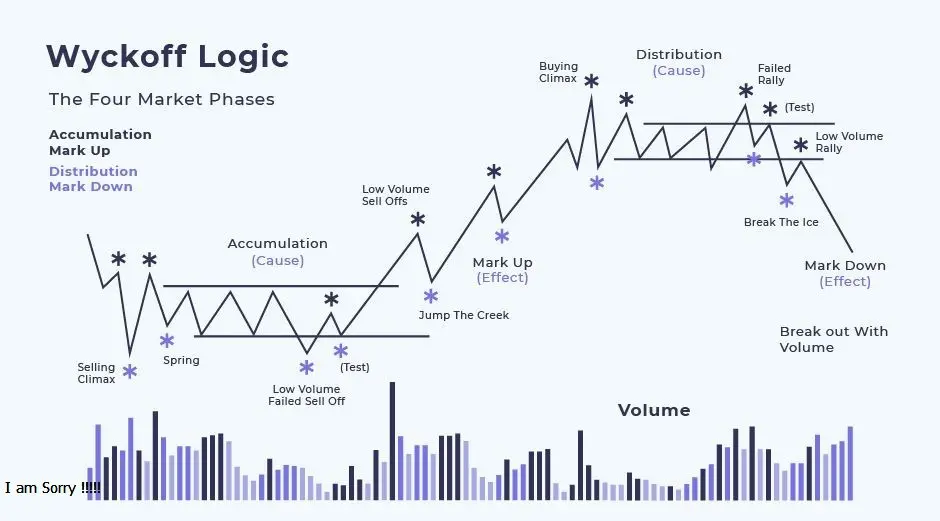
While this is a general pattern that depends on market conditions—and some structures are merely fluctuations— and methodology views the market through price dynamics and sentiment, not labels, every operation unfolds in five phases: A) stopping the previous trend with heavy volume or exhaustion, B) building the cause through subtle buying or selling, C) testing the structure’s strength with a price probe, D) trending within a range as operators hold control, and E) trending out of the range when the move begins. None of these phases stands alone; only after the structure forms can we discern the operator’s true intention, confirmed through “action and test.” At any stage, if the opposing side presses harder, the structure fails.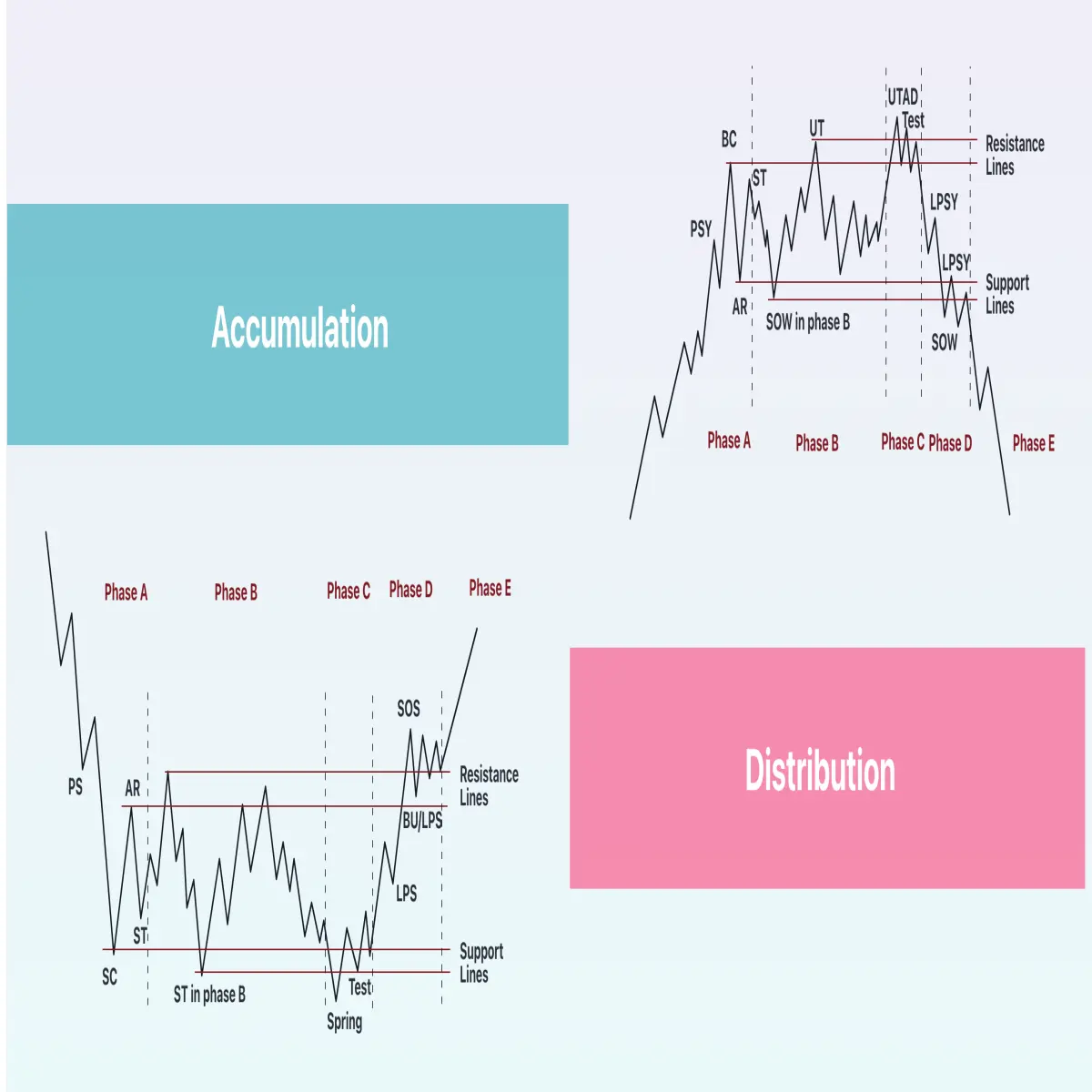
Price often moves within a limited channel—parallel lines connecting extreme highs and lows, or a wider zone—revealing this movements. A sloping channel, like rising bottoms or falling peaks, hints at underlying strength or weakness from buyers or sellers. By the way, If the intent or trading range isn’t clear, trader should zoom out to a larger time frame or switch asset for good.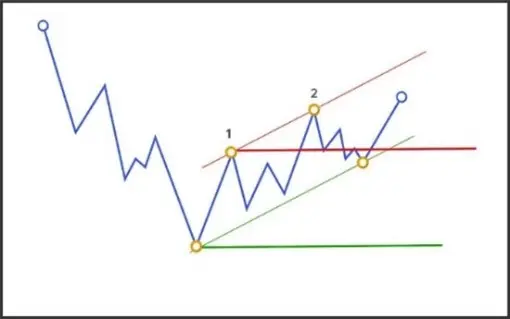
Operators accumulate or distribute a quantity based on the size of their venture and the anticipated profit. Large interests “lay the foundation” when planning a campaign. The greater the preparation, the larger the potential move. Similarly, the more developed the structure, the greater the confidence—but the lower the potential reward. Typically, a stock distributed to the public is later re-accumulated at a price three times higher than its original level.
By mastering these phases, recognizing key signals, spotting volume and price signals, you can understand the market as operators, aligning with smart money rather than fighting it, and turning price movements into opportunities rather than mysteries.
In this article, all content is inspired by or directly taken from Richard Wyckoff's books and teachings, and I'm proudly his student. If Wyckoff's wisdom resonated with you, share your thoughts or trading stories below.






