The gas war of Ethereum Network in the past made users unhappy because they had to pay incredibly high gas fees for a single transaction. The is due to high congestions of Ethereum Network, which we normally refer to L1 blockchain. Luckily, nowadays the traffic of Ethereum Mainnet has been significantly reduced by introducing the on-chain activities into various L2 blockchains which are mainly based on either Optimistic Rollup or ZK Rollup technologies.
Generally speaking, users have to move fund into the particular L2 blockchain to begin interacting with various Dapps in its ecosystems. In other words, users have to deposit some money into L2 blockchain to get stared. The funding sources are normally from another blockchain of the same wallet or from centralized exchanges such as Binance, OKX, Coinbase and so on.
Some well-known L2 chains such as Arbitrum, Optimism, zkSync, Starknet etc. have drawn a lot of attention and obviously, various types of Dapps are continuously building to enrich their ecosystems. The advantage of L2 include faster transaction speed, lower fees and friendly EVM interfaces that make users easy to participate. Obviously, there are many L2 chains like Linea, Base, opBNB, Scroll etc. coming up one after another recently.
To connect with different L2 chains becomes more and more important since people are likely to hold multi-chain assets. Each blockchain is independent but not isolated. Token transfer between different chains happens every day in today’s crypto market.
Cross-chain bridges therefore play an important role on the communications among different blockchains. As the rapid development of L2 ecosystems, we definitely need a number of bridges to link with each other.
From the practical viewpoint, there are several kinds of cross-chain bridges available in today’s crypto market.
Official Bridges:
Official bridges are recommended by the official projects. Basically the official bridges allow transferring tokens from L1 to L2 and vice versa. It usually refers to deposit ETH on Ethereum Network into another L2 chain.
For example, people are able to utilize zkSync Era official bridge to bridges their ETH token on Ethereum to zkSync Era chain, which is one of the famous L2 blockchains.
Another example like Linea bridge is also very popular recently.
L2 bridges:
In addition to the official bridges, there are plenty of third-party bridges available. Many third-party bridges enable transferring tokens between two different L2 blockchains.
For instance, Orbiter, Stargate, Bungee etc. are all popular cross-chain bridges mainly aiming at L2 blockchains.
Based on the characteristics of L2 bridges, they can be further classified into several subtypes.
- Typical L2 bridge
They enable token transfer between two specific L2 chains. For example, DeFi users may send ETH from Arbitrum to Optimism network.
- L2 Refuel bridge
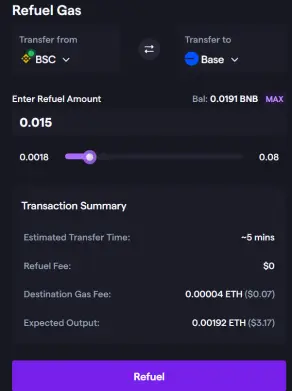
It is worth to mention that sometimes users may lack of gas in the particular blockchain. Therefore, bridging a few amount of money from another chain is a good idea to solve this problem. For example, users may bring a little BNB on BSC network into Base chain via Bungee. At this transaction, a few amount of BNB on BSC chain will be transferred and swapped into ETH on Base chain. The above bridging process is also known as refuel, and Bungee is one of the famous L2 refuel bridges. The source chain could be either L1 or L2, and the destination chain could be either L1 or L2 as well.
- BTC Bridge
Unlike other L2 bridges, the BTC bridge focuses on BTC token among a couple of chains, and enables them to be swapped each other. For instance, people can bridge BTC from Optimism to Arbitrum network.
L2 to L1 bridges
It is common and easier to bring assets from L1 to L2 because they can be completed via most bridges. On the other hand, bringing assets from L2 to L1 normally identified as withdraw, and may take much longer than usual. As mentioned easier, official bridges usually have the withdraw function that bringing tokens from L2 to L1. However, it is not recommended if you want to received fund immediately because users are likely to wait for several days to get their money back.
Let’s look at an example. According to the Arbitrum’s official document, withdrawing ETH from Arbitrum (L2) to Ethereum Mainnet (L1) via Arbitrum Bridge will take at least 7 days.
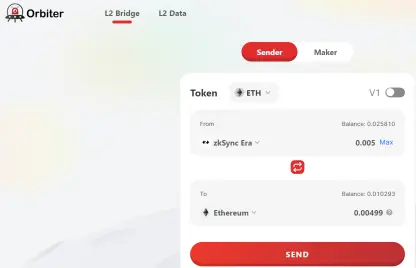
Compared with the official bridges, some third-party bridges provide really good user experience to shorten this waiting period. One of the practical bridges that I personally in favor is Orbiter’s L2 bridge. By using Orbiter’s bridge, you are able to transfer tokens from L2 to L1 just within a couple of minutes.
Bridge Aggregator
What is bridge aggregators? Instead of bridging tokens directly, bridge aggregators normally make use of third-party bridges to accomplish cross-chain assets transfer or swap.
The working principle of bridge aggregators is searching for the best route from various DEXes and bridges, and then achieving the expected cross-chain token transfer, just similar to many DEX aggregators.
Therefore, the bridge aggregator may not have its own liquidity or only have limited liquidity on its pool.
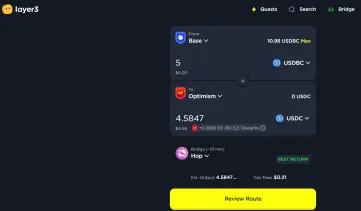
For example, XY Finance is a kind of bridge aggregator. Another well-known task platform Layer3 also launched its bridge function recently, which is in fact a bridge aggregator.
EVM and non-EVM bridges
As the EVM chains dominate the crypto market, the most majority bridges are EVM bridges. Most L2 chains such as Base, zkSync, Linea, Arbitrum, Optimism, opBNB, Scroll etc. are all EVM chains. The connection among these L2s relies on a number of bridges as mentioned above. In addition to EVM chains, some non-EVM chains such as Aptos, Sui are famous L1 chains.
To bring L2 assets to non-EVM chains requires another type of bridges. Aptos Bridge is a typical cross-chain bridge that has the following features.
- A bridge connecting EVM and non-EVM chain
- Not only a L1 bridge, but also bridging L2 to L1
Testnet and Mainnet bridge
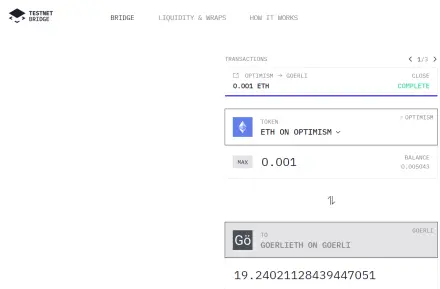
Testnet Bridge is a very special cross-chain bridge because it bridges mainnet with testnet. It means that you spend your real money (on mainnet) to exchange some fake money (on testnet). Looks ridiculous, right? Not at all. Testnet Bridge was so popular in the past few months as many airdrop hunters collected large amount of Goerli ETH (one of Ethereum testnet chain) for doing tasks. Many faucets almost ran out of Goerli ETH, and some of them could only supplied limited test tokens, which lead to the high demand of Goerli ETH.
By using Testnet Bridge, people could pay a little amount of Optimism ETH, Arbitrum ETH, or Ethereum ETH to exchange enough Goerli ETH.
NFT bridges
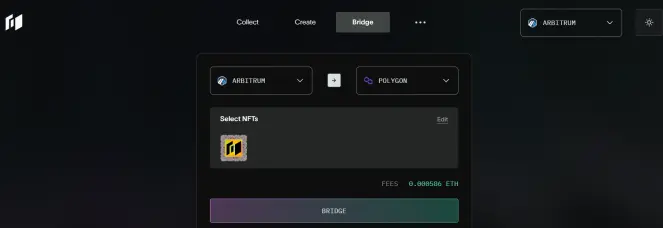
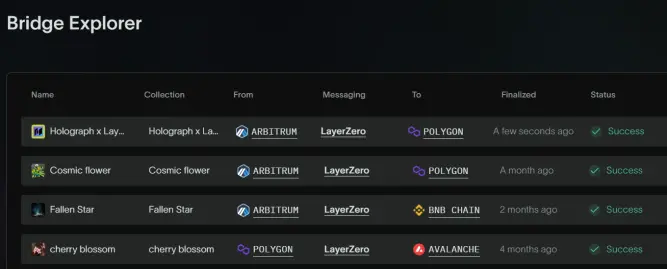
As the name indicated, NFT bridges are the bridges carrying NFTs from one chain to another chain. Nowadays NFT bridges support many L2 blokchains. Two of the representative NFT bridges are zkBridge and Holograph. For example, users can mint a particular NFT on Arbitrum chain, and then bridge it to Polygon network.