
Blockchain and International Payment System Revolution.
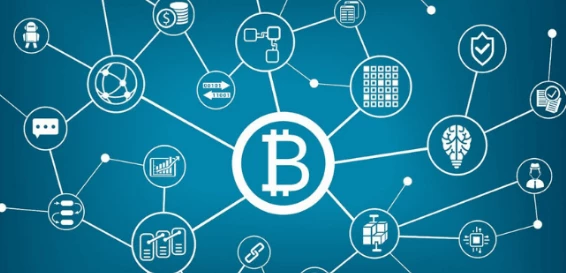
Not only technology activists, at this time there have been many groups of investors, the community of traders and especially the lay people who began to wonder how Bitcoin can be an alternative currency with a change in value and a return on fantastic investment.
But do you understand, Bitcoin doesn't want to be able to grow as long as this is without the support of Blockchain innovation?
For Bill Gates, founder of Microsoft, he said that BITCOIN (with the support of Blockchain innovation) has attractive energy because it facilitates the transaction process.
Bitcoin is better than conventional money because it is able to be transacted without the need for a physical hand-over process, and is sure to solve a large number of transaction problems that generally take time and pay.
What is the Blockchain?
Mastering the "basic" interpretation of Blockchain does not really require a background in learning data technology or pc. In this post, the description overrides what the Blockchain wants to be simplified so that it is easily understood by the lay reader.
The blockchain is basically a distributed information storage system, where each recorded information is secured by an eternal and irreplaceable cryptographic key so that efforts to change the recorded information can be detected very easily.
To be easy to imagine, let's analog the Blockchain like a big novel.
Now imagine that the big novel was copied up to 100 times and then distributed. Each copy of the great novel has recorded the initial transaction by the Agus and the Budi. Then, how is the process of recording the next transaction after the big novel distributed? All owners, aka 100 major novelists, want to simultaneously record the next transaction with the system layout and the exact same value.
Because this provision of recording big novels is shared, Blockchain innovations are known to be very comfortable and very difficult to rig. Curious, how much effort must be made to cheat this large distributed novel system?
Well, on the Blockchain, each "Block" has the same role as each page in the big novel. Each transaction that has been interwoven, from the very beginning to the latest, will be arranged in chronological order and secured by the cryptographic key in each Block, from which the Blockchain designation or Block sequence originates. Conversely, each of the major novelists is Miners with the robustness of large computations to compile a chronological password that leads to the creation of a Block unit.
Why is Blockchain the Eye of Crypto Money?
The large distributed novel system (Blockchain) was first introduced in 2008 by a pseudonym Satoshi Nakamoto in a proposal titled, "Bitcoin: A Peer-to-Peer Electronic Cash System".
In the proposal, the title Blockchain is still not mentioned, but the basic concept underlines Bitcoin as an alternative electronic payment through peer to peer verification. Bitcoin offers easy transactions between sellers and buyers anywhere and anytime, without the need for authorization from institutional parties (clearing agents, banks, etc.)
This alternative online payment proposal is indeed interesting because it is able to cut fees and the long bureaucracy of traditional online payments. But what is actually more revolutionary is how the Bitcoin system (with Blockchain support) is able to authorize the transfer of ownership of Digital objects from one party to another without the mediator and the impact of double-spending.
When before Blockchain innovations are encountered, Digital objects (for example, file, music or film information) can easily be duplicated, so that anyone who has an original copy can spread duplication to others indefinitely. Well, double-spending is a phenomenon where one tries to transfer something Digital object to another party but the Digital object has been duplicated more than once. Certainly, because of this weakness, the Digital object is out of value.
Alternatively, Digital object transactions must be verified by intermediaries or third parties such as clearing agents (banks) or centralized servers to check authentication in their network. New problems arise again from dependence on these third parties, are trust-gap and attack-vulnerability. The assumption is that third-party service users are forced to trust third parties even though their main server is something that can be hacked by irresponsible parties.






