
What is Cashing In and Out?
Cryptocurrencies are omnipresent on the internet, and many services adopt crypto payment methods. Many tout that privacy is an important factor, and that BTC as one decentralized cryptocurrency is only getting stronger. To be able to use those payment methods though, you first have to own crypto. For experts and seasoned crypto miners, this is a no-brainer, but for Joe Average this is a tricky topic. You have to navigate different platforms with very different fee models, be aware of common and not so common crypto scams, and make sure that you don't make a mistake in handling cryptic network addresses.
At the same time, if you own crypto, you may want to exchange it into hard cash - as the real world still very much relies on it. There are options to cash out on your crypto, and some are more expensive than others, some faster, some more practical, and some more anonymous. Depending on your needs, you may want to choose different paths whenever you are willing to exchange your crypto for cash in hand.

In this article I'll give an overview of cash flows between the most common platforms and money handlers, and will list some of the limits and fees that current platforms charge you for depositing or withdrawing your cryptocurrency. I'll cover the technological hurdles behind transaction costs, give a brief intro into how to get started on mining, and what you need to be aware of that happens in the background while you deal with coins.
Get some Crypto!
Now to get you started, how do you acquire cryptocurrency at all? There are numerous ways to do so, with some of the most prominent examples being:
- Buy crypto on exchanges: Small to large exchanges offer various terms for exchanging your Fiat money to the crypto of your choice. They usually require you to pay a percentage of the amount you want to convert.
- Play games: Play to Earn has become a common model on the internet, and basically lives off players either watching ads or buying virtual items that support them in their games. The playtime and successes in your game of choice usually decides how much you earn. Usually, they pay you in their own dedicated coin that you can convert to other more widespread coins on exchanges.
- Do sports: After Play to Earn, there's Move to Earn. In recent years, multiple platforms have arisen that offer you coins for sharing your physical activities. This usually concentrates on running or moving in general. Some platforms require you to buy NFTs to be able to participate, some come for free and incentivize you to watch ads. They also usually pay you in their own coin, convertible at exchanges.
- Answer surveys: Paid surveys have been around far before the internet, and they reached well into the digital age. There are many providers for getting paid in crypto for answering surveys. Usually they have entry level questions that decide whether a certain poll or survey is interested in your profile; if not, you're out. If you match the profile they're looking for, you get to spend up to an hour answering questions. Payment depends on the length of the survey, and comes in various coin types.
- Earn Bounties: When people are in need of help from professionals, they may be willing to pay in crypto. Platforms exist that facilitate this kind of need, connecting you to people that need your skills.
- Directly funding masternodes: Being a validator pays, and with some platforms you can pay with Fiat while earning crypto.
- Exchange crypto for cash: There are platforms that allow you to negotiate a deal with a local crypto owner. You then meet up and close the deal by you handing out cash and them sending the digital assets.
- Mine your own coins: Coins on Proof of Work chains commonly originate from specialized miner nodes that "generate" them. You can purchase or rent miner hardware to do this for you, or run mining software on your home PC or cloud server to achieve the same. These coins come at the cost of electricity and potential hardware investments to speed up the process (such as high-end CPUs and GPUs, depending on the coin you mine).
- Sell gift cards for crypto: On certain platforms you can exchange your existing gift cards (Amazon, iTunes, Steam, Google Play, etc.) for crypto. While the rates are usually low, it certainly is a way to become a crypto owner.
- Buying things for other people: Recently, specialized business models arose that allow you to spend your own Fiat cash to buy items for other people, and receive crypto in return.
There are more ways to achieve crypto ownership, and the above should give you an overview of some of the most common ways. I'll go into more detail on the above further down in this article and will give you a good overview of the pros and cons of each.
Crypto Exchanges
For most people that are not working with in-depth crypto technology, crypto exchanges are the prime source for coins of all flavors. They usually offer a custodial wallet (i.e., someone else owns the private keys) to manage your funds, and allow members to freely exchange between a pool of coins with each other. Each coin pair has an exchange rate that is determined in real time based on asks and bids. Some crypto exchanges allow you to buy crypto with credit cards or via bank transfer.

Here is a selection of the most popular platforms:
- Binance: One of the largest exchanges around. If you buy crypto through your credit card, they charge you a small 1% fee of the amount you want to buy. After that, you're free to use their markets for exchanging coins, or to withdraw your money in whatever currency you now own. They have other deposit options, too. Has a mobile phone app that is well-suited for both, managing your crypto and for trading. They offer a credit card that uses your crypto balance for purchases, so no need to exchange before you spend.
- Crypto.com: Similar to Binance, and also quite large, Crypto.com allows you to buy coins through credit cards and other means, too. They charge you 2.99% for buying through your card, have a mobile app for various platform tasks, and offer a credit card you can use to spend your crypto.
- Coinbase: This exchange has been around for very long. they also offer a custodial wallet, allow to trade between different pairs, charge a fee for crypto purchase, and offer a crypto credit card. Coinbase allows to buy very small amounts of crypto using Fiat currency, down to $2.
- Graviex: Supports many Altcoins that are not supported on major exchanges. Graviex looks a lot simpler than other platforms, but some coins can only be exchanged on this type of service. They also offer a crypto Faucet - by clicking a button that enables every other minute or so, you get small amounts of various lesser-known coins directly into your account. Maybe someday they are worth something, so better start early!
Play to Earn
The ever needed attention of consumers for products of all kinds has led to the rise of Play to Earn. Here, you play games, solve small, tasks, or invest in gaming-related items to build up a steady inflow of coins. The games you play either depend on you buying NFTs beforehand, or you watching ads. In both cases, you get a gaming experience that rewards you with more or less cryptocurrency, depending on how much time (and in the NFT case, money) you spend on it.

There are many, many Play to Earn games out there. I put together a small selection that features some of the most common concepts:
- Rollercoin: A crypto mining simulation. With cute pixel graphics, you get to stock up on miner hardware and mine real currency. This means that you try to achieve a relevant fraction of the overall (in-game) network hashing power and are rewarded with BTC, Solana, ETH, DOGE, or others. For an in-game coin type RLT (Rollercoin Token) you can buy more miners. You can also get more hashing power by playing mini-games offered on the site. Rollercoin is a fun game, and the interface is straight forward.
- Reward XP: Gives you a task-wall like selection of options to earn "Experience". The higher experience, the more rewards (in crypto) you can earn. Tasks include filling our surveys, playing games, watching movies, and fulfilling other miscellaneous tasks.
- Womplay: Offers a task-wall of options you can perform to earn tokens that can be exchanged for cash or other coins.
- Sandbox: A simulation of land-ownership. You buy "land" NFT tokens and can build your own environment and world. Within that world, you earn currency; depending on how much you pay for NFTs, you get the opportunity to earn more currency in-game.
Move to Earn
After Plat to Earn was successful, companies turned towards monetizing physical activity - Move to Earn was born. The idea is always the same: A player allows a mobile app to track their physical activity (such as walking or running) and earns tokens or coins for the amount of activity they logged. This comes in different flavors, where you either have to buy an NFT before you can participate, or you can start for free. I'll cover both cases here.

The following Move to Earn platforms are among the most common at the moment:
- Sweatcoin: A free to play platform. They log your daily physical activity based on how many steps you make. It works in the background and you can check in once or twice a day. For the steps you take with this app active, you earn a virtual currency called "Sweatcoin". Inside the app you can redeem these coins for offers on a marketplace, reaching from almost free subscription offers down to popular gift cards for Amazon, Uber, or alike (if they are currently stocked). While Sweatcoin is fun, they plan to start their own cryptocurrency $SWEAT later this year. For each Sweatcoin you own, you'll receive one $SWEAT in this one-time token generation event. No-one knows yet what $SWEAT will be worth, but if you don't want to miss out, let me invite you!
- STEPN: STEPN operates on the Solana blockchain and has been around for a while now. It's not straight forward to get in (you'll need an invite code distributed through Discord), it can be an interesting experience to try it out. To participane in STEPN, you have to acquire NFTs in the form of running shoes. These provide you with "Energy" that you can use to earn actual coins through running. The yield has been a lot higher, and these days earning serious coins is more about "breeding" their NFT running shoes into new ones and selling these than running.
Survey Answering and Earning Bounties
Answering surveys for market research firms has always been a way to earn small amounts of money. They need you to answer questions, try to figure out whether you fit the profile they're looking for, and reward you if they get the information they want. Different platforms offer different coins and survey types, so it's a bit of trial and error to see which one works best for you.
Other options for earning crypto for actual work is earning bounties by fulfilling tasks other people ask for. I listed "Gitcoin", as this is very tech affine.
- Freecash: Basically a large task wall, pays in crypto of various kinds.
- Gitcoin: You log in with your GitHub account and get access to coding related tasks, listed together with the reward you can expect. If you are good at coding, and have free time on your hands, this may be a great way to put some money aside!
- Lootup: Offers paid surveys, quizzes, gives you crypto for watching videos or shopping online. They offer giveaways, wheel spinning and lots more.
- YouGov: Offers you a wide selection of surveys, and asks you specifically for permission which fields of information you provide should be used for market research. Fun and elaborate platform.
Directly buying Crypto for Masternoding
Masternoding is the act of funding a validator or master node of a blockchain. For this you get rewarded in fractions of transaction fees, in the currency that is being validated. Also see my other article on Validators for more info on the background of Masternoding.
Some platforms allow you to buy masternodable currencies with Fiat money (e.g., credit cards, bank transfers) and get paid in crypto:
- YieldNodes: Allows payment of masternodes with Fiat currency via thirdparty platforms, then uses the resulting BTC and/or ETH to fund masternodes on various blockchains. You can request withdrawals in BTC, SAPP, or USDT.
Exchanging Crypto for Cash
If you don't want to trust online services or just want to exchange hard cash for digital assets without dealing with with trading, you can try one of the "local" platforms. I listed two popular ones that connect you to crypto owners or seekers in your area. You negotiate a deal, meet up, close the deal and leave.
- LocalBitcoins: Specializes on Bitcoin, connects you to fellow BTC enthusiasts/owners/seekers in the area.
- LocalMonero: Specializes on Monero, connects you to fellow BTC enthusiasts/owners/seekers in the area.
Mining
Cryptocurrencies have their root in Proof of Work (PoW) blockchain development. The predecessor of today's crypto ecosystem is Bitcoin (BTC), which is still being mined today. How much you can earn with mining depends on the computational power you have at hand. Initially, BTC was easy to mind, and the network difficulty (the amount of time required to mine a block on the blockchain) was low. With developments in GPUs, mining algorithms, and ASICs, mining got less profitable for amateurs and went more into large-scale spaces and investments.
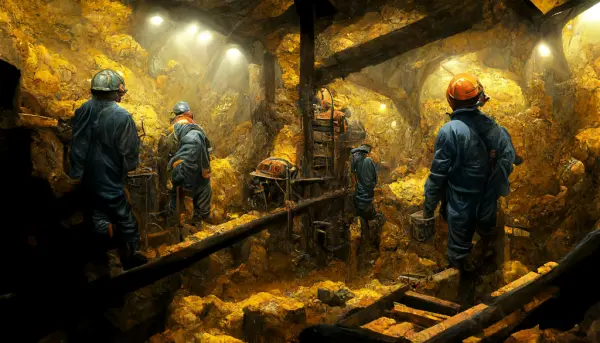
You can still join in on the mining fun. Good mining software is available with multiple options, and they all offer great features. You can either mine solo (try to find a block all by yourself), or join a mining pool and hare the effort (and the reward). Here is a list of common crypto mining software that you can use out of the box:
- t-rex: A versatile miner that works well on NVIDIA GPUs. They take a 1% developer fee (1% of all hashes goes to the developers' wallet). Works on Windows and on Linux. Works on the command line.
- CudoMiner: Meant to be used from a Laptop or Desktop PC. Can also be used to manage mining farms - great if you like sleek interfaces and want to get started with mining!
- GMiner: Works well for both, AMD and NVIDIA. Supports the most popular algorithms.
While solo mining might sound promising, there's a good chance you'll never ever find a block with consumer-grade hardware. By joining a pool, you can diversify the risk and get a steady in-flow of crypto:
- Nicehash: Nice interface, great mobile app and website. Nicehash has been around for very long, and has great reputation. They also offer a profitability calculator for you to check whether you can make any money with your hardware. You need to sign up in order to use NiceHash. They allow you to convert your hard-earned crypto into Fiat currency on-platform (for a small fee) and send it right to your bank account.
- 2miners: Offers many popular algorithms and coins. Easy to use, can be used as a pool or for solo mining. No signup required.
- flypool: Offers a rather small collection of coins, but pays out much earlier than other platforms. Super easy to use, great interface, all anonymous.
One thing to take note of is that you can also rent mining/hashing power from others. A popular platform for doing so is Nicehash, where you can decide which algorithm you want to rent, how much power you need, and which pool it should go to. You then offer how much you want to pay and see if any miners are willing to provide you with hash power.
Selling Gift Cards
If you have Amazon/iTunes/Google Play/Steam or other gift cards at hand and want to cash out on them, their native platforms usually don't let you do that. There is a number of services on the web that specializes in this, connecting sellers and buyers of these cards. Here I'm listing the one I had the most positive experiences with that has been around for a very long time already:
- Paxful: Here, you can exchange just about everything crypto and finance: Gift cards, crypto currency, PayPal money, various payment services, credit card money. You have to do your own research on which offers are legit, but Paxful offers a great Escrow service and lots of instructions that should keep you safe.
Buying Things for other People
There's a way to earn crypto through making purchases for other people. In this case you usually pay in Fiat currencies, and as a reward receive crypto.
- Purse.io: On Purse, you buy items for other people through Amazon. You pay Amazon for the items you purchase with your own Amazon balance (or gift cards), Purse then manages shipment to your counterpart. Once the shipment was confirmed by the buyer, you get payed in crypto. On Purse, buyers want to buy with a discount between 5-33%. That means as the one that pays for the goods on Amazon, you receive far less crypto that you paid in Fiat, but you can still call yourself owner of crypto now! On the other hand, if you're looking for a good deal (33% off doesn't sound too bad?), send them your bitcoin and paste an Amazon link. The system does everything else, and gives you a very straight forward, no hassle process to order your items and connect you to a willing crypto "Earner".
Conclusion
With the information above, you should have a basic set of knowledge to enter cashing in and out of crypto. Whether you want to pay for, earn, or mine coins, you're set to go. You now know where to exchange coins and how to convert them back into national currency. Stay tuned for more info, I'm eager to write about the next in-depth topic!






