
For years, centralized exchanges (CEXs) like Binance, Coinbase, and others dominated the digital asset landscape. They provided a familiar entry point: smooth dashboards, order books that resembled traditional finance, and seemingly simple user flows. For many, this became the standard template of what “trading” should look like.
Yet, the limitations of this model are becoming clearer with every market cycle. While CEXs were critical in onboarding millions of users, their design choices, close systems, opaque execution, and rigid dashboards are fundamentally at odds with the ethos of decentralization.
The future of DeFi will not emerge by copying CEXs. It will be built by creating new forms of UX and trading environments that unlock the potential of decentralization, interoperability, and user control.
Press enter or click to view image in full size
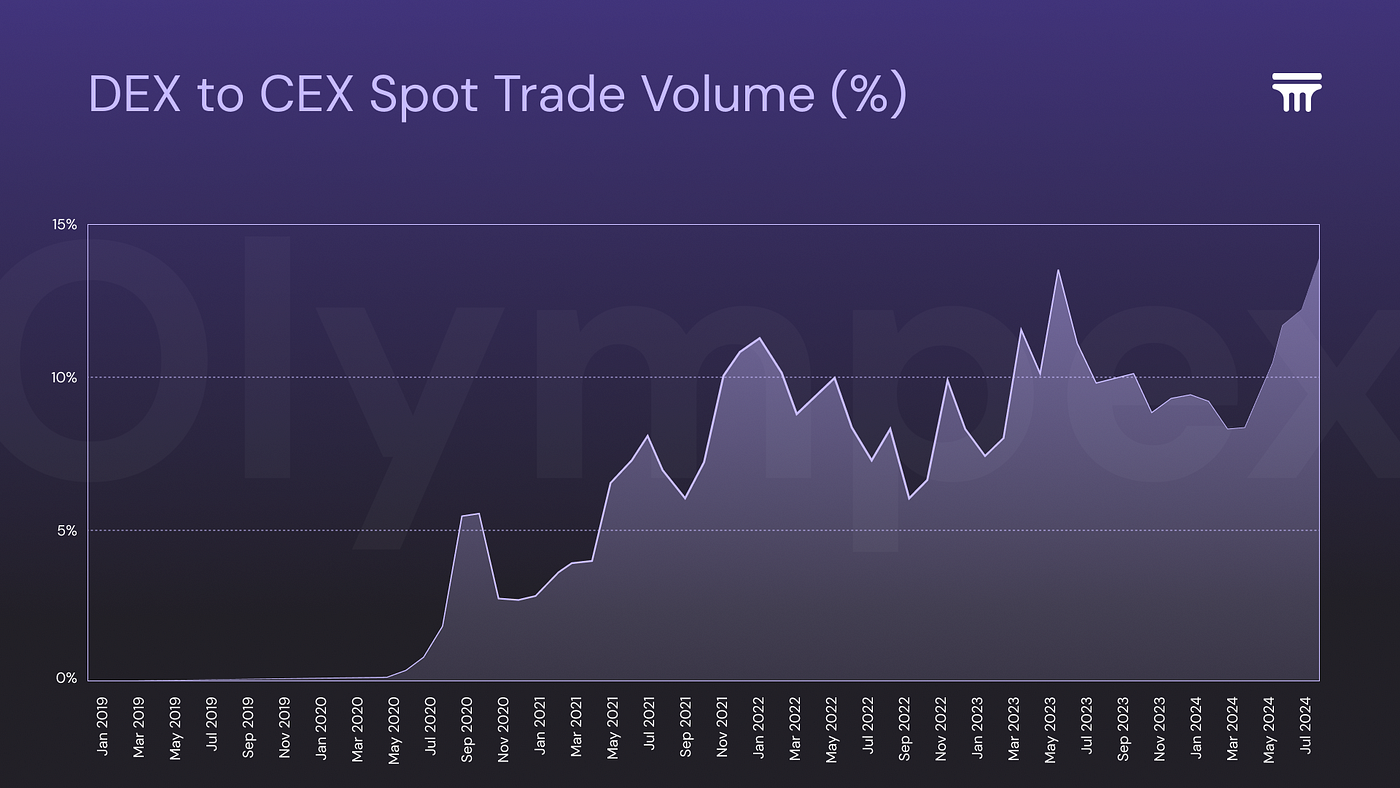
“DEX to CEX Spot Volume (%)” — CryptoRank
The Limiting UX of CEX Models
CEXs thrived because of their simplicity. But simplicity, in their case, comes at the cost of flexibility and transparency.
- Closed and rigid dashboards: What you see is what the exchange wants you to see. Order books, balances, and even market depth are filtered through centralized APIs.
- Lack of personalization: Whether you’re a beginner placing your first trade or a professional arbitrageur, the interface is the same. Advanced needs often require external tools or APIs, which remain restricted by centralized permissions.
- Isolated systems: CEXs operate like walled gardens. Moving assets in or out is not only cumbersome but also subject to fees, delays, and custodial risk.
In short, CEX UX is built for dependency, not autonomy.
Press enter or click to view image in full size
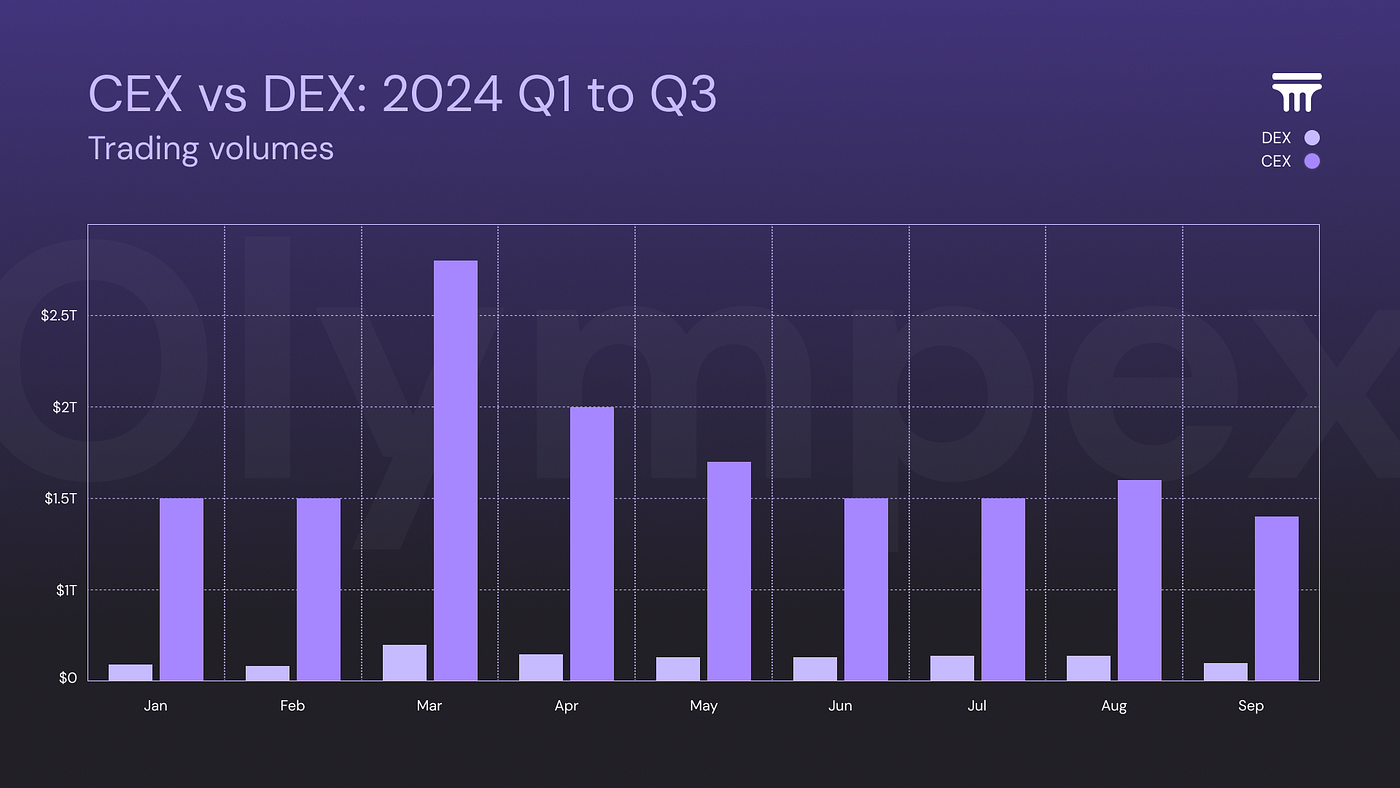
“CEX vs DEX: 2024 Q1 to Q3 Trading Volumes” — DeFiPlanet
Why UI Without DeFi Logic Fails
Some platforms attempt to replicate Binance-like dashboards on-chain. On the surface, this feels familiar to traders who see charts, order books, and balance panels. But without integrating DeFi-native logic, this approach becomes an empty shell.
- Interoperability gaps: Assets may move within one protocol but remain siloed from the wider ecosystem.
- Opaque execution paths: If the UI hides how contracts interact, the user has no visibility on routing, slippage, or hidden MEV extraction.
- Re-centralization risks: A single UI that dictates access to liquidity replicates the very centralization DeFi aims to replace.
DeFi that borrows aesthetics but abandons transparency is just centralization under a new name.
What a Decentralized UX Should Look Like
A true DeFi-native user experience must move beyond copying CEXs and instead embrace decentralization at every layer:
- Dynamic and modular design: Traders should be able to build their own dashboards. Liquidity routing panels, risk monitors, and yield analytics users decide what matters.
- Transparent execution: Every swap, bridge, or order connects directly to verifiable smart contracts, not opaque servers.
- Customizable strategies: Risk thresholds, routing preferences, and collateral choices are set by the user, not by a central operator.
- Native to DeFi functions:
- Cross-chain liquidity and routing.
- Multi-asset collateral systems that unlock capital efficiency.
- Automation for risk management and rebalancing.
- Permissionless integrations that let other protocols plug in seamlessly.
This model doesn’t just make DeFi more “user-friendly,” it ensures UX is aligned with decentralization, not against it.
Press enter or click to view image in full size
The Olympex Approach
At Olympex, we design around these principles:
- Modular dashboards: A professional trader can track liquidity flows across multiple chains, while a beginner can focus on a simple swap interface, both from the same platform.
- Cross-chain integration: Our design is not confined to one ecosystem. Instead, assets and functions move seamlessly across Layer 1s and Layer 2s, bridging liquidity without user friction.
- User-centric design: Olympex does not assume a single “average user.” Our architecture adapts to different profiles, ensuring every participant, from retail to institutional, benefits from decentralization.
This approach allows us to mirror the complexity of DeFi without overwhelming the user, offering transparency and autonomy alongside accessibility.
The end of centralized trading does not mean the end of smooth UX. It means the end of copying outdated models that were never designed to empower users.
CEX-style dashboards represent a comfort zone. But that comfort comes at a cost: lack of transparency, limited functionality, and dependence on an operator’s goodwill. DeFi’s purpose is to break those walls, not repaint them.
The next generation of DeFi will succeed not by imitating the past but by creating a new language of interaction where liquidity is unified across chains, transparency is the default, and the interface adapts to the user rather than restricting them.
At Olympex, we believe that the true challenge is not simply offering DeFi with a prettier front end. It’s building an ecosystem where every design choice serves decentralization: autonomy over custody, transparency over opacity, and adaptability over rigidity.
The end of centralized trading is not the end of trading, it’s the beginning of a more open, resilient, and user-empowered financial system.





