
Speculation has always been part of crypto’s DNA. The introduction of AI into speculative trading amplified both opportunity and risk. Faster analysis, pattern recognition, and automated execution create the illusion of control in an environment where volatility remains fundamentally unpredictable.
This blog focuses not on passive automation, but on AI-driven speculation, where speed and leverage are often pushed to extremes.
How Artificial Intelligence Analyzes Crypto Markets for Speculation
Speculative AI systems focus on short-term signals: momentum shifts, volatility spikes, liquidity gaps, and behavioral patterns. These models thrive in fast-moving environments but are highly sensitive to noise and regime changes.
The U.S. algorithmic trading market growth chart illustrates how speculative and execution-focused AI tools are becoming mainstream infrastructure rather than niche experiments.
Press enter or click to view image in full size 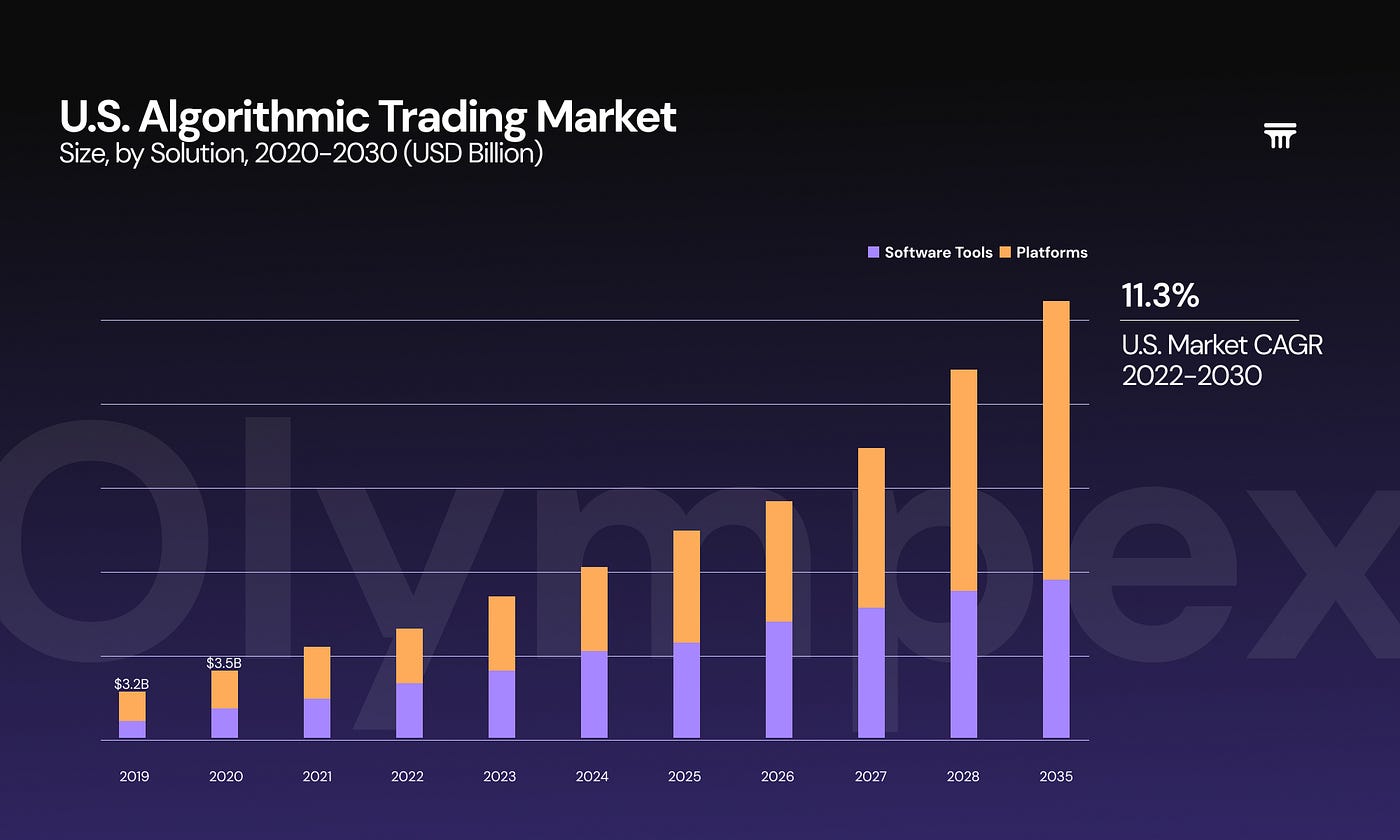
Advantages of Using AI for Speculation
AI can detect micro-patterns invisible to human traders, execute instantly, and remove emotional hesitation. In highly liquid markets, these advantages can produce short bursts of strong performance. However, speed alone does not equal sustainability.
Core Risks: Over-Optimization, Model Failure, and Extreme Volatility
Speculative AI systems are especially vulnerable to overfitting. Strategies that perform exceptionally well in backtests often collapse under real market conditions. Rapid drawdowns are common when volatility breaks historical norms.
The AI trading performance chart comparing closed P/L, net profit, and benchmark performance demonstrates how even profitable systems experience sharp equity swings, reinforcing the importance of capital controls.
Press enter or click to view image in full size 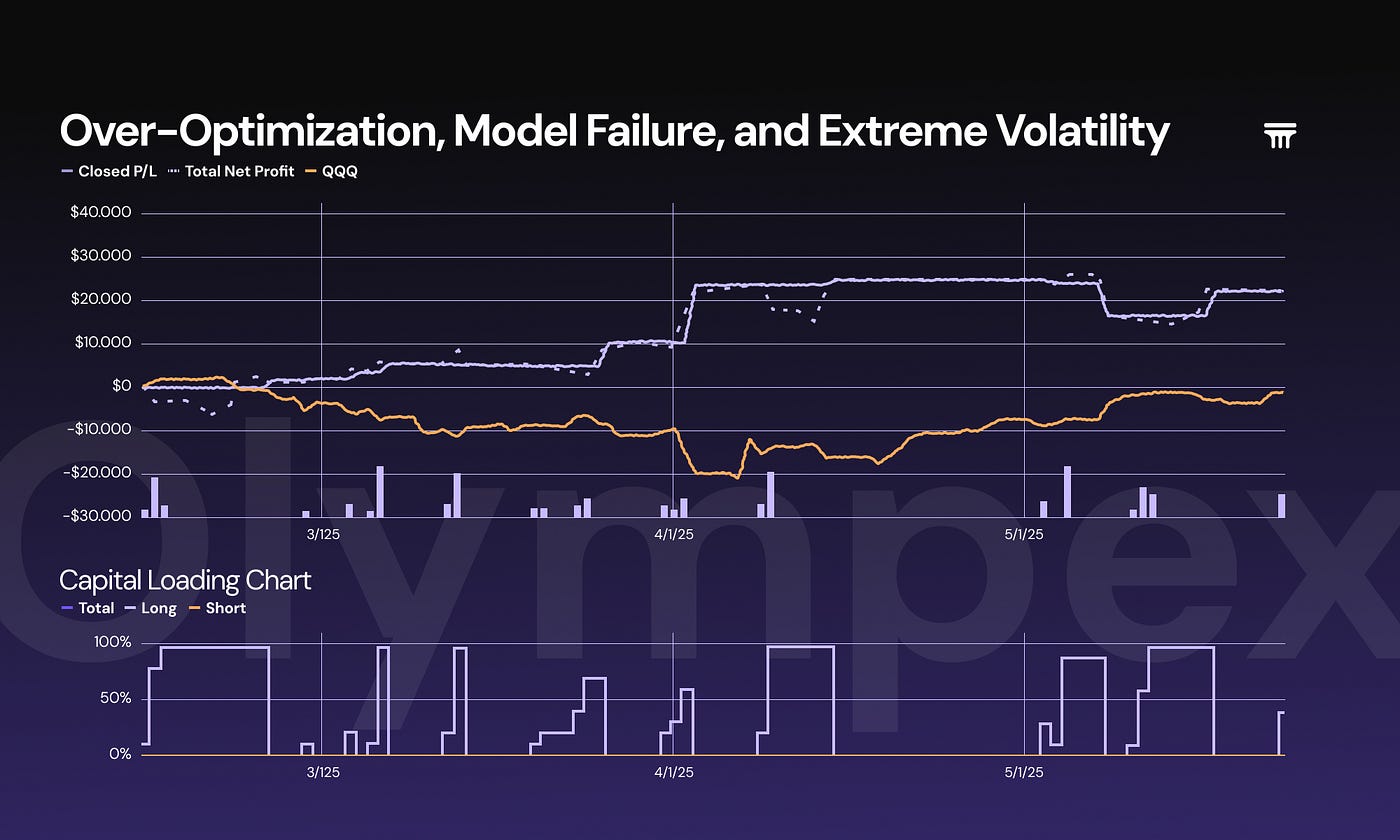
Strategies to Minimize Losses While Speculating with AI
Losses are unavoidable when speculating with AI. The objective is not elimination, but containment. The first and most effective control is strict position sizing. Regardless of model confidence, each trade should risk only a small fraction of total capital, typically between 0.5% and 2%, preventing a losing streak from becoming catastrophic.
Another key layer is volatility filtering. AI models tend to break down during extreme volatility, where price behavior deviates from historical patterns. Limiting or pausing automated strategies when volatility exceeds predefined thresholds significantly reduces tail-risk events.
Finally, traders should segment capital. Allocating only a portion of funds to AI-driven speculation, while keeping the rest in lower-risk strategies, ensures that model failures do not compromise long-term portfolio survival.
Common Mistakes When Trusting Automated Systems Blindly
A common mistake is assuming that automation equals adaptability. AI models are built on historical data and perform poorly when market regimes change. Without human oversight, traders often continue running failing strategies far longer than they should.
Another frequent error is over-optimized backtesting. Systems that perform exceptionally well in simulations often collapse in live markets because they are tuned to past noise rather than durable signals.
Lack of transparency is equally dangerous. If traders cannot explain why a system takes a position, they lose the ability to identify when it is malfunctioning. Automation should support decision-making, not replace accountability.
Human vs AI Speculation: When to Combine Both
AI is most effective as an execution and pattern-detection tool, not as a standalone decision-maker. It excels at speed, consistency, and discipline. Humans outperform AI when interpreting macro events, regulatory changes, and narrative shifts that models cannot quantify.
The most robust approach is hybrid. Humans define risk limits, market conditions, and activation rules, while AI executes trades within those boundaries. This structure reduces emotional bias without surrendering strategic control. Used this way, AI enhances human judgment instead of replacing it.
Real-World Lessons: Successes and Failures
Some traders use AI to compound small gains consistently. Others experience catastrophic losses due to leverage, poor assumptions, or blind trust. The technology is neutral; outcomes depend on discipline.
The future trends in AI trading graphic helps frame where speculation is heading: deeper learning models, decentralized AI systems, stricter regulation, and more personalized risk profiles.
Press enter or click to view image in full size 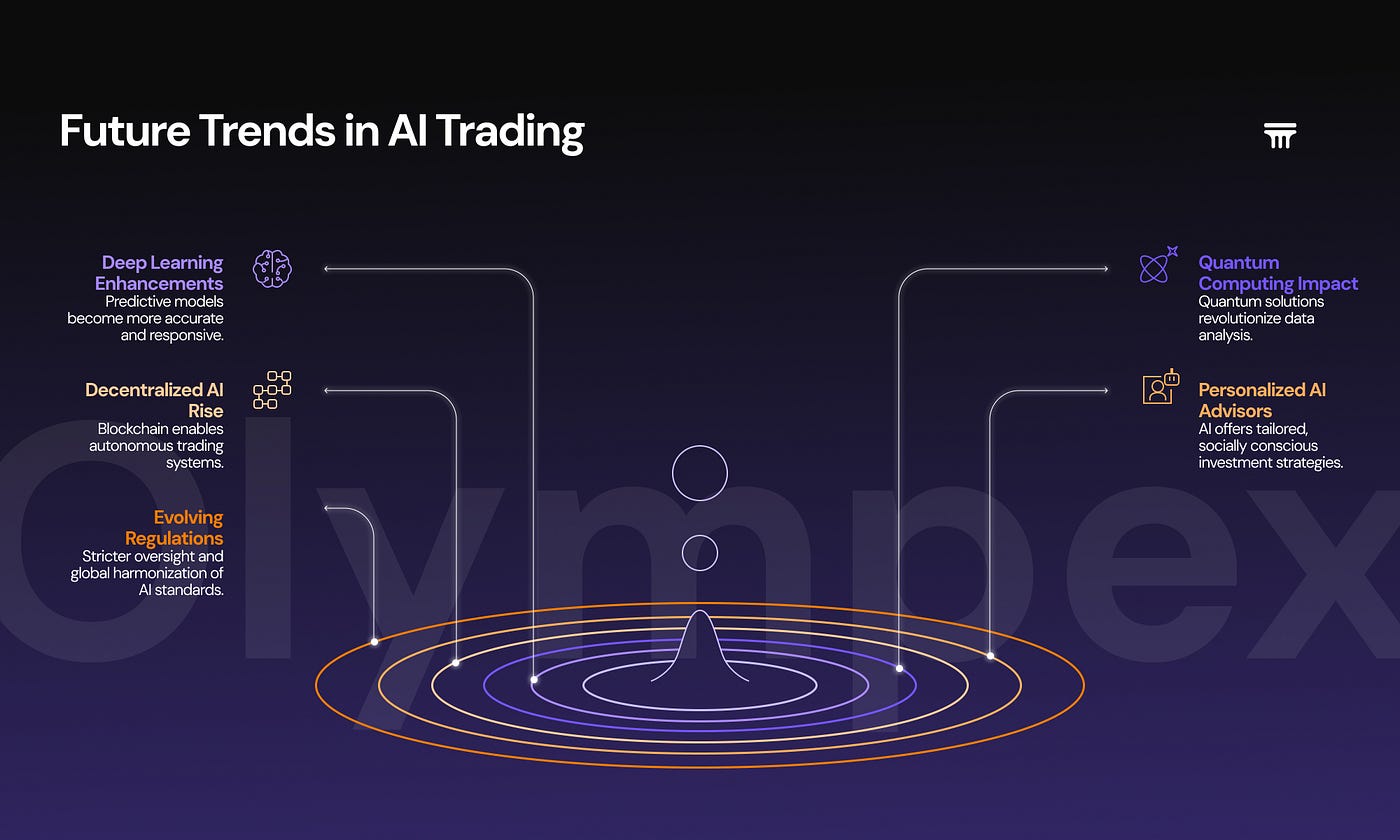
Final Thoughts
Speculating with AI in crypto is powerful but unforgiving. It rewards structure, humility, and risk awareness while punishing overconfidence. AI does not eliminate uncertainty, it accelerates its consequences. Those who survive are not the fastest, but the most disciplined.
🚀 Join the Olympex Community
If you want to learn how to approach automation, speculation, and detect narratives before they arrive, join our Telegram.





