
Sideways markets are uncomfortable. They offer no clear confirmation, no strong headlines, and no immediate validation. To most traders, they feel like wasted time.
But markets do not build major moves in expansion. They build them in compression.
Retail traders measure opportunity by movement. If price is not trending, they assume nothing is happening. Yet history shows something very different. The most aggressive rallies in crypto did not begin with excitement. They began with boredom.
Capital does not chase momentum. It prepares for it.
Press enter or click to view image in full size 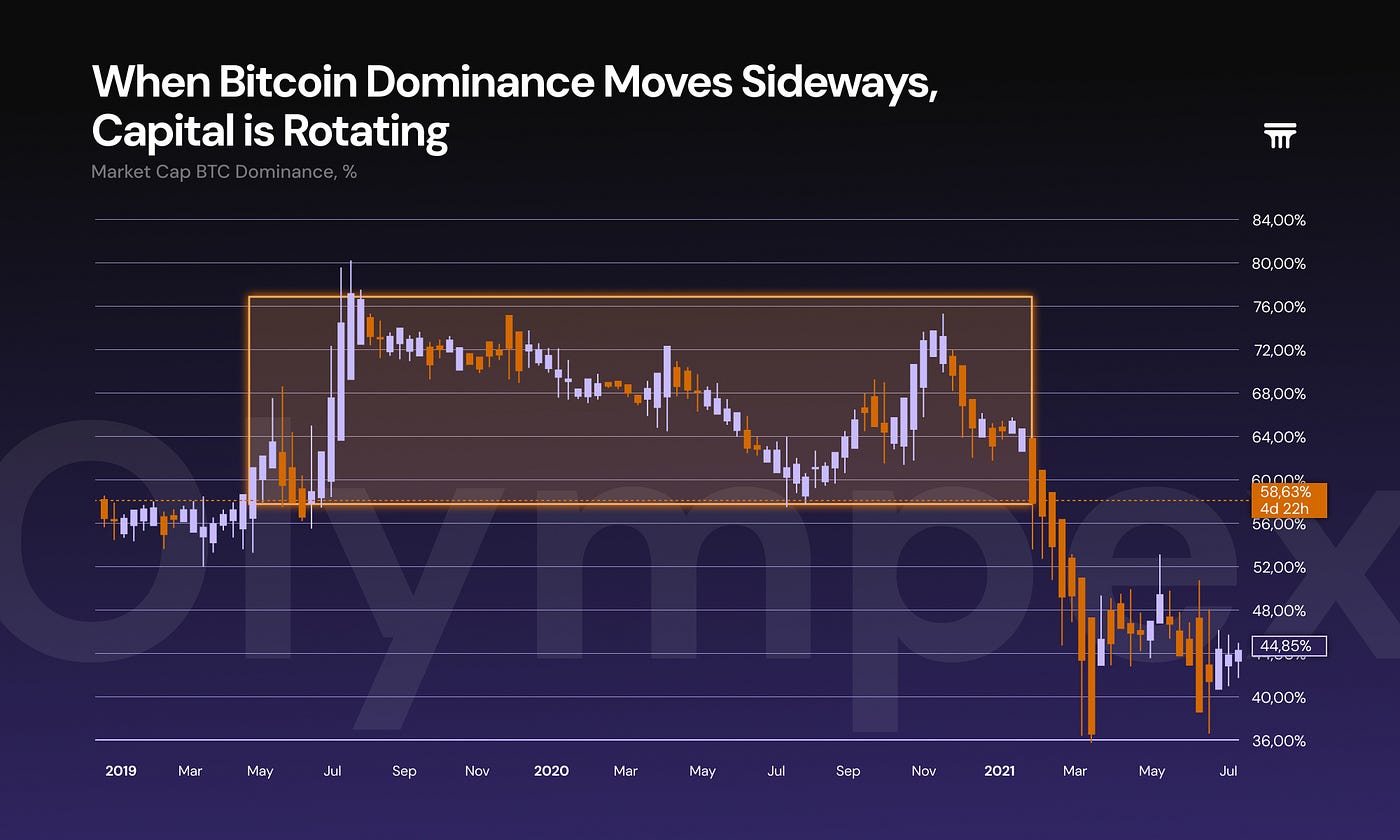
The first chart shows Bitcoin dominance moving in a prolonged sideways structure between 2019 and late 2020. For months, the market appeared directionless. Dominance oscillated within a defined range without committing to a breakout.
This was not indecision. It was redistribution.
While dominance moved sideways, capital was slowly positioning into altcoins. The range was absorbing supply and redistributing liquidity. When the expansion finally arrived, it appeared sudden. But the groundwork had already been laid.
What looks like stagnation is often silent capital rotation.
Solana 2022 to 2023: Compression Before Expansion
Press enter or click to view image in full size
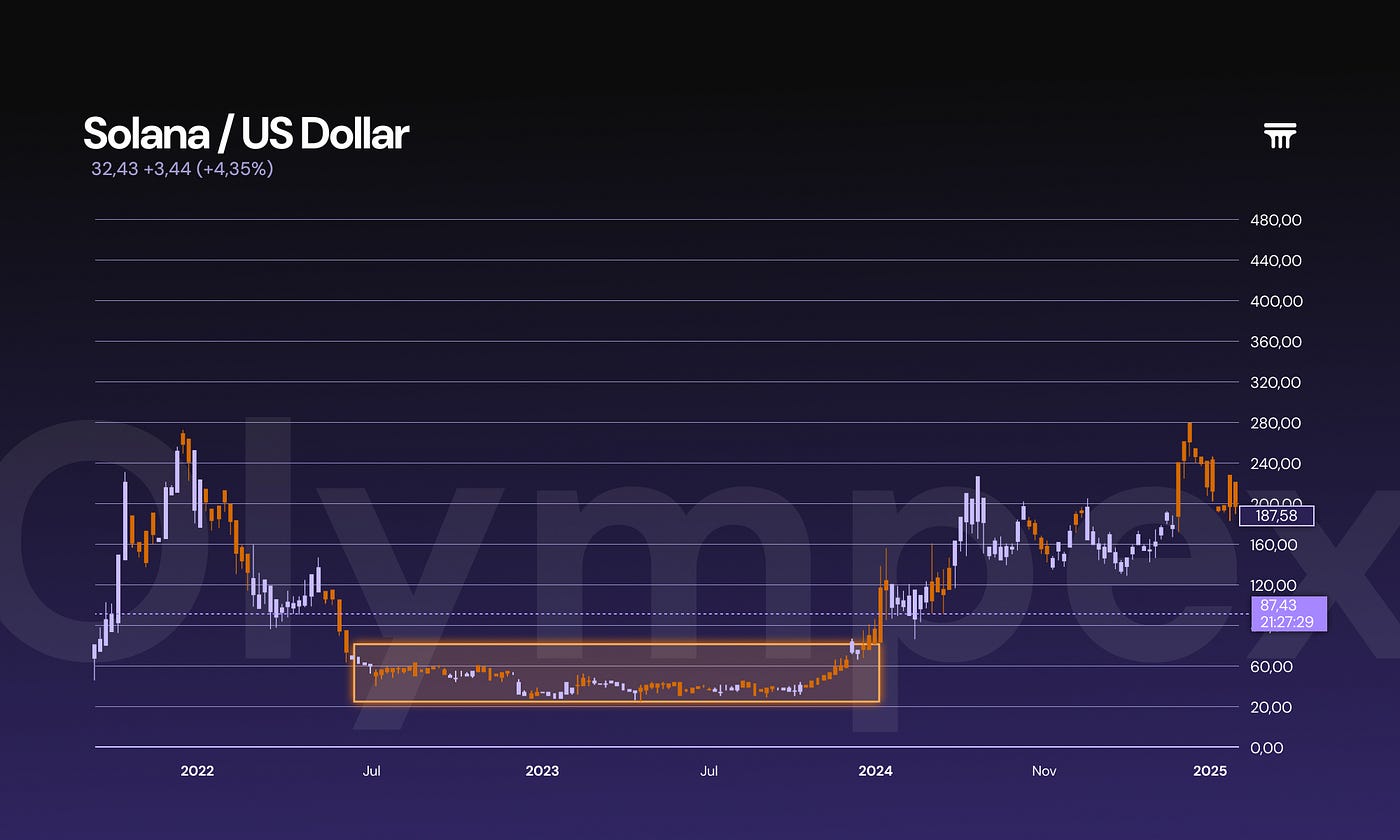
The second chart shows Solana trading in a prolonged sideways range during 2022 and 2023. Volatility compressed. Momentum faded. Price drifted within a low conviction structure.
Many interpreted this phase as structural weakness.
It was not weakness. It was absorption.
Breakouts do not begin from euphoria. They begin from indifference. When the expansion finally occurred, the move was sharp and decisive. But the asymmetric positioning opportunity existed during the quiet months before the breakout.
The rally rewarded patience, not reaction.
Ethereum 2019 to 2020: The Long Boring Base
Press enter or click to view image in full size
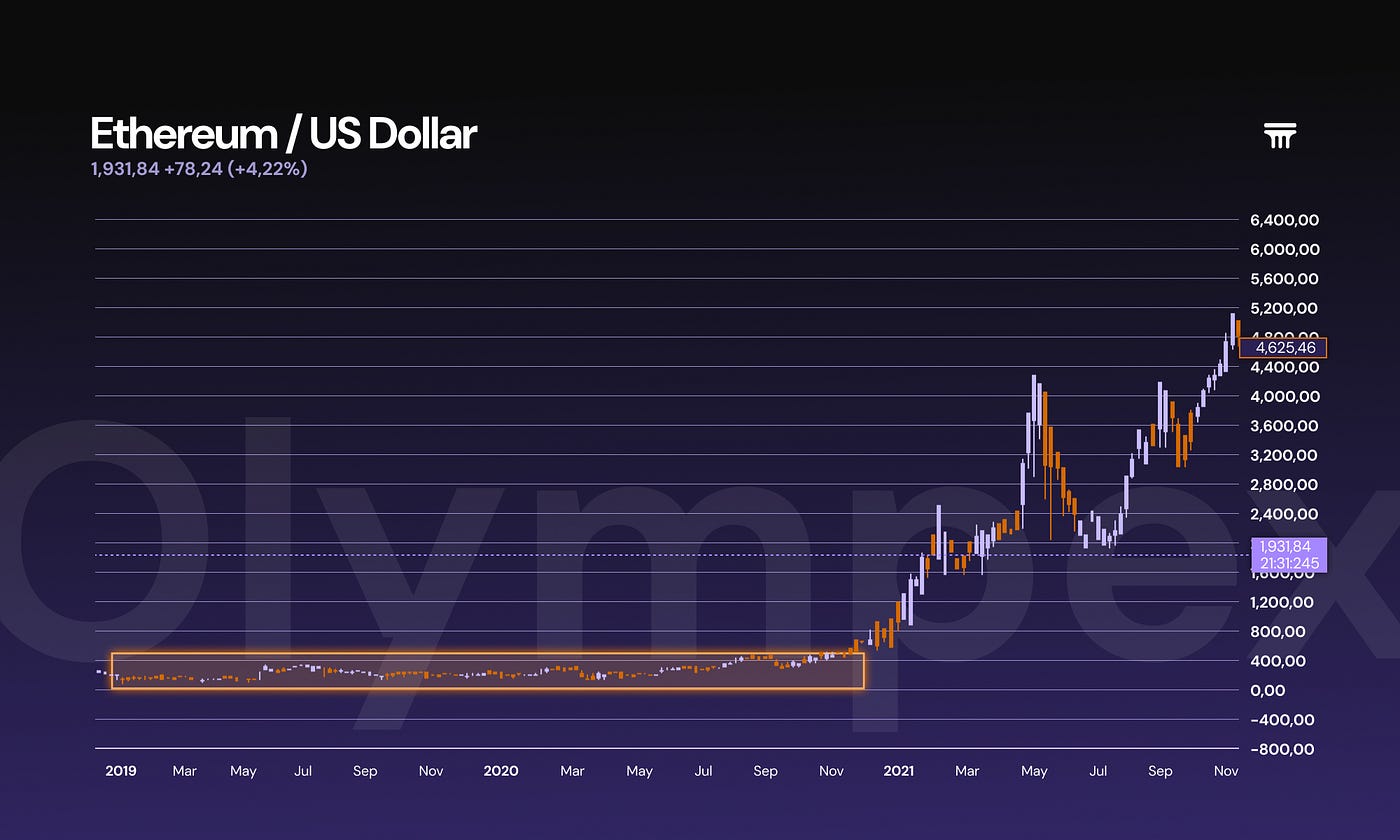
Ethereum’s structure between 2019 and mid 2020 provides another clear example. For months, price traded in a relatively narrow range. There was no dominant narrative. No explosive retail enthusiasm.
Then the expansion phase arrived.
This pattern repeats across cycles. First compression. Then expansion. First silence. Then consensus.
The range was not a lack of opportunity. It was a transfer of opportunity from impatient participants to patient ones.
Why Retail Rejects Sideways Markets
Sideways markets challenge the need for constant action. When there is no clear trend, traders feel pressure to manufacture activity. Overtrading becomes common. Risk increases without structural edge.
In reality, the most important decisions in a range are quiet ones. Defining accumulation zones. Managing position sizing. Observing volume behavior. Monitoring internal market rotation. Sideways markets are where exposure is structured. Trends are where exposure is rewarded.
If this framework resonates, it connects directly with our previous article, “Why Most Traders Are Late, And How Narratives Actually Form,” where we explain how structural shifts are priced in long before retail participants recognize them. Both perspectives revolve around the same principle. Position before consensus.
The Quiet Phase Before Acceleration
Every explosive move in crypto history had a silent phase before it. Every strong narrative began as a low conviction environment. Sideways markets are not dead zones. They are preparation zones.
If you want to see how we analyze current range structures, capital rotation, and positioning strategies in real time, you can join the Olympex Telegram community. That is where we discuss market structure without noise and without emotional bias.
The market does not reward impatience.
It rewards structure built before expansion begins.





