
Rotating Capital in Crypto: How to Use Olympex to Move Between Risk, Yield and Real-World Assets
A practical playbook for reacting to Fed decisions, earnings season, Bitcoin halving cycles and U.S. elections from one non-custodial execution layer.
Crypto markets do not move in isolation. Liquidity rotates between Bitcoin, Ethereum, stablecoins, equities, commodities and defensive assets every time a major macro or political catalyst changes the market’s risk appetite. In the past, traders often needed several exchanges, multiple bridges and too many manual steps to react. Olympex simplifies that process by bringing a DEX aggregator, cross-chain execution, bridge functionality, limit orders and DCA tools into one non-custodial environment. That matters because capital rotation is not just about choosing the right asset, it is also about reaching the best available quote fast enough to act on it.
Why capital rotation matters more than ever
When macro conditions change, correlations shift. A hawkish Federal Reserve meeting can strengthen the U.S. dollar and pressure growth assets. A strong quarter from mega-cap tech can send capital toward the Nasdaq-100 and risk-on positioning. A flight to safety can lift U.S. Treasuries and gold. A new post-halving cycle can pull liquidity back toward Bitcoin and then, later, toward altcoins. The advantage of an execution layer like Olympex is that users can respond to those rotations without abandoning self-custody or fragmenting their capital across different tools.
Through a growing multi-asset menu, users can build portfolios around crypto, stablecoins, tokenized dollars and euros, real-world assets such as gold, silver, oil and copper, yield-oriented instruments such as Treasuries, major equities, and broad benchmarks including the S&P 500. That opens the door to a more mature way of operating on-chain: not only chasing isolated trades, but rebalancing capital according to regime changes.
Why Olympex is well suited for rotation strategies
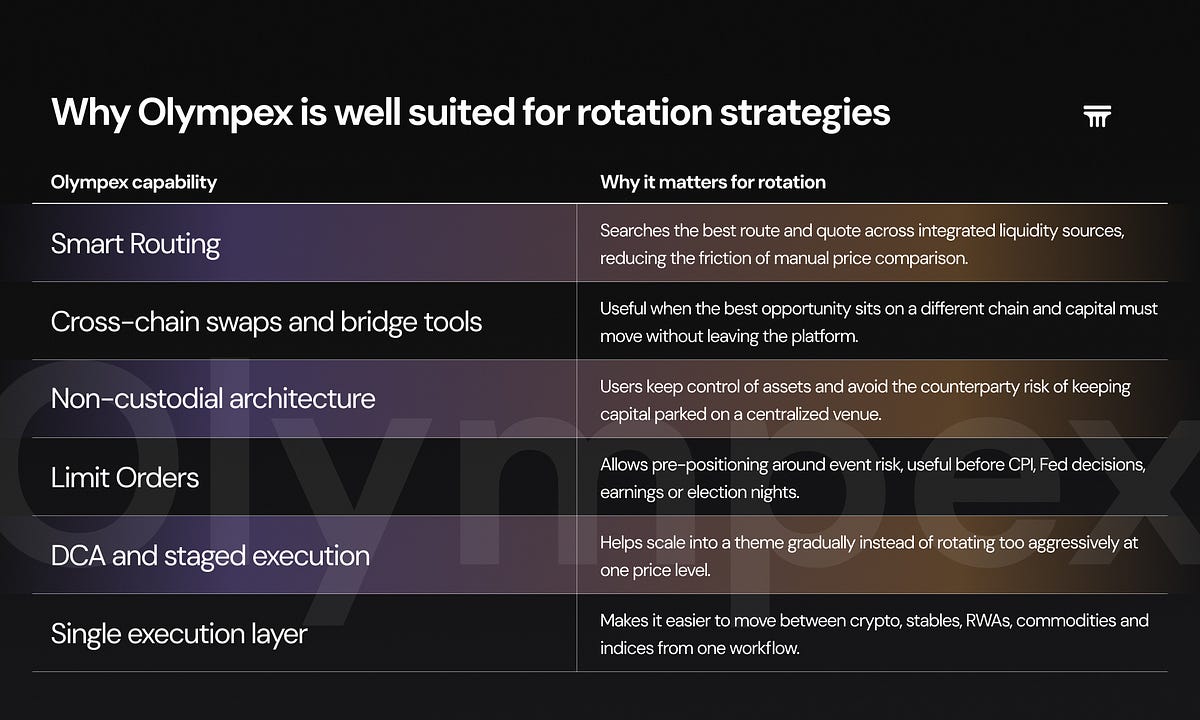
Makes it easier to move between crypto, stables, RWAs, commodities and indices from one workflow.
On a centralized exchange, users often rotate within a more limited menu, depend on the venue’s listed products, and give up custody while they wait. A DEX aggregator flips that experience. Instead of treating capital rotation as a set of isolated swaps, Olympex lets users approach it as an execution strategy built around best-price discovery, portfolio flexibility and cross-asset access.
The four big catalysts that move capital
Use a barbell strategy with risk assets on one side and hedges such as gold, Treasuries and stablecoins on the other until policy direction becomes clearer.
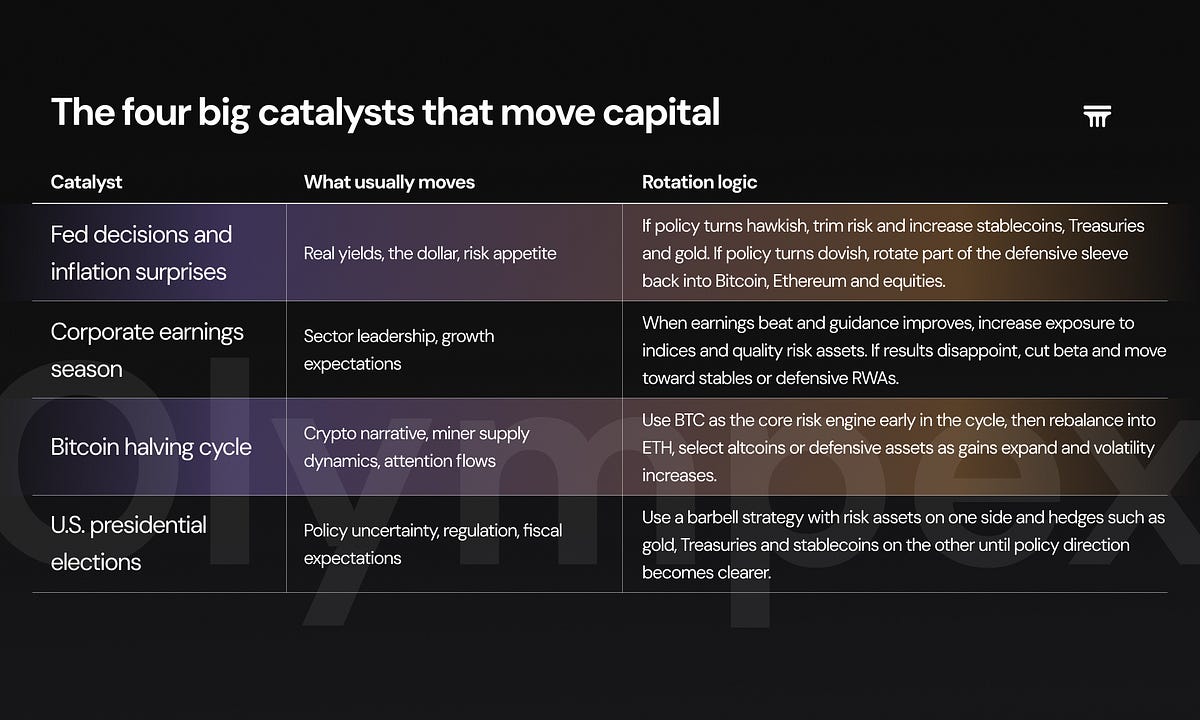
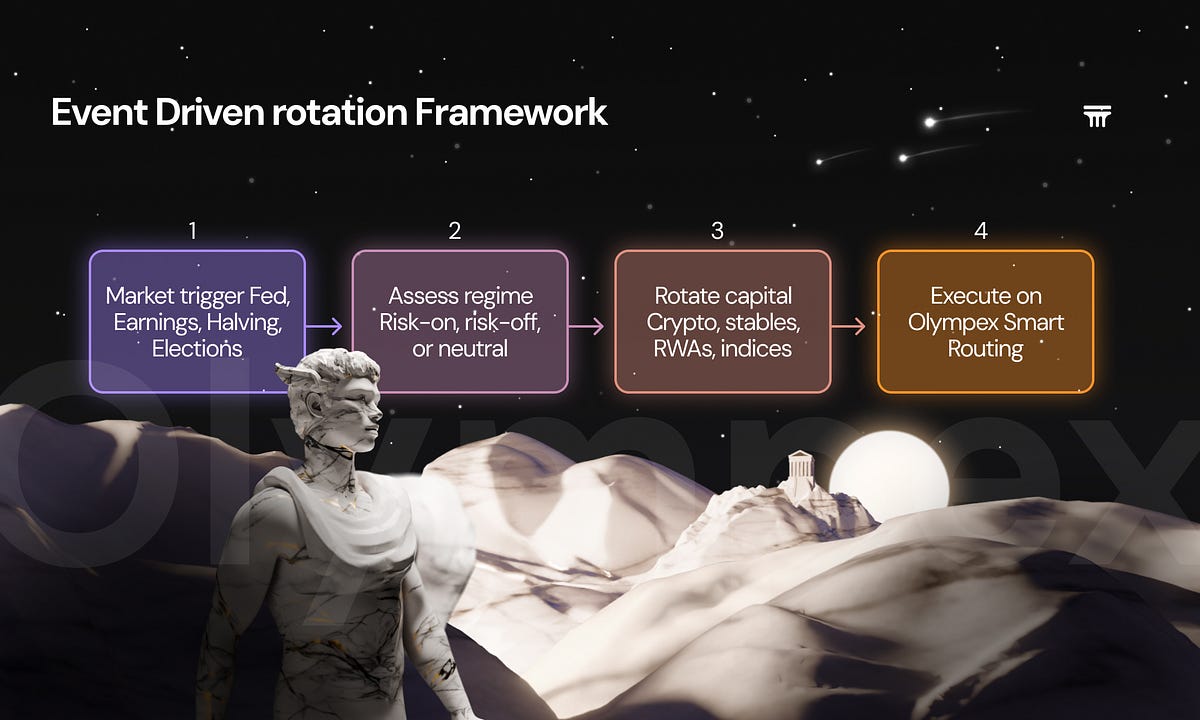
Figure 1. A simple framework for event-driven capital rotation on Olympex.
Three practical rotation strategies
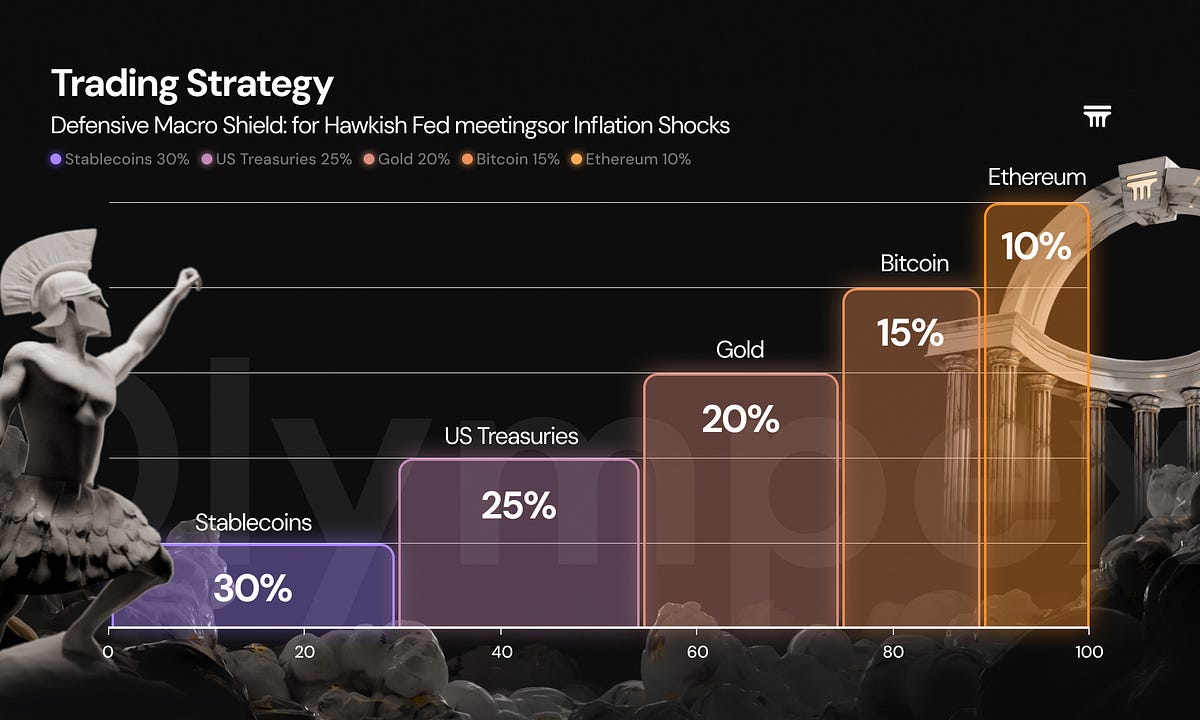
1. Defensive macro shield: for hawkish Fed meetings or inflation shocks
This setup is designed for moments when the macro backdrop turns defensive: sticky inflation, higher-than-expected CPI, a hawkish Fed statement, or a sharp rise in Treasury yields. In those regimes, the goal is not to abandon crypto entirely, but to reduce overall volatility and preserve optionality.
Example allocation: 30% stablecoins, 25% Treasuries, 20% gold, 15% Bitcoin, 10% Ethereum.
Why it works: Stablecoins and Treasuries protect liquidity. Gold helps hedge macro stress. Bitcoin and Ethereum remain in the portfolio so the user still participates if the market unexpectedly regains momentum.
How to use Olympex: Use Smart Routing to rotate quickly out of high-beta positions, deploy limit orders below spot to accumulate BTC or ETH on weakness, and keep the portfolio flexible if the Fed tone changes again.
2. Earnings and growth momentum: for periods of strong corporate results and falling yields
When market leadership is being driven by earnings, AI enthusiasm, or expectations of easier financial conditions, growth-linked assets usually absorb capital quickly. In that environment, the portfolio can lean more aggressively into tokenized equity benchmarks and core crypto beta.
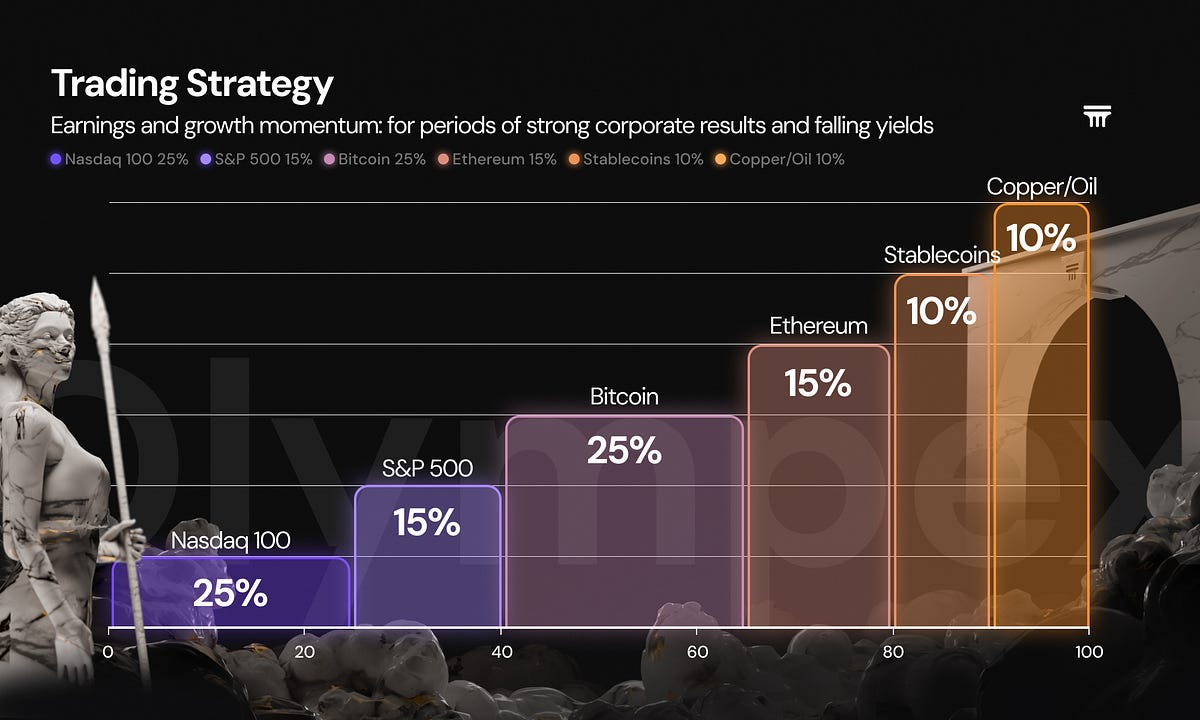
Example allocation: 25% Nasdaq-100, 15% S&P 500, 25% Bitcoin, 15% Ethereum, 10% stablecoins, 10% copper or oil.
Why it works: The index sleeve captures broad growth momentum, while Bitcoin and Ethereum benefit from a general improvement in risk appetite. A smaller stablecoin sleeve preserves flexibility and the commodity sleeve can capture cyclical strength.
How to use Olympex: Rotate part of the stablecoin allocation into indices after earnings confirmation, use DCA to avoid entering all at once, and set limit orders for partial profit-taking into strength.
3. Halving and election barbell: for mixed conviction environments
The Bitcoin halving is usually a long-duration narrative catalyst rather than a one-day trade, while U.S. elections can create short-term uncertainty around regulation, taxation, fiscal policy and the dollar. In these mixed-conviction moments, a barbell strategy can be more effective than making an all-in directional bet.
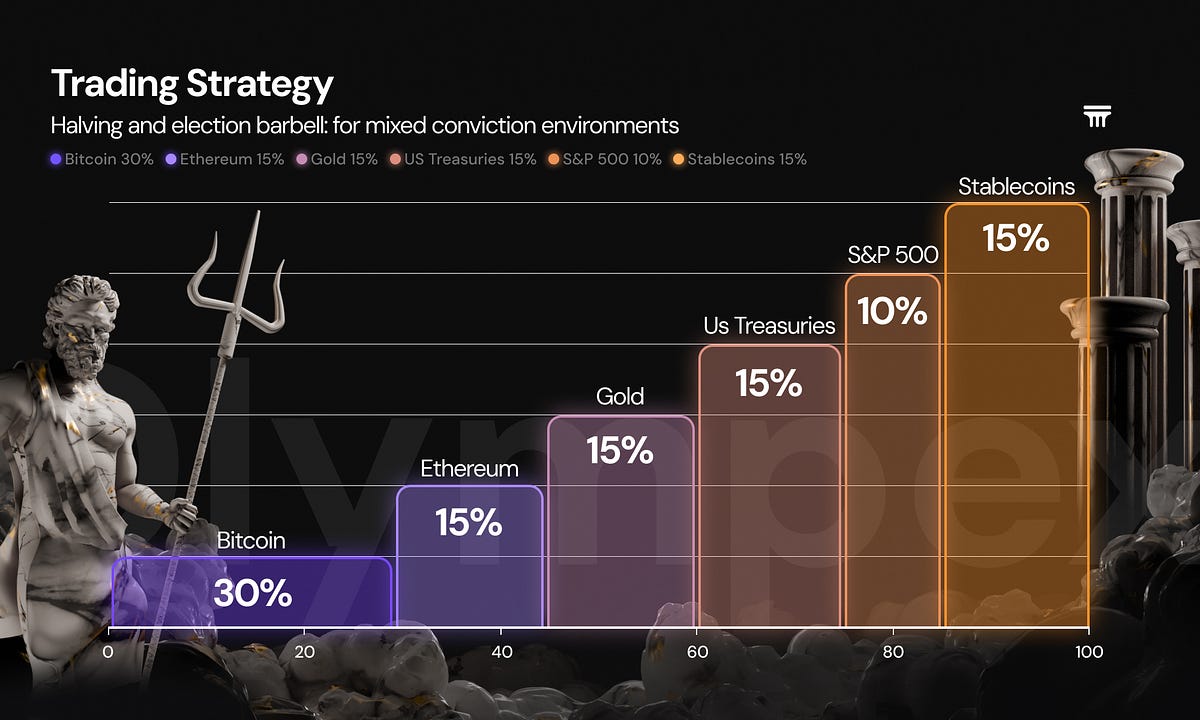
Example allocation: 30% Bitcoin, 15% Ethereum, 15% gold, 15% Treasuries, 10% S&P 500, 15% stablecoins.
Why it works: The crypto sleeve expresses upside if the post-halving trend continues. The hedge sleeve helps absorb volatility if policy headlines or election noise pressure risk assets. The stablecoin sleeve gives room to rebalance when market direction becomes clearer.
How to use Olympex: Keep BTC as the core risk engine, rotate a fraction of gains into gold or Treasuries when momentum becomes crowded, and use cross-chain execution to capture better liquidity if a particular venue or chain offers stronger pricing.
A simple operating model for rebalancing on Olympex
Rebalance back toward neutral, preserving gains and rebuilding dry powder for the next catalyst.
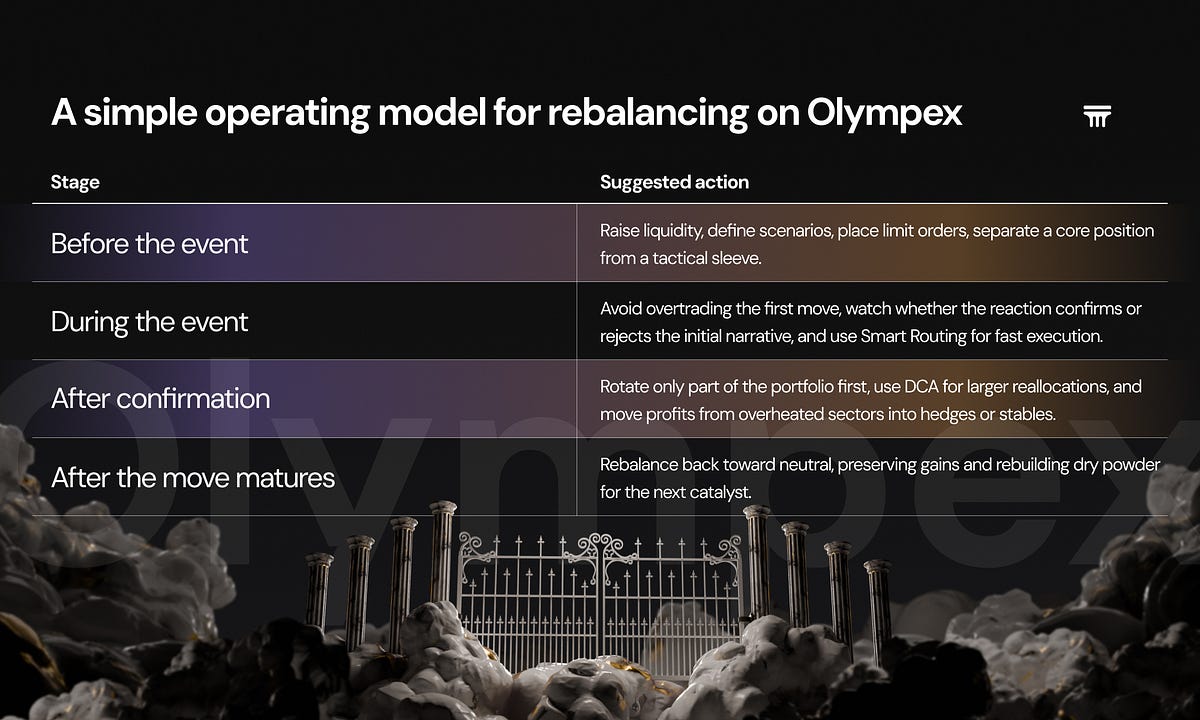
This is where Olympex becomes more than a place to swap assets. It becomes a portfolio management layer for on-chain capital. Users are not forced to choose between crypto and traditional market exposure. They can move between both depending on the cycle, the catalyst and the opportunity cost of staying in one asset class for too long.
Final thought
The deeper the on-chain market becomes, the less sense it makes to think in tribal categories such as only crypto, only stocks or only commodities. The smarter approach is to treat all of them as pieces of one capital allocation game. Olympex helps users play that game more efficiently by combining best-price discovery, non-custodial execution, cross-chain access and a broader asset universe into one workflow. In practice, that means one thing: capital can rotate faster, with more control, and with a strategy that matches the market regime instead of fighting it.
Designer note: The four charts included in this document are also exported as separate PNG files for reuse in Medium, social posts or presentation decks.





