
When NFTs first entered the public conversation, they were often misunderstood. Headlines focused on eye-catching prices, profile picture collections, and speculative trading, creating the impression that NFTs were little more than digital collectibles fueled by hype. Yet beneath that surface narrative, NFTs introduced something far more profound: verifiable digital ownership on open networks.
For the first time, digital assets could be owned, transferred, and proven scarce without relying on centralized platforms. This shift fundamentally changed how value, identity, and access function in online environments, and it continues to reshape multiple industries beyond crypto-native circles.
From Digital Collectibles to Real Digital Assets
The earliest NFTs were simple by design. They represented digital collectibles whose value came primarily from scarcity and social consensus. Over time, however, the market evolved. NFTs began to represent access rights, in-game assets, licenses, memberships, and revenue-sharing claims.
This transition marked a critical turning point. NFTs stopped being static objects and became programmable assets. Ownership was no longer just about holding a token, but about interacting with an ecosystem. This mirrors the broader evolution seen across Web3, where participation and utility increasingly matter more than speculation alone.
24h NFT Volume by Chain
Press enter or click to view image in full size
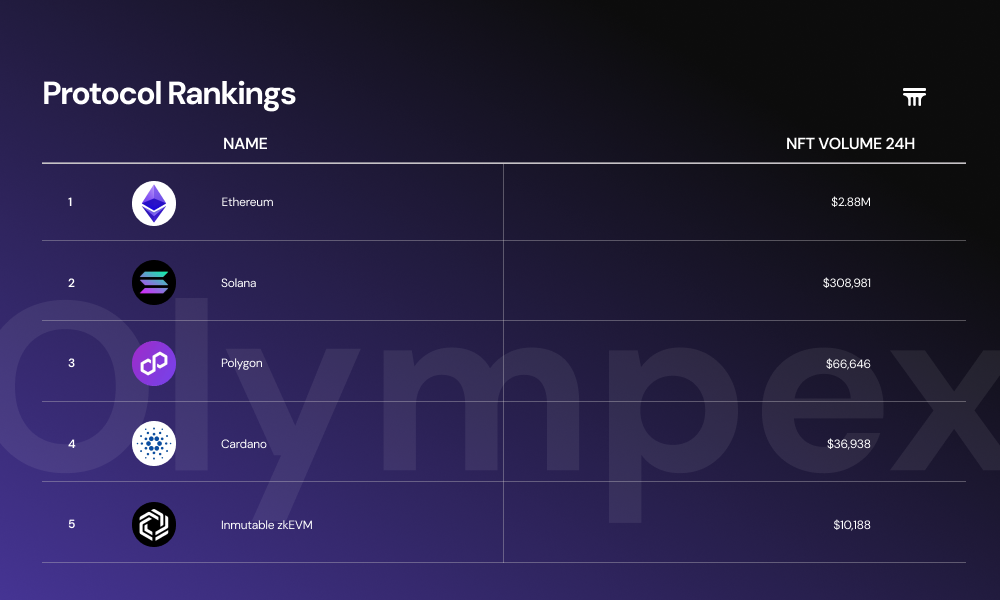
NFT activity is not evenly distributed across blockchains. Most trading volume still concentrates on a small number of networks with strong developer ecosystems, established marketplaces, and reliable infrastructure. This concentration highlights why scalability, transaction costs, and interoperability remain critical factors in the evolution of NFTs.
Types of NFTs and Where They Create Value
Today, NFTs span a wide range of applications. In art and music, they allow creators to monetize directly and embed royalties into secondary sales. In gaming, NFTs represent characters, land, or items that players truly own and can trade freely. In communities and media platforms, NFTs function as access passes, governance rights, or identity markers.
What connects all these use cases is control. NFTs give users ownership that exists independently of platforms. This same shift away from centralized control is explored in “What You Need to Know About the End of Centralized Trading”, where users regain autonomy over assets and access.
Press enter or click to view image in full size
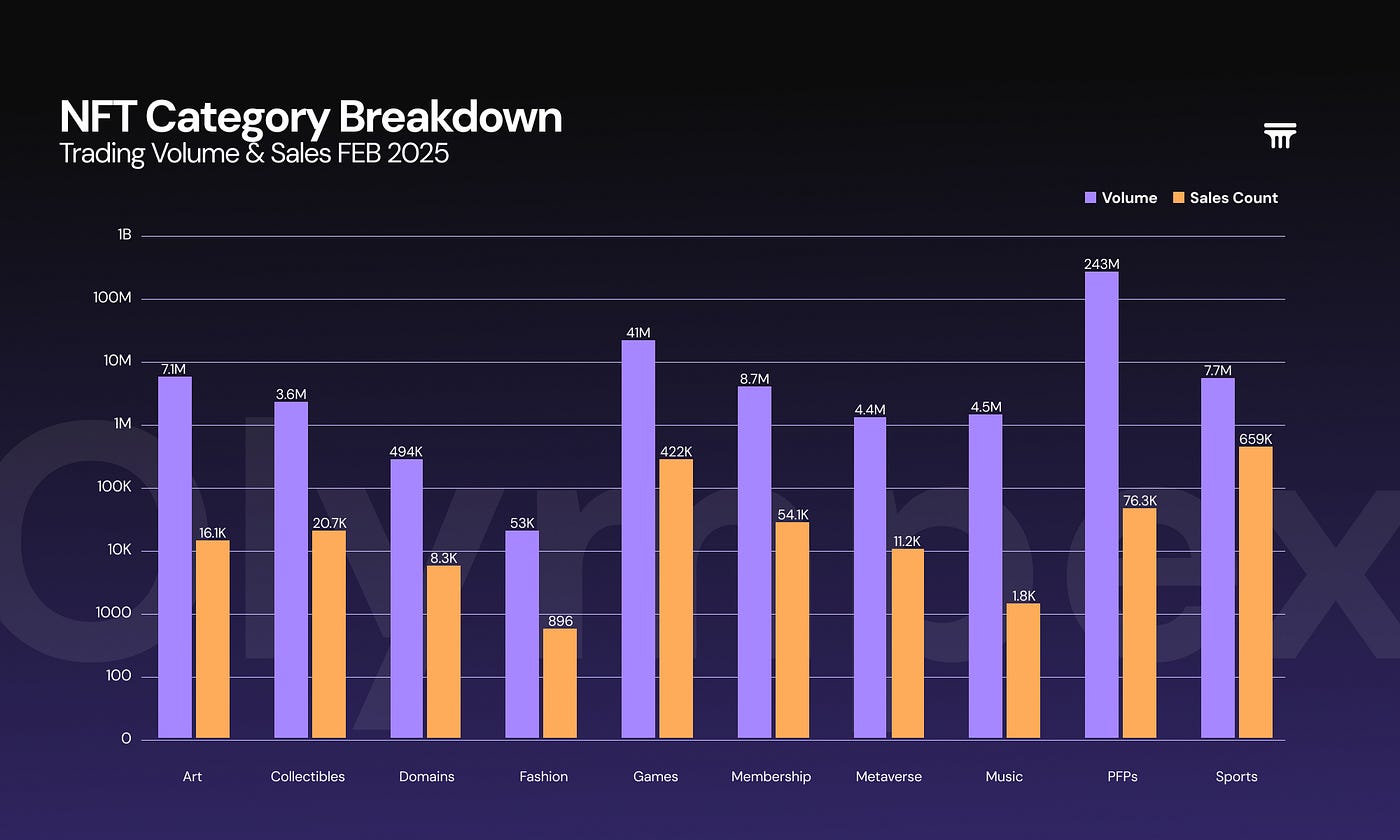
The shift from simple collectibles to utility-driven NFTs becomes clearer when looking at how trading activity is distributed across categories. Rather than being dominated by art alone, NFT volume and transaction counts increasingly concentrate around games, memberships, and profile-based assets. This reflects a broader transition toward NFTs that offer ongoing interaction, access, or in-ecosystem functionality rather than one-time ownership.
The Technology That Enabled NFT Growth
NFT adoption accelerated alongside improvements in infrastructure. Marketplaces became more efficient and user-friendly. Smart contract standards improved security and composability. Interoperability across blockchains expanded NFT reach beyond single ecosystems.
This technological evolution allowed NFTs to move from isolated experiments to integrated components of DeFi, gaming, and digital identity systems. As with bridges and cross-chain liquidity, infrastructure plays a decisive role in long-term sustainability, a theme explored in “Not Just Moving Tokens: Why Real Bridges Connect Experiences.”
NFTs as Financial Instruments
One of the most significant evolutions in the NFT space is their integration into decentralized finance. NFTs can now be staked, used as collateral for loans, or bundled into liquidity mechanisms. This transforms them from passive assets into productive components of on-chain portfolios.
As NFTs enter lending and yield strategies, they begin to resemble other financial primitives. This convergence highlights why evaluating risk and transparency matters, echoing themes discussed in “Safe or a Trap? It’s Your Money.”
Projects That Defined NFT Utility
Several projects demonstrated that NFTs can scale when utility comes first. Gaming ecosystems showed how player-owned assets create persistent value. Creator platforms proved that royalties align incentives between artists and collectors. Infrastructure projects enabled NFTs to interact seamlessly with DeFi protocols.
These examples reveal a consistent pattern: NFTs succeed when they solve real problems. Collections built purely on speculation tend to fade, while those embedded in functional ecosystems continue to evolve.
Risks and Challenges in the NFT Market
Despite their potential, NFTs carry meaningful risks. Fraudulent collections, copyright disputes, and misleading claims remain common. Liquidity can disappear quickly, and prices can be highly volatile, especially during market downturns. Understanding these risks requires the same analytical discipline applied to DeFi protocols. Sustainability, transparency, and real usage matter far more than short-term price action.
How to Evaluate the Real Utility of an NFT
Evaluating an NFT means looking beyond visuals and floor prices. Utility comes from function. Does the NFT unlock access, revenue, governance, or meaningful participation? Is it part of an ecosystem with active users and long-term incentives?
Timing also matters. NFTs follow adoption cycles similar to other crypto assets. Projects that survive bear markets often lead the next wave, a dynamic explored in “Understand the Cycles to Start Winning Before They Begin.”
The Future of NFTs in the Digital Economy
NFTs are moving toward deeper integration with gaming, virtual worlds, digital identity, and tokenized real-world assets. As Web3 matures, NFTs will increasingly act as interfaces between users and on-chain systems.
Press enter or click to view image in full size
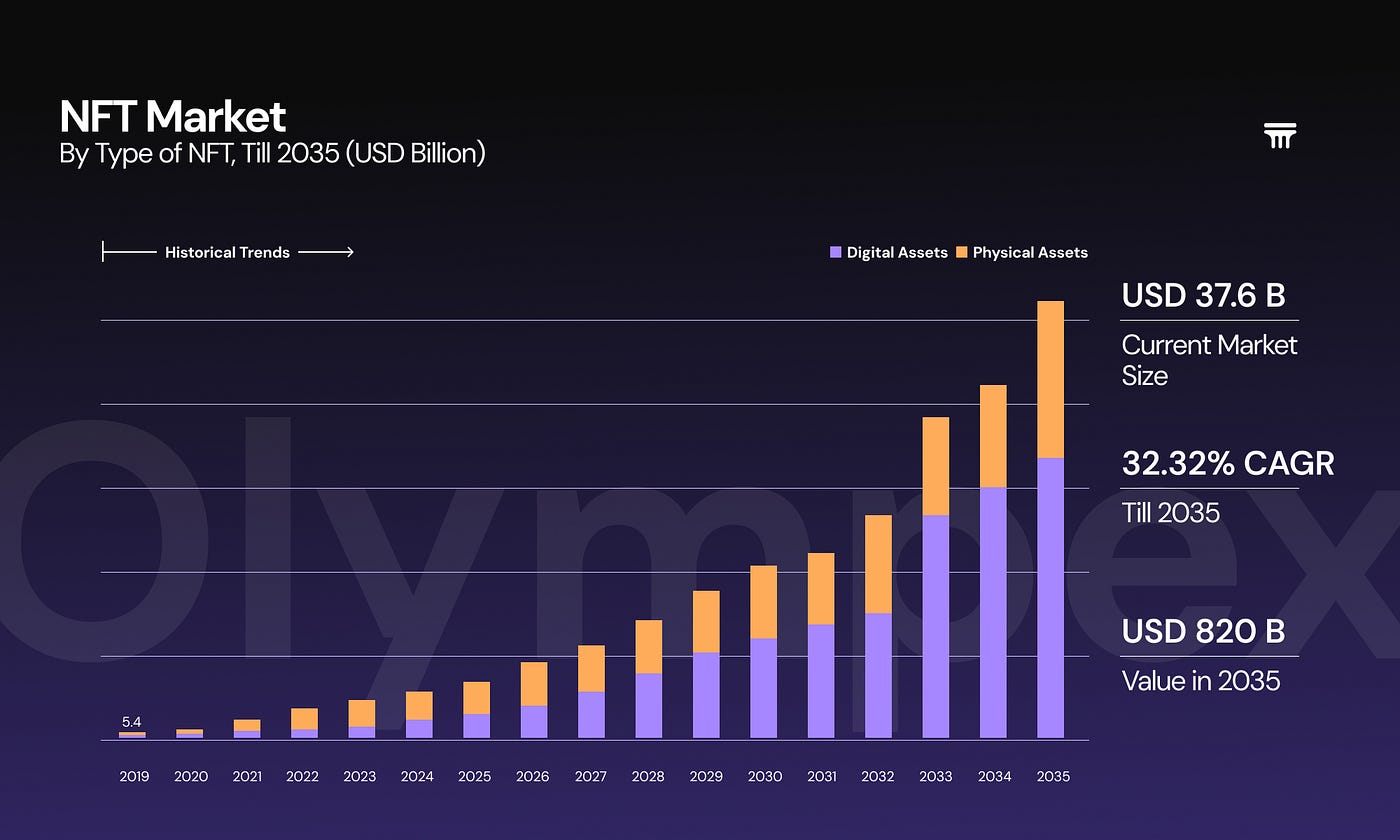
Looking beyond current market cycles, long-term projections show that NFTs are evolving into a core layer of the digital economy. Market forecasts suggest sustained growth driven not only by digital collectibles, but also by the tokenization of physical assets, enterprise adoption, and integration with metaverse environments. This shift positions NFTs less as speculative instruments and more as infrastructure for ownership in a digital-first world.
Over time, NFTs may fade into the background as infrastructure. Users may interact with them daily without labeling them as NFTs at all. Ownership, access, and programmable rights will simply be native features of the digital economy.
Final Thoughts
NFTs were never just about collectibles or speculation. They represent a structural shift in how digital ownership works. While hype dominated early narratives, long-term value lies in utility, interoperability, and participation.
Those who focus on understanding function rather than chasing trends will be better positioned as this space continues to evolve.
Want to understand where NFTs, DeFi, and digital ownership are heading next?
Join the Olympex Telegram community to discuss NFTs, on-chain utility, and emerging Web3 trends with builders and investors focused on long-term value, not hype.





