
Iron coin — NFT
From Hype to Function: What Comes After NFTs?
Discover how NFTs evolved from speculative hype to real-world utility, from billion-dollar JPEGs to tokenized services, and how Olympex is building the next generation of NFT infrastructure.
The Initial Boom (2020–2021): Euphoria and Speculation
In early 2021, NFTs exploded into mainstream culture.
Auction houses like Christie’s sold Beeple’s Everydays for $69 million, collections like CryptoPunks and Bored Ape Yacht Club became status symbols, and social media was flooded with profile picture projects (PFPs).
Play-to-earn gaming surged, led by Axie Infinity, which at its peak generated over $1.3 billion in annual revenue, and smaller titles like Plant vs Undead that promised effortless income through in-game NFTs.
But for every success story, there were dozens of projects minted without purpose, overhyped collections with no roadmap, relying solely on FOMO (Fear of Missing Out) to push demand.
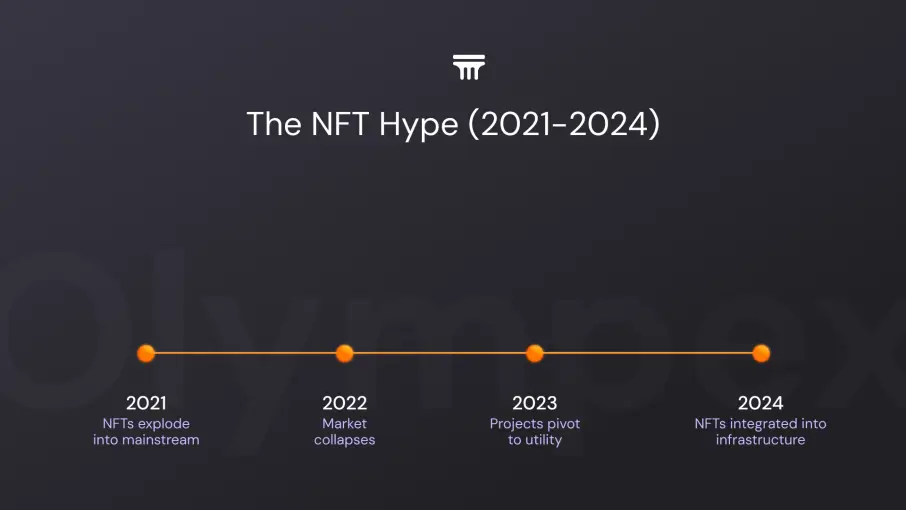
Timeline chart showing key NFT events
The Crash and Saturation (2022)
As 2022 unfolded, the market cooled dramatically.
NFT trading volume dropped by over 90% from its 2021 peak (source: NonFungible.com).
The problems were systemic:
- Abandoned projects left collectors holding worthless tokens.
- Communities dissolved as speculative profits dried up.
- Scams and rug pulls eroded user trust.
The hype machine couldn’t sustain itself without real value behind the assets.
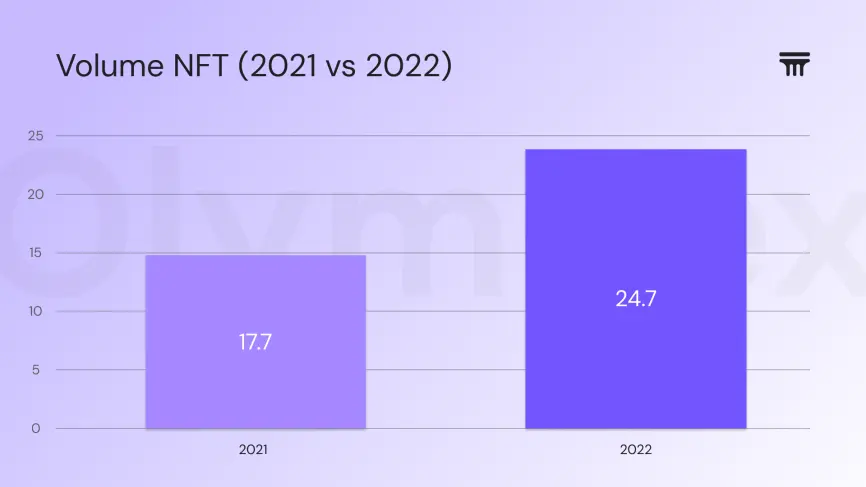
Bar chart comparing monthly NFT sales volume in 2021 vs 2022.(coinmarketcap coingeko DeFiLlama)
The Shift Towards Utility (2023–2024)
Survivors of the NFT winter began to pivot.
The focus shifted from selling digital art to creating functional assets:
- NFTs as Access Keys: Tickets to concerts, exclusive online communities, and premium content.
- Loyalty Programs: Tokenized discounts, memberships, and ongoing rewards.
- Sustainable Gaming: NFTs that enhance gameplay without relying on Ponzi-like tokenomics.
- Real-World Assets (RWAs): Titles of property, licenses, and certifications stored as NFTs.
This transformation is reshaping NFTs into tools that solve problems, not just symbols of speculation.
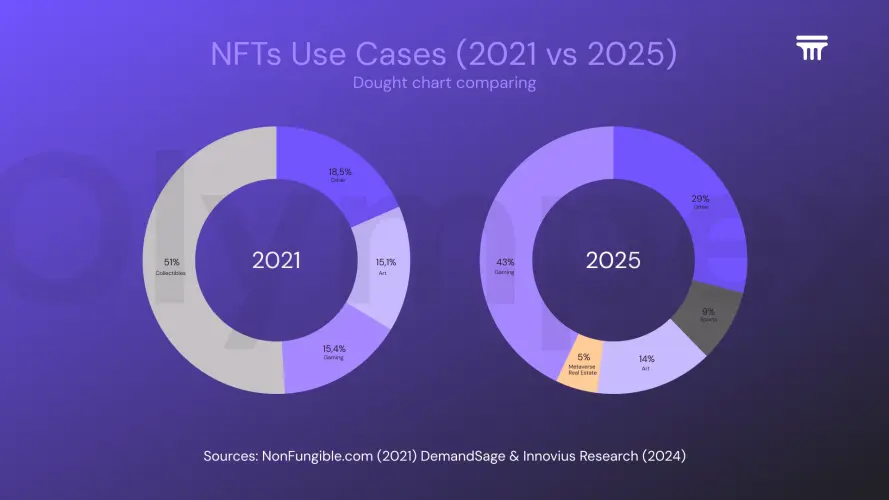
“NFT use cases in 2021” vs “NFT use cases in 2024” (NonFungible.com DemandSage)
Real Cases of Evolution
- Bored Ape Yacht Club → IRL Utility: From profile pictures to real-life events, merchandise, and exclusive collaborations.
- Nike’s .SWOOSH platform: Digital sneakers tied to real-world perks.
- Ticketmaster NFT Tickets: Verifiable event access, resale tracking, and fraud prevention.
The Future: NFTs as Infrastructure
The next chapter for NFTs is integration, not isolation:
- Cross-Chain Interoperability: Moving NFTs across chains without breaking functionality.
- Programmable NFTs: Assets that evolve over time or based on conditions.
- DeFi Integration: NFTs as collateral, yield generators, or governance tools.
Olympex: Building the Modular NFT Infrastructure
At Olympex, NFTs are not a gimmick — they are a core part of a unified financial ecosystem.
Through a single secure interface, Olympex allows users to:
By embedding NFTs into a modular, cross-chain, DeFi-ready environment, Olympex ensures they are more than collectibles; they become actionable financial instruments and service gateways.
Final Thought
NFTs aren’t dead, they’re maturing.
The speculative bubble has given way to a design-driven era, where each token must earn its place by delivering real utility.
With platforms like Olympex building the connective infrastructure, the next wave of NFTs will be more resilient, more valuable, and far more integrated into our digital and physical lives.





