
Airdrops have become one of the most powerful and inclusive tools in the crypto ecosystem. What began as a simple way for protocols to reward early users has evolved into a sophisticated mechanism for distributing ownership, accelerating adoption, and expanding access to digital economies. In a world where markets can feel gated by capital and dominated by institutions, airdrops offer something different: a way for anyone to earn value simply by participating.
They have already introduced millions of people to Web3, especially in regions where traditional finance is expensive or inaccessible. Users who once needed a bank account or a brokerage can now explore the digital economy with nothing more than a wallet and a willingness to engage. In that sense, airdrops feel similar to the role that crypto exchange traded funds played in traditional markets. They simplify access and invite participation from people who would otherwise remain on the sidelines.
For a deeper look at how new on ramps reshape user behavior, read How Crypto ETFs Are Changing the Game for Traditional Investors.
Airdrops are not merely giveaways. They are strategic building blocks for new protocols. They reward early community members, generate network effects during critical growth phases, and help transform passive users into long term contributors.
What Airdrops Are and Why They Are Reshaping User Onboarding
An airdrop is a distribution of tokens that a project sends to users who meet specific criteria. The requirements vary, but they almost always focus on verifiable behavior on the blockchain. These actions can include using a protocol, providing liquidity, testing new features on a testnet, bridging assets, or participating in governance.
In many ways, airdrops flip the traditional user acquisition model on its head. Instead of asking people to spend money first, protocols reward them for taking part in the early stages of development. This approach aligns incentives before any financial commitment is required.

Source: coingecko.com
Source: coingecko.com
How Airdrops Work Behind the Scenes
While every protocol designs its distribution differently, the underlying logic is consistent. Projects analyze on-chain behavior to identify real human activity. They evaluate which users genuinely contributed to the ecosystem and which wallets simply attempted to farm rewards without meaningful engagement.
Once eligibility criteria are finalized, the project allocates a portion of its token supply to these users. Claiming is simple. You connect a wallet, verify your allocation, and receive the tokens on-chain.
This process reduces barriers to entry and creates a smooth transition from curious newcomer to active participant.
Press enter or click to view image in full size
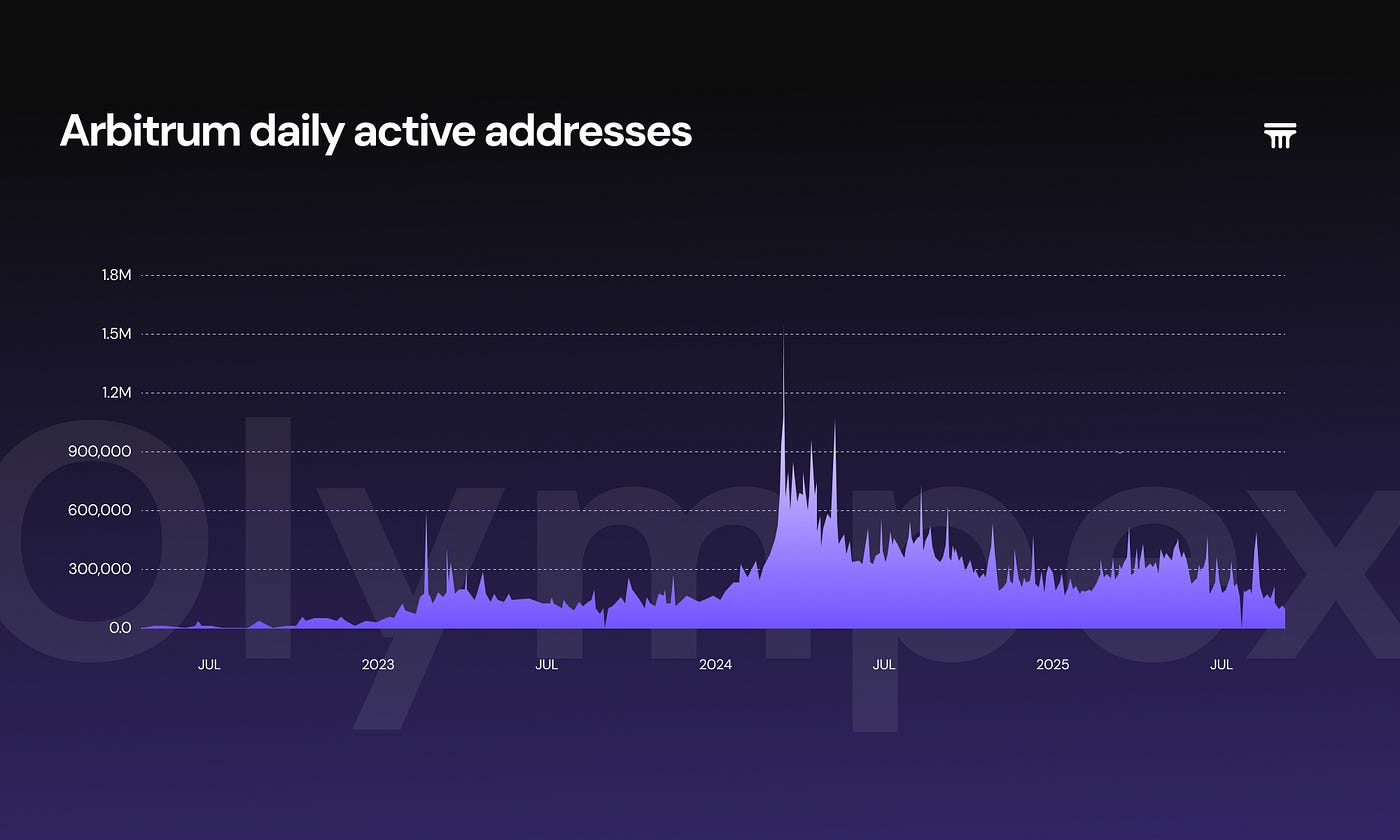
Source: defillama.com
The New Types of Airdrops Emerging Today
As the industry evolves, airdrops are becoming more creative and more selective. Standard airdrops reward early protocol usage. Exclusive airdrops target specific communities or partner ecosystems. Participation based airdrops require users to complete tasks or contribute repeatedly over time.
Cross chain airdrops are becoming especially important as ecosystems shift toward unified liquidity and multi network exposure. The lessons outlined in CrossCurve: A Deep Dive into Cross Chain Liquidity illustrate why cross chain behavior is turning into a key metric for high value distributions.
Protocols increasingly rely on identity signals, long term interactions, and data driven evaluations to ensure that rewards go to real contributors rather than automated agents.
How to Find Legitimate Airdrops in a Crowded Market
The popularity of airdrops has created an overwhelming supply of opportunities. Finding the right ones requires a blend of intuition, research, and discipline. Platforms like DeFiLlama Airdrops, DropHunter, and Airdrop.io help users discover promising distributions, but the best opportunities come from staying close to early ecosystem activity.
Early signs include protocol testnets, governance discussions, liquidity incentives, transparent audits, and deployments across multiple chains. Projects that invest in security and clarity tend to deliver more meaningful airdrops. For a deeper understanding of the importance of strong verification, read Safe or a Trap: It Is Your Money.
Security Risks and How to Avoid Them
The rise of airdrops has also brought an increase in fraudulent claim sites and phishing attempts. Users should treat every announcement with caution and verify information through official channels. A legitimate airdrop never requires you to send funds. Wallet approvals should be reviewed carefully, and suspicious contract interactions should be avoided.
Security is fundamental for healthy Web3 participation. For more insight into structural security, explore Think Your DeFi Is Safe: Think Again, which breaks down why constant audits and layered protections are essential.
Strategies for Maximizing Airdrop Rewards
The most successful participants treat airdrop exploration as a consistent strategy rather than a one time event. Instead of chasing hype, they distribute activity across multiple networks, become early testers, engage with governance, and contribute to testnets.
Behaviors that often lead to strong airdrop allocations include:
Using protocols consistently
Bridging assets to new networks
Participating in governance
Providing liquidity
Supporting cross chain infrastructure
Testing beta features
These strategies mirror the broader principles of positioning early before market cycles shift, as explained in Understand the Cycles to Start Winning Before They Begin.
Airdrops That Became Defining Moments
Several airdrops have become milestones in the evolution of Web3. Uniswap’s UNI distribution set a precedent for rewarding early adopters. Arbitrum’s ARB drop expanded the reach of Layer Two networks. Optimism’s OP program introduced the idea of retroactive public goods funding. More recent airdrops from Jito, Celestia, Wormhole, and Blur show how powerful these events can be at creating loyal user bases and driving adoption across entire ecosystems.
The Future of Airdrops
Airdrops are entering a new chapter. As the ecosystem becomes more mature, protocols are shifting toward identity based participation, cross chain activity, governance involvement, and high quality engagement rather than surface level interactions.
Future airdrops will reward communities instead of isolated wallets. They will validate long term participation instead of quick interactions. They will distribute ownership based on trust, transparency, and proven contribution.
This evolution parallels the broader transformation described in Not Just Moving Tokens: Why Real Bridges Connect Experiences, where protocols emphasize alignment across networks rather than isolated asset transfers.
The scale of airdrops becomes much clearer when looking at real distribution data. In 2023 alone, major crypto airdrops distributed billions of dollars in value to early users, with Layer 2 networks and infrastructure protocols leading the way. This shift shows that airdrops are no longer small marketing experiments, but one of the most effective mechanisms for decentralizing ownership and accelerating adoption across Web3 ecosystems.
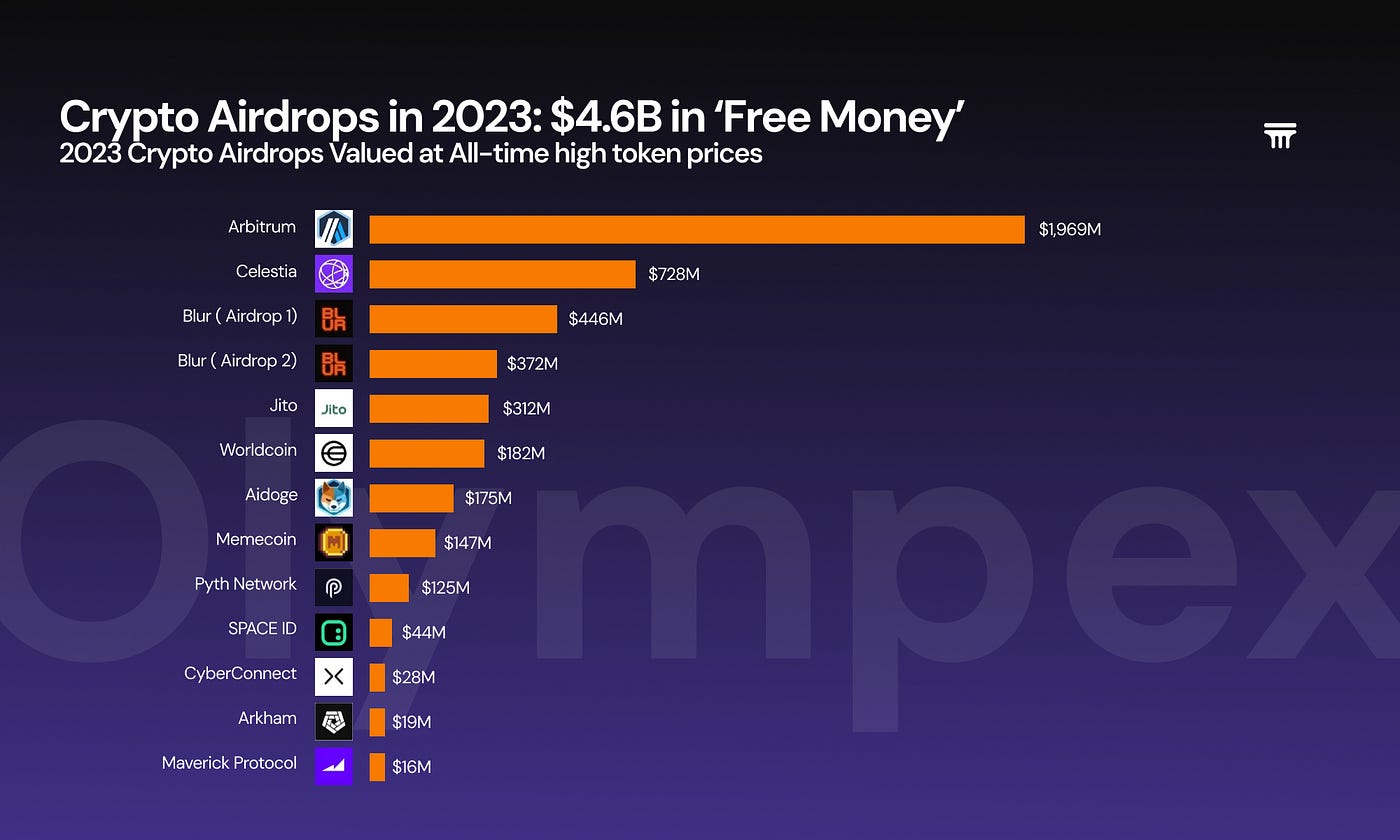
Source: coingecko.com
What stands out is not just the total value distributed, but the type of projects involved. Most of the largest airdrops came from networks focused on scalability, data availability, and liquidity infrastructure, rewarding users who interacted early with foundational layers of the ecosystem.
Final Thoughts
Airdrops are one of the most accessible and empowering innovations in Web3. They offer ownership without requiring capital. They reward curiosity and participation. They bring people into crypto before they ever risk funds. And they reflect the core design principle of decentralized finance: value should flow to those who help build the system.
Just as exchange traded funds opened the door for traditional investors, airdrops are opening the door for the next generation of Web3 explorers. They provide a path into digital ownership that is free, open, and available to anyone who shows up and participates.
In Web3, participation comes before profit. Learn how to position early and move efficiently on-chain with Olympex.





