
AI trading represents a structural shift in how market participation happens in crypto. Instead of relying solely on intuition, screen time, and emotional discipline, traders increasingly delegate execution and analysis to automated systems capable of processing massive datasets in real time. This evolution is not about eliminating risk, but about managing it more intelligently.
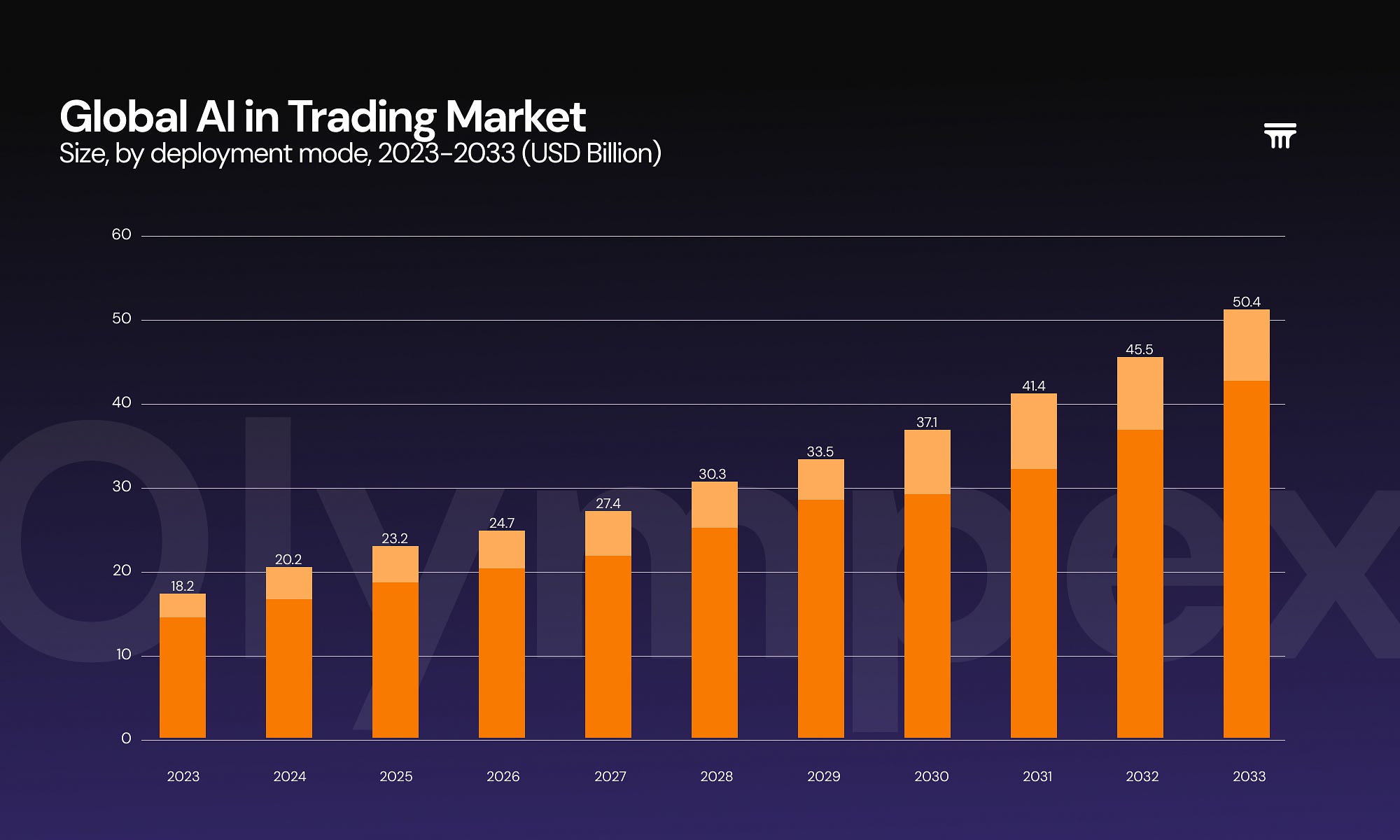
The growing relevance of AI in trading is not anecdotal. The chart below, showing the global AI in trading market size from 2023 to 2033, illustrates how capital, infrastructure, and institutional interest are converging around algorithmic decision-making. The steady expansion reflects a broader belief that automation is becoming a baseline requirement rather than a competitive edge.
How Artificial Intelligence Operates in Crypto Markets
AI systems analyze crypto markets by combining historical price data, real-time order flow, volatility metrics, and increasingly, on-chain signals. Unlike traditional rule-based bots, modern AI models continuously adapt by learning from outcomes, adjusting probabilities rather than following static instructions.
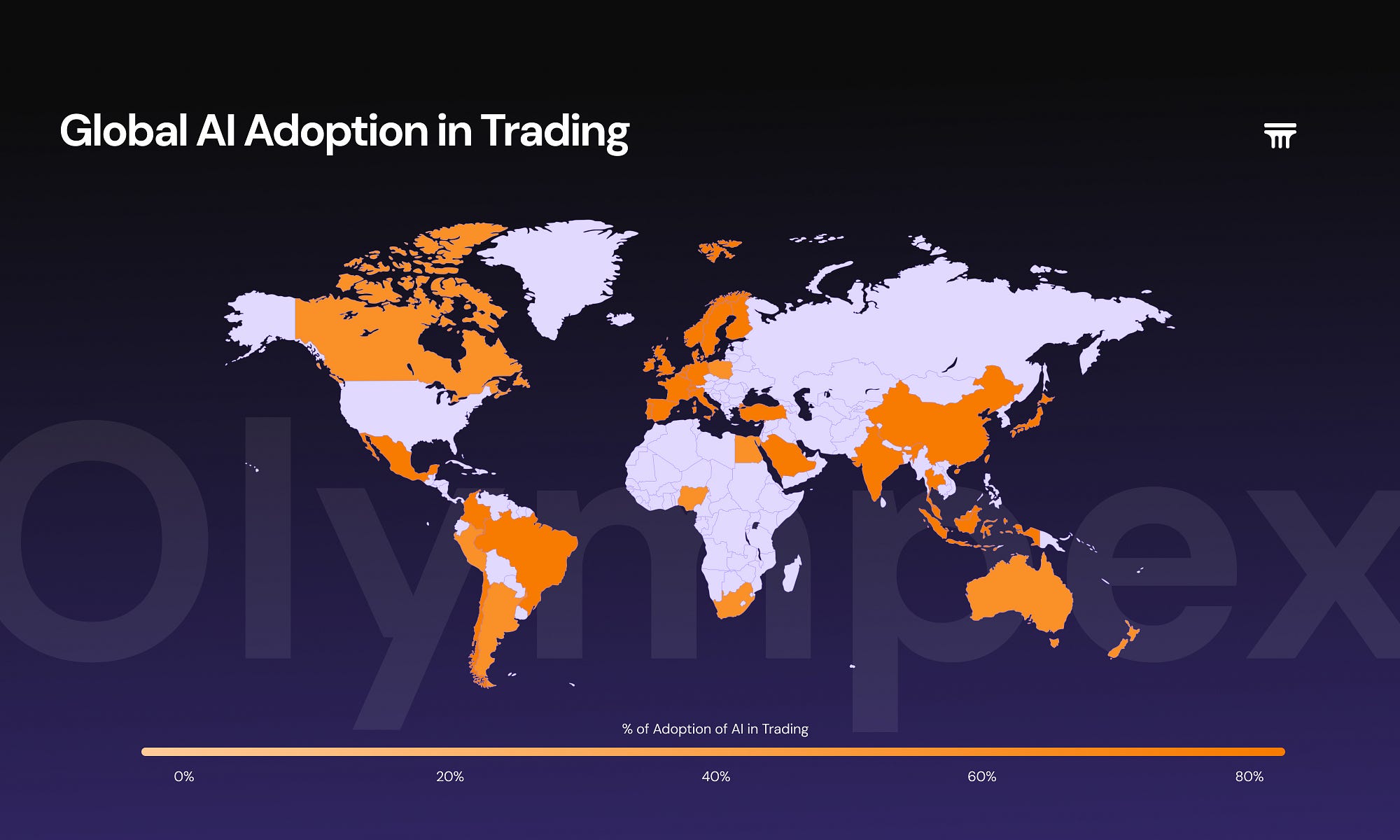
This global adoption is uneven but accelerating. The global AI adoption map in trading highlights how both developed and emerging markets are integrating AI into financial decision-making. Crypto-native regions often lead this shift due to fewer legacy constraints and a stronger appetite for experimentation.
Advantages of AI-Powered Trading: Efficiency, Speed, and Advanced Analysis
One of the strongest arguments for AI trading is consistency. Algorithms do not experience fear, greed, or fatigue. They execute strategies exactly as designed, regardless of market sentiment. This allows for faster reaction times, continuous monitoring, and disciplined risk management.
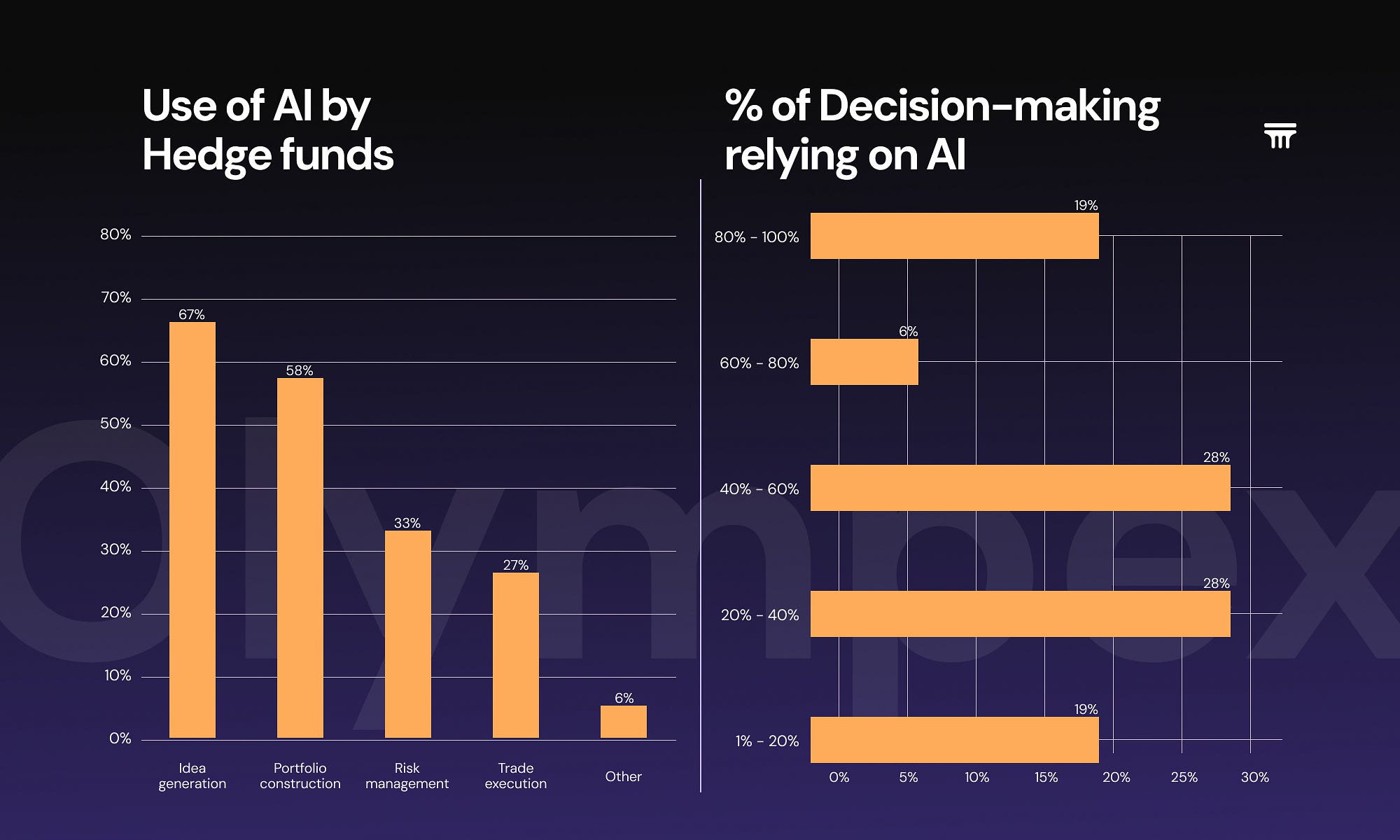
The chart showing how hedge funds use AI across idea generation, portfolio construction, risk management, and trade execution helps contextualize this advantage. Most AI usage is concentrated not in execution alone, but in decision support and risk control, reinforcing the idea that AI’s primary value lies in structure rather than aggression.
Limitations and Risks: Algorithms Are Not Risk-Free
Despite their strengths, AI systems are vulnerable to poor data, over-optimization, and unexpected market regimes. A model trained in trending conditions may fail during high-volatility or range-bound markets. Automation amplifies both discipline and error.
This is why AI trading should be framed as risk shaping, not risk elimination. Human oversight, capital limits, and scenario planning remain essential components of sustainable deployment.
Human Traders vs AI Systems: A Functional Comparison
Human traders excel at contextual reasoning, macro interpretation, and adapting to regulatory or narrative-driven shifts. AI systems excel at speed, repetition, and statistical consistency. The most resilient strategies emerge when both approaches are combined: humans define boundaries, AI handles execution.
This hybrid structure is increasingly becoming the default across professional trading environments.
Tools and Platforms Using AI in Crypto Trading
AI-powered platforms now range from portfolio rebalancers and signal engines to fully automated execution systems. What differentiates reliable tools from fragile ones is not performance claims, but transparency, risk controls, and alignment with long-term objectives.
Low-Risk Strategies Enhanced by AI
AI does not need to speculate aggressively to be effective. Strategies like DCA optimization, automated stop-loss execution, and periodic rebalancing benefit significantly from automation. These approaches prioritize capital preservation while remaining exposed to market upside.
Legal and Ethical Considerations of Automated Trading
As AI trading adoption expands, regulatory scrutiny increases. Transparency, accountability, and user awareness are becoming critical. Ethical deployment means understanding how decisions are made and accepting responsibility for outcomes, even when execution is automated.
Real Experiences: Learning from Traders Using AI
Some traders achieve steady, incremental growth by combining AI with conservative strategies. Others fail by over-leveraging or blindly trusting opaque systems. The difference is rarely the technology itself, but how it is used.
Final Thoughts
AI trading is not a shortcut to guaranteed returns. It is a framework for consistency, discipline, and structured exposure in a highly volatile market. Used responsibly, it can reduce emotional risk and improve long-term outcomes.
Join the Olympex Community
To explore smarter automation, structured DeFi execution, and real-world trading insights, join our Telegram





