
What's goin on, Investors?
Bitcoin has officially entered dangerous territory. After plunging below $75,000—levels not seen since April 2025—the world's largest cryptocurrency has confirmed what many analysts feared: this isn't just a correction, but the continuation of a sustained bear market that began after the October 2025 all-time highs near $126,000.
While crypto Twitter screams "buy the dip," the convergence of institutional exodus, macroeconomic headwinds, and deteriorating technical indicators suggests the pain is far from over.
The Institutional Exodus Has Begun
The most alarming development isn't the price drop itself—it's who is selling. The institutional bid that fueled Bitcoin's 2024-2025 rally has vanished. U.S. spot Bitcoin ETFs recorded $4.57 billion in outflows during November and December 2025, marking their worst two-month performance on record
. The bleeding continued into January, with $1.33 billion in outflows in the week ending January 23, 2026 alone—the largest weekly redemption since February 2025. I was watching a trading webinar today in which the presenter stated that more people were buying BTC at 100K than they are now, which can only mean that investors aren't looking for bargains on Wall Street! They still don't understand BTC and may never understand it.
.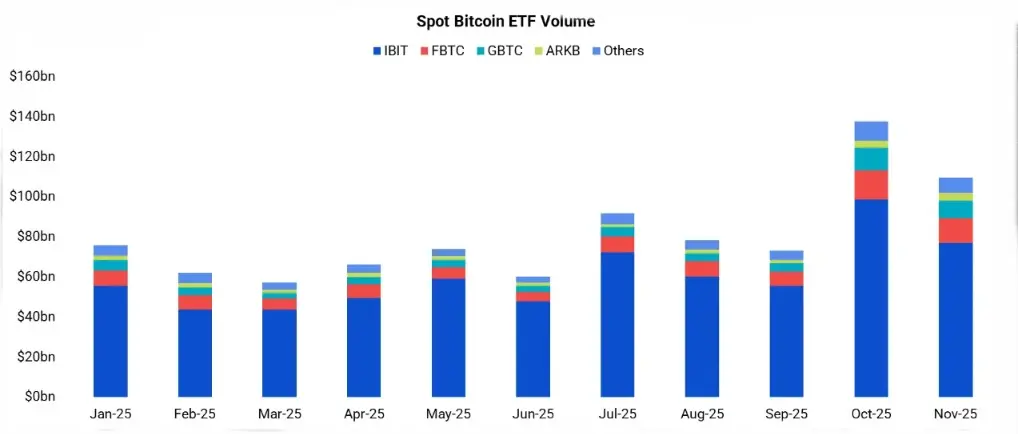
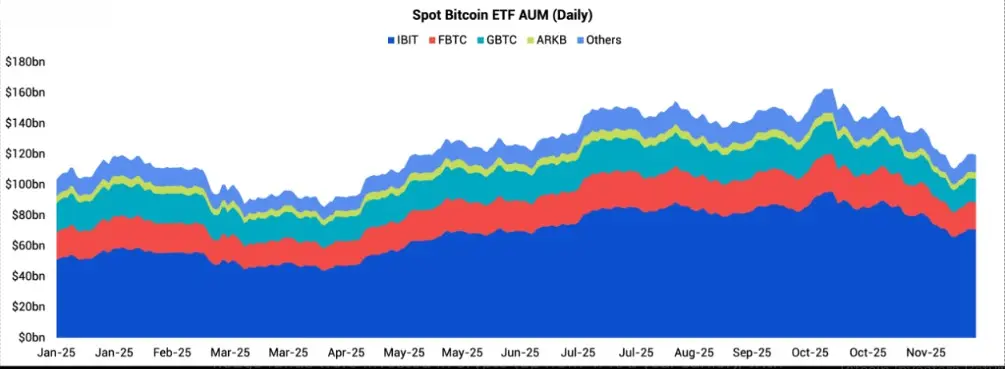
BlackRock's IBIT and Fidelity's FBTC, previously the crown jewels of institutional crypto adoption, have become the primary sources of exits. This isn't profit-taking; it's structural de-risking. When the "smart money" that accumulated between $40,000-$60,000 begins distributing at these levels, it signals expectations of significantly lower prices ahead.
Even Michael Saylor's Strategy (formerly MicroStrategy)—which added over 523,000 BTC between 2024-2026—can't single-handedly absorb the selling pressure. With capital inflows from ETFs dried up and Realized Cap flatlining (indicating zero fresh capital entering the market), Bitcoin's demand side has collapsed
.
Macroeconomic Regime Change
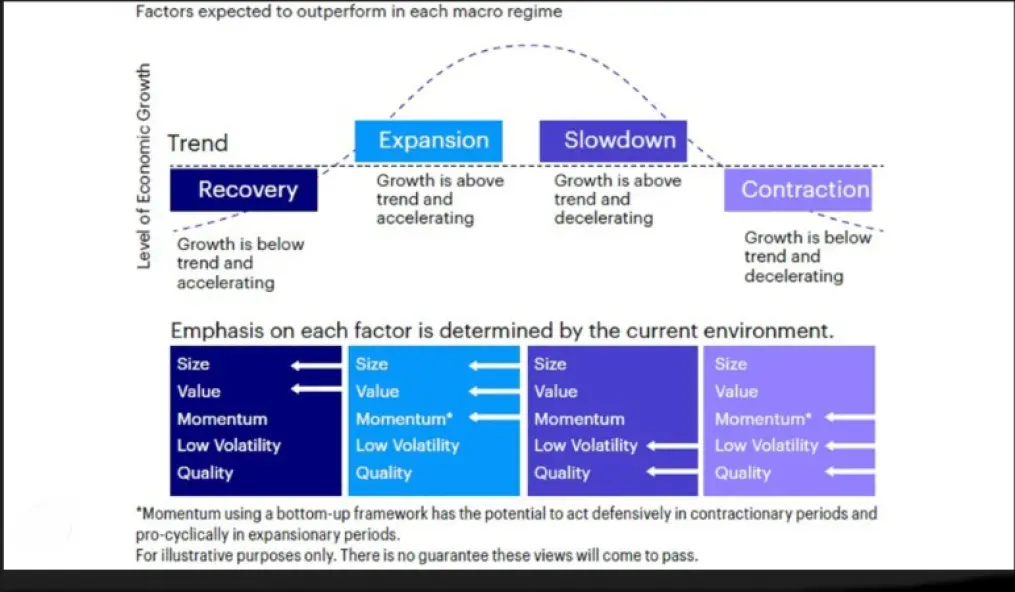
Bitcoin is no longer trading in the zero-interest-rate environment that birthed its previous bull runs. The Federal Reserve's "higher for longer" stance on interest rates, combined with President Trump's nomination of Kevin Warsh as future Fed Chair, has created a liquidity vacuum that risk assets cannot escape
Warsh, known for his hawkish views on quantitative easing and balance sheet expansion, represents a fundamental threat to the loose monetary conditions that benefit Bitcoin. As bond yields rise and the U.S. dollar strengthens, Bitcoin's narrative as "digital gold" has failed its stress test—it's behaving exactly like a high-beta tech stock, correlated to Nasdaq drawdowns rather than serving as a safe haven
The partial U.S. government shutdown, which has tied up $200 billion in liquidity, has only exacerbated the situation. In this environment, Bitcoin becomes collateral damage in a broader risk-off trade, not the uncorrelated asset its proponents promised.
Technical Destruction
The charts tell a devastating story. Bitcoin has broken below its 365-day moving average (near $101,000) and confirmed a bearish Kumo twist on the weekly timeframe—a historically reliable signal of bear market conditions
. The 50-day moving average crossing below the 200-day (the "death cross") has triggered algorithmic selling from institutional systematic strategies.
Key support levels have fallen like dominoes:
- $84,000: The critical floor that held for weeks finally broke, with Bitcoin dropping 13% in a single week
- $75,600: Briefly held as a bounce point, but selling pressure remains relentless
- $72,000-$68,000: The next major support zone, representing the 2024 consolidation range
The Relative Strength Index (RSI) on daily charts reads 20—extreme oversold territory—but in bear markets, oversold conditions can persist for weeks. The MACD bearish crossover from January 20 remains intact with rising red histogram bars, confirming momentum has shifted decisively to the downside
.
On-Chain Evidence of Distribution
Smart money is leaving the building. Data from CryptoQuant shows over 87,000 BTC sold on exchanges in recent days, with exchange netflow jumping to 9,500 BTC—clear evidence of aggressive spot dumping
. Experienced holders controlling 100-1,000 BTC wallets are exhibiting distribution behavior last seen in late 2021, just before the 2022 collapse from $69,000 to $16,000.
When sophisticated investors who accumulated at much lower prices begin offloading at $75,000-$80,000, it implies their modeled fair value sits significantly below current prices. CryptoQuant's medium-term downside target of $70,000, with potential for a deeper pullback to $56,000 (Bitcoin's realized price where bear markets historically settle), no longer seems extreme
.
The Liquidation Cascade Isn't Done
Over $700 million in leveraged long positions were liquidated in a 24-hour period as Bitcoin broke $75,000, with the single largest liquidation hitting $15.46 million on Hyperliquid
. While this deleveraging has flushed out some excess speculation, open interest remains elevated compared to true bear market bottoms.
The volatility has created a feedback loop: liquidations drive prices lower, which triggers more liquidations. Until futures open interest drops another 20-30% from current levels and funding rates turn deeply negative for an extended period, the market hasn't reached the capitulation phase that historically marks durable bottoms.
Where Does This End?
The path of least resistance remains downward. In the immediate term, $70,000 represents the next psychological battleground. A break below that opens the door to the $68,000-$60,000 zone, where significant volume built up during the 2024 consolidation period
More bearish scenarios, while tail risks, cannot be dismissed entirely. Veteran trader Peter Brandt has suggested an 80% drawdown could drive prices to $25,000. At the same time, Bloomberg's Mike McGlone warns of a potential decline to $10,000 under catastrophic conditions, including a hard economic landing or a total institutional withdrawal.
On this point, I agree with Peter Brandt more than Mike McGlone, and see it as an exceptional time to accumulate whoever is right...I ALWAYS BUY THE DIP!
Even conservative estimates suggest Bitcoin will struggle to reclaim $87,600, the point of control on the volume profile, until a long-term bottom forms. Bulls hoping for a V-shaped recovery to $100,000+ face a wall of resistance at every $2,000-$3,000 increment upward.

My Final Thoughts: Respect the Trend & Buy the Dip!
Bitcoin's cyclical nature is undeniable. It has recovered from every previous bear market to reach new highs. However, calling bottoms is a dangerous game. The confluence of ETF outflows, hawkish monetary policy, technical breakdowns, and on-chain distribution suggests the current downtrend has months, not weeks, to run.
For investors, the lesson is clear: in bear markets, the crowd that bought the dip at $85,000 is now selling in panic at $75,000, and the cycle will likely repeat at $65,000. Until institutional inflows return, macro conditions soften, and technical structures repair themselves, "DIAMOND HANDS" will prove to be the greatest mechanism for transferring wealth from optimists to patient accumulators waiting at lower levels.
The bear market (Bull Market for the Intelligent Investor) is here. The only question is how deep it goes before the next halving cycle, and institutional narrative can reignite the spark. Until then, trend-following beats hope. Also, remember when you hear mainstream media call a Bear Market for crypto...IT'S TIME TO ACCUMULATE!
Until next time, The Dark Sage singing out ✌️
Faucets That Work:
POLYGON ECOSYSTEM TOKEN FAUCET
Banks & Exchanges:
CAPITAL ONE SHOPPING GET 40.00 for YOU & 40.00 for ME






