
What's goin on, Investors?
Let's talk Solana vs. Ethereum: who wins the battle? Well, we have to start with the Monolithic vs. Modular aspect and why Solana's "Mistake" was actually its Superpower. Wall Street already picked the winner.
Spoiler: It's Not ETH!
The Solana Thesis: Why "ETH Killer" Is the Wrong Frame. And Why Solana Might Win Anyway!
Ethereum built the foundation. Solana is building the future. The data suggests we're watching a passing of the torch, not a murder.
The Numbers Don't Lie
Let's start with the uncomfortable truth for Ethereum maximalists: Solana is already processing more real economic activity than any other chain.
In 2025, Solana averaged 1,100 transactions per second (TPS), up 34% year-over-year and roughly 10x higher than Base, BNB Chain, or Sui. While Ethereum mainnet struggles with 15-30 TPS and even its Layer 2s manage only 100-150 TPS, Solana's theoretical ceiling sits at 65,000 TPS with sub-second finality
But raw speed isn't the story. Usage is.
Solana's DeFi TVL surged to $23 billion by early 2026, surpassing BNB Chain and Base combined
Its stablecoin supply hit $14.9 billion, with $11.7 trillion in annual transfer volume, a 7x increase over two years
This isn't speculative fluff; it's settlement infrastructure for real payments.
The "Application Revenue Capture Ratio", measuring how much value apps extract from network activity, climbed to 375.5% in Q4 2025, indicating Solana's ecosystem is monetizing usage at rates that make Ethereum's DeFi look like a charity

The Architecture Advantage: Monolithic > Modular
Ethereum's modular philosophy, pushing execution to Layer 2s while the base layer handles security, has created a fragmentation nightmare. Liquidity is splintered across Arbitrum, Optimism, Base, and dozens of smaller rollups. Users bridge, wrap, and pray. Developers chase grants across incompatible ecosystems.
Solana took the opposite bet: scale the base layer itself.
This monolithic approach, criticized in 2021 as naive, has become Solana's moat. By processing everything on Layer 1 with innovations like Proof of History, parallel execution (Sealevel), and Gulf Stream mempool management, Solana offers what Ethereum can't: atomic composability at scale
When you trade on Jupiter, lend on Kamino, and stake via Jito, you're not bridging between chains; you're executing within a single, coherent state. The result? 81% of all DEX transactions in crypto now happen on Solana
Ethereum's ecosystem, by contrast, resembles an archipelago of incompatible islands.
The fee differential is stark: Solana's median transaction cost is $0.001, while Ethereum mainnet fees regularly spike to $5-$50 during congestion
Even Ethereum L2s, while cheaper than mainnet, can't match Solana's sub-penny consistency.

The Firedancer Moment: From Fragile to Antifragile
Solana's 2021-2022 outages were its original sin. The network went dark five times, most notably for 5 hours in February 2024
Critics called it a "toy chain." The SEC cited outage risks in ETF denial comments.
Enter Firedancer.
Developed by Jump Crypto, Firedancer isn't an upgrade; it's a from-scratch validator client written in C/C++, independent of Solana's original Rust codebase. It uses a modular "tile" architecture capable of processing 1 million+ TPS in lab conditions
More importantly, it solves client monoculture. As of October 2025, 20.9% of staked SOL runs on Frankendancer (the hybrid version), up from 8% in June. This diversity means a bug in one client no longer threatens the entire network.
The full Firedancer client went live in late 2025, marking Solana's transition from "fast but fragile" to "fast and antifragile."
For institutions, this was the final objection removed.
Institutional Adoption: The Tipping Point
2025 was the year Solana went corporate.
Five spot Solana ETFs launched in Q4 2025, absorbing $1.02 billion in net inflows within weeks
Harvard's endowment increased its SOL allocation by 257% to 3,868 tokens ($441M). Abu Dhabi's sovereign wealth fund explicitly compared Bitcoin and Solana to gold as stores of value.
BlackRock's BUIDL tokenized treasury fund and Ondo's USDY launched on Solana, bringing $1.1 billion in real-world assets (RWAs) on-chain
Forward Industries, led by Galaxy and Multicoin, raised $1.65 billion to acquire 18.9 million SOL for a corporate treasury
This isn't retail speculation, it's structural allocation. When TradFi giants choose Solana for tokenized equities and stablecoin settlement, they're voting with nine-figure checks on which chain has the throughput, cost structure, and reliability to handle institutional flows.
The Developer Exodus
Ethereum's developer dominance was once unchallengeable. But Solana's Rust-based toolchain, while steeper to learn, attracts systems programmers who prioritize performance.
The ecosystem's competitive dynamics are brutal in the best way. On Ethereum, Aave, Uniswap, and Lido have held dominant positions for years. On Solana, market leaders change quarterly. Jupiter Lend reached $1.65 billion TVL in six months, becoming the fastest-growing money market in Solana history
New protocols like DoubleZero and Sanctum constantly challenge incumbents.
This "liquidity is king" environment forces innovation. As one analyst noted: "On EVM chains, we've watched the same players dominate for 3-4 years straight. Solana DeFi doesn't work like that... You can literally become a category leader in six months."
The result? Solana now hosts 3-6 million daily active addresses, with peaks exceeding 8 million
Ethereum's mainnet, by comparison, struggles consistentlyto break 1 million DAAs.
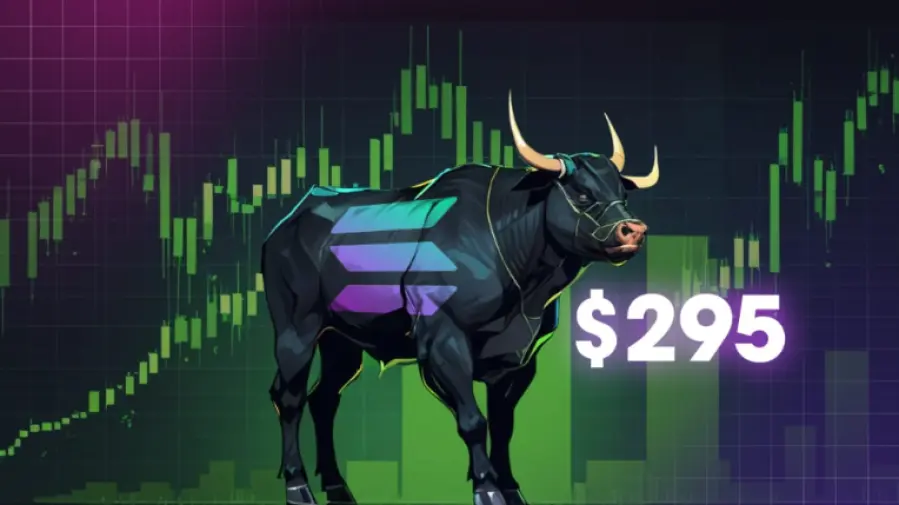
The Bull Case: $200+ and Beyond
Analysts project Solana reaching $140-$190 in base cases and $200+ in bullish scenarios by 2026
The upside case involves Solana becoming the default chain for AI agents, tokenized securities, and emerging market payments, sectors where latency and cost matter more than ideological purity.
The risks remain real: regulatory scrutiny (the SEC has called SOL an unregistered security in multiple filings), competition from Sui and Aptos, and the ever-present threat of network stress
But Firedancer's launch and ETF approval have derisked the two biggest existential threats, centralization and regulatory access.
Why "Better Than Ethereum" Might Actually Be True
Ethereum isn't dying. It's ossifying, becoming the "settlement layer for rollups," a digital bond for DeFi collateral, a store of value for institutions that prioritize decentralization over speed.
But Solana is becoming the execution layer for the internet economy.
The comparison misses the point. Ethereum is optimized for credible neutrality, maximizing decentralization even at the cost of speed. Solana is optimized for capital efficiency, maximizing throughput while maintaining sufficient decentralization for commercial use.
Both can win. But only one is capturing the high-velocity, low-margin use cases that will define the next billion crypto users: micropayments, gaming, high-frequency trading, AI agent economies, and real-time settlement.
When Stripe acquired Bridge for $1.1 billion to integrate stablecoin payments, they weren't looking for the most decentralized chain. They were looking for the one that could settle $11.7 trillion in annual volume without breaking.
My Final Thoughts: The Flippening Nobody Expected
Ethereum will remain crypto's "safe asset", the blue-chip bond of the decentralized economy. But Solana is becoming its high-growth equity, the platform where the next generation of financial infrastructure is actually being built.
The flippening won't be measured in market cap alone. It will be measured in settlement volume, active addresses, and developer mindshare. On those metrics, Solana has already flipped Ethereum in everything except narrative.
The institutions see it. The developers feel it. The data proves it.
Solana isn't the next Ethereum. It's the first Solana, and that is proving to be enough.
Sources:
Messari State of Solana Q3/Q4 2025
LinkedIn/Adil Ashfaq TPS Analysis
So, who do you think will win the Solana vs. Ethereum battle? Let us know in the comments!
Until next time, The Dark Sage singing out ✌️
Faucets That Work:
POLYGON ECOSYSTEM TOKEN FAUCET
Banks & Exchanges:
CAPITAL ONE SHOPPING GET 40.00 for YOU & 40.00 for ME






