
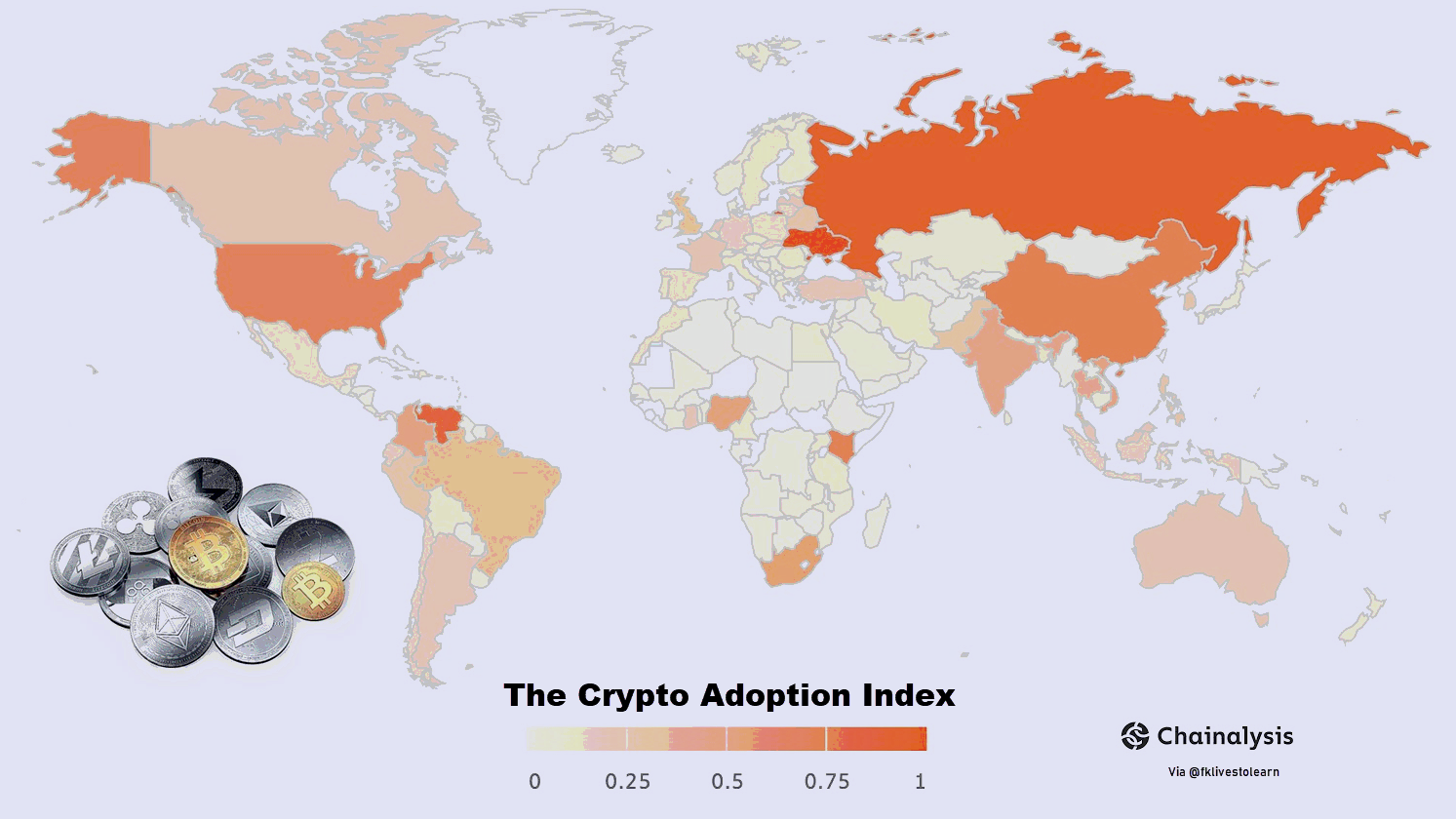
The Global Crypto Adoption Index ranks 154 countries, based on four key metrics
This year has brought a change in fate for cryptocurrencies. The bear market that ensued after the peak reached in Dec. 2017 led many to see the digital assets with skepticism. While the prices of the cryptos are still nowhere close to the levels reached almost three years ago, the cryptocurrencies have seen a move towards global adoption in 2020.
Chainalysis — a reputed blockchain analysis company has come up with a Crypto Adoption Index, based on objective measures rather than anecdotal evidence to see if cryptocurrencies are in fact becoming a global phenomenon. In the recently published, The 2020 Geography of Cryptocurrency Report, they used a methodology incorporating four key metrics to find out the trends in global adoption and usage of Cryptos.
The broader global picture is presented in the infographic above. A total of 154 countries were analyzed based on the metrics described below and given a score on a scale of Zero to One — the latter representing the highest score. Cryptocurrencies included in the analysis were — Currencies included: BAT, BCH, BNB, BTC, BUSD, CRO, CRPT, DAI, ETH, GNO, GUSD, HT, HUSD, ICN, LEO, LINK, LTC, MCO, MKR, MLN, OMG, PAX, PAXG, TGBP, TUSD, USDC, USDT, WETH, ZIL, ZRX.
Four key metrics were as follows:
❶ On-chain cryptocurrency value received — weighted by purchasing power parity (PPP) per capita
❷ On-chain retail value transferred — weighted by PPP per capita
❸ Number of on-chain cryptocurrency deposits — weighted by the number of internet users
❹ Peer-to-peer (P2P) exchange trade volume — weighted by PPP per capita and number of internet users
Top 10 countries of Global Crypto Adoption Index
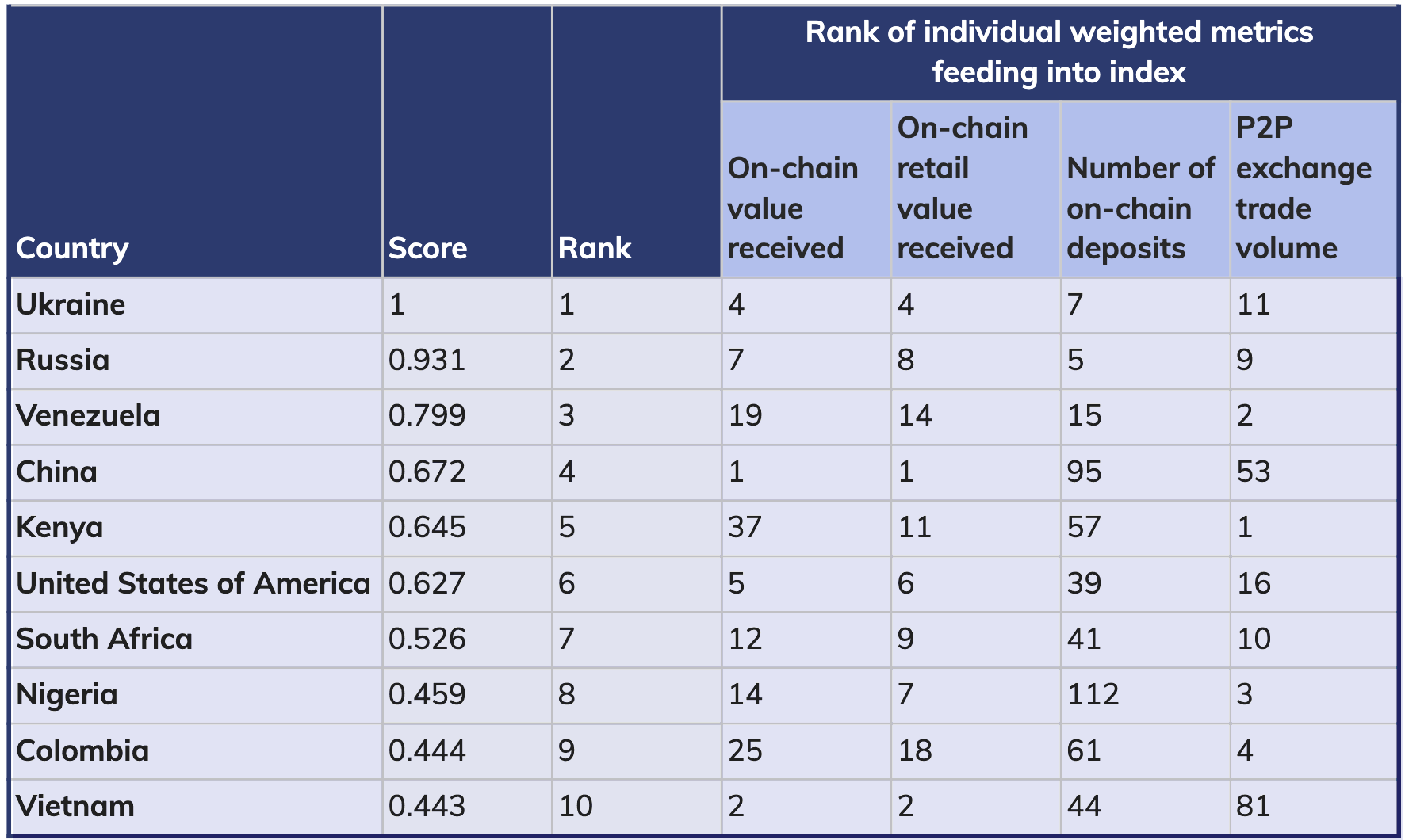
Although the chart above (Figure 1) highlights how well-spread is the Top 10 list globally, the absence of a European country was noticeable. The presence of Kenya (0.645) at №5 showed that the digital currencies’ craze is also spreading to developing countries with low tech penetration.
Ukraine grabbed the top honors with a maximum possible score of 1 followed by Russia (0.931) — China (0.672) & the United States (0.627) were at №4 and №6 respectively. The methodology employed meant any country scoring zero in any of the four metrics would be scored at a 0 for its overall index score.
The following 12 countries were placed in this category, however, a zero score didn’t mean that these countries had no cryptocurrency activity — it just indicated they had very little of it. Amongst these lowest-ranked nations were — Afghanistan, Algeria, Cape Verde, Chad, Fiji, Laos, Libya, Mongolia, Tajikistan, Turkmenistan, West Bank & Gaza and Zimbabwe.
Let’s move on to the regional breakdowns of Cryptocurrency activity from Jul. 2019 to Jun. 2020.
AFRICA
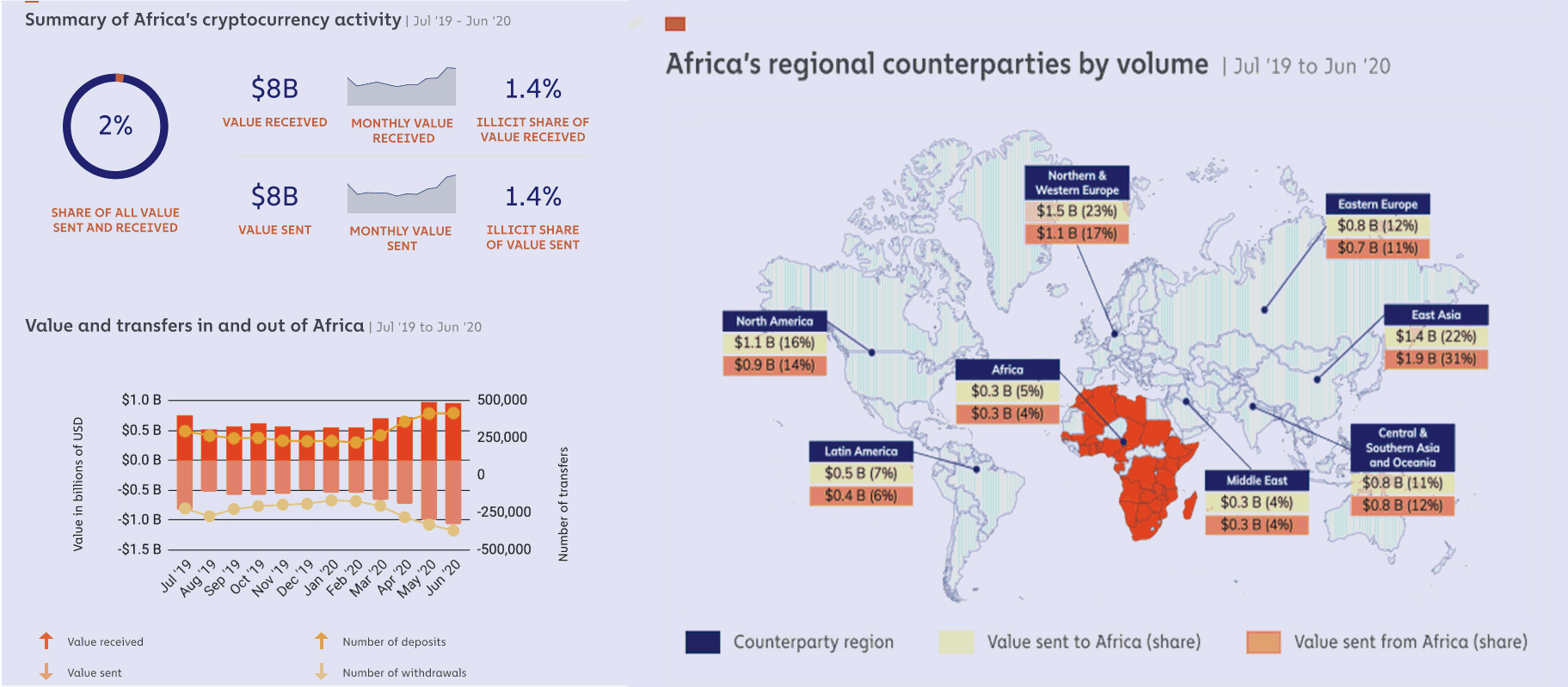
Despite having the smallest crypto economy (2% of total) of all the regions, with $8.0 billion worth having been received and $8.1 billion sent on-chain during the time period, the digital assets have, nonetheless, created immense value for its users in the region — letting them stave off economic instability, offering low-fee remittances and an alternative way to save.
Northern & Western Europe sent the highest value (23%) of cryptos to Africa, while East Asia with 31% was the biggest recipient of cryptos from Africa. The onset of the pandemic has sharply increased the interest in Cryptos in the region (Figure 2). Nigeria, South Africa & Kenya were the three representatives for the African continent in the Top 10 Crypto markets.
Central & Southern Asia and Oceania
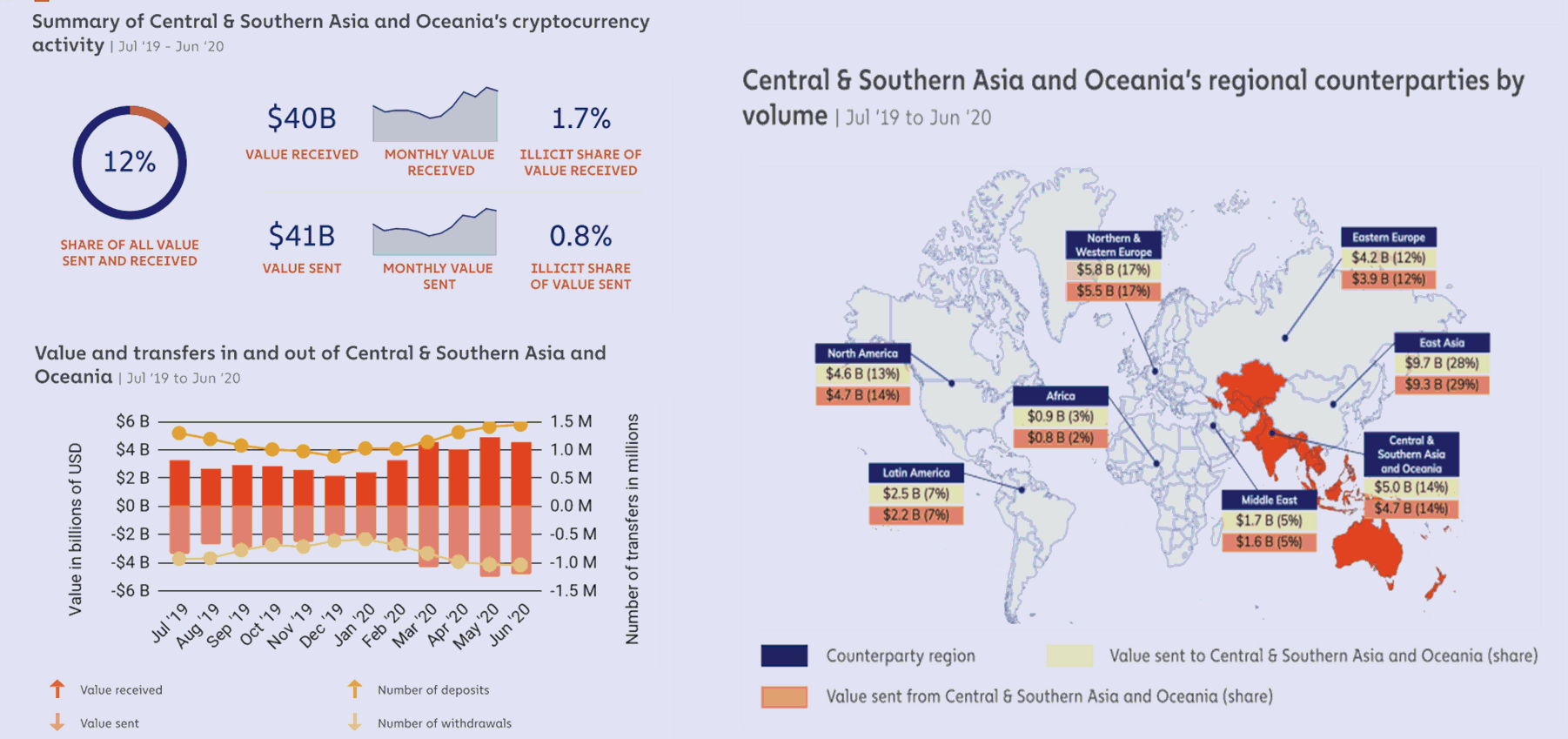
Home to many of the developing countries, this region ranks fifth in crypto traffic among the eight regions analyzed. Heavy activity in the retail sector suggested that users may be turning to cryptocurrency for remittances and possibly even everyday transactions.
Crypto transactions here comprised 12% of the total value processed globally with East Asia being the biggest regional counterpart — with 29% sent there and 28% received from there (Figure 3). Just like Africa, the crypto activity picked up after the pandemic lockdown.
East Asia
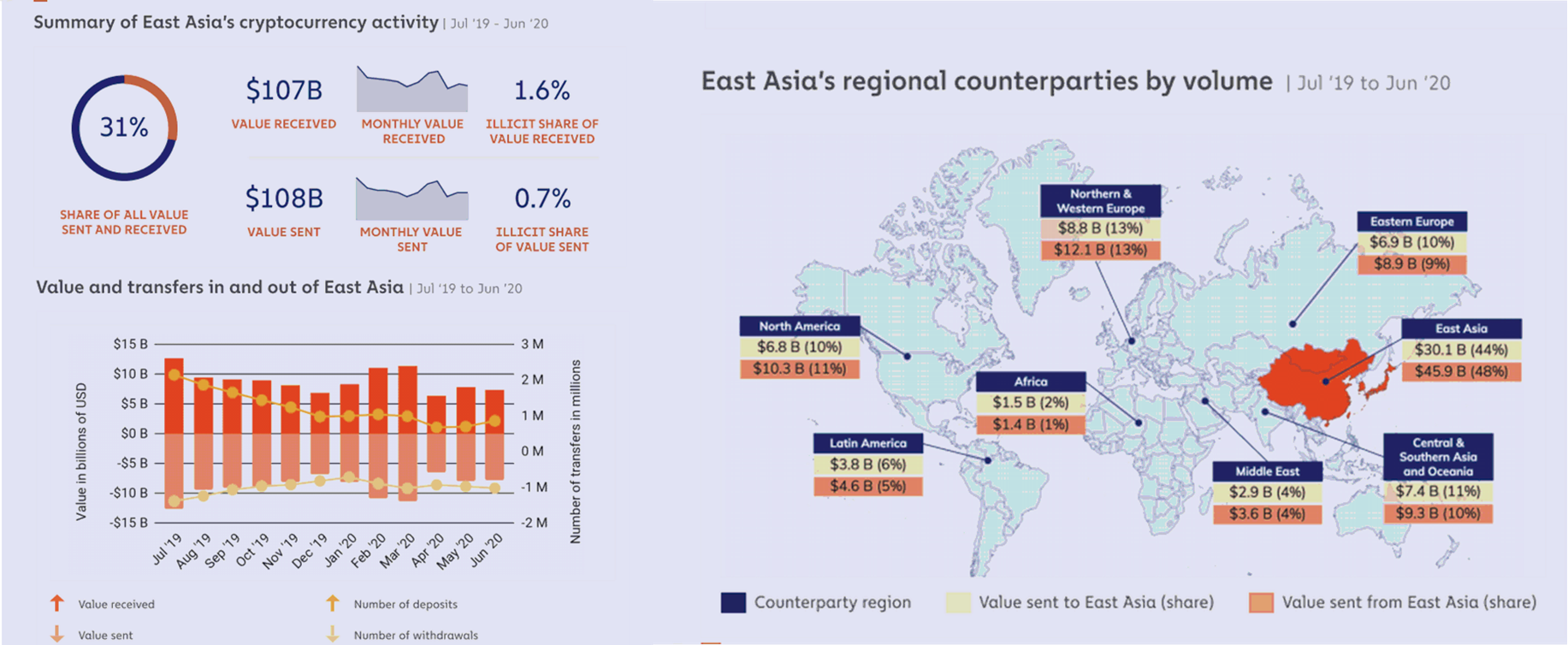
As evident from 31%, East Asia is the world’s largest cryptocurrency market. The region received $107 billion worth of cryptocurrency in that time period, which is 77% more than Northern & Western Europe (NWE), the second-highest receiving region. Also, the region is the counterparty to most of the other regions analyzed in the report.
East Asia is home to a large trading population with the most professional & liquid crypto market. For that reason, the biggest counterparty to the region were countries in the same region itself — sending 44% and receiving 48% (Figure 4). Value & transfers increased earlier in the year coinciding with the pandemic lockdown in China.
Eastern Europe
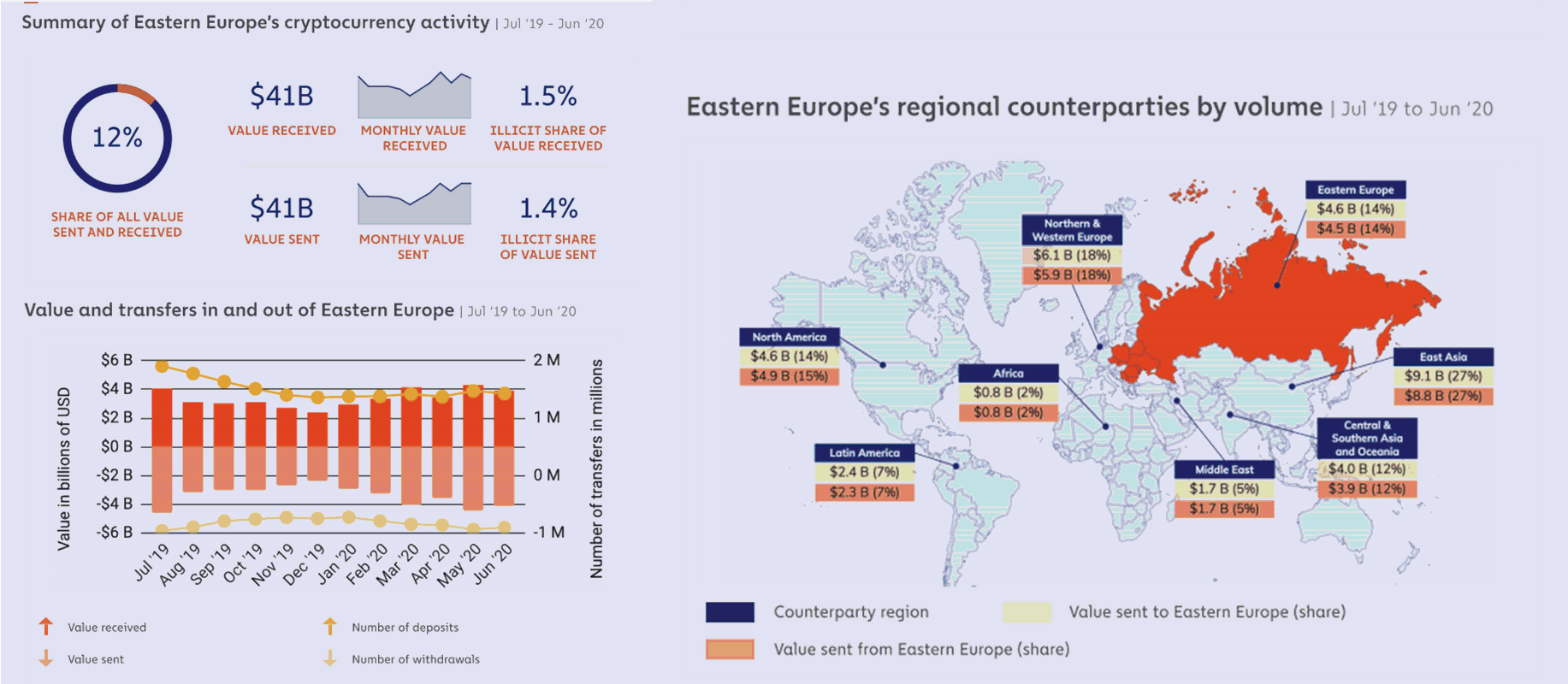
This region shows strong grassroots-level adoption of cryptocurrency — no wonder Ukraine and Russian ranking at the top of the Global Crypto Adoption index and Belarus ranking №19. Although volumes in these countries are much smaller compared to markets like China & the U.S but considering the size of both countries’ populations and economies, the adoption rate is very high.
The biggest crypto trading partner here as well is East Asia — 27% of crypto trades in either direction. The region, overall, contributes 12% to the global crypto trade in the time period (Figure 5). The increase in crypto volume caused by pandemic lockdown is evident here as well.
South America
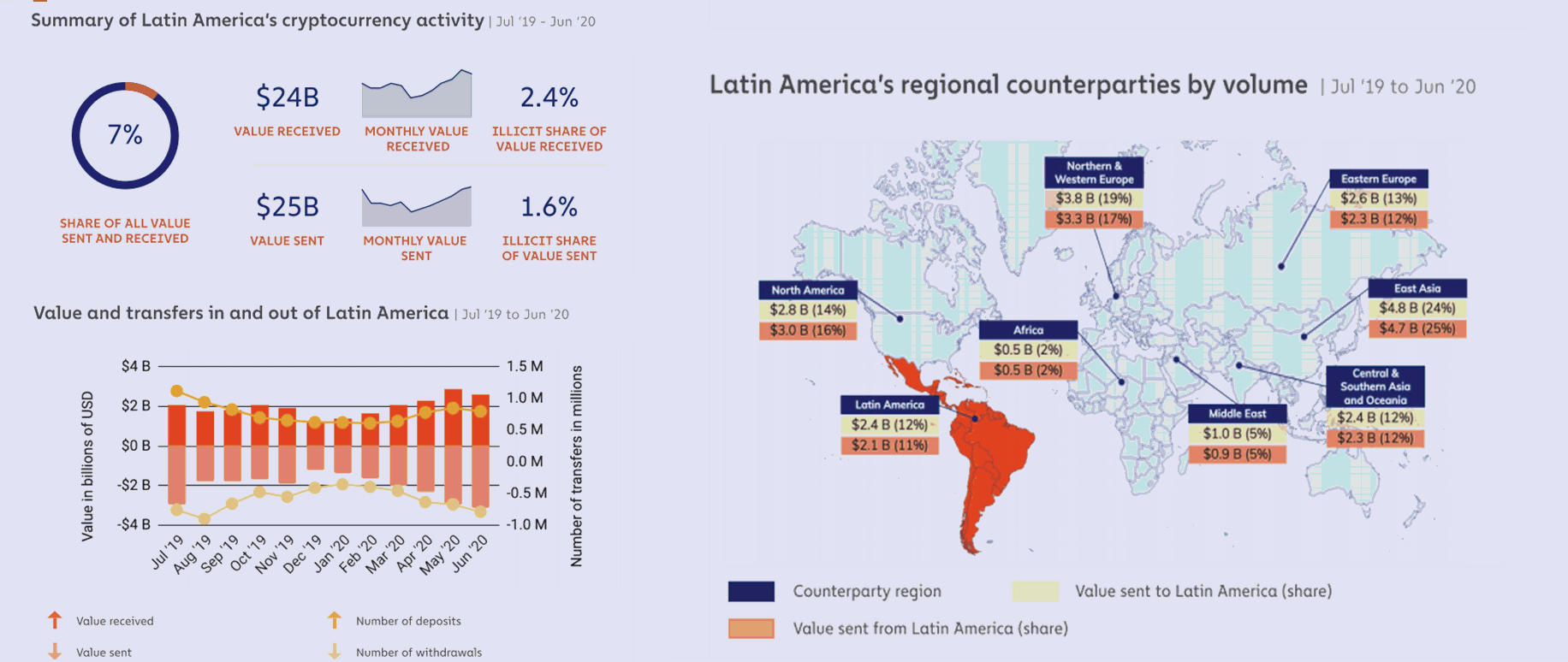
Contributing roughly 7% to the global crypto activity, the Latin American region is one of the smaller cryptocurrency markets — just ahead of Africa and the Middle East. Interestingly, despite being in the neighborhood of the significant North American crypto market, East Asia was the biggest counterparty for this region — posting 24% incoming and 25% outgoing crypto transactions.
The trend of growing crypto transactions after the pandemic was similar to all the other regions, but the most noticeable was the bigger value of illicit transactions in the region — 2.4% of the illicit share of value received (Figure 6). Despite the smaller size of the crypto market adoption was high in countries like Venezuela & Columbia — which ranked №3 and №9 respectively on the Top 10 crypto markets.
Middle East
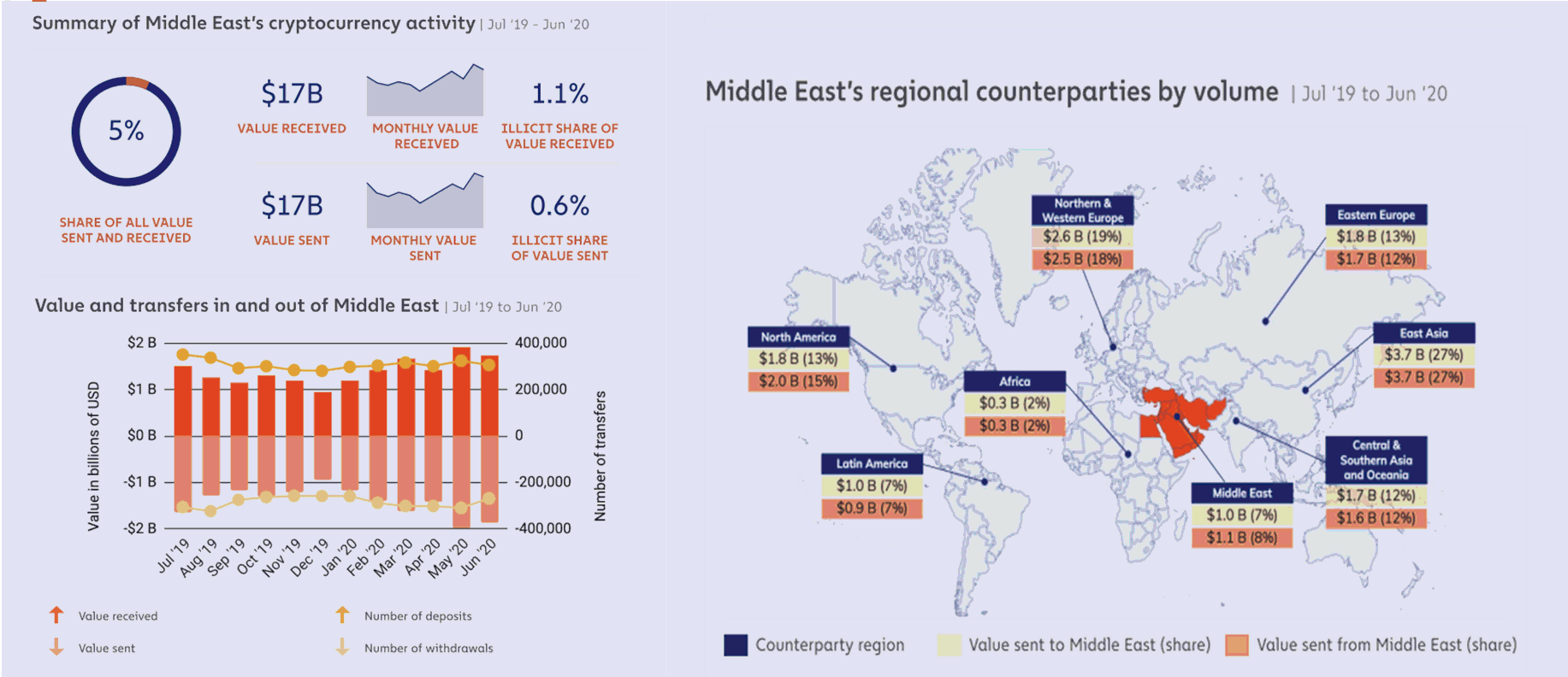
The region is the second-smallest crypto market of all the regions looked at it in the report — posting 5% of the value of all the inbound & outbound crypto transactions. Turkey is the highest-ranking country in the region sitting at №29 in the Crypto Adoption index.
Unlike many of the other regions, where there is a strong retail presence, Middle East’s cryptocurrency activity is highly concentrated to professionals. East Asia was the biggest counterparty here too with 27% crypto transactions both ways (Figure 7).
North America
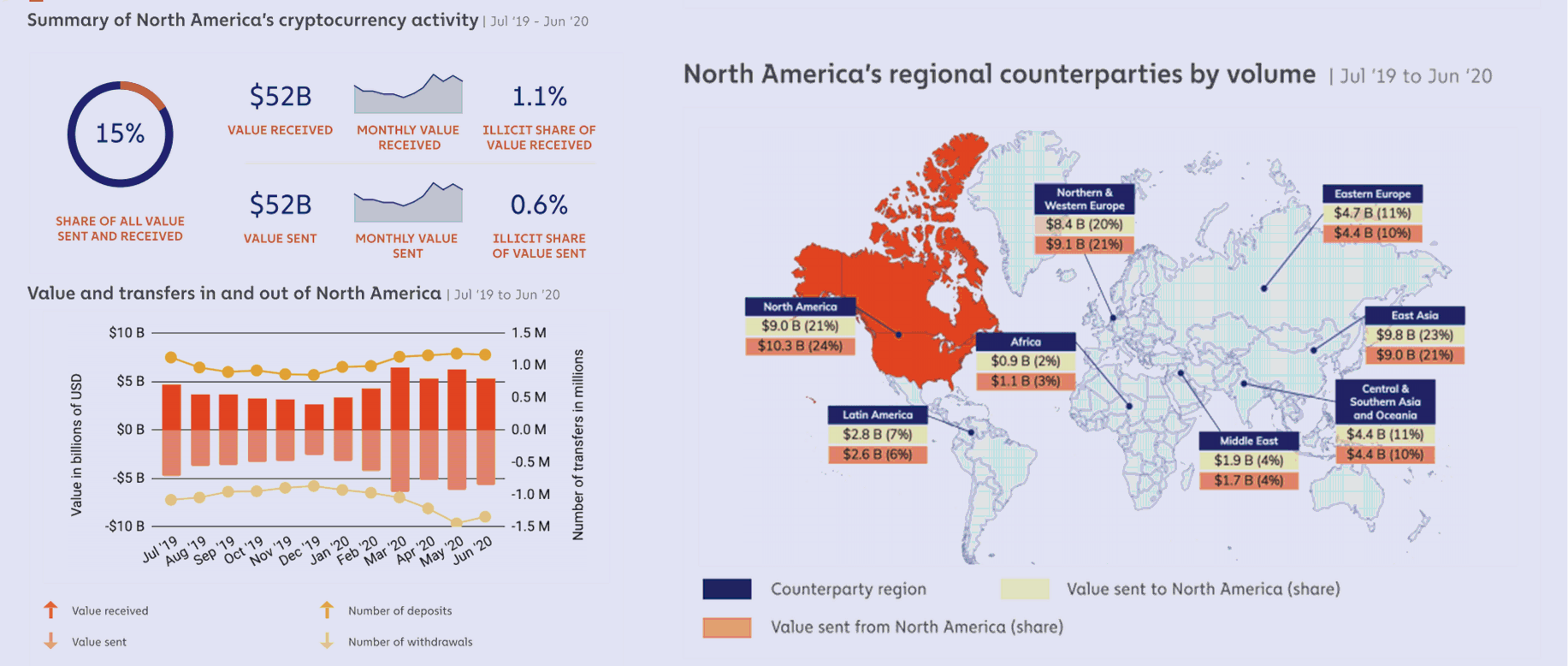
North America is the third-largest crypto market by volume (15% of the total)— just behind Northern & Western Europe (NWE) and well behind East Asia. The region has a highly professional market like East Asia, but the crypto-investment strategies seem to differ in both the regions. The region is a contributor to institutional investors which conduct large transactions and make digital assets part of their portfolios.
East Asia was the biggest inbound counterparty with 23% of transactions to the region while both NWE & East Asia were the biggest outbound counterparties with 21% each (Figure 8). The region also had one of the lowest percentage of illicit transactions.
Northern & Western Europe (NWE)
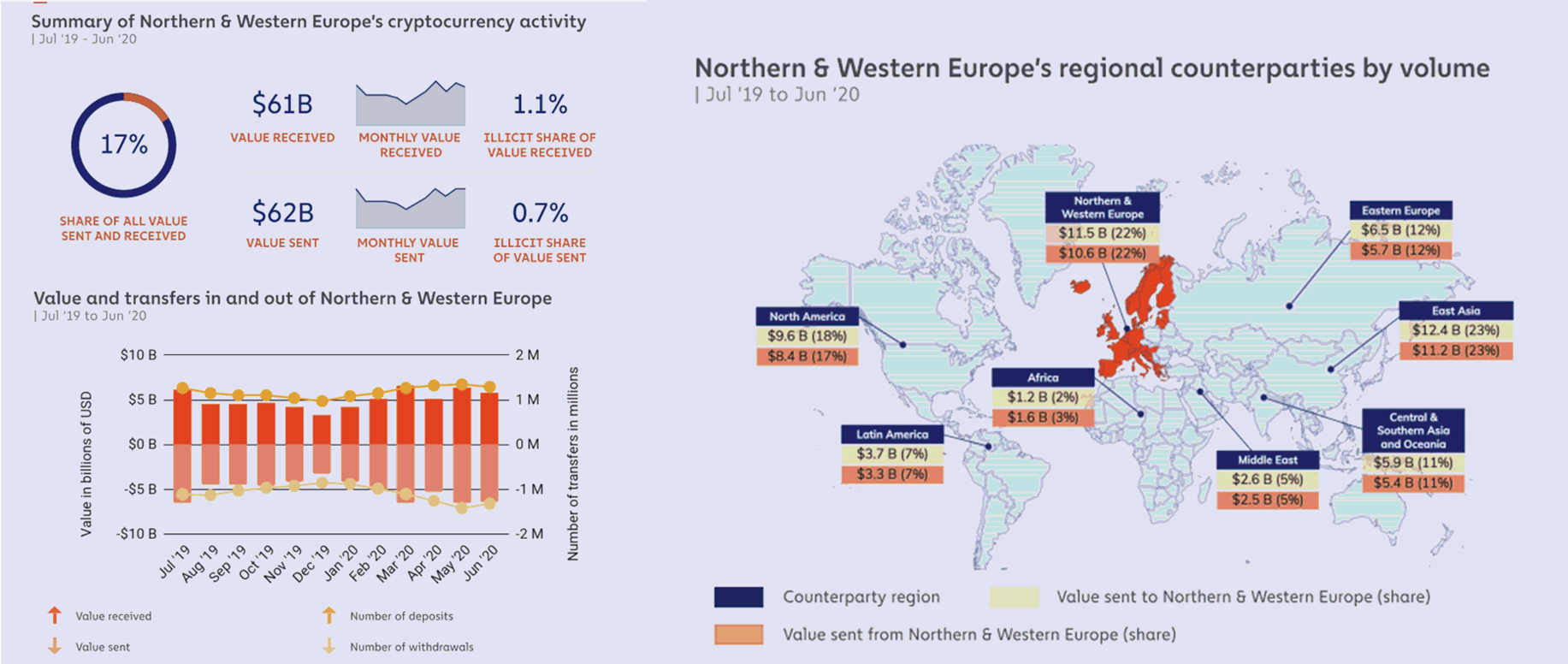
And finally, we come to NWE, the second-largest cryptocurrency market in the world — accounting for roughly 17% of all cryptocurrency value sent and received globally (Figure 9). Like North America & East Asia, the region boasts of highly-developed cryptocurrency markets — comprising of professional players conducting larger transactions.
Like the North American crypto market, NWE’s professional market exhibits a conservative, Bitcoin-focused strategy. And no surprise once again, that East Asia is the biggest destination and source of crypto funds to this region — 23% each of the total volume.
This methodology is the first-ever attempt at a comprehensive country-level breakdown of global cryptocurrency activity. Chainalysis has reiterated that they would continue to strive for an improved methodology in the future rankings.
Although the Global Crypto Index varied widely for different regions, a few key takeaways were evident from the report — most importantly, crypto adoption has become a global phenomenon, secondly, the developing countries are showing grassroots activity, and finally, P2P crypto exchanges are essential to adoption in developing countries.
Originally Published on Medium
Medium 📭| Twitter 📜 | LinkedIn 📑| StockTwits 📉 | Telegram 🔗






