
AI companies scale faster than any industry before them. But are valuations built on solid ground or speculation?
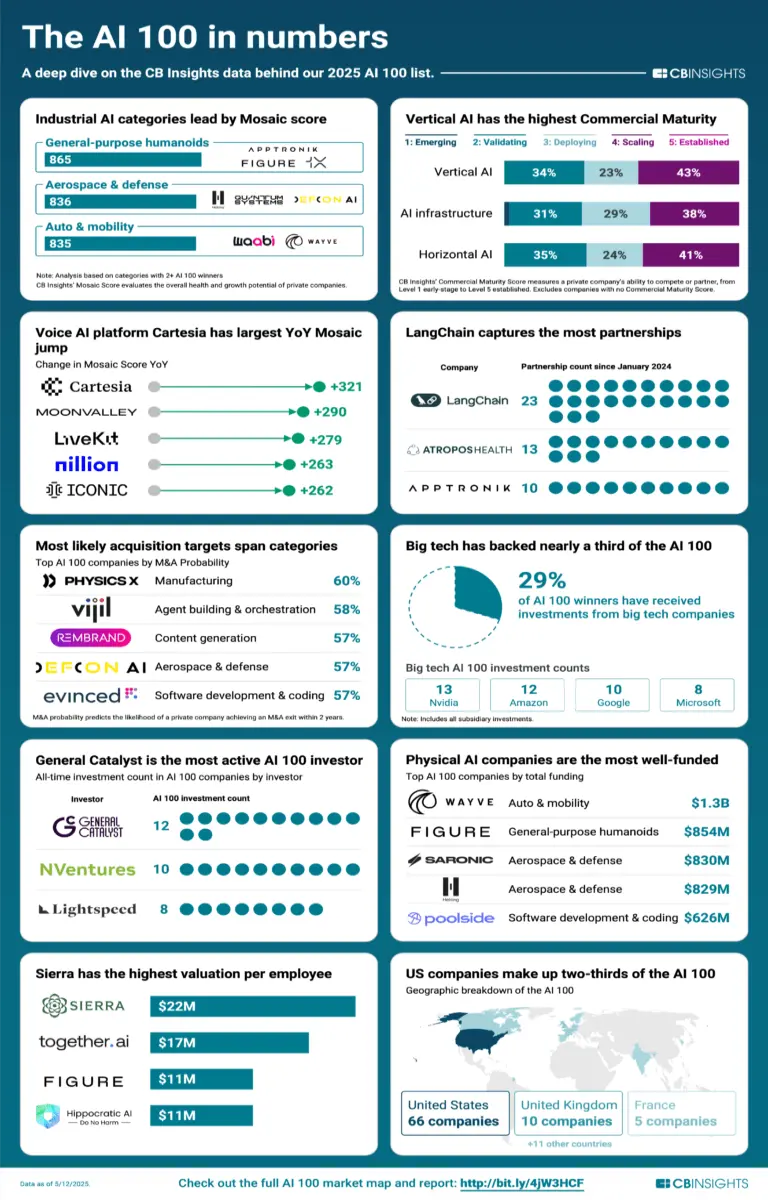
We may be standing at the edge of the largest wealth boom in modern history — one that could reshape not just markets, but also power structures, industries, and society itself. Unlike past surges driven by industrialization, oil, or the internet, this one is happening at breakneck speed and on a scale that feels almost unreal. According to CB Insights, there are now 498 AI unicorns worth a combined $2.7 trillion, with 100 of them founded since 2023 alone. For context, this is not just a trend line bending upward; it’s a vertical launch.
Consider the timelines. Amazon took 24 years to reach a $1 trillion valuation. Google needed 21 years. Facebook hit $100 billion nine years after its launch. Now compare that to OpenAI, which is reportedly closing in on a $500 billion valuation just six years after its founding, with most of that explosive growth compressed into the 18 months since ChatGPT’s release. We have never seen acceleration like this.
Why This Boom Is Different?
The AI surge differs from previous wealth booms in three key ways:
- Instant Scaling Without Physical Infrastructure: Earlier waves of economic transformation required physical infrastructure — factories, distribution hubs, or user networks that had to be painstakingly built. AI firms, by contrast, can plug directly into existing cloud infrastructure, ride on global distribution channels, and deploy at near-zero marginal cost. This is why companies like Anthropic, Mistral, and Cohere have grown to billion-dollar valuations in a fraction of the time it took their predecessors.
- Capital in Overdrive: Trillions of dollars of investable capital are sloshing around global markets, seeking high-growth opportunities. With interest rates stabilizing and traditional sectors like real estate or energy offering diminishing returns, investors are funneling money into AI at a scale we haven’t seen since the dot-com era — and perhaps not even then. The difference is that AI is not just another internet layer; it is a general-purpose technology poised to touch every sector.
- Narrative Power: In finance, stories drive valuations as much as fundamentals. The AI narrative — machines that can reason, write, and create — is one of the most compelling in economic history. It evokes both hope (unlocking productivity and scientific discovery) and fear (displacement, misuse, inequality). That duality ensures AI dominates headlines, boardrooms, and investment decks, creating a self-fulfilling cycle of capital inflows.
The Fragility of Paper Fortunes
But here’s the paradox: while headlines trumpet the rise of new AI billionaires, much of this wealth is, for now, illusory.
- Locked-Up Value: Many firms, including OpenAI, operate under unusual structures. OpenAI’s nonprofit/for-profit hybrid limits founder cash-outs and keeps equity complex. In other cases, insiders are restricted from selling shares on secondary markets, meaning paper billionaires cannot easily realize their wealth.
- Wildly Inconsistent Valuations: China’s DeepSeek, for example, has been valued at anywhere between $1 billion and $150 billion, depending on which source you trust. Such disparities underscore the opacity and speculative nature of these numbers.
- The Bubble Question: Rapidly rising valuations without corresponding revenue growth evoke memories of the dot-com bubble. While AI may ultimately prove transformative, not every company minted today will survive to profitability. Investors may be overestimating short-term monetization, even if they’re underestimating the long-term impact.
A Wealth Boom With Unequal Distribution
If this is indeed the largest wealth boom in modern history, its benefits will be anything but evenly spread.
- Founders and Early Employees stand to gain massively if their companies sustain valuations long enough for liquidity events.
- Investors, particularly sovereign wealth funds, venture capital, and big tech firms with deep pockets, are positioning themselves to capture the lion’s share of gains.
- Workers outside AI hubs may see little direct benefit, at least initially, even as they face disruption from automation.
The history of industrial revolutions suggests that while productivity gains eventually diffuse, the early decades are marked by the concentration of wealth and power. AI’s speed may amplify that concentration before broader societal benefits take hold.
Lessons From History
History reminds us that technological revolutions are rarely smooth. The railroad boom of the 19th century created vast fortunes but also devastating busts. The dot-com bubble left behind spectacular failures but also gave rise to Amazon and Google, reshaping the economy. The question is whether today’s AI wealth boom resembles the early internet (an overhyped bubble with lasting foundations) or something closer to the industrial revolution (a transformation so profound that it permanently altered wealth distribution, labor markets, and global power dynamics).
A Defining Moment
Whether this wealth boom proves sustainable or not, one fact is clear: we have never seen valuations, capital flows, and company creation at this velocity in modern history. The AI revolution compresses decades of technological, financial, and societal change into a handful of years. And unlike previous waves, its reach is universal, affecting not just tech, but law, medicine, education, manufacturing, defense, and even art. That makes this wealth boom not just a financial story, but a human one.
Originally Published on LinkedIn.






