
The Exchange benchmark is a useful tool for investors & traders who are looking for reliable avenues of digital assets trading
If you are a prospective trader, the first thing that probably comes to your mind is what platform to choose. While it is much easier to do this in traditional financial markets of Stocks or Forex, it is a little more tricky when it comes to trading the digital assets like the cryptocurrencies — primarily because it’s a new phenomenon and the oldest crypto trading platforms have been in business for less than a decade.
This is where you need reliable market data that can come in handy to decide which way to go. Cryptocompare, a global cryptocurrency market data provider established the Exchange Benchmark in 2019 and just published the Report for July 2020 — which ranks 165 crypto exchanges based on a variety of metrics and the following 8 categories of evaluation.
The figures in the brackets are the assigned weights for the crypto exchanges & decentralized exchanges (DEXs) respectively.
⓵ Legal/Regulation (15%, 5%)
⓶ KYC/Transaction Risk (15%, 15%) — Engagement for DEXs
⓷ Data Provision (15%, 15%)
⓸ Security (15%, 20%)
⓹ Team/Exchange (15%, 15%)
⓺ Asset Quality/Diversity (5%. 10%)
⓻ Market Quality (20%, 20%)
⓼ Negative Events Penalty (~5%)
The cumulative maximum score comes to a 100 with grades assigned on the total score achieved by each exchange — AA (75 & above), A (65–75), B (55–65), BB (45–55), C(35–45), D(20–35), E(10–20), F(<10). Here are some statistics for you to ponder.
Exchange Rankings
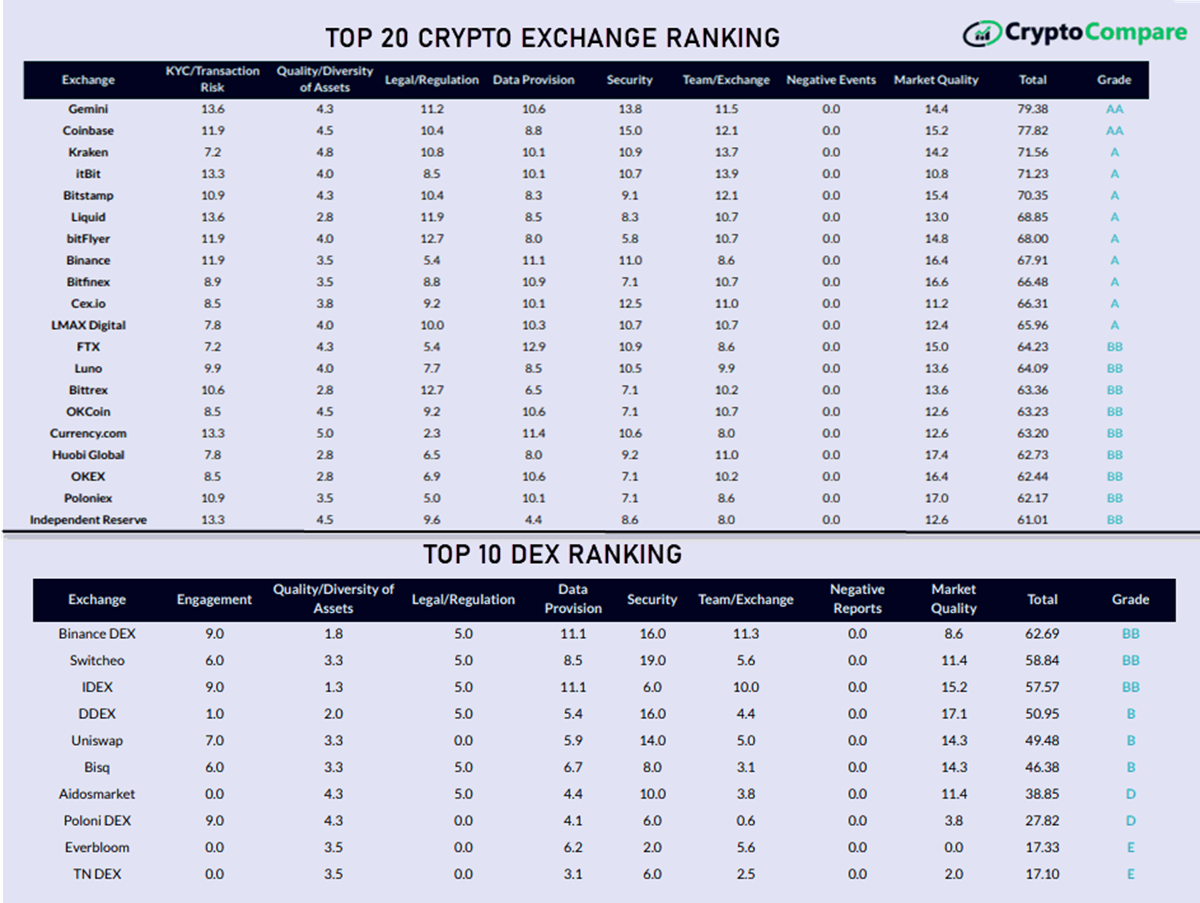
No surprises here with most of the well-known names in the crypto trading arena featuring in the Top 20 — Gemini, Coinbase & Kraken stealing the top 3 spots with Bitstamp, Binance, Bitterex, Huobi & OKEX all featuring in the list. Only the top 2, however, scored the grade AA (Figure 1). None of the DEXs could score a AA or an A grade with the top position going to Binance DEX with a cumulative score of 62.69 (BB).
Top-Tier Volumes & Exchange count per Grade
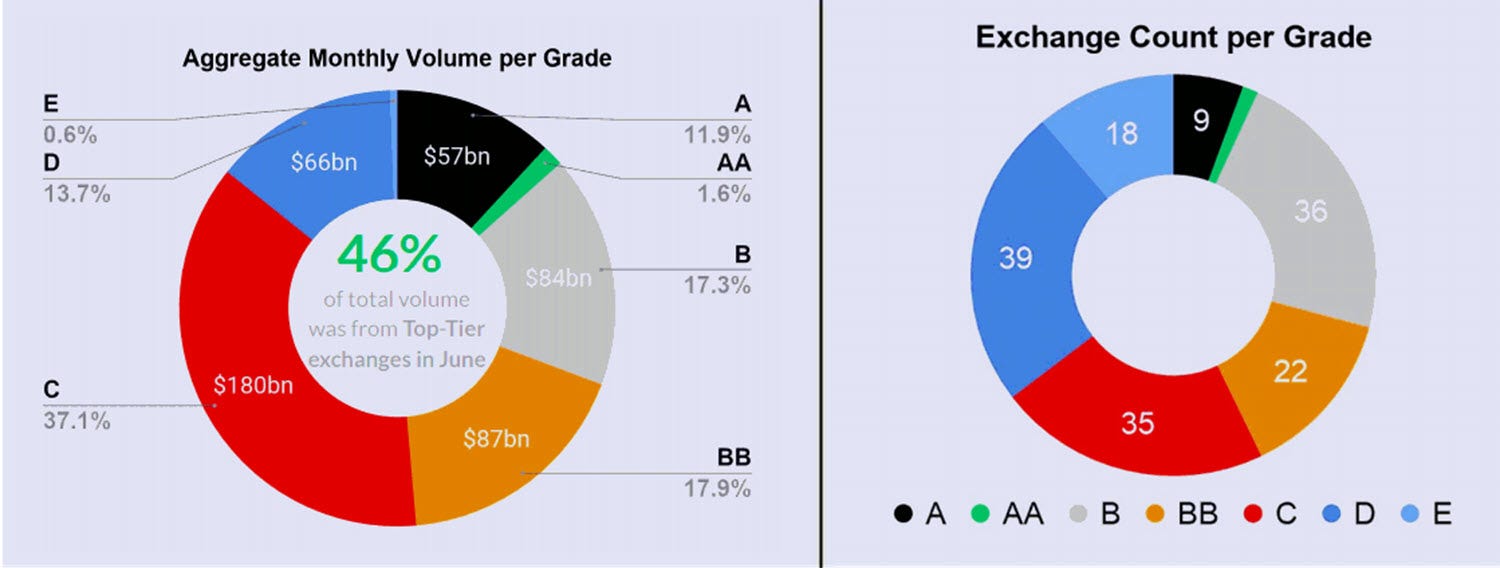
As evident in the image above (Figure 2), most of the grades are pretty well spread among the exchanges with higher grades accounting for a much lower percentage of the exchanges. The trading volumes are proportionate to the grading percentages as well.
Average Ranking based on Geographical Location
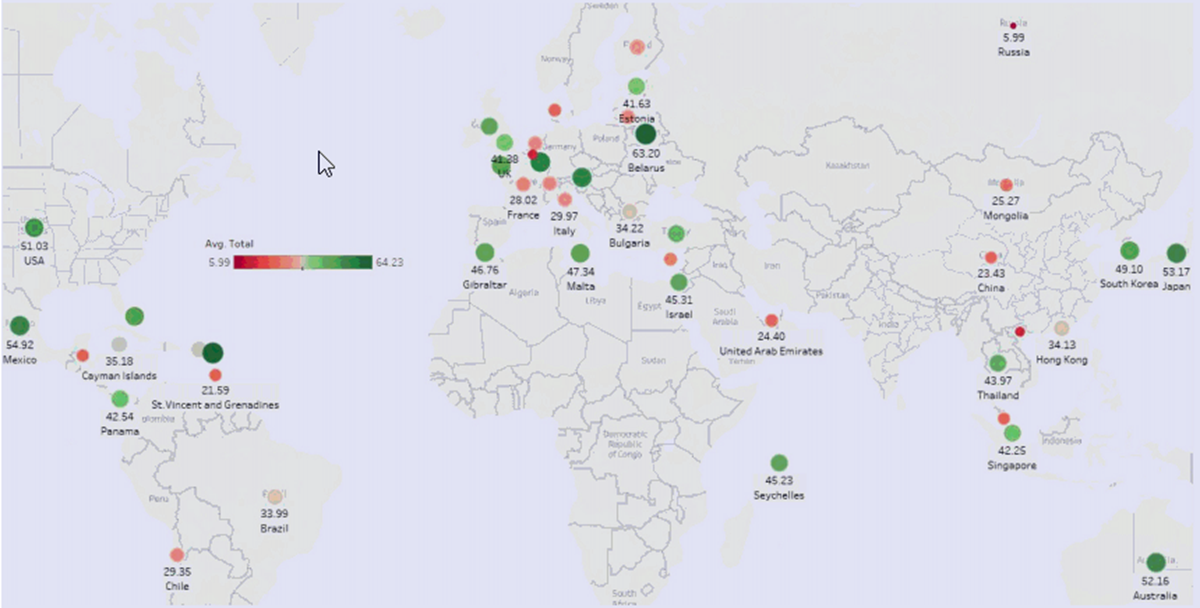
The results showed that the exchanges based in Luxembourg, Japan and the USA are usually the ones boasting of the highest quality. Exchanges in Australia & South Korea also scored well (Figure 3). Generally, crypto exchanges located in jurisdictions with better regulatory frameworks tended to perform better.
Regulatory Standards
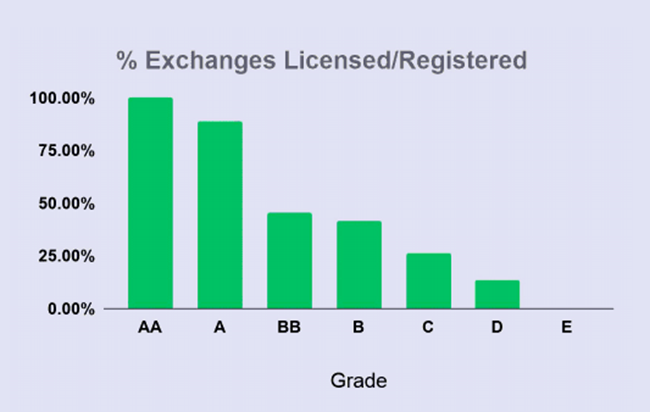
It is pretty obvious from the chart above that the higher the rating of the crypto exchange, the better is their chance of having exchange licenses or being registered with the regulatory authority (Figure 4). Overall 30% of the exchanges possessed a crypto exchange license, while only about 5% offered some kind of cryptocurrency insurance and even lower 2%, insured users, in case of crypto theft.
Transactional Risks
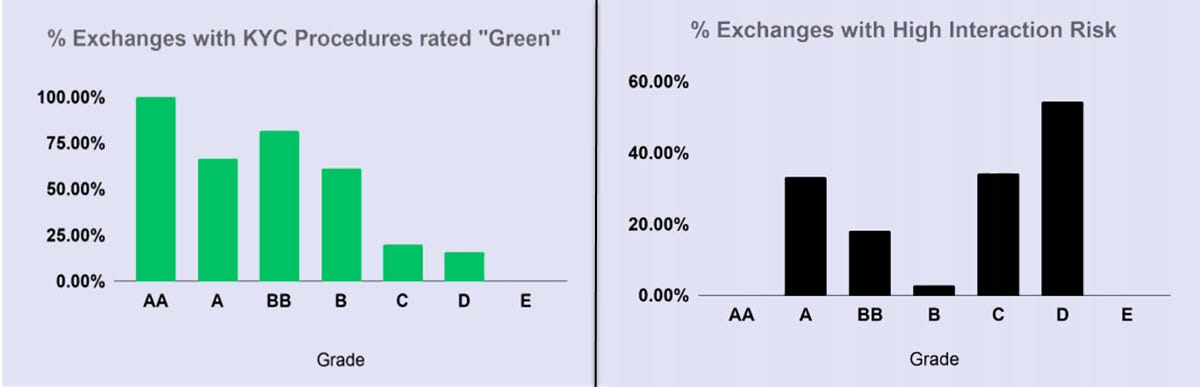
Here as well, exchanges with stringent Know Your Client (KYC) procedures in place where the ones rated high in the order (left, Figure 5). While a majority (56%) of the entities imposed strict ID verification requirements, a sizeable 44% had inadequate KYC programs in place. More than one-third (38%) of the entities were found to interact with high-risk entities (right. Figure 5), while only 16% employed external on-chain monitoring service.
Trading Incentives
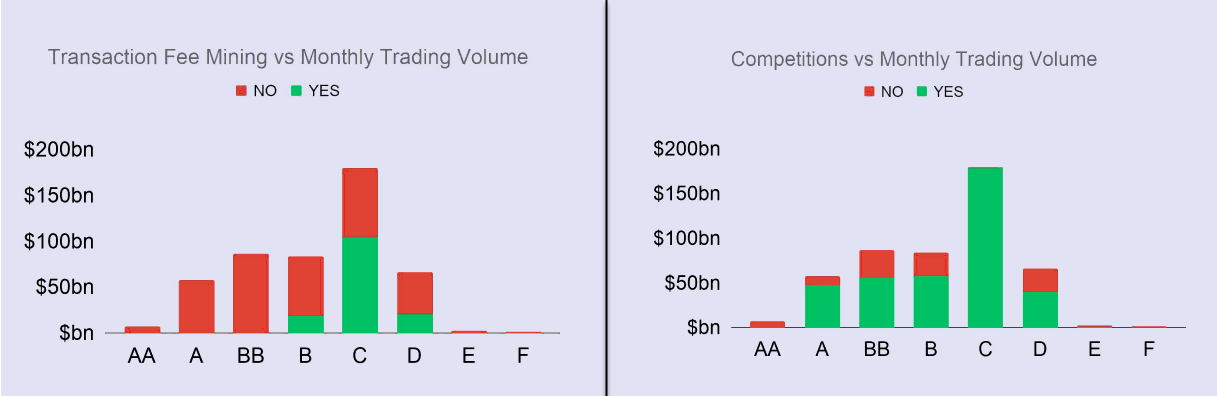
32% of exchanges offered margin trading as you are used to in Stocks & Forex. Almost half (47%) of them rewarded traders with incentives like airdrops (crypto bounty) while only 6% of the entities offered no-fee trading (Figure 6).
Security Protocols
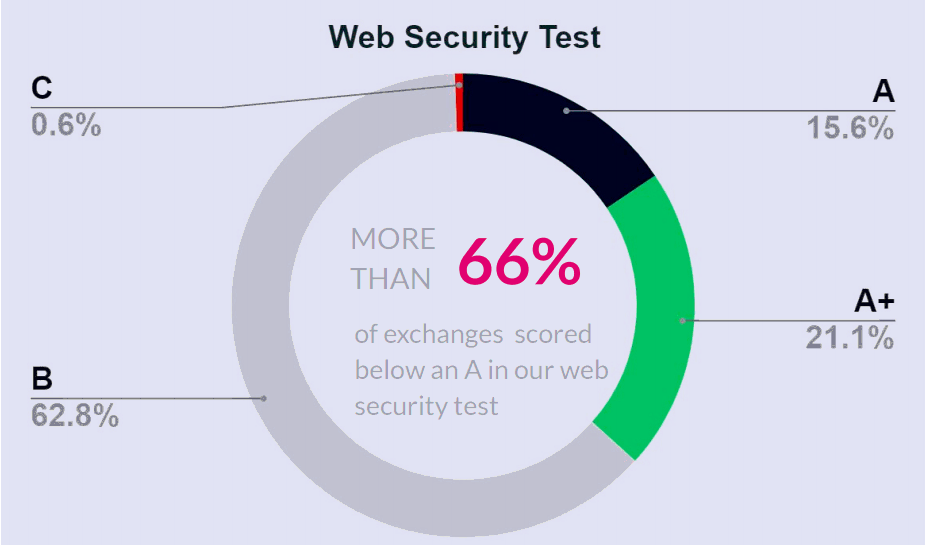
Of all the crypto exchanges analyzed, 4% were hacked in the last year, still more than 66% of exchanges scored below A grade in this important metric (Figure 7). Only 7% of the exchanges possessed ISO 27001 or SOC2 certificate. The strength in this metric was the two-factor authentication, which was offered by 95% of the exchanges, with 15% holding the digital assets in cold wallets (safer than hot wallets).
Data Provisions
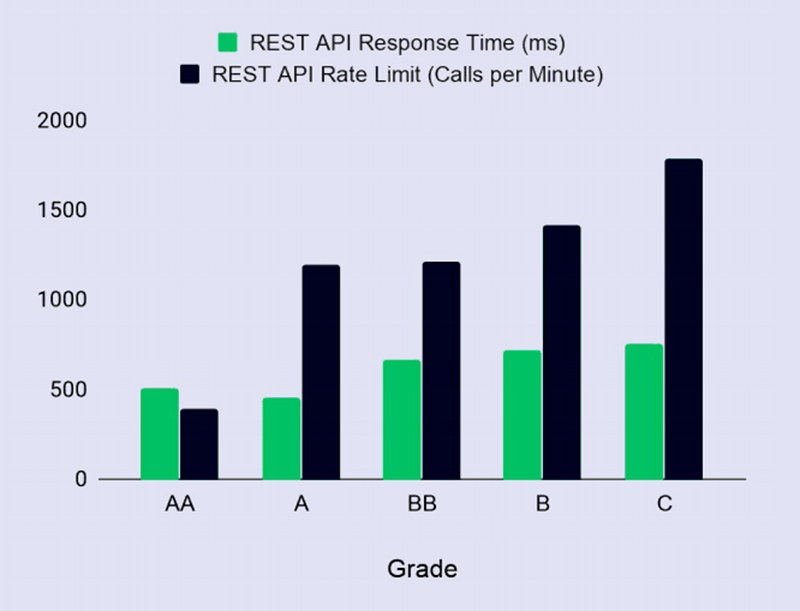
Response times were lower for higher grade crypto exchanges as evident from the chart above (Figure 8) — AA-rated exchanges had a lower average public REST API response time of 504 ms as compared to the 727 ms across all the exchanges. In this metric, 43% of the exchanges provided historic candlestick data.
Originally Published on Medium
Medium 📭| Twitter 📜 | LinkedIn 📑| StockTwits 📉 | Telegram 🔗






