
From alternative to mainstream: Cryptocurrency’s market cap has soared past U.S. currency in circulation in 2024.
The U.S. dollar has long enjoyed its position as the world's reserve currency, facilitating international trade and serving as a safe haven asset. However, the rise of cryptocurrencies presents a potential challenge to this dominance. As the market capitalization of digital assets grows, there's a possibility that they could carve out a larger role in global commerce and investment, potentially reducing reliance on the dollar.
Surge in Crypto Market Cap
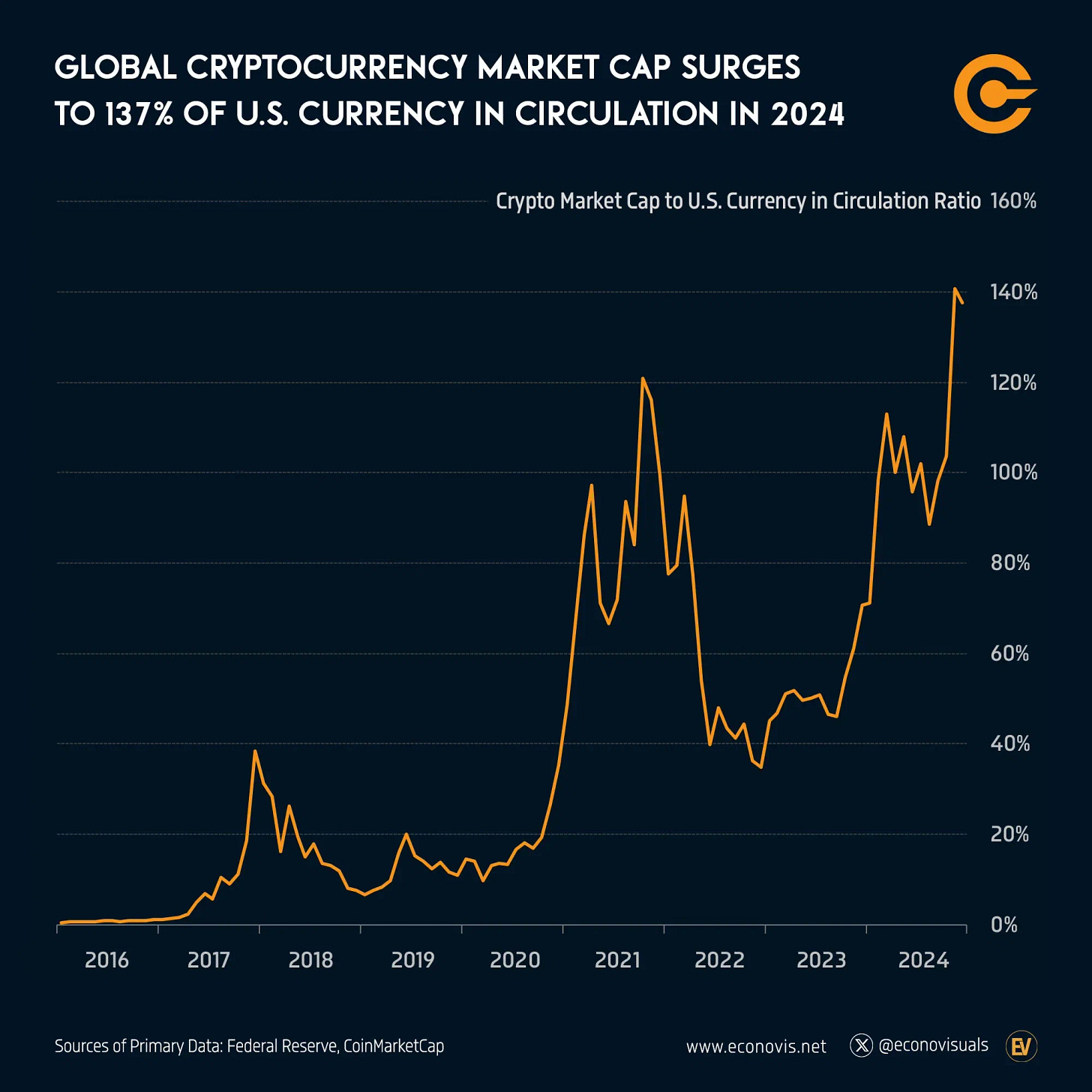
In 2024, the global cryptocurrency market achieved a historic milestone, with its total market capitalization soaring to 137% of the total U.S. currency in circulation. This remarkable growth, nearly doubling from 71% in 2023, underscores the accelerating influence of digital assets in the global financial system.
This development not only highlights the expanding scale of cryptocurrencies but also raises significant questions about the future of traditional reserve currencies and the evolving financial landscape. The data, sourced from the Federal Reserve and CoinMarketCap, reveals a dramatic increase in the ratio of the crypto market cap to the U.S. currency in circulation.
From a modest beginning in 2016, the ratio has grown exponentially, reaching 160% by 2024 (chart below). This surge reflects the increasing adoption of cryptocurrencies by both individual and institutional investors, driven by factors such as technological advancements, regulatory clarity, and the search for alternative investment opportunities in a volatile economic environment.
Implications For The U.S. Dollar
🢡 Diversification of Reserves: Central banks and financial institutions may begin to diversify their reserves by including cryptocurrencies, reducing their reliance on the U.S. dollar.
🢡 Reduced Transaction Costs: Cryptocurrencies offer the potential for lower transaction costs and faster cross-border payments, which could diminish the role of traditional currencies in international trade.
🢡 Hedging Against Inflation: With cryptocurrencies like Bitcoin being perceived as a hedge against inflation, investors might increasingly turn to digital assets to protect their wealth, further eroding the appeal of fiat currencies.
🢡 Alternative Financial Systems – With stablecoins and decentralized finance (DeFi) gaining traction, financial systems outside traditional banking channels are becoming more viable.
🢡 Erosion of Monetary Control – Central banks, including the Federal Reserve, risk losing influence over the financial system as decentralized digital assets reduce the need for centralized monetary policy interventions.
Implications and Future Outlook
The long-term implications of this trend are still unfolding, but several potential scenarios exist:
-
Coexistence: Traditional finance and cryptocurrencies may coexist, with digital assets playing a more significant role in certain areas like cross-border payments and decentralized finance.
-
Gradual Shift: A gradual shift away from the dollar as the sole reserve currency is possible, with a basket of currencies and digital assets sharing this role.
-
Regulatory Scrutiny: Governments worldwide are likely to increase regulatory scrutiny of cryptocurrencies to address concerns about money laundering, tax evasion, and financial stability.
Navigating the New Landscape
The rise of cryptocurrencies presents both opportunities and challenges. Investors need to carefully assess the risks and potential rewards of this volatile asset class. Regulators face the complex task of balancing innovation with the need to protect consumers and maintain financial stability. The world is witnessing a profound transformation in the financial landscape, and the future of money is likely to be shaped by the continued evolution of cryptocurrencies.
Originally published at Substack.






