
Prologue: The Three Pockets of a Roadside Hustler
Every single morning on the asphalt of Kendal Regency, I don't just jump onto my motorcycle seat blindly. Before I turn on my ride-hailing app, I organize my financial operational capital very carefully. As you can see from my photo below, I wear my official green jacket packed with pockets.

"Ready for the shift in my driver uniform. Out here, a misplaced note or a single moment of distraction can completely wipe out my daily earnings."
In my line of work, if a driver makes the critical mistake of putting all his money into a single pocket—mixing his physical cash for fuel, his family's emergency e-wallet balance, and his corporate delivery capital all together—he is walking straight into a disaster. In the tech and blockchain world, this vulnerability is known as a Single Point of Failure.
My latest module on BitDegree taught me that professional crypto holders never keep their digital assets in one place. They separate their wealth into three distinct layers based on risk profiles: Hot, Warm, and Cold Storage. Sitting at a local shelter between rides today, I realized that the harsh, raw rules of the street manage security risks exactly the same way. Let’s break down the mechanics under the hood.
Part 1: Hot Storage — The Vulnerable Cash in Your Pocket
• The Crypto Theory: A Hot Wallet is any digital storage (like an app on your smartphone or a Centralized Exchange account) that is permanently connected to the internet.It is built for lightning-fast transactions, liquidity, and active daily trading.
• The Asphalt Analogy: This is exactly like the Physical Cash Notes I keep loosely inside my jacket or pants pocket. I use this small float to quickly pay for gasoline at gas station (roadside) stands or buy a hot cup of black coffee at a traditional stall that doesn't accept digital scan codes.
• The Real-World Risk: My pocket is highly vulnerable. When I am rushing through a busy intersection or quickly pulling out my phone from the same pocket to check my navigation maps, loose cash notes can accidentally catch on the phone or my keys, get pulled out, and fly away onto the asphalt without me ever noticing.
This mirrors hot storage perfectly. Major global exchanges like Bybit, DMM Bitcoin, and FTX have historically suffered massive security breaches or institutional collapses, freezing billions in user funds. If you leave your entire life savings sitting on a hot exchange platform for mere "convenience," you only hold a digital promise (an IOU), not the true digital keys to your wealth. Not your keys, not your crypto!
Part 2: Warm Storage — The E-Wallet and Social Manipulation
• The Crypto Theory: Warm Storage represents wallets secured by hardware devices but actively connected to the internet via Web3 protocols like WalletConnect. It allows you to interact with decentralized finance (DeFi) networks, stakes assets, or trade NFTs while keeping your master keys isolated on a physical chip.
• The Asphalt Analogy: This is exactly like my Personal OVO E-Wallet Balance on my phone. I keep this money safe in a digital layer, completely separated from my physical saku (pocket) cash.
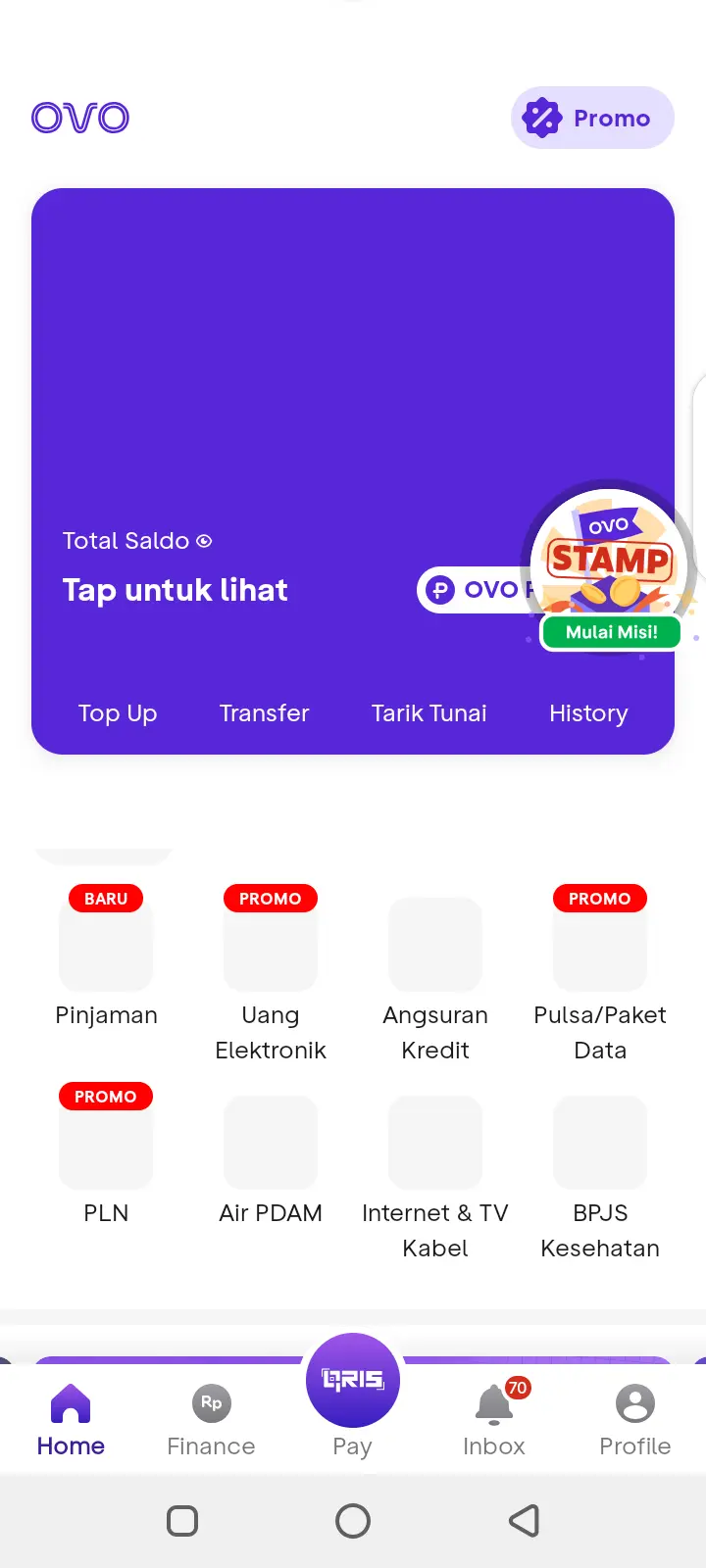
"My digital e-wallet application interface. It holds emergency funds for my household, but it requires strict attention to protect it from predatory actors."
• The Real-World Risk: I use this warm digital balance strictly for urgent, high-priority household needs—such as buying internet data packages when my phone goes dead on the road, or buying pre-paid electricity tokens (PLN) late at night when my family's power meter at home suddenly runs out of juice.
However, this layer carries a massive security threat: Social Engineering (Psychological Scams). When a driver is deeply exhausted, filtering through heavy traffic, and hyper-focused on maintaining his customer ratings, malicious oknum (bad actors) will strike. They place a fake order and use the in-app chat function to manipulate the driver’s empathy, saying: "Sir, please help me out, use your own e-wallet to transfer money to this account or top up this phone number upfront, I will pay you back in cash upon arrival."
If the driver loses concentration for a single split second and clicks approve, his warm capital is instantly drained by a thief. This mirrors a malicious DeFi dApp connection. If you blindly connect your active wallet to an unverified smart contract protocol without cryptographically analysing, the transaction simulation, predatory bots will empty your connected balance instantly.
Part 3: Platform Risk — The Long Road to Plantaran
• The Crypto Theory: Leaving substantial digital assets exposed to third-party smart contracts or exchange databases means you are absorbing massive platform risks—including system hacks, regulatory freeze downs, and malicious counterparty exploits.
• The Asphalt Analogy: This is exactly like the Driver Credit Wallet balance inside my ride-hailing app, which I am forced to load with capital to act as an upfront guarantee for food delivery and shopping orders.
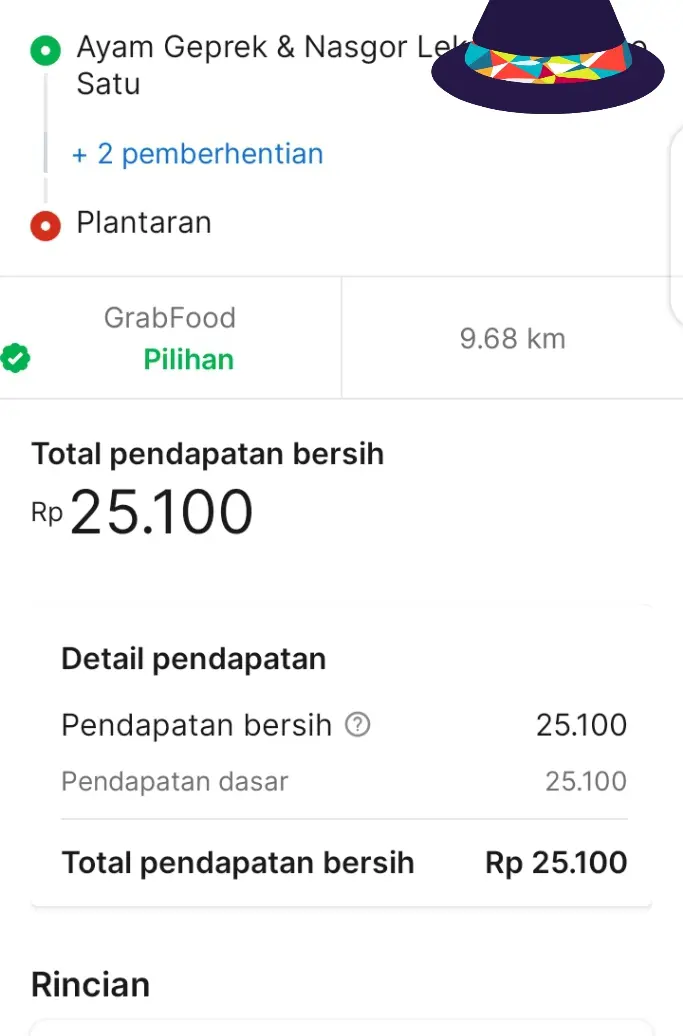
"A 9.68 km GrabFood order heading deep into Plantaran village. A long, exhausting haul that exposes my hard-earned operational capital to system risks."
• The Real-World Risk: Look closely at my order history above. It was a long 9.68 km haul out to the rural area of Plantaran, earning a net base fare of Rp25,100. To complete this, I had to exhaust my motorcycle's fuel, burn my physical energy under the blazing sun, and use my driver credit wallet to pay the restaurant kitchen upfront.
If this turns out to be a malicious Orderan Fiktif (Fake/Ghost Food Order) created by a scammer, my capital gets trapped inside a broken transaction. I arrive at the dark, empty location, only to find out there is no real customer. My bensin is gone, my time is wasted, and my hard-earned capital is locked up inside the system until I file a long corporate dispute report.
In Web3, leaving excessive funds exposed to a single platform or exchange acts exactly like holding too much capital in your driver app. If the platform freezes or suffers an exploit, your working capital vanishes into thin air. The standard professional rule is simple: only keep your active trading float on an exchange, and move the rest into self-custody cold storage where no third party can touch it.
Technical Security Blueprint: The 3-Card Redundancy
To completely eliminate these systemic risks, modern Web3 security protocols utilize advanced offline hardware solutions, such as the Tangem Cold Wallet. Tangem utilizes an NFC-enabled hardware chip certified with military-grade EAL6+ security protocols (the same cryptographic baseline used in biometric passports). It operates completely without batteries, wires, or Bluetooth exposure.
By utilizing Tangem’s 3-card pack framework, a disciplined user can assign roles to each card to replicate a bulletproof asset defense system.
1. Card 1 (Deep Cold Storage): Placed safely inside a locked home vault or a bank safety deposit box. It never connects to any external internet application or DeFi dApp. It serves exclusively as a permanent destination for long-term wealth preservation (Bitcoin/Ethereum).
2. Card 2 (Warm Storage): The active physical card you carry in your daily wallet. It connects via Wallet Connect to complete monthly staking operations. It is incredibly secure because even if an internet session is active, no transaction can be executed unless you physically tap the hardware card against your smartphone chip.
3. Card 3 (The Emergency Backup): Stored completely separate from the other two cards at a completely different physical location (such as a highly trusted family member's house). If your daily Card 2 drops out of your jacket pocket during a torrential downpour while navigating the mountain curves of Kendal, your life savings are completely untouched. You simply pull out Card 3 to regain full cryptographic access to your assets.
Critical Caveat: This multi-card infrastructure provides absolute device redundancy, but it demands total personal accountability. If all three cards are physically destroyed or lost, and you chose the seedless setup option, your digital capital is sealed away forever. No corporate tech support desk can reset your password or recover your coins.
Conclusion: Real Proof of Work Cannot Be Faked
Managing risks on a public blockchain ledger sounds incredibly complicated when you read it inside a corporate boardroom, but it is driven by the exact same instinct as surviving the streets of Central Java: never trust blindly, always secure your perimeter, and never bunch your survival capital into one fragile basket.
My 95-day active learning streak on BitDegree is proving to be a priceless anchor. It has completely transformed the way I view security—both on the asphalt and on the screen. People may continue to look at our green jackets on the sidewalk and see nothing but identical, low-income drivers. But they don't see the expanding architecture inside our minds.
True integrity and deep-dive cryptographic knowledge are assets that no "Aplikasi Tuyul" can ever hijack, and no "Orderan Fiktif" can ever drain. Keep your spirits burning bright, secure your private keys like your life depends on it, and let’s keep moving forward! See you on Part 16! 🏍️🛡️✨
📌 Author’s Note:
Thank you for reading my journey from the asphalt! Just a quick milestone: my Web3 Journal Part 2 was officially cited on MEXC News, and from Part 6 onwards, this grassroots series has been curated and published by Block Magnates and Coinmonks on Medium. If these roadside analogies helped your crypto literacy, please consider leaving a thumbs up or a nice tip below to keep this driver's engine running! 🏍️⛽ Every bit of appreciation counts!






