
Hello fellow Street Warriors! Before we park our motorcycles and log off for the night, let’s talk about a silent predator that crawls both on the asphalt and inside our crypto wallets: Scams.
In every job, there are always risks. Bad luck doesn't give you a heads-up, and it certainly isn't marked on any calendar. Tonight, I hit a painful streak of bad luck on the road—I got hit by an "Orderan Fiktif" (a fake delivery food order). I received a delivery request at 06:44 PM to pick up food from a local merchant and deliver it to an address 5.20 km away. In these cash-on-delivery situations, drivers have to use their own hard-earned money to bail out the food cost (nalangi), fully trusting that they will be reimbursed upon arrival.
But when I arrived at the destination on Jalan Dempel II, reality hit me hard. Nobody knew the customer. The name was a ghost. Not only did I lose my time and gas for a minor Rp13,900 delivery fee, but I also lost my actual out-of-pocket capital bailing out the food.
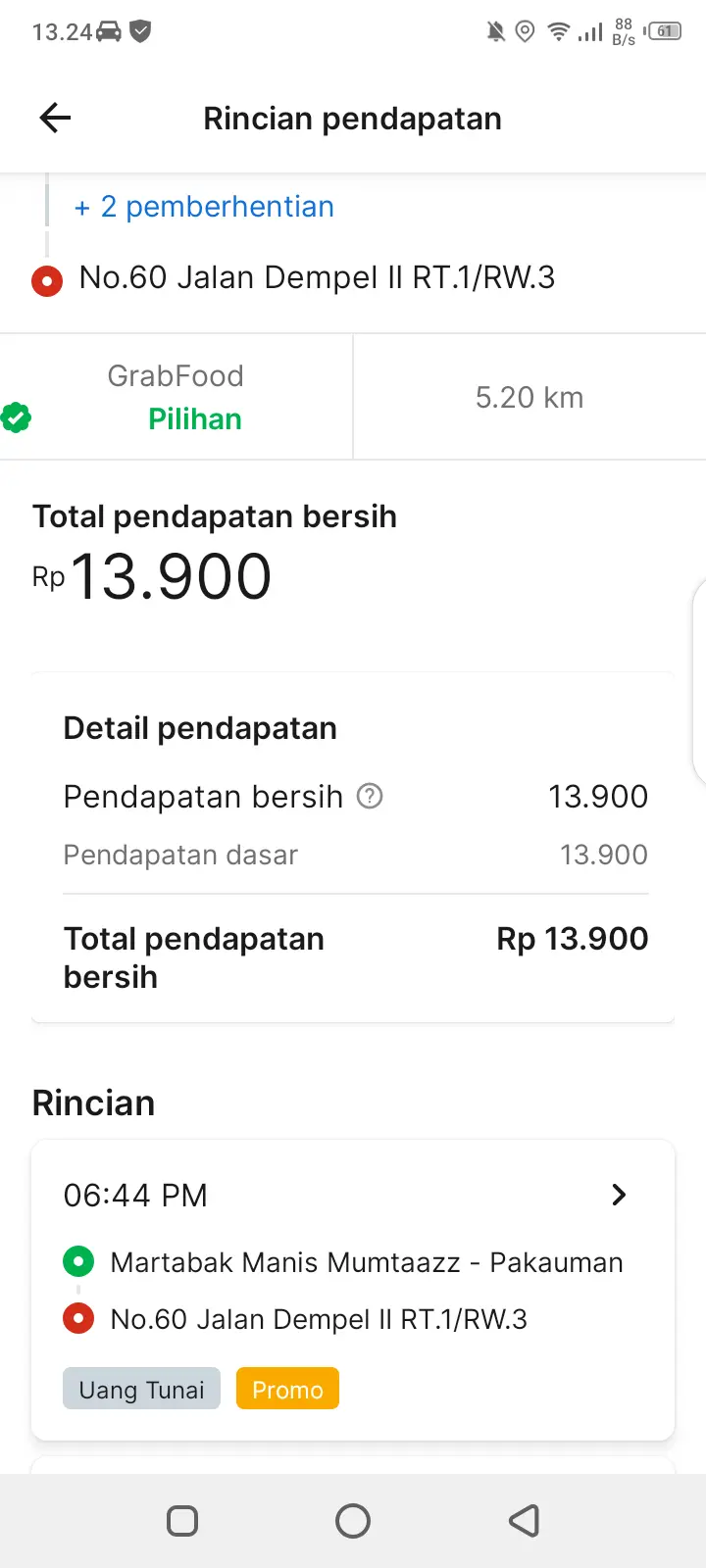
Caption: "My driver app dashboard showing the fake food order details. A real-world example of social engineering where victims lose both service fees and upfront capital."
In the physical world, this is a classic social engineering trick. Scammers exploit human psychology—using our daily commitment to complete orders and earn a living—to manipulate us into parting with our money.
While wrapping up my study module on BitDegree tonight, I realized that internet hackers use the exact same psychological tricks to steal digital assets. In the Web3 world, this is called Phishing and Social Engineering. In 2022-2023 alone, phishing scams accounted for over $4 billion in cryptocurrency losses worldwide.
Let's break down how these modern tech thieves operate and how we can use street-smart logic to build an unbreakable defense for our wallets!
What is Phishing and Social Engineering?
In crypto, hackers rarely break into the blockchain ledger itself—the cryptographic infrastructure is too secure. Instead, they choose to "hack" the human mind.
· Social Engineering is the act of manipulating people into performing actions or revealing confidential, private information.
· Phishing is a specialized method where scammers send fraudulent messages—often emails, website links, or direct messages—designed to trick you into typing your private seed phrases, revealing passwords, or signing a malicious smart contract.
1. Recognizing the Digital "Fake Customers" (Phishing Signs)
Just like a seasoned driver spotting a sketchy, unverified account booking a ride, you can catch a digital trap by looking closely at the details:
· Unfamiliar & Spoofed Senders: Always check the sender’s exact email header. Scammers use misspelled domain names that look slightly similar to trusted companies (e.g., [email protected] instead of binance.com).
· Urgent & Threatening Language: Phrases like "Urgent action required!" or "Your wallet will be permanently suspended!" are designed to panic you so you act instantly without thinking.
· Hidden Traps in Links: Never click blindly. Hover your mouse or press and hold a link to see the actual URL destination. If the web address doesn’t perfectly match the official domain, it’s a trap.
2. Social Engineering: The Digital "Gendam" Tactics
Web3 thieves exploit human psychology to gain your trust. Two of their favorite tricks are:
· Pretexting (The Impostor): The attacker creates a false scenario, impersonating a helpful community admin, a customer service agent, or a technical support team member in your Discord/Telegram DMs to slowly extract your wallet details.
· Baiting (The Free Lunch Trap): Enticing offers like "Free $500 Airdrop! Click here to claim your reward instantly!" Just like a fake cash prize scam on the streets, if it sounds too good to be true, it is always a scam.
3. Indicators of a Fake Website (The Counterfeit Hub)
Phishing sites are built to look 100% identical to legitimate cryptocurrency platforms, decentralized exchanges, or investment protocols. Watch out for these red flags:
· Misspelled URLs: Slight alterations in familiar web addresses (e.g., faiir.club instead of fair.club).
· Lack of HTTPS Security: Legitimate financial platforms use secure, encrypted "HTTPS" connections. Always check for the padlock icon next to the URL bar.
Roadside Case Study: The Fake Customer Service Email
Let’s look at a classic scenario. Suppose you receive an urgent email claiming to be from your primary cryptocurrency exchange. The email warns that your funds are frozen due to sudden regulatory updates and provides a big blue button to "Update Your Login Details Immediately."
· The Rookie Mistake: Panicking, clicking the link, and typing your password and wallet seed phrase into the form. Within seconds, your digital assets are completely wiped out.
· The Street-Smart Warrior Move: Pausing and taking a deep breath. You examine the sender's address and spot a subtle misspelling. Instead of clicking the email link, you close the application, open your secure web browser independently, and log into your official exchange dashboard directly to verify the claim. You safely ignore the fake link.
Structural Summary: Physical Roadside Scams vs. Web3 Phishing
Scammer Tactic
Physical Roadside Scam (Ojol)
Web3 Crypto Phishing
The Setup
Fake Food Delivery Order (Orderan Fiktif).
Fake Airdrop claims or fake wallet maintenance alerts.
The Trigger
Panicking the driver into purchasing goods or bailing out cash.
Creating artificial urgency (e.g., "Your assets will be locked!").
The Ultimate Goal
Stealing physical cash, food items, or your app login OTP.
Stealing your private keys, seed phrases, or crypto assets.
Best Defense
Independent verification via official call centers.
Strict Rule: Never share seed phrases; use Hardware Wallets & 2FA.
Preventive Measures: Your Digital Helmet
Protecting your digital assets requires a combination of constant vigilance and proactive digital habits:
1. Two-Factor Authentication (2FA): Always activate 2FA using secure apps like Google Authenticator (avoid SMS 2FA, as hackers can duplicate SIM cards via SIM-swapping). This acts like a heavy padlock on your account.
2. Regular Software Updates: Keep your wallet applications, browser extensions, and phone operating systems updated to patch any security vulnerabilities.
Conclusion: Driving Safely in the Crypto Traffic
Understanding the signs of phishing and social engineering is just like knowing which roads to avoid during a flash flood. By staying informed, verifying every link, and keeping your private keys strictly to yourself, you can drive smoothly through the Web3 ecosystem without ever falling victim to these digital predators.
The road may be filled with traps, but a prepared street warrior is impossible to cheat.
Time to lock the brakes, turn off the engine, and get some well-deserved rest. Keep your spirits high, drive safely on the asphalt tomorrow, and let’s keep building our block height with honor! 🏍️💤
📌 Author’s Note: My Web3 Journal Part 2 was officially cited on MEXC News, and this grassroots series is curated and published by Block Magnates on Medium. If these roadside analogies helped your crypto literacy, please consider leaving a thumbs up!





