
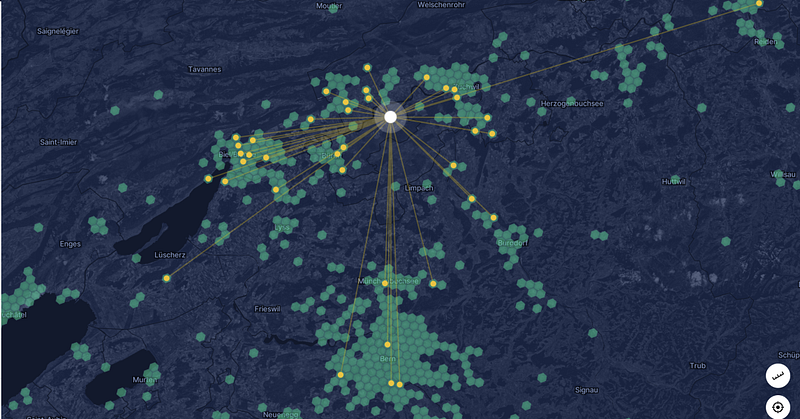
Helium, a blockchain-based network, connects IoT devices to the Helium network. Helium technology allows communication between devices while the system transmits data to other nodes.
Hotspots provide public network coverage that relies on LoRaWAN. LoRaWAN, a media access control protocol layer, has a cloud component to which platforms such as Helium can connect to.
What Are the Differences Between LoRaWAN and WiFi? WiFi is limited in range and is data intensive which would quickly drain batteries. LoRaWAN is specially designed for IoT devices which send small amounts of data but need to do so over greater distances. LoRa stands for Long Range. LoRa gives long-range transmissions of more than 10 km in rural areas with low power consumption. It is a patented wireless data communication technology developed in 2012.
Helium, of the largest LoRaWAN networks, has over 950,000 hotspots that act as nodes. Hotspots combine LoRaWAN’s power with a mining device that uses blockchain technology.
Helium, also known as “The People’s Network,” aims to create an efficient and functional IoT network ready for the future.
So what is the Helium Network used for ?
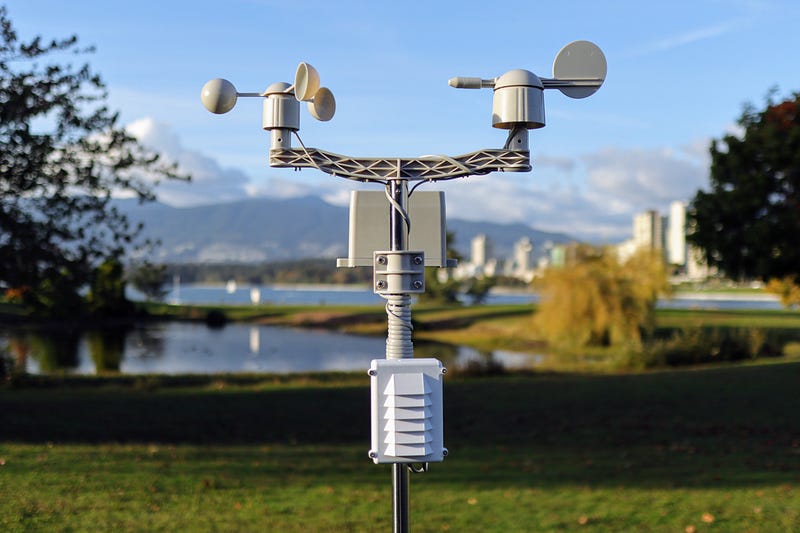
One use case for the Helium Network is a company called Airly. The focus at Airly is on monitoring air quality which can be accomplished through IoT devices which may send small bits of data a few times a day. Using the LoRaWAN protocol these devices can be miles from the closest power source and transmit data for up to several years without changing batteries.
Airly is the leading cost-effective SaaS (sensing-as-a-service) solution for hyperlocal air quality monitoring and control.
Our comprehensive platform helps governments and business take bold action to reduce emissions and protect public health.
Another use case for the Helium Network is LoneStar Tracking. All this is made possible by using low power IoT devices that are not bandwidth intensive and use very little battery power to transmit the required data.
“In the past, if a company approached LoneStar Tracking with a LoRa need, we would visit their location, deploy multiple towers, and provide the LoRaWAN coverage needed for their operations. However, this was expensive and coverage was limited.
Our partnership with Helium has given us three advantages. First, because of the widespread coverage that The People’s Network provides, we rarely need to deploy infrastructure and can leverage a rapidly growing network. Second, the price of our sensors has dropped tremendously. Cellular and Satellite terminals are expensive and don’t even come close to the low cost of a LoRa terminal. And lastly, our sensors are secured and encrypted, starting from the sensor, all the way to the end user’s computer. The Helium Network allows us to maintain a high level of security and encryption, to keep your data private.”
— Thomas Remmert, Co-Founder and CTO, LoneStar Tracking
The Helium network has evolved to became the world’s largest decentralized wireless network. It enables a convenient and low-cost way of transmitting and retrieving data over the internet. With Helium’s technology user information is protected and transparent. With Helium, no infrastructure needs to be purchased or deployed. Everyone can become a part of the new decentralized network by buying a Helium hotspot miner. When online and offering coverage, those devices are earning HNT Helium’s own native cryptocurrency so you can become a part of a global wireless network and earn money in the process.
There are many use cases in addition to Airly and LoneStar for the Helium network as LoRaWAN has proven to be a cost effective alternative to cellular. Thanks for reading !






