
Working from home has some clear benefits: no more early-morning commute, reduced exposure to toxic office politics, and lunches more nutritious than store-bought sandwiches with access to your own kitchen. But working from home can also be pretty damaging from the isolation it creates due to the lack of human contact.
Having worked from home for the last five years I want to share some of the things that helped me reverse the depressed feeling I got from working from home for far too long.
The name changer
The first thing I would recommend is to start calling yourself a ‘remote-worker’ rather than use the phrase ‘working from home’ when describing your work situation.
It’s a small change but that little shift in thinking helps you remember you are not necessarily bound to your abode. Local libraries or quiet cafes are a good place to work for an hour or so with a hot drink for that little variety in the day and to be surrounded by others.
Cafes and Meetup groups
For me, working in local cafes still felt lonely, but not as much as a day spent entirely at home, and those little ventures out and about were helping chip away at the ball and chain remote working had created.
From those little sessions in public places, my confidence built up enough to make more positive moves and start seeking out lunchtime and evening talks related to my work. I joined freelancer meetups where I could rub shoulders with like-minded folk. I even met a future room-mate at a techie talk, which was a decent much-needed revenue stream for six months.
All that began with going to a couple of cafes, buying a coffee and working for an hour on my own in a busy room.
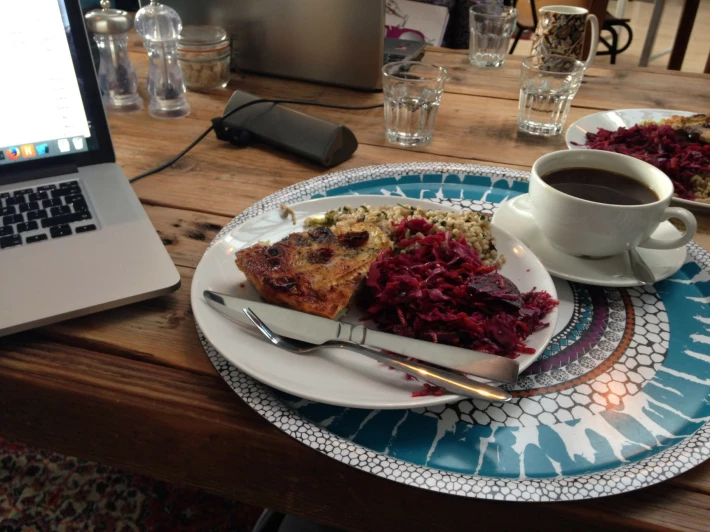
Become ritualistic
If you are absolutely bound to the home then it is even more important that you aim for a mental separation between work and home. You need to be able to ‘take off the tie’ at the end of the day so to speak.
A certain ritual in the morning can help. I would leave the house and walk for twenty minutes, at the same time as all the other city dwellers. We were all heading to work, the only difference being my destination was also my starting point.
That alone helped create a separation between home leisure and home working. It’s going to be different per person but some change to the start of your work day to a weekend will help stop you feeling like you are working all the time.
Log your hours!
Logging hours is something I would also highly recommend. It is easy to work longer hours when working at home as you don’t have to physically leave the area to end your working day. I use the basic timer available when googling ‘online timer’ and let it tick away.
Working for a web agency, I also log my hours using harvestapp. This logs my time against specific tasks, which ultimately gets billed to the client. It’s vital but some tasks such as responding to emails or doing research cannot justifiably get passed onto the client. Therefore, I use two timing systems as I found that if I just used my billable task timings to hit my required hours, I ended up working way more than a regular eight hours.
Logging your hours also helps you see how you’ve spent your day, helping review productivity, and it becomes easier to justify your hours spent to the client. I would recommend you always work as if you are under threat of an audit!
Keep talking
One thing that really helps a project go sour is a lack of communication, especially if you are avoiding a really awkward conversation with the project manager about how ‘the current deadline is simply unrealistic’. I’ve not yet suffered from being truthful to my boss, colleagues or clients and find people appreciate the truth over white lies. Having been in a situation where lying was required in one office-based job, I know the damage mistrust causes and, without a doubt, the client deserves better than to be fobbed off with half-truths.
Also, act as if the person talking to you is in the same room. Being responsive allays any fears a client might have about your availability.
The slack app has been a good fit for the agency I work for, allowing us to quickly chat to colleagues or clients. Anything that helps communication via chat is essential in avoiding long email chains that can be tiresome and time consuming to trace back what has been said.
The home/office hybrid
From attending the co-working meetup group, I’ve met some really inspiring interesting people, folk that I just would not have met if I actually worked in the same company as them. Data scientists, traders, and an audio engineer to name but a few.
Living in a city has made establishing the meetup group easier. It also had the added benefit that co-working spaces have begun to take root around us and as a dad with a 1 year old, working from home has definitely become less of an option in the last 12 months.
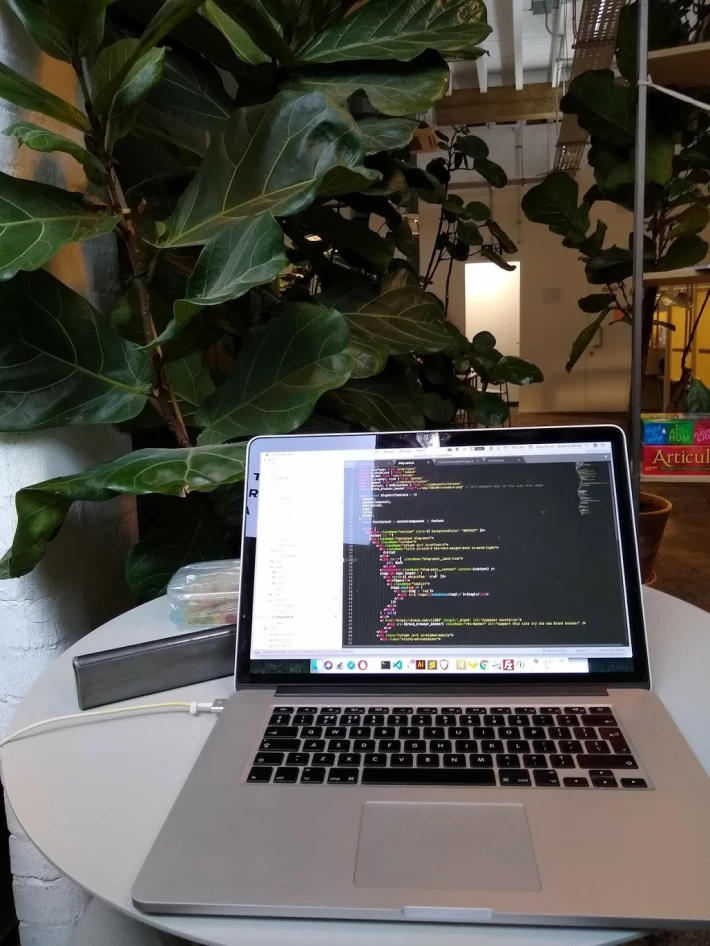
With a little kidster at home, the noise has elevated a tad too much and concentrating can be difficult, so my work environment situation has organically shifted to a co-working space. By paying a fee each month, I can hot desk in a place that feels as relaxed as a café but with a secured front door so I don’t have to worry about my personal property when I nip for a toilet break or pop out for lunch. I work with a variety of people and with a café-grade coffee machine. I’m exceptionally lucky that my co-working space offers a part-time tariff so I can still work from home a few days a week, which is handy with a wife who still works part-time as a nurse.
It did take a while to find the co-working space that suited me. It was down to distance and general ambience. Most co-working spaces offer a free day pass so I’d highly recommend you try them out if you can.
So, really, in conclusion, working with others or socialising with others in work-related talks or gathering is almost vital to your health. It should be seen as an integral part of your job. After all, you don’t knowingly sabotage yourself, yet working too many hours from home is doing just that. It affects your mental health, which can affect your output, which will bring out more work-related stress… rinse, repeat.
tl;dr
Create a routine to your day that helps separate a normal relaxed day at home to a working day at home.
Look out for lunchtime/evening talks at libraries, social enterprise places, co-working spaces, other businesses, universities or simply via meetup to start meeting like-minded folk and create some healthy networking.
See if there are any local meetup groups for your industry or related interest groups.
Mix up your day by working in a local cafe or library (just make a reasonable amount of purchases if in a commercial place!)
Check out co-working spaces. They should offer a free day so you can see if the place is a good fit for you and your work flow.





