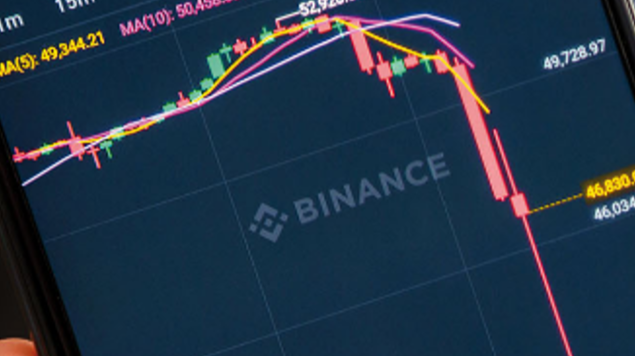
Many investors know the unpleasant feeling when a stock price suddenly skyrockets and you're just a spectator. If you had gotten in at the right moment, you could have made a fortune within hours or even minutes. For example, when the share price of the American hydrogen vehicle developer Nikola more than doubled in a very short period of time in June.
The hope of quick and large profits lured numerous investors to day trading after the setback caused by the coronavirus pandemic. At first glance, the conditions for speculatively buying and selling a stock within a trading day appear more favorable than they have been for a long time: In the spring, stock market volatility reached levels comparable to those seen during the 2008 financial crisis and remains at an elevated level to this day.
Little investment, but high risk
In the first quarter alone, 3 million new customers opened an account with the free American broker Robinhood. In Switzerland, Saxo Bank reported three times as many account openings as usual in the first half of the year and a 70% increase in trading volume compared to 2019. Market leader Swissquote also reported a "massive influx of new customers."
Some of these new customers are trying their hand at speculative day trading. Leveraged financial instruments such as contracts for difference (CFDs) and options allow for large profits to be realized with a relatively low financial investment – provided the short-term performance of a security or exchange rate is correctly predicted. However, losses can also quickly become very substantial if the price develops differently than expected. Is it even possible to make money with day trading in the long term after deducting trading costs?
Profits primarily due to chance
American financial economist Brad Barber is one of the world's most cited authors in his field and, together with fellow researchers, has analyzed the trading activities of hundreds of thousands of day traders in Taiwan. His sobering conclusion: In a typical year, around 20% of the investors studied achieved net profits. In most cases, however, it was just luck.
Over the long term, of 450,000 day traders, only the 4,000 most experienced managed to reliably and statistically predictably achieve a positive return. That is, less than 1%. Around 99% of investors who were active in day trading lost money in the long run.
Barber told NZZ that there are many who continue day trading for years despite having lost a lot of money in the past. They either have an unrealistic view of their own abilities or view day trading as a worthwhile hobby despite losses. "Most investors would be better off if they invested in a well-diversified, passively managed index fund."
The Role of Information Asymmetry
That leaves the small group of elite day traders who, according to Barber's study, "possess a remarkable ability to select the right stocks" and, despite all statistical probabilities, achieve consistently positive returns over the years. Information asymmetry appears to be a key factor: The most successful day traders generally focused on a few stocks, presumably gaining a knowledge advantage.
They also achieved above-average profits with difficult-to-value stocks with small market capitalizations and in close proximity to earnings announcements: They presumably reacted faster and more aggressively to new publicly available information than other market participants. Or they illegally used confidential information about the traded stocks. However, according to the study authors, insider trading alone cannot explain the consistently positive returns. They suspect that it is trading skill that sets the most successful day traders apart from the crowd.
Costly Mistakes
The fact that very few day traders make money also has psychological reasons. Portfolio manager Rocco Rafael at fund provider Swisscanto analyzes the development of the stock and commodity markets, including from the perspective of behavioral finance. He examines perceptual distortions that can lead investors to make costly mistakes.
A typical example: If a trader loses money on the first trade of the day, they are psychologically more inclined to take risks on the second trade in order to offset the initial loss. At the same time, many private investors sell their securities far too quickly when prices rise in order to secure their profits.
This behavior is called the disposition effect, and it is one of the most well-known cognitive traps: If investors feel they are in the loss zone, they behave in a risk-averse manner, while in the profit zone they are more inclined to take risks.
Risk-averse. What is perceived as a gain and what is perceived as a loss is also not set in stone: Some investors perceive it as a loss when a stock price that initially rose sharply falls again, even though they are still in the profit zone.
Well-rested traders are more successful
Rafael says it is crucial for day traders to have a well-founded trading plan with entry and exit scenarios and to implement it with discipline. Otherwise, it can quickly become very expensive, especially with leveraged trades. It is also important to be able to read one's own state of mind before becoming active on the stock market. "When people are emotional, objectivity suffers from a biochemical perspective."
Studies have shown that poorly rested investors take greater risks and may then hold on to a falling stock for too long. Arguments within a relationship also affect one's mental state and thus later decisions. Professional day traders therefore check their own emotional state before starting trading and, if necessary, take a day off.
Unrealistic Expectations Fueled by Social Media
Like financial economist Barber, Rafael also advises new retail investors against day trading. Inexperienced investors often have completely unrealistic expectations when they first start, harboring the fantasy of getting rich quickly. It's best not to believe the success stories circulating on social media.
Charles Day of UBS Global Wealth Management recently formulated a simple rule for Bloomberg: In the current environment, it's definitely not advisable to invest in stocks you'd never heard of three months ago, even if they're experiencing sharp price increases. Especially as a wealthy investor, he said, you shouldn't succumb to the fear of missing out on huge returns in such cases.
https://www.nzz.ch/finanzen/day-trading-nur-1-der-tageshaendler-erzielt-positive-renditen-ld.1566078?fbclid=IwY2xjawM8HIVleHRuA2FlbQIxMABicmlkETFFdTA2c1B3QkE0cjdXTFlvAR4UiyCBXElb8HsG59Y02q7SpuYmc3WwfZ0U7VNkGggY10CpgIkFF7wjM637vA_aem__-Z110WI2VR3I_ZK-6M-1A