
Memecoins: Why Do They Exist?
If you’ve ever wondered how a picture of a Shiba Inu dog or a cartoon frog turned into billion-dollar digital assets, you’re in for a ride.
Memecoins are the crypto market’s court jesters—born from internet jokes, fueled by viral hype, and somehow commanding serious cash.
Let’s unpack their origin story, how they’re performing, the markets they play in, the apps driving their madness, why they exist, their importance, and the pros and cons of jumping into this speculative circus.
How Memecoins Got Their Start: From Doge to Digital Dollars
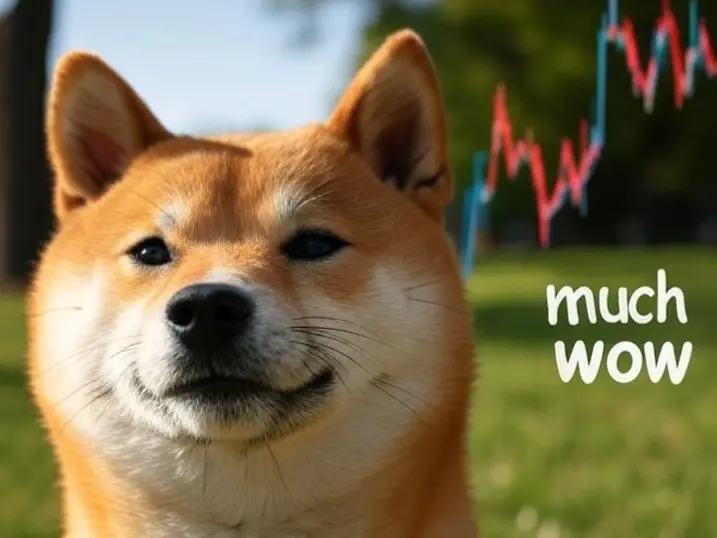
Memecoins kicked off in 2013 with Dogecoin (DOGE), the granddaddy of them all. Created by Billy Markus and Jackson Palmer as a tongue-in-cheek jab at Bitcoin’s self-seriousness, Dogecoin was based on the “Doge” meme—a Shiba Inu dog surrounded by Comic Sans text like “much wow.”
It was a joke, plain and simple, meant to poke fun at the crypto world’s obsession with “revolutionary” tech. But the internet, being the internet, ran with it. By 2014, Dogecoin had a cult following, raising funds for charity and tipping Reddit users for dank memes.
I can remember when DOGE landed and the fun that ensued, DOGE tokens were basically given away, reminiscent of Bitcoin’s first introduction. People would tip out thousands of Bitcoins for doing simple acts online, and DOGE seemed to continue that phenomenon when Bitcoin became too expensive to toss around as tips.
Fast forward to 2020, and Shiba Inu (SHIB) entered the scene, calling itself the “Dogecoin killer.” Created by an anonymous developer named Ryoshi, SHIB leaned hard into the same canine vibe but added a twist with its own ecosystem, including tokens like LEASH and BONE and a decentralized exchange called ShibaSwap.
Then came the 2021 memecoin explosion, fueled by Elon Musk’s tweets and a crypto market high on FOMO. Dogecoin skyrocketed, hitting a market cap of over $17 billion, and copycats like Akita Inu and Kishu Inu popped up like mushrooms on horse dookie.
By 2023, PepeCoin (PEPE), based on the Pepe the Frog meme, and Bonk (BONK), the first big Solana-based memecoin, joined the party. Even political figures got in on the action in 2025, with coins like $Trump and $Melania launched amid much fanfare (and subsequent crashes).
Memecoins went from a niche gag to a full-blown cultural phenomenon, proving that internet memes could move markets.
But why do they exist?

Market Performance: A Rollercoaster with No Seatbelts
How are memecoins doing?
In a word: chaotically. As of August 2025, the memecoin market cap is hovering around $60-75 billion, with Dogecoin and Shiba Inu leading the pack at $8.94 billion and $15 billion, respectively.
The market’s been a wild ride—2021 saw memecoins like SHIB surge by 25,000,000% at their peak, while 2022’s crypto winter tanked the sector to $17-21 billion. By Q1 2024, it rebounded to $60 billion, a 169% jump.
Memecoins are insanely volatile—50 to 100 times more than Bitcoin, and by some estimates and researchers, the reason why memecoins exist.
A single tweet from a celebrity like Elon Musk can send prices to the moon or straight to the gutter.
Dogecoin’s 2021 surge was largely Musk-driven, while $Trump hit $27 billion in market cap a day after its announcement in January 2025, only to crash, leaving investors with $2 billion in losses. Memecoin trading volume is nuts, too, with a 77% turnover ratio compared to Bitcoin’s 1.8%.
Specific coins like Memecoin (MEME), tied to the Memeland ecosystem, are trading at $0.00286 with a $153.7 million market cap, up 2.56% in a day.
Bonk, on Solana, sits at $1.49 billion, and newer entries like Fartcoin (yes, really) hit $1.15 billion.
Our own $SCORE memecoin is slowly carving out a niche, riding the wave of community-driven hype and aiming to capture the spirit of memecoin mania with a playful twist. But more on that later.
The Markets: Where Memecoins Live and Die
Memecoins trade on both centralized and decentralized exchanges. Big players like Binance, OKX, and Toobit dominate, with Binance’s MEME/USDT pair seeing $127 million in daily volume.
Decentralized exchanges (DEXs) like Uniswap, SushiSwap, and PancakeSwap are also hotspots, especially for newer coins on Ethereum, Solana, or Binance Smart Chain. Solana’s low fees and high speed have made it a memecoin haven, with coins like Chillguy hitting a $500 million market cap in under a month in 2024.
The MarketVector™ Meme Coin Index tracks the top six memecoins, showing real-time price and volatility data. But liquidity is a double-edged sword—sudden influxes or exits can spike or crash prices, making memecoins a bot-driven battlefield.
Automated sniping tools like Gem Hunter Dog and BananaBot let traders pounce on new coins, but they also amplify volatility.
Apps Powering the Memecoin Craze
Memecoins thrive on apps that make trading, managing, and hyping them easy. Here’s the lay of the land:
Wallets: Many wallets support DOGE, SHIB, PEPE, and more, letting users swap, stake, and manage tokens. MetaMask is huge for Ethereum-based coins, with one-click integration for tokens like MEME or others. Trust, Solflare, Phantom, Moonshot, Dextoro, and other apps and wallets provide an easy off CEX trading system that allows users more decentralized options without fearing lockouts and stolen funds by CEX platforms.
Exchanges: Binance, Kraken, and Coinbase list major memecoins, with Kraken offering recurring buys for MEME. DEXs like Dexscreener, Moonshot, and Pump.fun let you trade new coins and even launch your own in minutes.
Launchpads: Platforms like Pumpfun and Photon are hotbeds for new memecoin launches, especially on Solana.
Social Platforms: X and Reddit are memecoin hype machines, where communities like the Doge Army or Shib Army drive virality. LunarCrush tracks social mentions, showing which coins are trending.
NFT Platforms: Memecoin (MEME) integrates with MarbleCards, an NFT layer where users create digital cards tied to memes.
Why Memecoins Exist and Why They Matter
Memecoins exist because the internet loves a good joke, and crypto loves a good gamble?
Not exactly.
They’re a marriage of viral culture and speculative finance, thats turning memes into money. Unlike Bitcoin, which aims to be digital gold, memecoins are about community, humor, and FOMO. They lower the barrier to crypto, letting newbies buy tokens for pennies and join the revolution without losing more than what they might pay for a Starbucks Latte.
Their importance lies in their cultural and economic impact. Memecoins have onboarded millions to crypto—Dogecoin’s 4.4 million unique wallets prove it. They’ve also pushed blockchain adoption, with Solana’s revival partly credited to BONK’s airdrop to developers and users. Plus, they’re a creative outlet, letting communities monetize shared humor or identity, from cat memes (Nyan Meme Coin) to political jabs ($LIBRA) ($FDT).
But it’s not all laughs. Memecoins reflect the internet’s power to shape markets and highlight crypto’s speculative side. They’re a gateway for new investors but also a warning about hype-driven bubbles. They keep traders on their toes and newbies jumping into the insanity of what memecoins are with high hopes of winning against the odds.
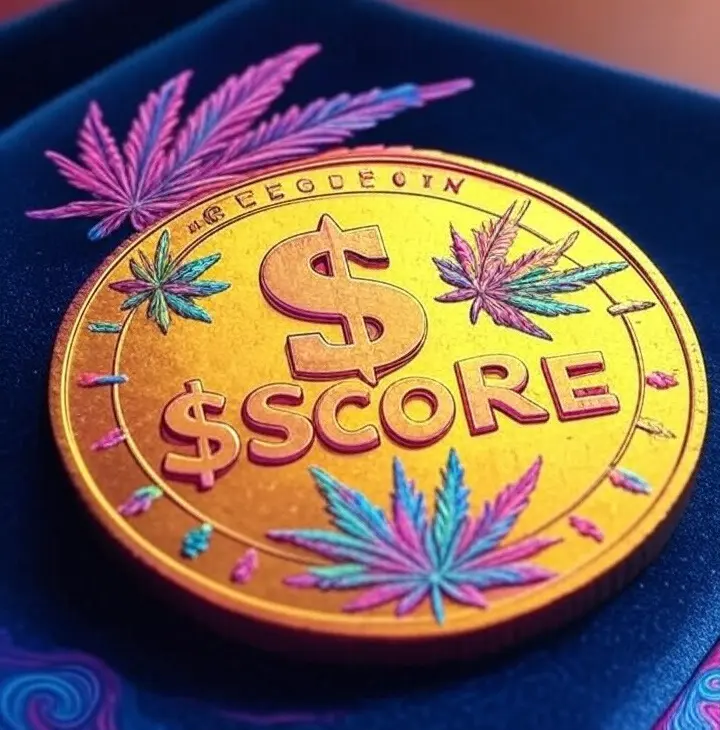
$SCORE, for instance, taps into this by blending meme culture with cannabis community engagement, aiming to be more than just a flash in the pan. As time goes on, a solid memecoin, one without traction can suddenly zoom and explode, as we expect with projects like $SCORE.
Pros and Cons: The Good, the Bad, and the Absurd
Memecoin Pros:
High Returns: Memecoins like SHIB have delivered insane gains—25,000,000% at peak, and that sets the stage for the main reason memecoins exist. The opportunity to turn 30$ into 300,000,000.00$ is exactly why memecoins thrive.
Accessibility: Priced at fractions of a cent, they’re affordable for new investors.
Community: Vibrant online tribes drive engagement and loyalty, like Dogecoin’s tipping culture. Telegram groups pull Twitter raids on competition or influencers posts, for a few million memecoins tossed into users wallets.
Innovation: Some memecoins evolve, adding DEXs, NFTs, or Layer 2 solutions. They can have utility or a usecase beyond speculation, and can be used outside of the vices of trading and hodling.
Cultural Relevance: They capture the internet zeitgeist, making crypto fun and relatable, interactive and competitive. Different niches provide different buyers and drive tokens based on cultural forces behind the coins ticker. Dog lovers, cat lovers, shark enthusiasts, and cannabis culture all seem to correlate with the token that best represents their cultural ideals.
Memecoin Cons:
Volatility: Prices can crash 90% to 100% overnight, like $Melania. More examples exist, with thousands of memecoins laying in the gutter, many dying as a scam or liquidity rug.
Scams: Rug pulls (SQUID, BALD, ) and pump-and-dumps plague the space— I'd estimate 40% to an upwards of 80% of all memecoin projects are indeed launched only to steal investors funds, dump, and relaunch to do it again.
No Intrinsic Value: Most lack utility, relying solely on hype or puffed up bot interactions on X. Hardly are memecoins launched with any working subsystem behind them.
Manipulation: A few wallets control huge chunks—48% of DOGE, for example, can be found in 7 wallets, 6 of which could belong to one person, Elon Musk. That's an example. Many memecoins launch with loaded wallets filled by the developers wallet before marketing or pushing the coin on markets.
Regulatory Risk: Bans in places like Thailand and scrutiny in the UK highlight legal gray areas.
Historically, memecoins have been a speculative gamble, with early adopters reaping rewards and latecomers often burned.
The 2021 boom and 2022 crash showed their fragility, but 2024-2025s rebound proves their staying power.
In 2024, Solana became the memecoin epicenter, with coins like SLERF raising $10 million despite coding errors. Binance probed insider trading in Book of Meme (BOME), showing the market’s growing pains.
In 2025, political memecoins like $CAR and $HCC flopped hard, with $CAR losing 95% of its value in a day amid deepfake scandals.
Meanwhile, platforms like Memeland are pushing memecoins toward utility, integrating NFTs and voting systems.
$SCORE, our memecoin, is riding this wave, tapping into the community-driven spirit while aiming to avoid the pitfalls of flash-in-the-pan tokens. It’s a small but scrappy player in a market that’s equal parts absurd and exhilarating.
Wrapping It Up: The Memecoin Paradox
Memecoins are the crypto world’s guilty pleasure—a mix of humor, hype, and high-stakes gambling. From Dogecoin’s humble beginnings to Solana’s meme-fueled renaissance, they’ve carved out a bizarre but undeniable niche.
They’re a gateway to crypto, a cultural mirror, and a speculative minefield. Apps like Guarda, Kraken, and Dexscreener make them easy to trade, but the risks—volatility, scams, and regulatory heat—are real.
Whether you’re in it for the lulz or the profits, memecoins like $SCORE remind us that in crypto, sometimes a good meme is worth more than a whitepaper. Just don’t bet the farm on Fartcoin.






