
Image by Enrique from Pixabay
It is said in Argentina that you reach maturity the day you realize that the Three Wise Men are your parents. Until then, every January 6 you gather grass and water for the camels to eat and drink. At dawn, your parents get up, take out the grass and the water and leave the empty containers, along with the little gifts that the Three Kings left you for leaving the food to the camels. Then time passes and the magic is gone, and life begins.
But how can someone who believes so much in cryptocurrencies write a headline like this?
Precisely because I believe so much in cryptocurrencies. Business has taught me many things, but the most important of all is that success is achieved after proper decision-making, in which strategy, logic, and common sense are applied. Luck is not a factor. If not, you just have to go to the casino or buy lottery tickets, and that's it.
The more I work, the luckier I get.
Pablo Picasso
It gives me a lot of anger that cryptocurrencies are taken as a ticket to the casino or a lottery ticket. I'm sick of hearing about new projects without sustenance, ultra-bid with tons of marketing dollars, that last a few days and then plummet. As there are people who believe in such garbage and buy, scammers still have a very easy way.
In January 2009, an event occurred that can be considered a random mutation in the environment, which can radically change the system centralized by large corporations that manage all aspects of our lives, be it food, health, energy, money, wars, leisure, and also money.
Bitcoin: A Peer-to-Peer Electronic Cash System
Satoshi Nakamoto [email protected] www.bitcoin.org
Abstract. A purely peer-to-peer version of electronic cash would allow online payments to be sent directly from one party to another without going through a financial institution.
BITCOIN White Paper
What Satoshi Nakamoto proposed was a person-to-person payment system, without the intervention of an intermediary, that could be self-controlled and in which no one has to ask for permission to do what he/she wants with his/her money. What he intended is to dramatically change the mental paradigm that makes us depend on banks for money. But he never intended to create a lottery ticket for people to kill themselves by buying and selling with the aim of becoming a millionaire. That is bullshit.
The projects of puppies, aliens, and bored monkeys, are all garbage created by unscrupulous manipulators with the clear intention of keeping a lot of money from gullible people, attracted by the American dream (hallucination?) of getting rich and buying a Lamborghini.
Bitcoin, Ethereum, and a few others aren't even currencies. They are what they really are: means of payment, just like debit cards. Bitcoin and Ethereum are intangible assets, of a kind never before known to mankind, but they perform the same function as a debit card or an electronic payment system like PayPal.
Why do I say that they are not coins?
In the following analysis, I am going to refer only to the two coins that between them have more than 60% of the cryptocurrency market cap, with the remaining 40% in the hands of some 25,000 coins.
For there to be a currency, three things must be fulfilled: that it be a means of payment (which is fulfilled), that it serves as a unit of account, and that it serves as a store of value.
Unit of account. Neither Bitcoin nor Ethereum can be considered a unit of account, given the volatility that both assets have, and will have for many years to come. Let's say it with all the letters: the US dollar is very damaged, but it will remain the international unit of account for any operation for many years, probably until the last satoshi is mined in 2104. Let's be honest, when someone says "I'm going to become a millionaire with cryptocurrencies”, you are thinking of your presumed wealth in terms of dollars, right? No one thinks of his/her wealth in Bitcoin or Ethereum, but in the dollars that he/she is going to get by having them and later exchanging them to pay for the things he/she wants to buy. There are few and will continue to be few shops that accept cryptocurrencies. McDonald's is going to fluctuate the price of its Big Mac in Bitcoin, keeping the value in dollars. There is not much to think about this, all its providers charge it in dollars, so it has no choice but to pool dollars to pay in dollars.
Reserve of value. Neither Bitcoin nor Ethereum can be considered a store of value. The first, due to the great concentration of coins in the hands of whales, and the second, for having switched to PoS, which means that the richest are the ones who decide. Time will tell if Ethereum's decision to seek scalability was correct. The objective of lowering the insane values of gas fees for the moment has not changed in the slightest.
The National Bureau of Economic Research found that 1% of Bitcoin holders control 27% of the supply. The study found that the top 10,000 accounts hold 5 million Bitcoin. The Bitcoin ecosystem is still dominated by large and concentrated players, be it large miners, banks, institutions, or exchanges. Bitcoin, unfortunately, is moving out of reach of average people, the very individuals for whom it was originally created to help.
Who do you think the whales are?
Whales can manipulate the price of Bitcoin at will. There is nothing like a "free market" for Bitcoin with such concentration. But there is a tendency to think of whales as strange goblins hiding in a medieval castle tower causing evil. This is very wrong. It is the banks that criticize Bitcoin so much that buy and hold Bitcoin. Is the international organizations and large institutions that have the largest wallets.
Even so, there is a slight but sustained trend, due to the effect of decentralization, which shows that Bitcoin is slowly beginning to be distributed a little more in more wallets. We don't know who those wallets belong to, and here we fall back on the old saying that the greatest strength can also be the greatest weakness. Due to the pseudonymous nature of Bitcoin, we cannot know for sure who owns the wallets. Also, consider that there are many Bitcoins lost forever and that Satoshi Nakamoto's wallets show more than a million Bitcoins.

Image by garyh18 from Pixabay

Image by PIRO from Pixabay
Does all this mean that we should not be in the crypto ecosystem?
No! not at all. On the contrary. We must buy, receive or swap cryptocurrencies every day because they are the most decentralized payment tool we have. That is the legacy of Satoshi Nakamoto. It gave us the possibility that we have our money represented by zeros and ones in thousands (soon millions) of computers around the world, instead of entrusting it to a centralized banking entity that becomes the owner of our money and that charges us commissions, interest and penalties at its sole discretion, and to which we have to ask permission to handle our money. Does anyone think this change is little?
I totally switched to crypto. I only receive payments in crypto, and I pay in local currency using some local card that exchanges crypto for local currency at the time of the transaction. From the provision of food to gasoline, everything is paid for in this way. The seller receives Argentine pesos and they deduct cryptocurrencies previously loaded on my card. My vision is to get out of the system a little bit every day, and until now, no one had given me more freedom than the crypto ecosystem to manage my money without asking anyone for permission and feel truly in control of my money.
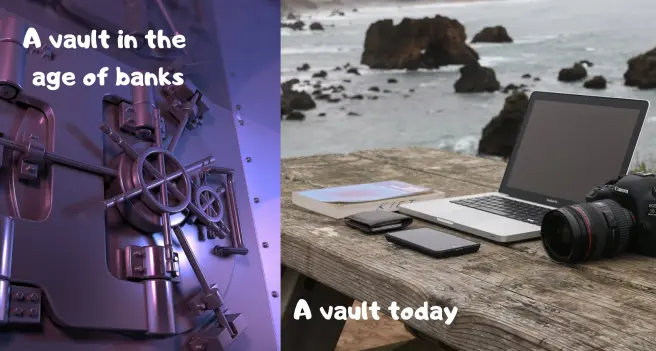
Image by Reimund Bertrams from Pixabay

Image by Luis J. Albizu from Pixabay
But having cryptocurrencies should not be thought of as a means to becoming a millionaire, because that is a serious mistake. Buying cryptocurrencies is not an investment, much less a strategy to become a millionaire, always talking about ordinary people like us, entrepreneurs, or independent workers. At most, it is reinsurance to really be the owner of one's own money and use it freely.
Let me show you why I say this.
Suppose that with a lot of effort someone manages to collect 0.5 BTC. This means today (10/20/2022) about $10,000. Suppose the next bull run (no doubt there's going to be a new bull run soon) is a 3x to get the last ATH back. So, our hero is going to have $30,000. I think we'll agree that doesn't make him/her a millionaire, does it?
Suppose that in the next bull run Bitcoin reaches the much-mentioned ATH of $100,000. Our "investor" happens to have $50,000, far from being a millionaire. Even if Bitcoin reaches $1,000,000, equity would go up to $500,000. Although this may be a lot of money, it does not make our hero a millionaire. In reality, the only thing $500,000 is good for is paying $175,000 to the local tax agency.
Even if our hero has collected 1BTC, the truth is that $1,000,000 cannot give him/her the right to call himself/herself a millionaire.
Conclusion.
Who wants to be a millionaire?
I remember that my grandfather, an Italian immigrant from the beginning of the 20th century, told me when I was very young that “a million dollars is a million problems. You become the target of the tax agency, your friends and enemies and you cannot go unnoticed anywhere”. A hundred years ago a million dollars was a lot of money. Also, take this saying into context, with the mindset of a European born in the late 19th century.
But I think he was referring more, in a very pragmatic way, to the problem of where to put a million dollars.
Suppose that today I give you 0.1 BTC. where do you keep them? You will tell me in any of my wallets. Okay. If I give you 1BTC, where do you keep it? It's not so easy anymore, you're going to have to distribute it in several wallets, including hardware ones. Now if I give you 10BTC, where do you keep them? And if I give you 50BTC, where do you keep them? (50BTC at today's prices is $1,000,000).
Did it get complicated?
The same goes for fiat. Saving $10,000 is not the same as saving $1,000,000. We can consider depositing $10,000 in a bank, knowing that it is like putting your hand in a cage of tigers that have not eaten for a week. But would anyone think of depositing $1,000,000 in a bank? My grandfather had no choice but to deposit it in a bank. We have a fabulous tool, a debit card with money loaded into thousands of computers on the planet, which can be used without permission and without the need to trust an entity, which is generally not trustworthy.
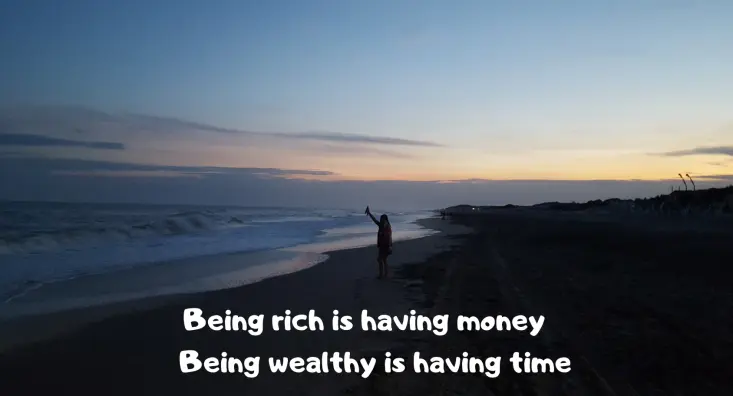
That is the legacy and the paradigm shift. Not the richness. Although on second thought, with cryptocurrencies we are all a little richer today.
Thank you for reading! Decentralize yourselves as much as you can, and much more! Work for yourselves, not for others. When you work for someone else, they pay you what YOUR POSITION is worth, when you work for yourself, they pay you what YOU are worth. No one achieves financial independence by working as an employee. Live long and prosper!
Never forget:
As usual, none of the things written in this post are financial advice and are not intended to replace personal research. My sole intention in writing this post is informative. Several of the things discussed here could be wrong, so in no way can this post be construed as financial advice, and in no way should it replace your own research.
If you have any questions or comments, please feel free to leave them down below
You can also contact me at [email protected]
Twitter https://twitter.com/SirGerardThe1st
LinkedIn https://www.linkedin.com/in/gerardosaporosi/
Follow my blog Anarchy: the Final Solution: https://gerardosaporosi.substack.com/






