
Image by domeckopol from Pixabay
SoftNote
At the end of the day, it's all about the technology you have at any given time.
If someone had told me 20 years ago that a type of money accepted by a vast proportion of the world's population, was going to be produced from the lava of a volcano or from the shit of cows, I would have said that the guy was completely crazy.
It is the environment of the dominant ideas at a given moment and the entrepreneurs who detect that “I don't know what” in the air that makes them come across a revolutionary business, or at least, that resolves the knot in which the prevailing system finds itself.
Precisely 20 years ago I found myself involved in the sale of a gold mine. The owner, a young man who had inherited the site from his ancestors, lived in La Quiaca, the most extreme city in northwest Argentina, where the mine was located at about 4,200 meters above sea level. Even though this guy went to the deposit once every two months and extracted enough gold to live for two months, using prehistoric mechanisms for extraction and relatively dubious and dangerous mechanisms to exchange it for cash, he did not like that lifestyle and so he wanted to sell the mine to one of the big operators and live in peace for the rest of his life. So I took the business to the two large corporations that handle gold mining on the planet. After analyzing the deposit, they came to the conclusion that there was about 40 million dollars in gold there, but extracting it would cost them about 80 million dollars, so they decided to pass. My client continues his prehistoric work today. He has a good life, although he is not happy with his lifestyle. I think the problem was the technology available 20 years ago.
We were facing one of several cases of “useless” accumulation of wealth.
“Useless” depends greatly on the available technology and some visionary entrepreneur who knows how to shape a profitable business model for the miracle to happen.
Let's assume two hypothetical scenarios. I don't get into the technical details and feasibility, since, if the business could exist, it is because someone found a profitable model.
First scenario. A company that we will call LLNN, offers my client and the international gold corporation a business that consists of the owner of the deposit passing all the gold to the corporation, in order to introduce it into the normal gold circuit. That is, what we would do is “put my client's gold on-chain”. He could spend his gold (now in the international chain) with a device designed by the company LLNN that consists of setting up a network of channels between my client and the suppliers from whom he buys goods and services, over which he could transfer fractions of his gold quickly and with very low commissions to pay for those products and services. An important requirement for the operation of the LLNN company network is that both ends of the channel must be online at the time of the transaction. The LLNN network would operate as a Layer 2 of the international gold financial network, which is a Layer 1, taking advantage of the security of this internationally accepted network, and at some point, according to the protocol, it would have to lower operations to L1 to consolidate them and that everything is balanced. That is, my client gets the precious "fractionality" of his gold, and he now can make payments with his gold quickly, easily, with very low or no commissions, and with extreme precision. But, (¡hey, always a but!), by depending on the security of the L1 on which the business was set up, it is exposed to eventually being tracked. In addition, the network of channels known as LLNN can be overcrowded, or, worse still, since these channels require both points to be online at the time of the transaction according to the protocol, it is possible that failures occur when there are many operators such as my client doing operations.
Second scenario. A company we will call NNSS offers my client a similar business, but with much more attractive features. My client must also transfer his gold to the international network, in order to introduce it into the normal L1 international gold circuit. Again, what we would do is “put my client's gold on-chain”. But now, my client has another option to spend his gold. The NNSS company offers him a “magic suitcase” system. Actually, my client hires a payment “delivery service”. First, he has to mint a “magic suitcase” by paying for it, then he must transfer the amount of gold he has to pay to his supplier to that magic suitcase, and then send the suitcase to his supplier. The magic suitcase is recorded with a hash in the SSNN company's own L1 blockchain. So my client took his gold, paid, but he did not do so to be registered in the main blockchain, but in an alternative blockchain, in which there are only records of magic suitcases, without knowing what is inside each of them. The supplier of the product or service, after extracting his/her payment from the suitcase that my client sent him/her, can even burn the suitcase, that is, send it to an address that no one sees. Furthermore, the speed of the alternative blockchain is almost infinitely higher than the speed offered by the international circuit and the competing company LLNN. Which everyone is very happy with. Well, the supplier not so much, because he/she has to pay, according to the protocol, 1% of the operation, but the advantages are still obvious.
As we said, to mint a magic suitcase, you have to pay. As we are in a blockchain that is not the original payment currency, to pay the minting fee we must pay in the token of the new network, which is a token that has an issuance limit, so there is a very high possibility of a future increase in its price, as is usually the case with all scarce assets. SSNN thus shows the great shrewdness of its business model.
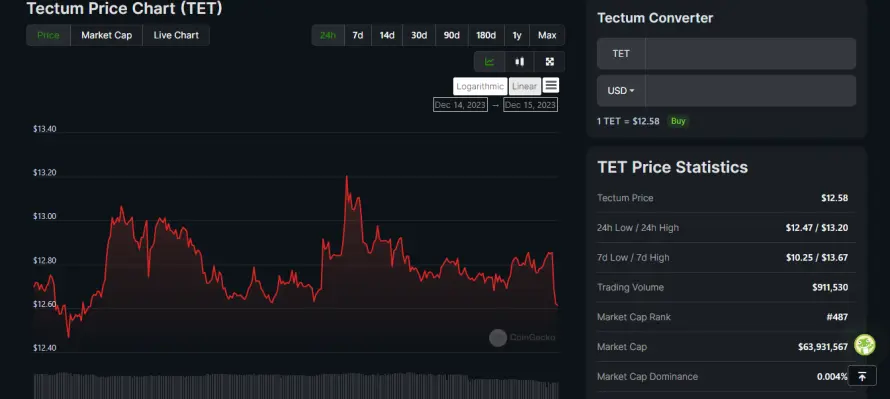
Well, summarizing, LLNN is the so-called Lightning Network that has been successfully operating Bitcoin for more than 5 years, and SSNN is CrispMind Cybersecurity Company, which has developed its own blockchain called Tectum, which is the fastest blockchain in the world. The magic suitcase we mentioned is what this company calls The Tectum SofNote, and the new network's token is called TET, which is automatically minted when a BTC transaction occurs.
Source
Both LLNN and SSNN took advantage of the currently existing technology to improve the circulation of a “useless” asset and, with good entrepreneur ideas, generated a service with a good business model. We say “useless”, because if BTC cannot be used to buy a cappuccino, it would not seem to have much use as a unit of exchange. It is like my client's gold mine, he has great wealth, but it is “useless” until he arrives with his children to collect some gold nuggets so they can live for the next two months.
We could say that LLNN is a net payment system, like VISA, although much cheaper and faster. Whether it is more secure remains in doubt, although the current success of the Lightning Network is showing that there are millions of users very interested in using it for their payments.
On the other hand, SSNN is a business that we could enroll in the logistics industry. It is a very fast, secure and very cheap payment delivery model, built on a sophisticated blockchain architecture. Let's put it this way: SoftNote is a payment delivery system, based on a proprietary blockchain that adds a layer of anonymity to the Bitcoin blockchain, without being built on top of the latter. SoftNote transfers ownership of BTC without mounting the BTC L1 blockchain. Transactions occur by transferring ownership of the magic suitcases and some keys and pins.
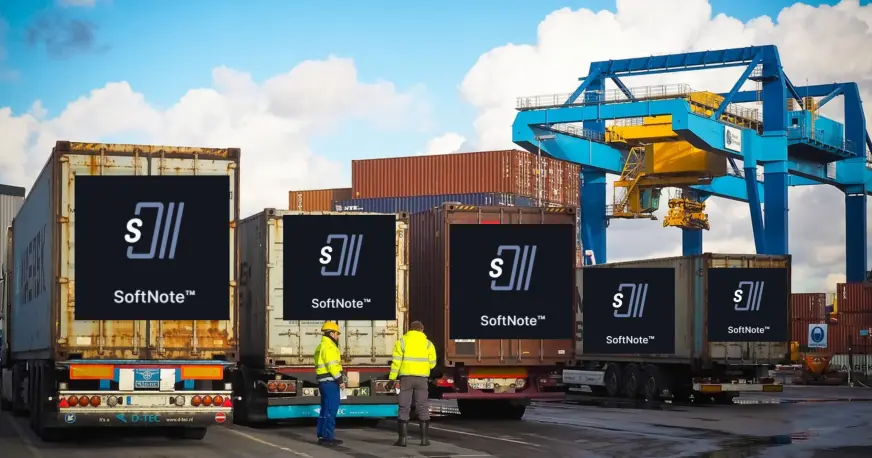
Image by 652234 from Pixabay
Although it would be more appropriate, given that we are talking about a blockchain that exceeds 1 million transactions per second, to think of a ship traveling at warp speed through the wormholes of infinite space-time.

Image by HeckiMG from Pixabay
Both businesses, LLNN and SSNN, made it possible for a “useless” asset such as my client’s gold locked up in its ancestral tomb granted and guarded at more than 4,000 meters above sea level, to be incorporated into the generation of cash flow, the only issue that makes a business to be a successful business. In both cases, they allowed my client to pay for his daily cappuccino with the gold accumulated in the deposit. Everyone is worried about being able to pay for their cappuccino with a Bitcoin micropayment, but they can't do it, because the transaction fees are higher than the cost of the cappuccino, if the operation is done on-chain. From this point of view, the accumulated Bitcoin is also “useless”. As I have said several times, any currency that does not have the capacity to circulate has no value. So, LLNN and SSNN “magically” give value to unused Bitcoin for micropayments. A great achievement of available technology.
When the mining corporations rejected my client's mine purchase project, they did so because the technology available at the time could not make it a business. In the same way, if we consider Bitcoin as an accumulated asset without circulation for micro payments, LLNN and SSNN come to show that there is a technology that can be used to generate a cash flow to an asset that would otherwise continue to be accumulated, only as store of value.
After all, you don't walk around with $40 million in your backpack drinking cappuccinos.
I am not going to write the technicalities of the SoftNote project, since they are very well described in the project's White Paper for anyone who wants to read them.
I'm just going to briefly describe the reasons why everything seems to happen at high speed.
There is no mining in Tectum. In exchange, the system is built on a unique protocol to form the blocks based on ZKrollups technology. The network mapping is also unique, and rests on the company's claim that 6 confirmations to finish a transaction is excessively redundant and that Bitcoin miners end up doing unnecessary work. Multiple nodes are used to validate. There are Master Nodes, Nominal Nodes and Elected Nodes. Which brings us to the always problematic PoS. We all know that in PoS protocols, there are privileged nodes and that the philosophy of PoS itself is biased to a lesser or greater extent towards the much-feared centralization, privileging scalability.
The SoftNote system is much simpler than the Lightning Network channel system, and thus reduces attack points for malicious vectors. Additionally, SoftNote adds a layer of privacy on a new blockchain, which the Lightning Network cannot have, as it is entirely dependent on Bitcoin's L1 and must sooner or later fall into it. Using SoftNote, once the off-chain ownership change has occurred, the transaction cannot be traced and is virtually anonymous, just as Satoshi Nakamoto dreamed.
The fact of the birth of this more than novel proposal is not minor. The history of Tectum dates back to 1980 when a core developer who is still in the Company developed software for submarines, with the well-known stress situations that these systems have in terms of redundancy, work in very adverse conditions such as cabin flooding, needs for self-correction and decentralization, which can mean the difference between life and death for many people. When the blockchain technology revolution began in 2009, Tectum was already very advanced in distributed, decentralized and redundant systems, which allowed them to create a powerful artifact. The SoftNotes project is one of the projects of the CrispMind company and can be thought of as just the beginning of a long chain of new products that lead to the total decentralization of money. Due to this relative age, the Tectum blockchain is written in Delphi, which is one of the oldest and most powerful computing languages.
Something that caught my attention in CrispMind's competitive analysis is considering SWIFT and Ripple as competitors. It is true that substitute competitors must be considered in any strategic analysis, but the two chosen seem to me to play in much lower leagues. The first belongs to the Jurassic period, and the second is a dubious ecosystem very far from Tectum technology.
SoftNote technology seems like a brilliant solution all around. I only reserve one doubt regarding the issue of printed SoftNotes, which I don't like very much, because they are very similar to fiat money. In any case, I admit that it can be a very useful system, especially when the Internet is not available . But this issue of printed money does not like me at all. We argentines bitterly know what printed money means, or the impression of any type of bond, the creation of secondary black markets and the plague of flying checks. The printing of SoftNotes in paper is something like the return to the American Express Travelers Checks, now with a QR. In no way do I think that printing SoftNotes is to take advantage of the best of both sistems. On the contrary, I think it is a step back, by eliminating at least in part, what we have won so far with the Internet money.
Anyway, you can print a SoftNote that can be used to purchase products and services at retailers that accept them, who must pay a 1% commission. The company predicts huge revenues from this payment method of printed SoftNotes. We will see.
As I said at the beginning, any solution depends on the technology available at that time and on the visionaries who realize that something is happening to change things, and then make things happen. Even though there are lapses of time until this happens.
Let me do a very brief comparison to show what I mean by raising the bar several notches, just as, IMO, the idea of SoftNote did on the road to sound money.
- In 1801, Joseph Marie Jacquard invented a device for a loom to weave complicated fabric designs from a perforated ribbon.
- In 1842, Charles Babbage built a programmable machine to do any type of calculation, which used punched cards like those made of Jacquard ribbon. Ada Lovelace was the first programmer of that machine
- In 1847, George Boole defined his so called boolean algebra as part of a logical system.
- In 1889, Herman Hollerith built a tabulating machine based on punched cards, which the United States government hired to prepare the 1890 census. In 1986 he founded his company, which in 1924 was to become IBM
- In 1897, J.A. Fleming invented the first electronic valve, the vacuum diode, and later, Lee De Forest implemented a vacuum triode to amplify electrical signals, giving rise to the electronics industry.
- In 1910, Russell and Whitehead developed Analytical Philosophy in Principia Mathematica, and laid the foundations of formal logic to study concepts such as language.
Let's say that in the first 20 years of the 20th century, all the knowledge necessary to build a computer was available in the technological environment. The bar was set at a very high level. However, the first computer, the US Army's ENIAC, was built (using electronic valves) in 1946. It took about 30 years until humanity found the “killer app,” in this case, an artifact like the computer that shaped to a new culture and a new vision of civilization in the following decades of its history until today.
Now let's look at a similar diagram for the new industry based on cryptography and blockchain technology.
- In 1956, John McCarthy coined the term Artificial Intelligence (AI)
- In 1960, expert systems appeared
- In 1962, Licklider discussed the concept of the Galactic Network as an idea of a computer network and network infrastructure.
- In 1963 Quillian developed semantic networks as a knowledge representation model.
- In 1969 ARPANET was created
- In 1970 email was born
- In 1981, Paul Benioff presented his theory to take advantage of quantum laws in the computing environment, this being the first idea of quantum computing.
- In 1983 the transition to the TCP/IP protocol, which continues to be used today, was completed.
- In 1986 McClelland and Rumelhart published their work on neural networks
- In 1988, object-oriented languages were established
- In 1990, the basic technologies of the Internet were introduced and the World Wide Web was created.
- In 1991, Stuart Haber and W. Scott Stornetta created the rudiments of a chain of information blocks protected by cryptographic resources, and in 1992 they incorporated Merkle trees into their system, which improved the efficiency of the ecosystem.
- In 1993, Marc Andreesen created the Mosaic browser and then Netscape
- In 1995 Yahoo! and Altavista were created
- In 1997 Google was created
- In 1998 Nick Szabo proposed a smart contract infrastructure, which nowadays remains the backbone of the so-called DeFi
- In 2001 Bram Cohen designed the BitTorrent protocol for peer-to-peer file sharing on the Internet.
- In 2009 Satoshi Nakamoto presented the White Paper of a new payment system called Bitcoin as an open source and peer-to-peer network. Internet money was born
- In 2014 Vitalik Buterin in the Ethereum White Paper describes Bitcoin as a poor version of the concept of smart contracts defined by Nick Szabo and proposes a more solid version with the Solidity Turing complete language
- In 2014 Gavin Wood, co-founder of Ethereum, proposed the term Web3
- In 2015, Ethereum was launched and the DeFi fever and the disproportionate appearance of cryptocurrencies formally began, 99% of which were frauds.
- In 2015 the Linux Foundation presents the Hyperledger project
- In 2016, Joseph Poon and Thaddeus Dryja publish the design of the Lightning Network as Bitcoin's L2 second layer P2P network
- In 2019 @fiatjaf developed the Nostr protocol and the Zaps function allows content creators to tip sats
- In 2020, SoftNotes are presented as a wallet system that can be loaded with Bitcoin and transmitted through its own blockchain called Tectum
- In 2021, El Salvador designates Bitcoin as legal tender
- In 2022 ChatGPT is launched
- In 2023 Casey Rodarmor introduces the Bitcoin Ordinals protocol
- In 2023 IBM presents the first quantum computer with a 1000 cubit chip
- In 2023 River launches River Link that allows users to send Bitcoin very simply using messaging applications such as WhatsApp, Signal, Telegram, Facebook, Instagram, Snapchat and TikTok.
We could say that all the knowledge necessary to find a definitive solution to the problem of the blockchain trilemma is already available to the technical and scientific environment.
Particularly, I don't think that SoftNote is the definitive solution to sound money, although I admit that it is a brilliant idea that raises the bar many notches.
But the question is: Will it take another 30 years, as in the case of the presentation of the computer, until humanity finds the “killer app” that models equally and in concrete everyday practice the relationship between the human being and money?
Conclusion
The Kondratiev wave, also called the long cycle of economic activity, is a long-term cycle that occurs in the Layer 0 capitalist system imposed throughout the planet. It is named after the Soviet economist Nikolai Kondratiev. The duration of each wave or long cycle varies between 47 and 60 years, during which a period of high growth alternates, in which the economic expansion situations are more marked and lasting, and a period of relatively slow growth, in which crises are stronger and depressions longer.
For Kondratiev, the existence of these cycles was linked to large investments that require capital goods that can be used for a long time. Kondratiev's hypothesis was contrary to the idea that Stalin had at that time about the end of capitalism in the immediate period. Opposing the forced collectivizations ordered under Stalin, in the spring of 1930, Kondratiev was arrested and deported to Siberia, and in 1938 he was sentenced to death and shot.
This reminds me of Bitcoin neggies, particularly those who hold political office in the government elites.
In fact, there is a lady US senator who is very angry with Bitcoin and who, sponsored by her banker friends, wants to close down the crypto ecosystem, because it serves to finance terrorists, drug traffickers, arms traffickers, North Korean nuclear bombs, pandemics, bad breath, delays in airports, the (in)famous total destruction of the environment due to the crazy consumption of energy, and child pornography networks. My lady and banker friends, the dollar exists for all these things. What you don't want is competition. I'm sorry to tell you that there is nothing you can do to stop this long-term cycle of the system you love so much.
The bar is very high, brothers and sisters. But we still haven't won. All the information is out there, waiting for someone to build “the first computer”, something like the “killer app” that means sound money for all the inhabitants of the planet, without borders, without permits, without censorship, and without intermediaries. We are in dates of the long Kondratiev cycle, for at least a decade.
The idea of SoftNote seems brilliant to me and it solves a real and concrete problem, which is the problem of being able to pay for a cappuccino with Bitcoin without dying trying. Although I must say that all the material I saw from SoftNote does not give me the impression of being very friendly and intuitive. There is a lot of design, a lot of brain, a lot of architectural logic and very good and innovative operating ideas. But there is a bit of a lack of friendliness with the system, which I imagine will be addressed in the new stages of the roadmap.
Of all the innovations mentioned above in recent times, SoftNote seems to me to be the one that really raised the bar several notches. But there is always an athlete who breaks the records, and this is still very healthy for the entire ecosystem.
Thank you for reading! Decentralize yourselves as much as you can, and much more! Work for yourselves, not for others. When you work for someone else, they pay you what YOUR POSITION is worth, when you work for yourself, they pay you what YOU are worth. No one achieves financial independence by working as an employee. Live long and prosper!
Never forget:

As usual, none of the things written in this post are financial advice and are not intended to replace personal research. My sole intention in writing this post is informative. Several of the things discussed here could be wrong, so in no way can this post be construed as financial advice, and in no way should it replace your own research.
If you have any questions or comments, please feel free to leave them down below
You can also contact me at [email protected]
Twitter https://twitter.com/SirGerardThe1st
LinkedIn https://www.linkedin.com/in/gerardosaporosi/
Follow my blog Anarchy: the Final Solution:https://gerardosaporosi.substack.com/
Mensaje para hispanoparlantes. Pueden seguir mi podcast MACROESTRATEGIA en Fountain.
¿Sabían que en Fountain pueden ganar sats solo por escuchar episodios de sus podcasts preferidos? No se pierdan esta oportunidad de juntar sats para usar en la Litghning Network.
Pueden bajar la aplicación Fountain para IOS o Android y hacer una cuenta con mi referral link:
https://fountain.fm/sirgerardthe1st?code=7ea0b680d3
Cuando la hayan hecho, podrán empezar a acumular sats solo por escuchar sus podcasts y sus episodios favoritos.






