
Image by Etienne Marais from Pixabay
WhatIsAdshares
There is a tendency to consider the “middleman” as a natural person, the typical intermediary who connects the parts of a business and stays with a small part. While this is a type of intermediary, in reality, when we talk about the intermediary that Satoshi Nakamoto intended to eliminate, we are talking about an interwoven network of dark operators, companies, corporations, international organizations, managers, advisers, deputies, senators, lobbyists, big industrial robotic plants that ensure product uniformity and stockholders earnings, sports clubs and associations (notably FIFA, dean of corruption), banks, central banks, financial sharks and whales, colleges and universities, delivery logistics, distribution logistics, natural resource predators, designers of wars and crimes in general, government controls, controls by Covid19, unions, lawyers, accountants, notaries, government files, government and municipal tax collection agencies, dentists, dog sitters, acrobats, clowns, etc.
Everything is the middleman, not the fat man who cuts the tickets so you can get into a rock festival.
This is a network that industrial capitalism began to build almost 200 years ago, and managed to consolidate with great success in terms of the standardization of products and services through the economies of scale that are achieved by making all parts of the country and the world consume the same plastic bottle with the same registered trademark and with the same marketing that ensures eternal well-being through communication.
Dismembering this monster, loosely called “middleman,” is going to take a long time. But his fate is sealed.
Always remember, Satoshi Nakamoto will be remembered much more for having proposed a technology that allowed us to eliminate the middleman, than for the invention of Bitcoin.
This post is a short horror story that shows the continuous reinvention of the capitalist system to create new networks of intermediaries with consequent increases in costs and inefficiencies, and the actions that those who believe in a free and decentralized society implement to make the monster run to the hills. In this regard, Adshares stands out as an environment to break free from the middleman in the chaotic and traditionally corrupt advertising industry.

Image by OpenClipart-Vectors from Pixabay
It is almost impossible today to open a mass media and not read the word "Metaverse" on the cover. I want to start by quickly describing the Metaverse in which we are immersed in the daily reality of 2021 when it comes to advertising, press, marketing, and public relations, similar to the proposal described in the movie The Matrix.
- 90% of the mass media (disinformation media?) on the planet is in the hands of six corporations. In 1983, 90% of the mass media was in the hands of 50 companies. In the second decade of this millennium, the same 90% became controlled by 6 companies: GE, NEWS-CORP, DISNEY, VIACOM, TIME WARNER, and CBS.
- There are ten advertising agencies that lead the advertising industry. WPP-London, OMNICOM GROUP - New York, PUBLICIS GROUPE- Paris, and 7 more. All of them control practically every advertising agency on the planet.
- There are 15 top social media sites and apps, measured by the number of active users, among which Facebook stands out with 2.74 billion active users, followed by YouTube with 2.291 billion active users. To Facebook, we must add 2.0 billion active users of WhatsApp, 1.3 billion active users of Messenger, and 1.221 billion active users of Instagram.
This total concentration of marketing, press, and communication, governs what we see and hear every day, at will, controlling global anguish and anxiety. These dinosaurs have to start thinking about how to react to the changing scenario so as not to be left out of the Metaverse, but their disproportionate size and the not very easy to deactivate interwoven network will surely play against them.
It is very likely that mass advertising of mass products will continue in the field of TV in the hands of corporations and large agencies.
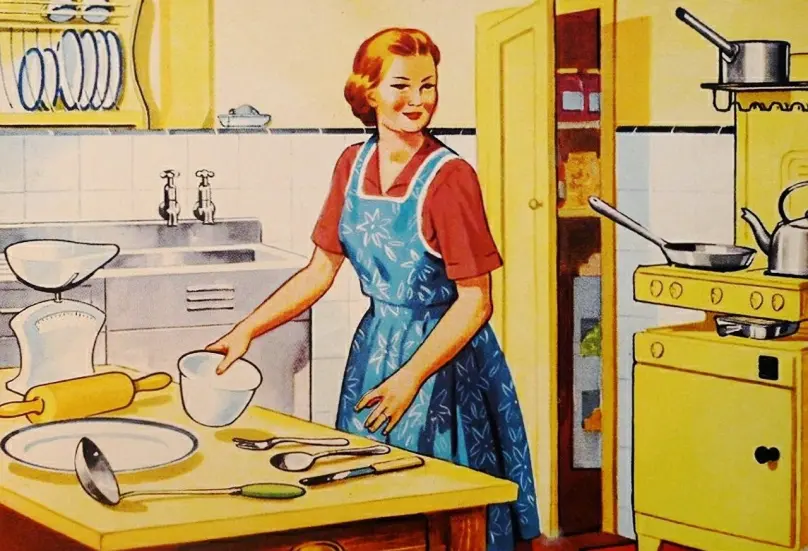
Image by Oberholster Venita from Pixabay
Marketing and advertising memoirs will recall how derogatory housewives were treated in the mid-20th century in advertising agencies, calling them “sitting ducks” and “attacking” them with useless product commercials while watching late-afternoon TV.
But not all communication is massive, and each year it will be less massive.
From Bulova watch's first official TV commercial in 1941, for which the company paid $ 9 for a 20-second spot aired before a baseball game, to the first mobile ad launched by a Finnish news provider via SMS in 1997, more or less 50 years passed.
In 2000, the dot.com bubble burst. Google, a survivor, launched a pay-per-click service. Today, AdWords accounts for more than 95% of Google’s revenue. Pop-up and pop-under ads fill users’ screens.
In the middle of that decade, YouTube gave birth to video advertising and Twitter made viral marketing fast and free. Facebook introduced the concept of behavior-based advertising, targeting the interaction of its users. Online advertising became the second item in the advertising budget for every firm, to the detriment of print and radio advertising.
The appearance of programmatic advertising
In the universe of conventional online advertising, initiated and led today even by Google and Facebook, advertisers use external digital media to insert their messages in previously reserved and/or purchased spaces.
In recent years we have seen the successful emergence of programmatic advertising, an ethos in which Advertisers, instead of buying spaces, buy audiences or people, using automated technology, based on data, cookies, and algorithms.
The purchase of conventional online advertising is carried out in the same way as the purchase of any other advertising space, that is, the Advertiser through its advertising agency sends a reservation order and space purchase to the Publisher. On the other hand, to make a programmatic purchase, the advertiser needs a specialized team that knows the complex technological process through which the bid and the purchase of advertising space available to its target audiences are carried out.
This complexity is what, in this industry, we call “intermediary”.
To make it even more difficult, RTB appears (Real-Time Bidding), which is real-time betting through the use of Big Data. Surely you have noticed that for the last years, practically all websites put a banner that forces you to "accept cookies". Cookies are data files that a web page sends to your computer with two purposes: to remember accesses and to know browsing habits. They are surveillance cameras to create a profile of your tastes, habits, and behaviors. Cookies collect our data and create a visitor profile. In the RTB process, Advertisers interested in your profile can bid on a profile like yours. The Advertisers ensure that their investment in advertising will be directed to people interested in their product. In milliseconds, we can buy and sell advertising inventory that helps to achieve the objectives proposed by each Advertiser.
However. We were talking at the beginning of a reinvention of the capitalist system, a kind of change so that nothing changes. This issue of programmatic advertising, which could be handled via blockchain with smart contracts and real-time reports, has actually created a more complex network than the existing networks of intermediaries in the already intermediaries-prolific marketing and advertising industry.
The programmatic advertising ecosystem is made up of a large number of nodes. Digital newspapers, search robots, social networks, file-sharing services, advertising portals, digital advertising agencies, ad servers, ad networks, paid search, software services to automate the buying and selling of audiences and inventories ...
In the midst of this paraphernalia, Adshares seems to have found a model to unravel this often indecipherable skein.
To explain it, I will quickly describe the pillars of that ecosystem.
In traditional advertising, the advertiser contacts the Publisher, negotiate the price and follow up on the ad.
The following actors appear in programmatic advertising:
- Demand Side Platform. DSP. (Advertisers side) It is a space where Advertisers and agencies buy inventory in an automated way. DSPs streamline and automate the buying and selling process and optimize results by segmenting to reach the right audience in real-time, monitoring the campaign, and making immediate changes to maximize ROI. DSPs are connected to various AdExchanges.
- Data Management Platform. DMP. Made up of software for the elaboration of strategies based on the unification of large volumes of data from innumerable different sources to present them in a useful way. The sources that generate data for DMPs are multiple, analytics tools (customer site data), customer CRM data, WiFi data, Apps, Ad Servers, etc. DMPs are in charge of finding the right customer.
- Sell-Side Platforms. SSP. (Publishers side). It is a board on which publishers sell their advertising space.
- AdExchange. A digital marketplace of Advertisers and media, where digital advertising prints are bought and sold through real-time bids, on displays, video, and mobile. The Advertiser's decision-making depends on many factors, but fundamentally, on the digital behavior of the user who will receive the impression.
As you can see, in today's programmatic advertising landscape, there are many intermediaries between Advertisers and Publishers, waiting for a slice of the pie. Intermediaries collect a tremendous amount of fees from Advertisers and Publishers.
Adshares proposes a completely new model: each Advertiser creates an account on the blockchain and associates it with its domain. In today's market, there is no communication standard for Advertisers. RTB's (Real-Time Bidding) preponderant model, is extremely expensive and doesn't scale well. It is reminiscent of the ridiculous costs of gas on the Ethereum network.
The main objective of Adshares is to build an open platform that allows Advertisers and Publishers to meet in the market without the need for intermediaries and to trade freely with each other using blockchain technology. The idea is to put on the market a standardized exchange that allows Publishers to be their own SSP and Advertisers to be their own DSP.
What seems to me most revolutionary about the Adshares business model, to eliminate intermediaries and incidentally reduce fraud to its minimum expression, is the Adshares principle of “display first, collect payment later”. This gives Advertisers a great advantage, since by paying later they are not forced to blindly go into an RTB bid, and, in this way, they can take more time to evaluate the validity of the impressions and verify that the traffic generated is genuine. Fraud can be totally eliminated if the decision is made to change the process to a “revenue sharing” scheme. In this case, the Advertiser would agree with the Publisher to share the income generated by the real and specific traffic that the Publisher generated.
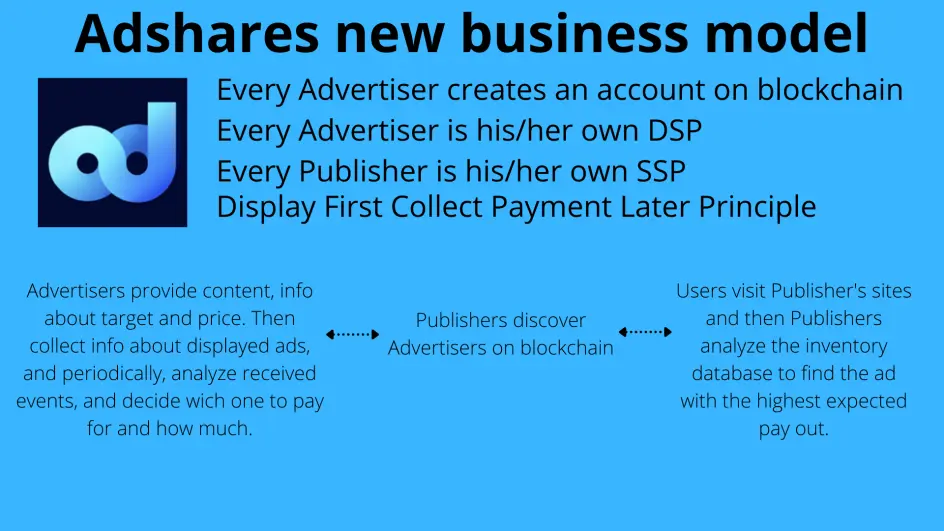
The reputation of the actors is self-controlled, since Advertisers have the incentive to pay a fair sum for their ads to be shown because if they do not, they risk being banned from the most valuable sites or leaving the place to other Advertisers, and Publishers are encouraged to show the ads that best suit their audience to maximize their profits.
The model is in itself very attractive. In addition, any project aimed at eliminating as many intermediaries as possible should be celebrated with a party.

Image by Sheila Santillan from Pixabay
How I imagine the interaction of the Metaverse and programmatic advertising
The Metaverse can be an inexhaustible source of income for programmatic advertising for Advertiser and Publishers, as the person can be accessed directly while playing or interacting in any way in the 3D scenarios of the various platforms that will make up the Metaverse of the coming years. In the Metaverse, you see the person you want to sell to and you can reach him/her directly with your ad, through the media he/she is using at the time. It's fantastic. No middleman in sight.
In any case, you should not lower your guard and wait for the attacks that the corporations affected by this process will cause.
I imagine two very different types of Metaverses and this is a warning.
A- A totally concentrated dystopian Metaverse managed by dictatorial corporations. (quite similar to the current one). Bloggers everywhere are remembering movies like The Matrix or Ready Player One, welcome to watch again. I prefer to recommend to be terrified of what a world in which technology is the absolute protagonist in the hands of corporations could be like, the novel “Count 0” by the American-Canadian science fiction writer William Gibson, considered the father of cyberpunk. This novel impressed me a lot more than 20 years ago, and I think it perfectly describes the nightmare environment that artificial intelligence and augmented reality can bring us if we don't reason a little about the meaning of life.
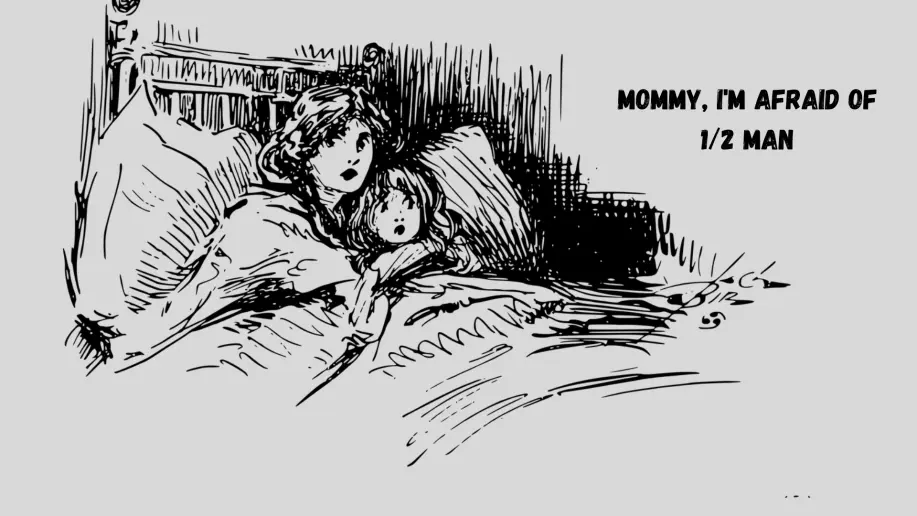
Image by OpenClipart-Vectors from Pixabay
B- A completely P2P Metaverse without intermediaries, that is, without corporations, governments, or hierarchies. Trade is free between all parties, in the event that they want to trade, and advertising is for the person in question, not for the masses. An Advertiser can perfectly identify his/her "person" and hire the right media to get his/her message across, more or less as the Adshares model proposes.
The Metaverse platforms are in their infancy, like almost all industries that today take advantage of blockchain technology to propose their business models. We are like the Internet towards the end of the last century. If we are not close to the different business models proposed by the Metaverse platforms, we will be able to realize when it is too late that the world has turned into a huge Matrix. Just imagine what the Metaverse can become in the hands of Facebook (or Meta as it is now called by chance).

Image by Thomas Budach from Pixabay
I think the president of El Salvador understood my idea of the anarchist islands by proposing his bitcoin city next to the volcano, without any kind of tax from the government. Type B Metaverse is actually made up of a series of islands inhabited by free people who interact with each other at their discretion and will, while contributing to a sustainable "mutual". Adshares proposes a model that fully matches this style. We hope to see it expand quickly.
As usual, none of the things written in this post are financial advice and are not intended to replace personal research.
Thank you for reading!
If you have any questions or comments, please feel free to leave them down below
You can also contact me at [email protected]
Twitter https://twitter.com/SirGerardThe1st
LinkedIn https://www.linkedin.com/in/gerardosaporosi/






