
For many years marketing companies are trying different methods to make cryptos adapted by masses, but without any success. Today, the cryptos mass adaptation problem is similar to the problem of mass adaptation of computers in the 20-th century. Since 1950s, marketers were tried to make computers adapted by masses, but without any success. Only in 1976, when Steve Jobs and Steve Wozniak introduced the first personal computer -Apple II, personal computers were adapted by masses. The success of Apple computers was based on user friendly interfaces of Apple computers, which were absent in previous models.
Today problem with mass adaptation of cryptos is the same as was with computers in 20-th century: absence of user friendly interfaces for cryptos. Wallet addresses and private keys are not user friendly and many people have no user experience with such items. On the other hand, most people are familiar with gift cards, debit cards, credit cards, etc.
A simple solution to this problem is to use a card interface to cryptos. A cryptocard, similar to a debit/credit/gift card has a card number, which is connected to a crypto wallet address and a PIN number (or password), which is connected to a private key. These connections can be done by means of dynamical passwords, in a way described in one of previous posts (See [1]).
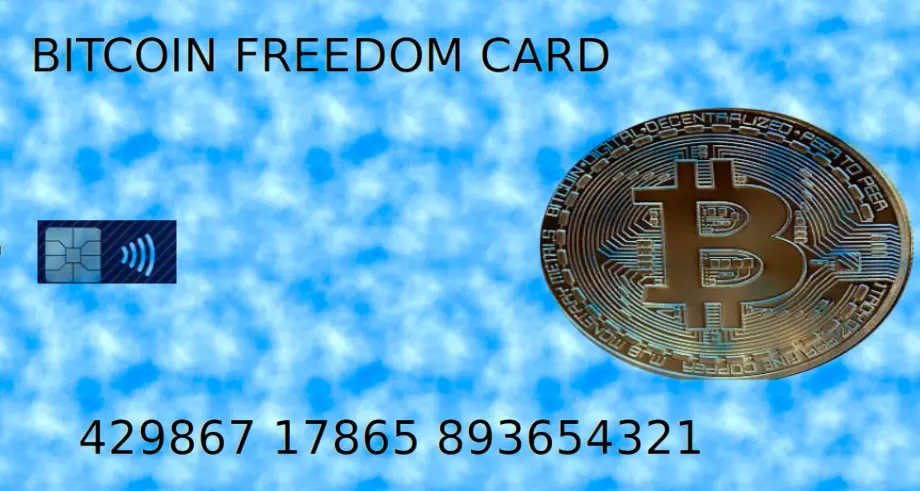
Any computer with (or without) a card reading device can be used to make transactions with such crypto cards. Any device connected to internet can be used by users of cryptocards to buy products and transfer funds.
It is possible to install crypto-boxes in public places (similar to ATMs) were people will be able to deposit/withdraw cash, using their crypto cards.
A user even may not know that she/he uses a cryptocard and may think that this is a pre-loaded gift card.
In the next post we consider a simple way to increase your income when values of crypto go up.
References:
[1] A simple solution to the private key loss conundrum






