Traditional ways to manage backups and recoveries of crypto wallets are based on writing seeds/passphrases on paper or metallic plates and keeping them in different secure places. Such methods reduce some risks, but introduce new risks. When the number of crypto wallets increases such methods became unmanageable, in secure ways, because the risk of errors and unintended exposures is increasing when the number of crypto wallets is increasing.
A simple and secure way to manage recovery/backups of up to 20 crypto wallets with public DPGs is the following:
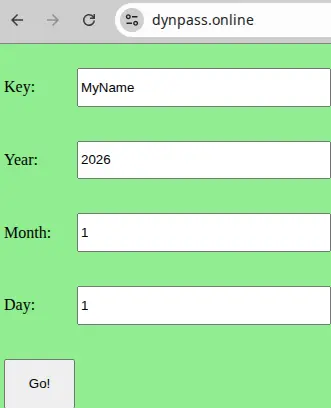
Step 1. Select easy memorable key, date and salt. For example, key=”MyName”, date=2026/1/1 salt=”book111”. Using a public DPG, generate 20 output strings with the key and date.
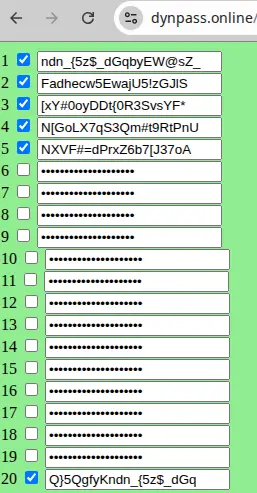
Step 2. Combine each of 20 output strings from the public DPG with the salt and use these new strings as input for a BIP39 converter to generate 20 seeds or passphrases for crypto wallets.
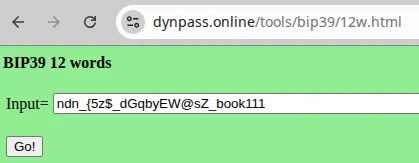

Step 3. Use “Import” or “Restore” options of crypto wallets to import the seeds/passphrases into your hardware/software wallets, for regular use.
When you need to recover some or all of these crypto wallets then repeat these 3 steps.
If a public DPG you use is not working or accessible then use any other public DPG, for example:
If a BIP39 converter you use is not working or accessible then use any other BIP39 converter, for example:
https://www.dynpass.online/tools/bip39/12w.html
https://www.dynpass.online/tools/bip39/24w.html
https://dynpass.free.nf/tools/bip39/12w.html
https://dynpass.free.nf/tools/bip39/24w.html
https://0602209.xyz/tools/bip39/12w.html
https://0602209.xyz/tools/bip39/24w.html
If you want to increase security even more or need to manage up to 100 crypto wallets then use private DPGs instead of public DPGs
This method does not have “low entropy” problem, which may exist in other methods based on random generations of seeds/passphrases/etc.