
It’s Not About the Price of Fuel: How the "Politics of Fear" and the Myth of Oil Depletion Shape the Modern World
Headlines warning of the imminent end of the oil era and sudden price hikes at gas stations have been a constant fixture of media messaging for years. From all sides, we hear that "the resource is running out" and that the only salvation lies in the immediate imposition of strict restrictions. But are we truly facing a scenario where we run out of fuel for our cars overnight? The real question isn't when underground reserves will be depleted, but why the mechanism of fear has become the foundation of modern politics and social management.
The Myth of Depleting Reserves and the Cake Paradox
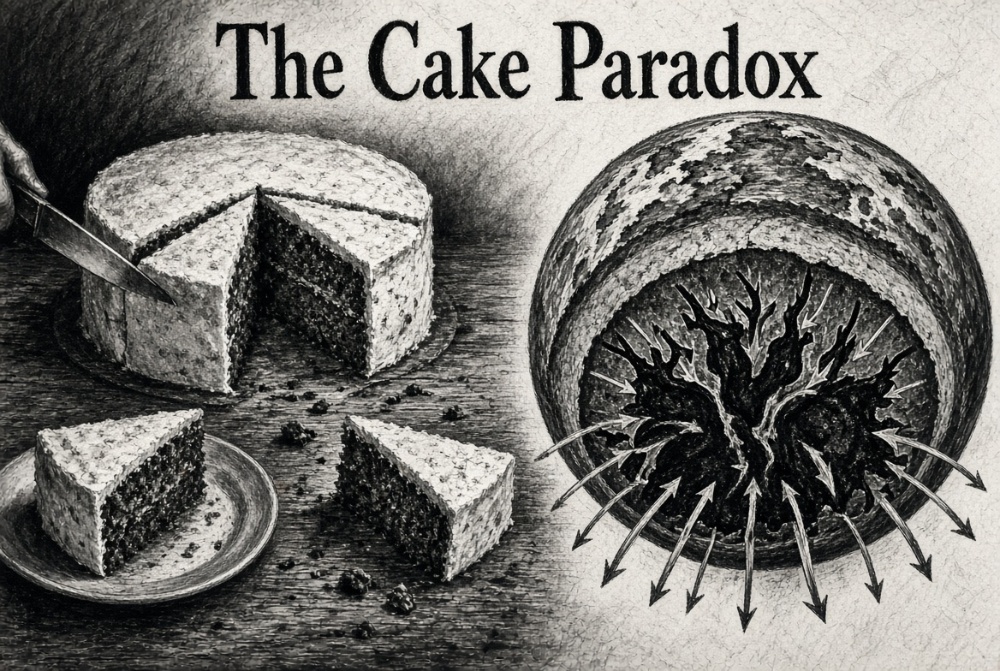
The belief in the imminent depletion of oil resources stems from what refers to as the cake paradox. Our daily, empirical experience suggests a simple logic: if a cake is sitting on a table and we eat slice after slice, with every bite there is physically less of it left. We intuitively apply this linear thinking to the entire planet and its natural resources.
However, economic practice and geology operate under entirely different principles:
- Evolution of Forecasts: School textbooks from the 1990s explicitly stated that the oil fields known at the time would be depleted in the first decade of the 21st century (by 2010). Meanwhile, today's expert estimates still point to reserves sufficient for another 40 to 70 years.
- The More We Consume, the More We Have: As demand rises, the profitability of exploration and technology development increases. New methods make it possible to discover previously inaccessible deposits-such as the gigantic offshore fields in the Atlantic at the mouth of the Amazon River in Brazil (estimated at $720 billion), fields in the Caspian Sea, or near the border of Venezuela and Guyana.
- Proven Reserves: The concept of "oil reserves" is not a fixed physical value, but an economic and technological variable. As prices rise and innovations develop, reserves constantly expand.
Peak Oil – Why Did Past Forecasts Fail?
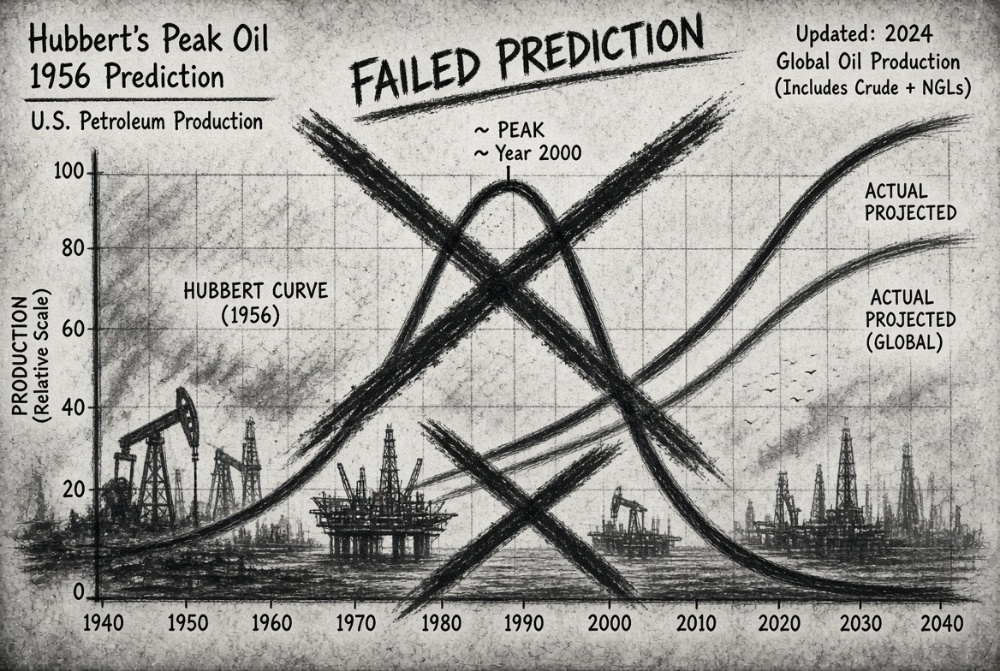
The roots of catastrophic visions date back to the post-war theory proposed by geophysicist M. King Hubbert in 1956 (the so-called Peak Oil Theory). Hubbert assumed that global oil production would reach its historical peak around the year 2000, followed by an inevitable decline and a civilizational crisis.
However, this theory failed because it assumed a static state of technology. It did not foresee breakthroughs such as deepwater offshore drilling or hydraulic fracturing (fracking). Furthermore, it ignored the core price mechanism of the free market.
The Market Mechanism and the Economics of Substitution
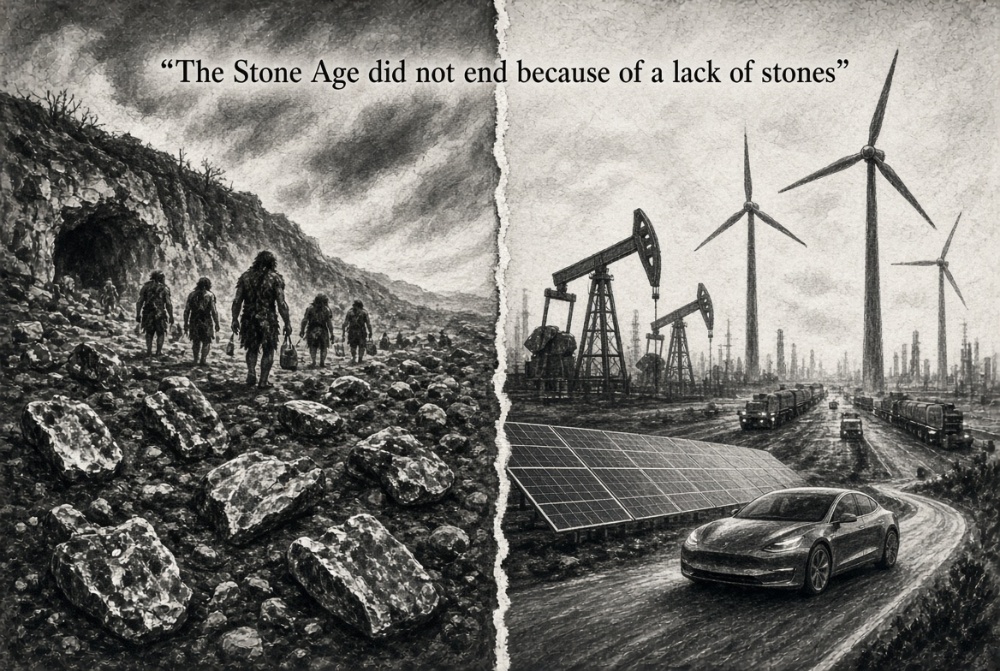
If there is no shortage of oil beneath the Earth's surface, why are we talking about phasing out fossil fuels? The answer is perfectly captured by the words of the former Saudi Minister of Petroleum in OPEC, Sheikh Ahmed Zaki Yamani:
"The Stone Age did not end because of a lack of stones, and the Oil Age will not end because of a lack of oil."
From an economic perspective, there is no such concept as the "physical depletion of oil in the world." Oil will remain in the ground simply because we will stop needing it. We will move away from it when we develop technologies that are cheaper, cleaner, and more efficient, or when the cost of extracting harder-to-reach raw materials pushes prices up to the point where consumers naturally choose alternatives-public transportation, bicycles, or electric vehicles.
In a market economy, an increase in raw material prices triggers two immediate effects:
- Demand Reduction: Consumers and industry seek savings and optimization.
- Substitution Effect: Investments in alternative energy sources and new powertrains become financially viable.
Market innovations are already driving change today. Even the largest fuel players (like British Petroleum) are investing heavily in renewable energy to build new business pillars and avoid repeating the mistake of market giants like Kodak, which ignored the digital revolution and disappeared from the market.
Engineering Fear: How Fear Rules Modern Politics
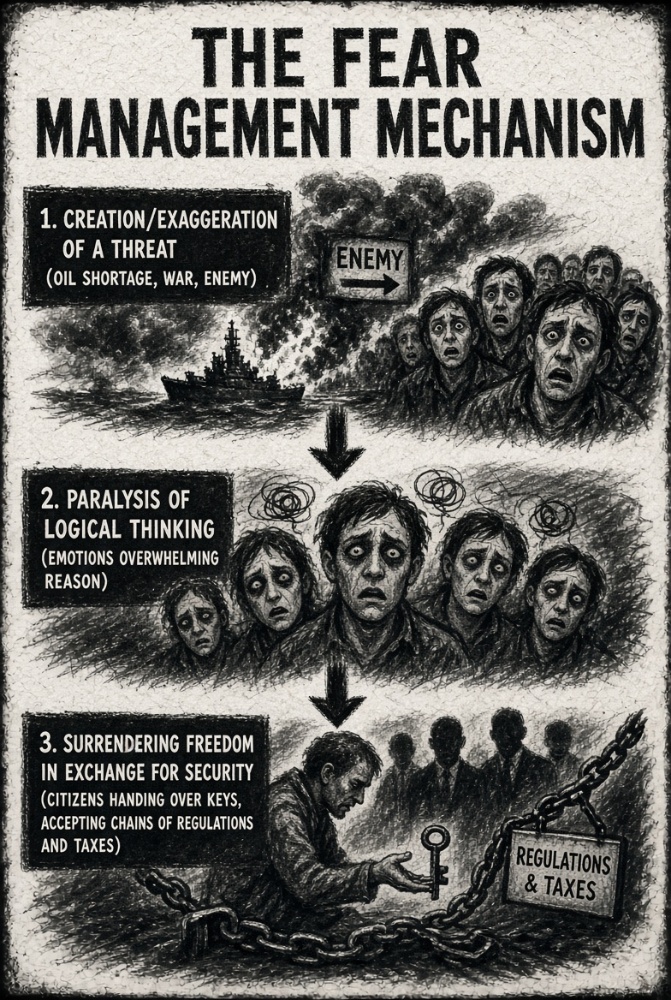
If scientific and market facts show that we are not facing a sudden shortage of resources, why is the catastrophic narrative so pervasive? Both Prof. Janicki’s analyses presented in his book World in Fear and numerous sociologists point to the same fact: fear is the most efficient tool of social control available to politics.
1. Neurobiology and the Dominance of Bad News
For evolutionary reasons, the human brain responds to negative stimuli several to dozens of times more strongly than to positive messaging. Bad news leaves a deep imprint on our neurons. That is why heart-warming stories are served at the very end of news broadcasts, while prime airtime is filled with creating a sense of threat.
2. Affect Theory and Creating an Enemy
In political psychology, the so-called affect theory is well-known. Its mechanism is simple in construction, yet extraordinarily effective:
- Identify or Create a Threat: Frighten society with a catastrophe (war, famine, energy shortage, or resource depletion).
- Present Yourself as the Sole Savior: Build a narrative around a leadership model that holds the exclusive formula to solve the crisis.
- Demand Power and Obedience: Conclude the messaging with a subtle: "Trust us, and we will protect you."
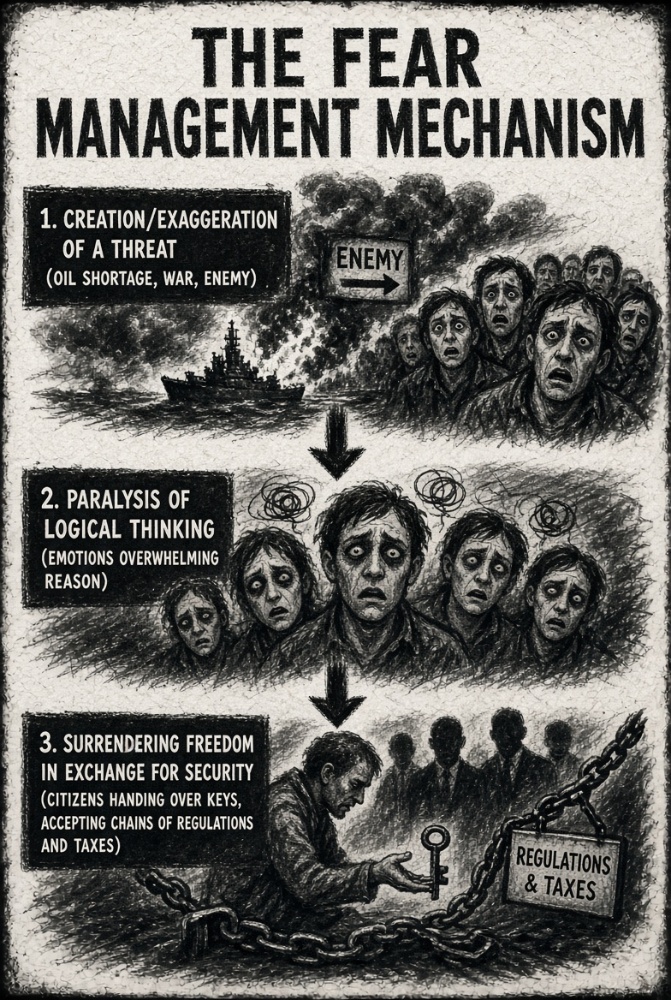
Prof. Janicki points out how historically authoritarian regimes, such as Germany in the 1930s, gained traction through democratic processes by exploiting economic crises and public anxiety over instability.
In modern governance, similar dynamics appear when political leaders highlight external security risks, geopolitical rivalries, or disputed maritime territories to consolidate domestic support and redirect attention from internal economic challenges.
Plaintext
┌─────────────────────────────────────────────────────────┐
│ THE FEAR MANAGEMENT MECHANISM │
├─────────────────────────────────────────────────────────┤
│ 1. Creation / Exaggeration of a Threat │
│ (e.g., imminent oil shortage, war, hostile group) │
│ │ │
│ ▼ │
│ 2. Paralysis of Logical Thinking in Citizens │
│ (emotions override factual analysis) │
│ │ │
│ ▼ │
│ 3. Surrendering Freedom in Exchange for Security │
│ (acceptance of higher taxes, bans, regulations) │
└─────────────────────────────────────────────────────────┘
Escape from Freedom and "Boiling the Frog"
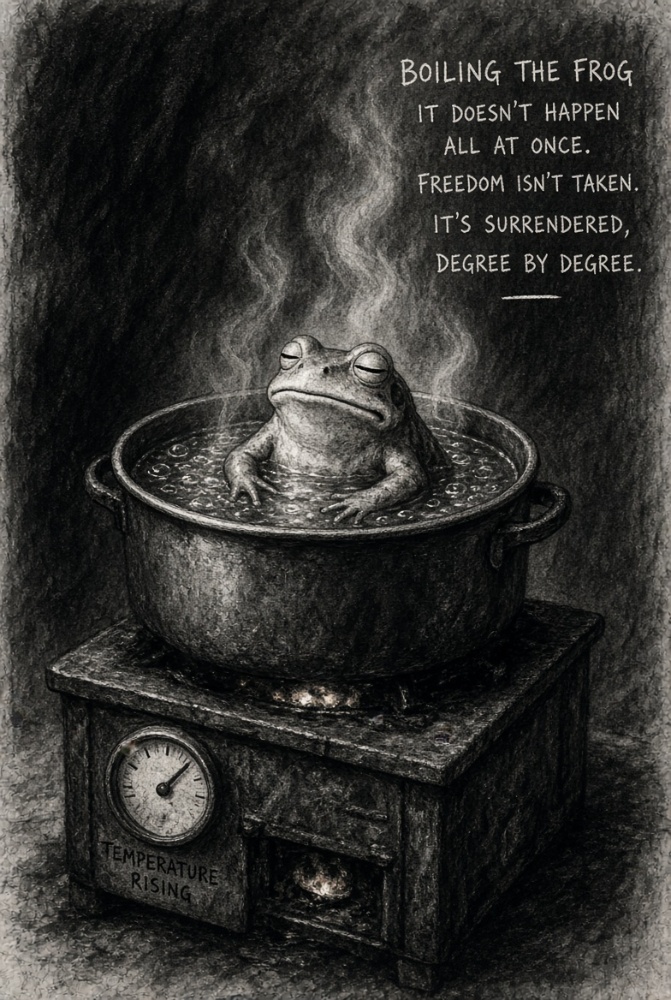
Citing Erich Fromm’s classic 1940 work Escape from Freedom, Prof. Janicki highlights a fundamental relationship: Freedom and Security lie at opposite poles.
When a society feels threatened, it is willing to surrender a significant portion of its civil and economic freedoms without blinking an eye to authority promising protection. This process rarely occurs abruptly. Similar to the metaphor of the boiling frog, the change takes place gradually, step by step. Citizens become accustomed to new bans, regulations, and taxes, believing they serve a "higher good" and save them from a previously fabricated disaster.
Escaping Forward Instead of Bans and Ideology
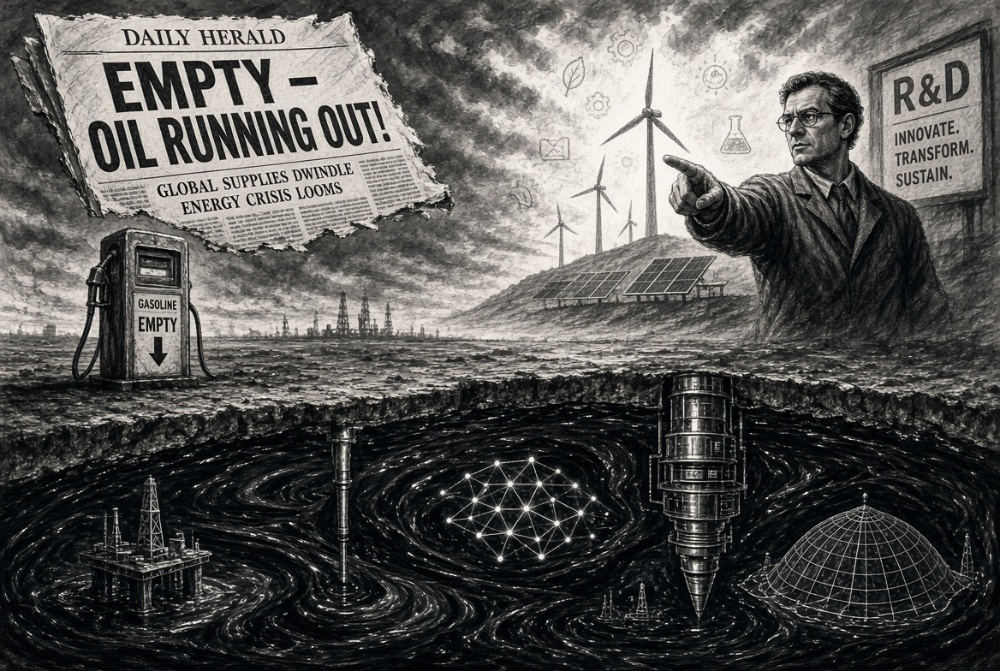
The contemporary debate on energy transition suffers from a division into two extreme camps: those who demand top-down bans and self-limitation, and those who completely deny the changes taking place.
The real way out of this deadlock is to escape forward-by betting on innovation, research, and development (R&D). Instead of forcing people into sacrifices through political mandates, conditions must be created in which modern, clean energy simply becomes cheaper and more widespread than fossil fuels.
Fuel prices at gas stations will continue to fluctuate under the influence of geopolitical turmoil and the ongoing interplay of supply and demand. However, the fear that one day the pumps will simply run dry of oil is merely a convenient myth. The greatest threat to modern society is not the depletion of underground reserves, but subservience to a politics of fear that strips away our freedom and stalls genuine progress in exchange for the illusion of security.
Resources:
http://www.youtube.com/watch?v=M7KDfRnnTxU
https://www.azquotes.com/author/22048-Ahmed_Zaki_Yamani
https://gardner.utah.edu/blog/peak-oil-theory-revisited/
https://www.reddit.com/r/AskEconomics/comments/1s9xpi3/what_happens_when_the_world_runs_out_of_oil/
https://www.scribd.com/document/776650559/Ucieczka-Od-Wolno%C5%9Bci-by-Fromm-Erich-Z-lib-org






