
Luxury in the Shadow of the Blockchain: How the Underground Crypto-Thief Economy Works
How is it possible that teenagers are renting private jets, driving the latest Lamborghini models through the streets of Miami or Dubai, and living in mansions costing tens of thousands of dollars a month? The answer lies in an underground market built specifically to convert stolen cryptocurrencies into luxury goods and services.
Here is how this hidden ecosystem operates, combining internet forums, Telegram channels, forgery, and complex money laundering operations.
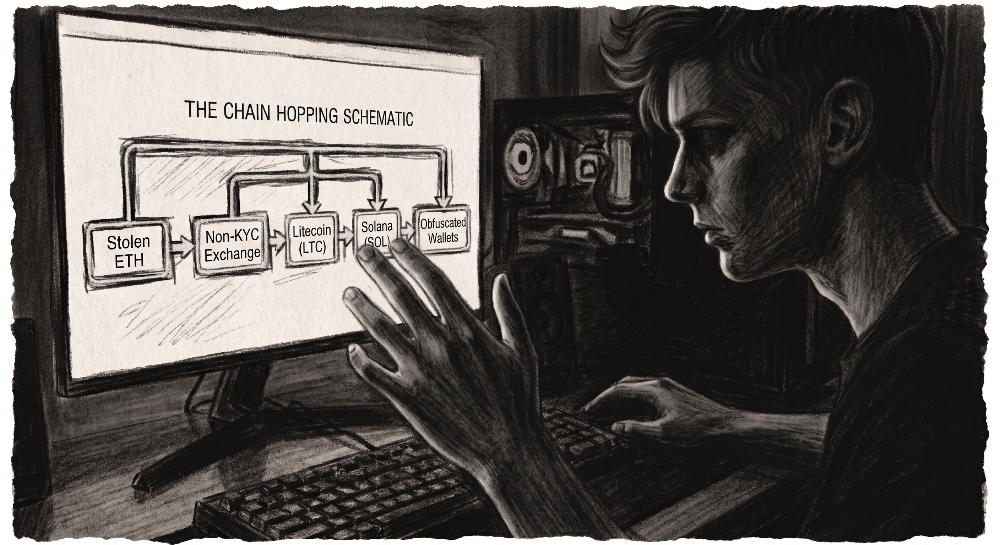
The "Clean" Money Challenge: The Myth of Cryptocurrency Anonymity
It might seem that stealing millions in crypto solves every problem, but in reality, it is only the beginning of the difficulties. As investigative journalist Andy Greenberg notes in his book Tracers in the Dark, Bitcoin and most digital assets rely on a public blockchain—a transparent ledger where every transaction is visible to everyone.
[Stolen Digital Assets]
│
▼
[Non-KYC Exchange / Mixer] ─── (Chain Hopping: ETH ➔ LTC ➔ SOL)
│
▼
[Obfuscating the Trail]
│
┌───────┴──────────────────────────────┐
▼ ▼
[Crypto-Brokers] [Money Laundering (Kunal Mehta)]
• Jet/car rentals • Cash in plushies (Squishmallows)
• Super Clones / luxury brands • Fake jobs (LLCs) and tax filing
When a cybercriminal steals funds, on-chain analysts (like the renowned ZachXBT) and law enforcement can trace the movement of coins right up to the moment they are converted into traditional fiat currency. Legitimate exchanges enforce Know Your Customer (KYC) identity verification. Attempts to trick the system—such as hacker Nicholas Truglia using a deceased person's identity on Coinbase—end up exposed by law enforcement through submitted documents.
To obfuscate asset tracking, hackers employ techniques like chain hopping:
- Transferring stolen assets to non-KYC exchanges.
- Splitting large sums (e.g., in Ethereum) and swapping them for other coins (e.g., Litecoin, Solana).
- Repeating this process multiple times to create a dense transaction network that prevents straightforward analysis.
Even these measures do not guarantee safety. Because blockchain records are permanent, analysts can link old transactions to criminals' real-world identities years later.
Telegram as an Underground Department Store
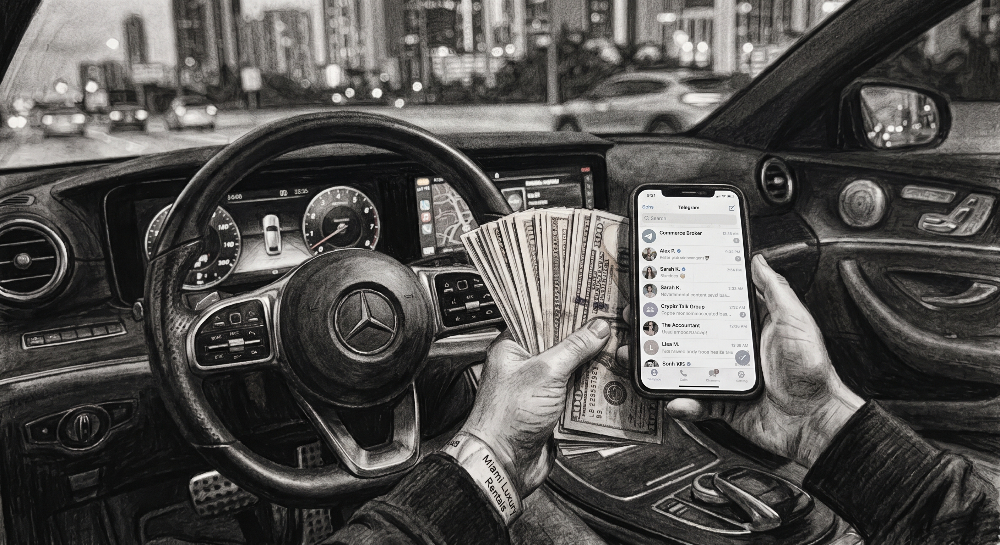
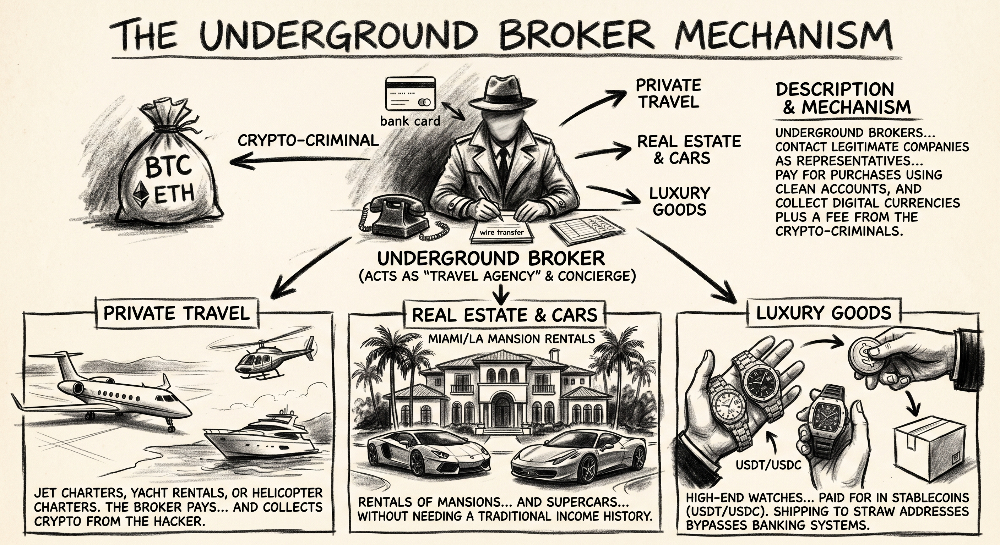
Because directly transferring crime proceeds into a bank account carries immense risk, a broker market emerged. Real commercial operations migrated from unsafe, leak-prone forums (such as OGUsers) to Telegram.
On specialized channels, criminals gain access to a full suite of luxury services:
The "Super Clone" Phenomenon: Flexing and Scams Inside the Underground
A significant part of this market involves "Super Clones"—counterfeit luxury watches produced mainly in Asian factories (such as VSF). They are crafted with such attention to detail that distinguishing them without removing the case back and analyzing the movement is nearly impossible.
Two distinct trends are observed here
- Intentional purchases to build clout: Young SIM-swappers buy clones for a few hundred dollars along with forged boxes and certificates featuring matching serial numbers to flex on Instagram and fake a higher status.
- Internal network scams: Dishonest dealers sell clones (or "Frankenstein watches"—fakes built with a few genuine parts) at full price. Victims cannot seek legal recourse or report the scam to the police because they paid with illicit funds.
High-Level Money Laundering: The Kunal Mehta Case Study
While teenagers spend funds on immediate pleasures, architects of money laundering systems sit at the top of the structure. A prime example is the case of Kunal Mehta (known online as "Papa," "The Accountant," or "Neil"), who co-created the financial infrastructure for the Scattered Spider group (also known as S&E Enterprise), responsible for stealing over $250 million.
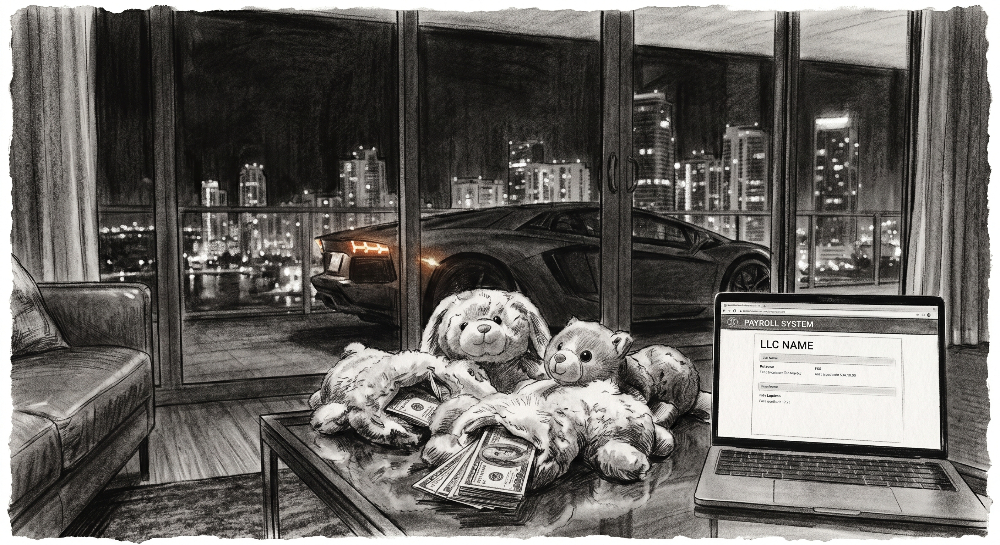
Kunal Mehta pleaded guilty to RICO conspiracy and laundering at least $25 million as part of an organized group. He offered hackers full-service support:
- Cash delivery: Converting stolen crypto into physical cash (charging roughly a 10% commission). He delivered cash in duffel bags or mailed it—sometimes sewn inside Squishmallows plush toys ($25,000 per plushie).
- Building tax history: Using a network of his own LLCs (tied to real estate rentals and fashion) to list criminals or their family members as employees. This provided proof of income through fake employment contracts, allowing them to file taxes legally with the IRS.
- Registering assets via proxies: Registering luxury cars and leasing mansions under his own name or third-party "straw signers" to hide that young hackers were the actual beneficiaries.
Summary
The world of luxury goods funded by stolen cryptocurrency is a complex branch of crime that merges modern digital technology with traditional asset-concealment tactics. Despite advanced token-swapping techniques, the permanent trail left on the blockchain—alongside the work of analysts and investigators—inevitably leads to identification, asset seizure, and prosecution.






