
In recent years, the digital space has witnessed one of the most profitable and controversial marketing revolutions of the 21st century. Niche gambling platforms based on cryptocurrencies have transformed into multi-billion-dollar empires, embedding gambling right into the heart of pop culture.
However, this success story is not a tale of innovation, but rather one of masterfully exploiting legal loopholes, leveraging persuasion psychology, and creating a proprietary media ecosystem when traditional doors were slammed shut.
Foundations of the Empire: An Island Paradise and the Australian Loophole
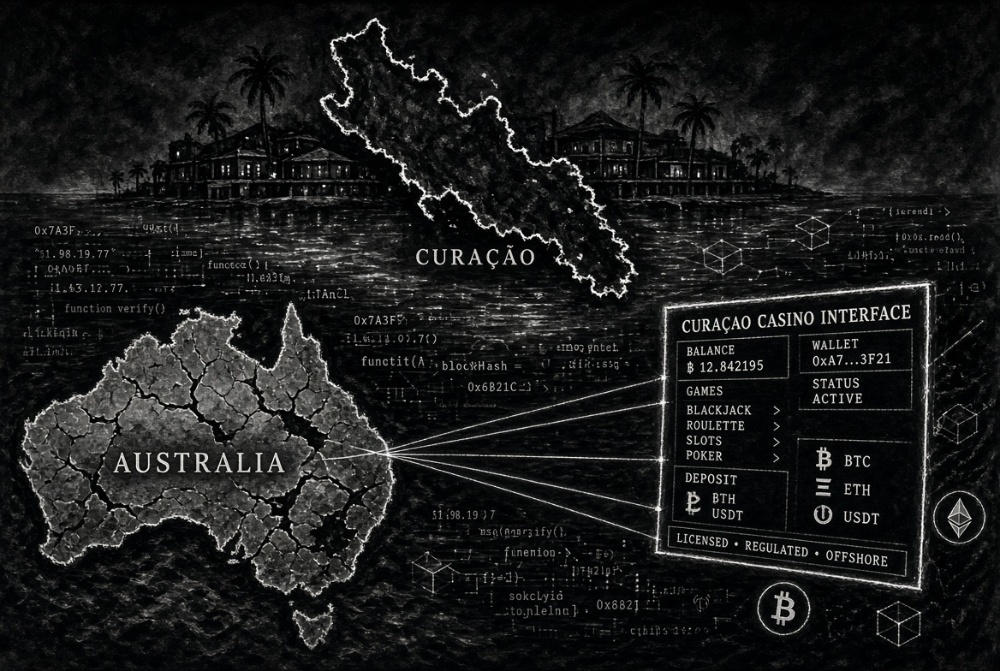
At the heart of crypto gambling lies the multi-billion-dollar brand Stake.com. Its co-founders-Edward Craven and Bijan Tehrani-registered a company in Australia called Easygo, responsible for developing games and software.
Even though online gambling is legally prohibited in Australia, the founders identified a regulatory loophole: the law bans offering and advertising gambling services directly to Australian citizens. As long as the platform does not serve local players or promote itself domestically, it can operate smoothly in the global market.
```
[Easygo (Australia)] ──(Software/Games)──> [Stake.com / Media / Sponsorships]
│
(Offshore Registration / License)
▼
[Curaçao / Sub-licenses]
```
To lend the business a veneer of legality, platforms such as Stake or Roobet were registered in tax havens, primarily on the Caribbean island of Curaçao. For years, licensing there served as little more than a rubber stamp-verification requirements were minimal, and oversight of algorithmic fairness was virtually non-existent. Cryptocurrency payments completed the picture: the absence of a traditional banking system made it easy to bypass national jurisdictions and facilitated access for minors.
The Architecture of Manipulation: How the Marketing Psychology of Crypto Casinos Works
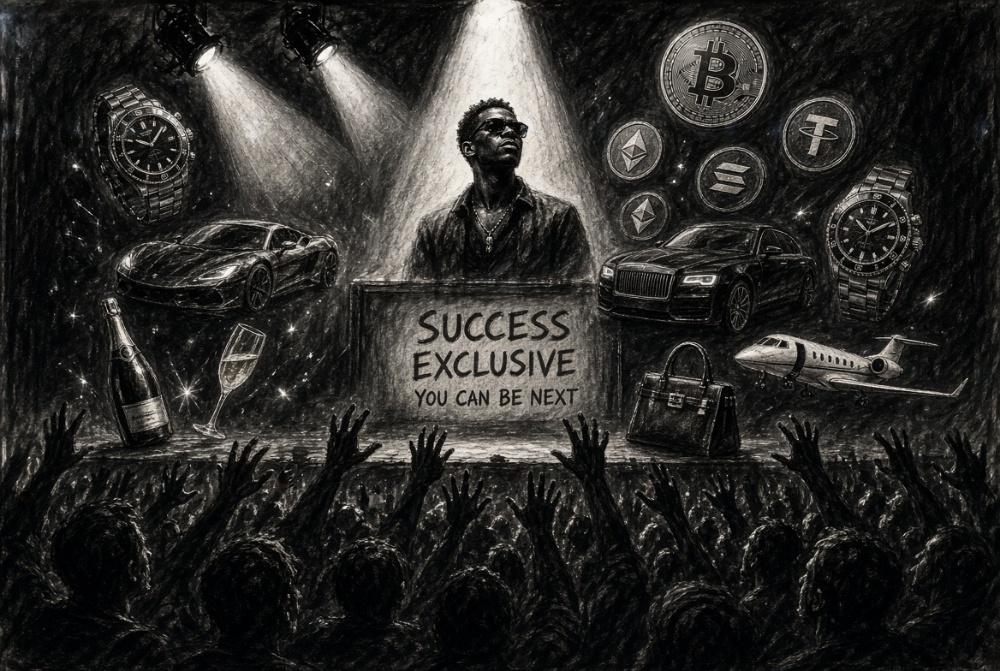
Traditional gambling is difficult to sell through rational arguments-mathematics clearly dictates that the house always wins. For this reason, crypto casinos deployed marketing strategies built on advanced psychological mechanisms.
The Elaboration Likelihood Model (ELM) and the Peripheral Route
According to the Elaboration Likelihood Model (ELM), there are two routes to information processing:
Central route:Requires deep analysis of data and facts (where the casino loses, as probability is relentless).
Peripheral route: Relies on emotions, status, attractiveness, and the authority of the messenger.
Crypto casinos bet heavily on the peripheral route. Collaborations with pop culture giants (including rapper Drake, the UFC, and Premier League clubs) were not intended to convince viewers that gambling is profitable. Their goal was to associate the brand with a glamorous lifestyle, luxury, and excitement. A viewer watching Drake win millions of dollars live does not coldly evaluate the balance sheet of gains and losses-they fall under the spell of celebrity status.
Inoculation Theory and the Role of Streamers
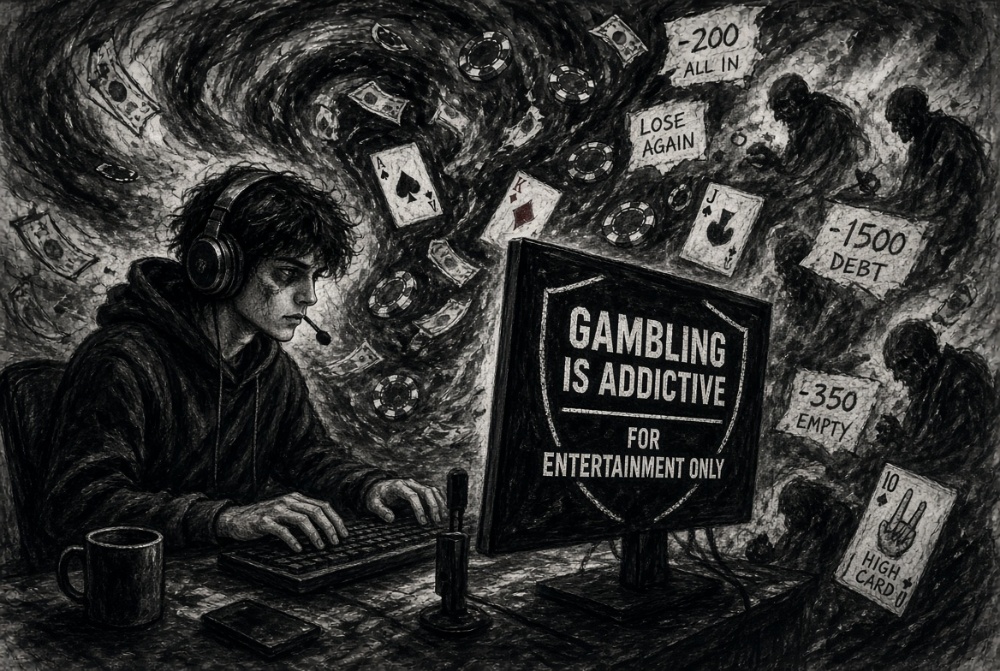
Streamers on live-streaming platforms (such as Trainwreckstv or Adin Ross) became the critical link in attracting recurring players. They received contracts worth millions of dollars per month alongside massive gambling budgets. Losses posed zero financial risk to them-they were playing with funds provided directly by the casino itself.
To shield themselves from criticism and accusations of ruining their viewers' lives, streamers developed a defense mechanism aligned with "Inoculation Theory":
Providing weak counterarguments: The streamer places warning overlays on screen ("Gambling is addictive", "Do not start playing").
Building an alibi: During broadcasts, they repeat phrases like: "I'm going to lose it all, you will lose too, this is done strictly for entertainment."
The end result: These warnings act as a "vaccine" that protects the creator from moral accountability, while the thrilling, multi-million-dollar live wins effectively entice the viewer to try their own luck.
The Turning Point: The Twitch Ban and the Birth of Kick.com
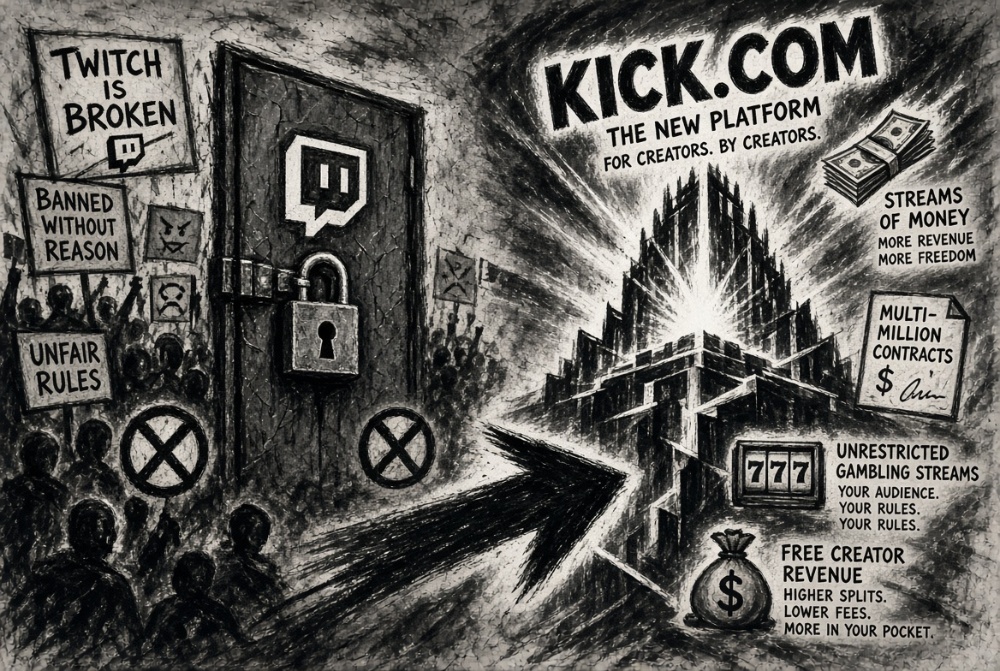
The crypto casino world faced a massive crisis in late 2022. Following a wave of community protests, pressure from top creators, and growing media backlash, Twitch officially banned the streaming of gambling sites unlicensed in the US (including Stake.com and Roobet).
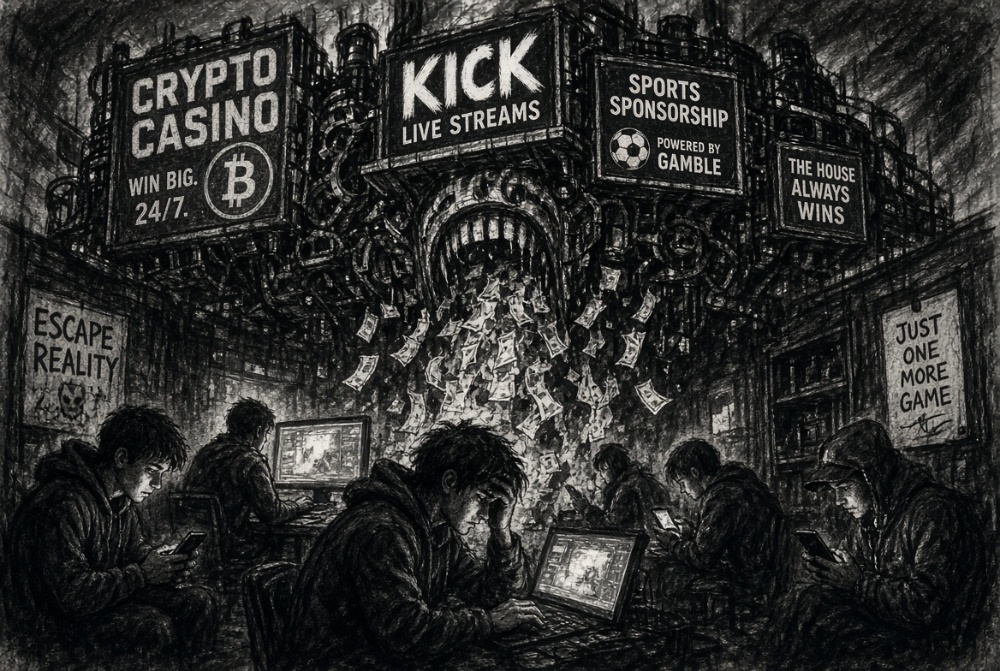
The casino owners' response was immediate and led to an unprecedented power move in the digital media market:
- Creating their own platform: Edward Craven and Bijan Tehrani funded the creation of a new streaming platform-Kick.com.
- Poaching creators: Kick offered streamers terms unattainable anywhere else (a 95/5 revenue split favoring the creator) alongside multi-million-dollar exclusive contracts for gambling-affiliated stars.
- Full control of the ecosystem: Instead of paying third-party platforms for ad space, Stake’s creators built their own media outlet, where gambling streams became one of the primary content pillars.
[Public Backlash / Scandals] ──> [Twitch Gambling Ban (2022)]
│
▼ (Response from Stake owners)
[Launch of Kick.com]
│
┌─────────────────────┴─────────────────────┐
▼ ▼
[Multi-Million Creator Contracts] [No Gambling Restrictions]
Impact and Outlook: A High-Stakes Game
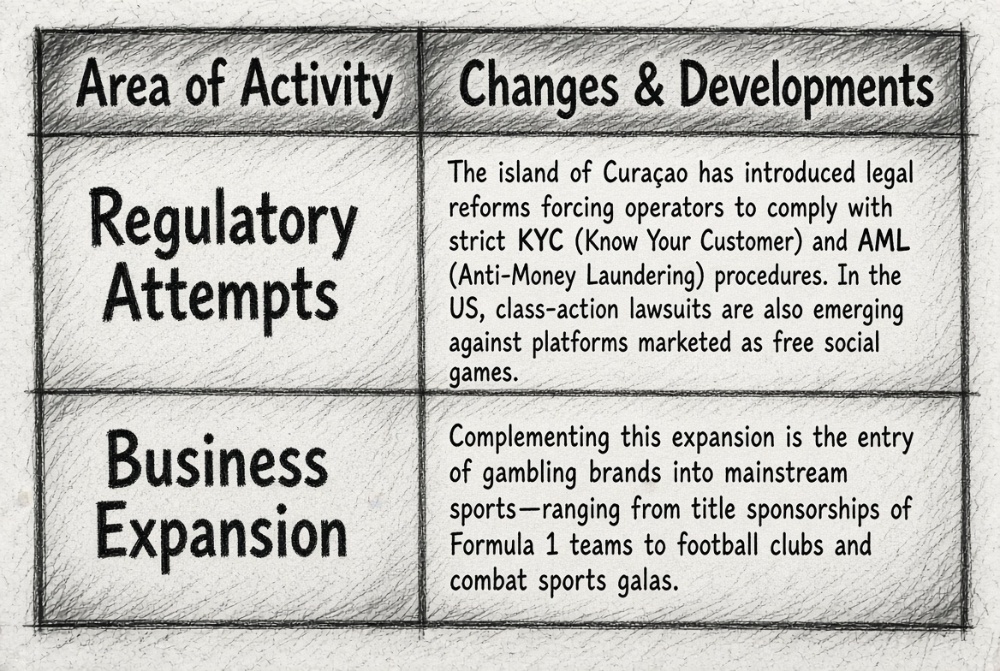
Numerous investigative journalism reports have revealed that the combination of cryptocurrency anonymity, VPN usage, and aggressive marketing has triggered a dramatic surge in gambling addiction among teenagers and young adults.
Today, the industry stands at a crossroads, driven by two opposing forces:
Summary
The story of crypto casinos demonstrates how, in the age of digital transformation, the lines between entertainment, the ideal of a free market, and the cynical exploitation of human weaknesses have become thoroughly blurred. The journey from operating illicitly out of the shadows of Caribbean islands to launching a global streaming platform like Kick.com is proof of the immense power held by capital built on human addiction.






