
Pharmaceuticals as Emerging Environmental Contaminants.
It has been a long time since I have posted but this is something I have been reading about over the last while. I will try to get more stuff I found interesting written up and posted soon!
When many think of an environmental contaminant they imagine an oil spill, heavy metal pollution from mining or dumping of waste directly into the environment but there are many other types.
An emerging contaminant (EC) is a term that covers a wide variety of chemicals including medicines, fragrances, food additives such as preservatives, ‘lifestyle drugs’ such as caffeine or nicotine, flame retardants and pesticides. They are not regularly tested for in environmental or drinking water monitoring and their long term effects on the environment and human health, the extent of their movement through the environment and persistence generally have been poorly understood. The origin of the ECs in question may not be fully clear and contribution of a single source difficult to identify and measure.
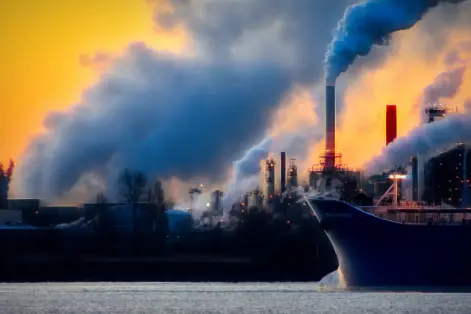
Image: Chris LeBoutillier via Pexels
Pharmaceuticals are an example of an EC. Due to the sheer volume of use in both humans and animals they are continuously released into the environment. They can be introduced to the environment and waters directly via excretion by humans and livestock, use in aquaculature, accidental release or the spreading of sewage sludge or animal waste for the purposes of crop fertilisation. Sources fall under 2 main classifications; Point sources such as wastewater treatment plants, hospital wastewater and industrial waste water discharge pipes can be considered a more ‘direct’ source of entry while diffuse sources such as leaching from landfill into groundwater or entry via animal waste through the soil are a less ‘direct’.
Chemically, the entry, movement and persistence of contaminants such as pharmaceuticals in soil and water is affected by their own chemical properties (such as their solubility, polarity, stability).
The ability of the soil itself within to retain the pharmaceuticals will be affected by its, pH, content of organic matter and mineral content. 1, 2 Other loss and sequestration processes such as uptake by plants bacterial degradation and photodegradation (being broken down by sunlight) are also possible. 3 Chemicals which are more water soluble are more likely to run through or off the soil with rainfall for example whereas less water soluble chemicals are more likely to be retained by other matter in the soil. 4
As they are not effectively removed in waste water treatment plants they are expected to have the greatest impact on organisms downstream. By design, pharmaceuticals are intended to have the greatest effect at the lowest possible dose, this raises concern that pharmaceuticals in the environment will have effects on non-target organisms. Due to shared cell signalling pathways in addition to similar enzyme and cellular processes across species there exists a very real possibility for effects on non-target organisms in the environment. 5

Image: Green_greyDarya via Pexels
It has been found for example that oestrogen compounds from human and animal use can affect the ratio of male: female individuals, fertility and sexual characteristics in several species such as fish and frogs. This could lead to obvious effects on population stability by affecting reproduction. 6 Some studies investigate sub lethal consequences of widely used treatments such as ivermectin or fluoxetine in species such as dung beetles, mussels and fish and how these can still have significant effects on the behaviour and abilities of the organisms to carry out normal functions within the environment. 7, 8 This can happen either direct toxicity (eg. The effects of ivermectin on beetles) or sharing of basic physiological pathways with the target species (eg. An SSRI such as fluoxetine having effect on the behaviour of animals). Effects on natural processes in animals such as hibernation have been considered also with some authors suggesting potential pathways for pharmaceutical ECs to affect processes such as hibernation, reproduction and increasing species propensity to infection or predation by altering their behaviour. 8, 9
Effects on species such as insects can have negative secondary effects such as preventing nutrient cycling such as breakdown of animal dung by beetles or flies preventing the nutrients from the dung from re-entering the soil. A reduction in population of these insects will have further carry on effects by reducing prey for bats and birds.
One notable example of unintended consequence from a pharmaceutical being introduced to the environment was the mass death of vultures in Southeast Asia caused by accidental intake of the common human and veterinary anti-inflammatory drug diclofenac. As the vultures consumed carcasses of livestock which had been treated with diclofenac it caused a dramatic decrease in their populations (>95% in some species) as the drug is fatal for them. Secondary effects for such a drastic drop in the number of vultures was an increase in the numbers of feral dogs and rats as the increased availability of a food source (animal carrion) caused a population explosion. These animals can be a vector for diseases such as rabies and leptospirosis and so this causes obvious concerns for human health and ecosystem balance. The use of diclofenac for veterinary purposes has since been banned in countries such as India and Nepal where there is some recovery of vulture populations but illicit use of the drugs remains. 10

Image: karen Alchin via Pexels
Other, less continuous sources can still have an impact on the environment. After Glastonbury music festival in England for example there were high traces of MDMA and cocaine found in the river that runs along the festival ground. It is expected that this was from excretion of the drugs rather than direct accidental or deliberate entry. The river is home to the rare European eel so there are concerns of the effects that such contaminants can have. 11
A big area of concern is the development of antibiotic resistance from the exposure of microbes in the soil and water to antibiotics to which they can develop resistance. As many of these compounds are excreted in relatively unchanged forms by humans and animals it means that antibiotics which are in common use for the treatment of human and animal infections may be reduced in their capacity to treat infection as microbes adapt to their presence. In some countries with intensive factory farming practices it is a routine process to administer antibiotics for prevention of infection in densely housed animals although this has recently been banned in the European Union over concerns of antibiotic resistance. 12, 13
Additionally, the long term effects of taking low doses of pharmaceuticals or other drugs and contaminants in humans for which they are not intended is unknown. This is of special concern for vulnerable populations such as young children, the elderly and those on other medications.
Due to the amount of variables involved when chemicals are released into the environment, from weather patterns to species which will encounter it, from interactions with other chemicals to the effects that multiple chemicals may have on a species it is not sufficient to say that laboratory tests for ecotoxicity or other effects are reflective of the full extent of the potential for consequence. Long term and large scale effects are difficult to simulate in a laboratory setting.
There are volumes of research being done on ECs such as pharmaceuticals finally as the potential for their effects are recognised. Methods for detection of multiple contaminants are in development and are becoming more common although as stated previously they are far from routine in drinking water analysis as would be the case for lead or bacterial contamination. Research is also being done on methods to reduce their concentrations in the water whether it is breakdown of the contaminant by bacteria in waste water treatment plants or by ‘capturing’ contaminants from the water using materials such as polymers or by biological means such as algae. 14, 15, 16 Environmental impacts carried out by pharmaceutical companies should also be more extensive looking at wider potential impacts rather than limited lab based ecotoxicity studies on specific species. In Sweden, environmental effects of drugs are considered, the prescribing of a drug includes its potential impacts on environmental health in addition to that of the patient in an effort to encourage the development of more environmentally friendly drugs. 17
While it is obvious that medicines are very important to society, the environment in which we live and the water which we drink are very important too. Efforts must continue to be made to strive for balance with the natural world and so hopefully methods to identify, reduce and mitigate such pollution succeed.
Any questions are welcome below!
References:
1 https://www.sciencedirect.com/science/article/abs/pii/S0045653505001414?via%3Dihub
2 https://www.sciencedirect.com/science/article/pii/S0045653512013239
3 https://www.jstage.jst.go.jp/article/jts/38/2/38_215/_article
4 https://www.ncbi.nlm.nih.gov/pmc/articles/PMC1474581/
5 https://www.sciencedirect.com/science/article/abs/pii/S0304389413006018
6 https://www.pnas.org/doi/10.1073/pnas.0609568104
7 https://resjournals.onlinelibrary.wiley.com/doi/full/10.1111/een.13158
10 https://www.ncbi.nlm.nih.gov/pmc/articles/PMC3492300/
12 https://journals.asm.org/doi/10.1128/AEM.71.12.7941-7947.2005
14 https://pubs.rsc.org/en/content/articlelanding/2022/me/d1me00142f
15 https://pubmed.ncbi.nlm.nih.gov/22871013/
16 https://www.mdpi.com/1660-4601/19/13/7717
17 https://www.sciencedirect.com/science/article/pii/S0160412008002547?via%3Dihub






