Prologue
Since cryptocurrencies have developed and firmly established themselves in the market, there has been a parallel increase in the number of scams involving them. On this blog, we discuss old and current schemes used by scammers to obtain personal data or sensitive information such as passwords or simply money. Most schemes are painfully dull and predictable, requiring only a minimal sensitivity to certain warning signs such as:
- Overly favorable offers
- Implausible stories
- Random encounters/acquaintances (especially prevalent on Discord and Telegram)
- Websites that advertise themselves in such grandiose and perfect ways that it looks like a caricature of an advertisement written by a youth fresh out of reading a manual on writing ads.
How to recognize and protect yourself from these types of people, websites, and traps? This blog will serve as a base of such information. Personally, I often find myself falling for the bait thrown by scammers in order to learn about and break down both new and old schemes. Let's get started!
Project Pi
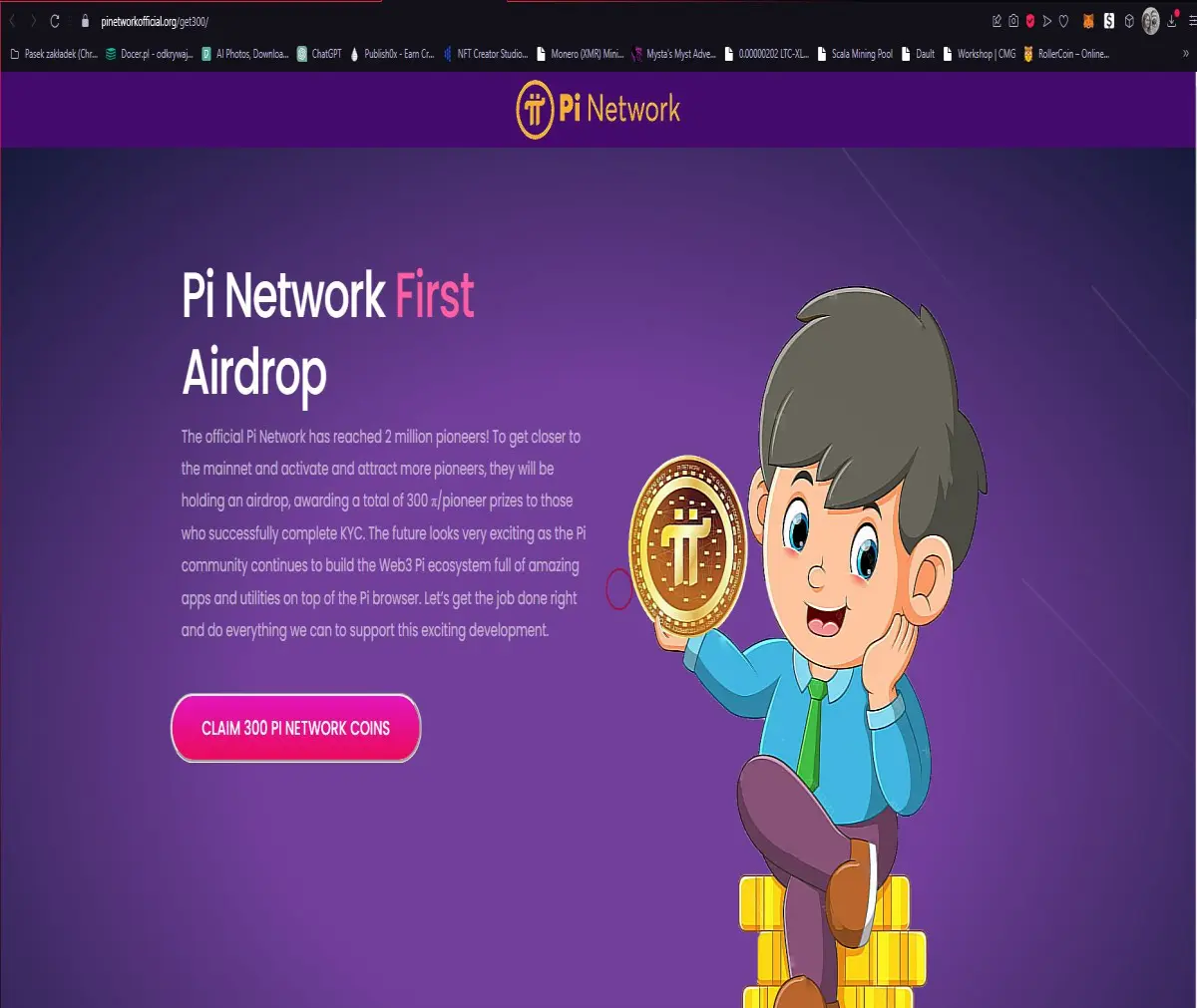
Experienced cryptocurrency users have surely heard of this project. A group of developers gathered to create a currency along with its entire blockchain. They then released an app where you can mine the currency using your phone without draining the battery. We won't discuss the technicalities here; the only thing worth mentioning is the enormous interest in this project, and where there is interest, there are also scammers. Why? Because they can't resist having what others have and they don't, so they'll take it from those who earned it. The same is true for Pi; a multi-million user base, increasingly better organization, and a community that binds this whole mess together have effectively raised expectations for this cryptocurrency. Scammers listen to speculation, and it's quite optimistic, so they're eager to get as much of it as possible before the first listing and entry into the mainnet. The scheme I'm presenting is so banal that in 2024 we shouldn't fall for such ploys.
(From this point on, I emphasize that the link is the original link to the scam website. UNDER NO CIRCUMSTANCES PROVIDE ANY DATA THERE, DO NOT DOWNLOAD ANYTHING, AND DO NOT CLICK ANYTHING.)
Here's a website that seems neat at first, informing us of a 300 token drop for platform users. Why is this a scam? And now pay attention, you should engrave this like a mantra, so deeply that when you wake up at 3 a.m., you'll sing it so beautifully that you'll win another contest from the "Voice of" series.
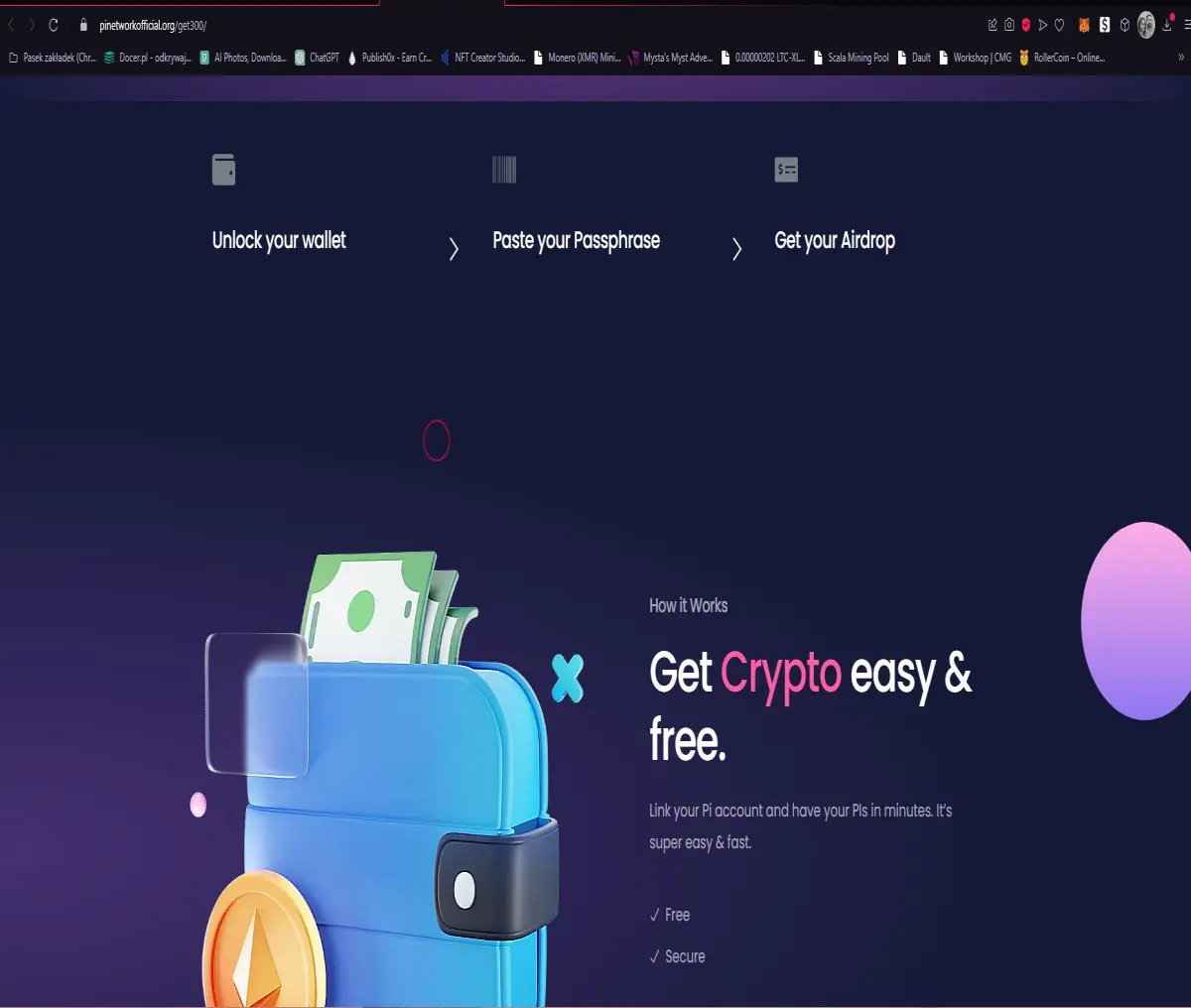
It's precisely this element on the website:
Unlock your wallet > PASTE YOUR PASSPHRASE > get airdrop
!!!!!!! IF YOU EVER GIVE ANYONE YOUR PASSPHRASE (WALLET KEY), IT IS EQUIVALENT TO GIVING THEM ACCESS TO YOUR WALLET AND THE FUNDS IN IT!!!!!!!
Never give anyone – keywords, private keys, wallet seeds. It's best not to give anything! On Telegram, the rule is that the ADMIN WILL NEVER WRITE TO YOU FIRST AND WILL NEVER ASK YOU FOR LOGINS. Instead, a scammer will send you a private message, showing understanding until they ask for:
a) login and password
b) private key
c) 12 seed words
This is a scam and it's basic.
The same goes for this website; if any website requires you to provide passwords or logins that allow access to your wallet, it's 300% a scam. Avoid it like the plague.