
Looping RWA collateral is one of the most capital-efficient strategies in DeFi right now — real yield 8–15%+ net without farms or inflationary tokens. But one wrong move = liquidation.
Here are the 5 most dangerous mistakes people make in 2026 — and how to avoid them.

1. Ignoring LTV and going too aggressive
Many push LTV above 60–65% thinking "yield is high, so leverage more". In volatile markets (even treasuries can dip 2–5% in a bad day) — health factor drops below 1.0 fast.
Safe rule: Keep LTV ≤55% on Morpho/Aave for OUSG/Centrifuge. Current examples: Morpho OUSG supply 5.2% → borrow USDC 3.1% → net 8–10% at 50% LTV.
2. Not monitoring health factor daily
DeFi moves 24/7. One flash crash or sudden borrow rate spike — and you're liquidated.
Tools: DeFi Saver, Zapper, or Aave app notifications.
Pro tip: Set alerts at 1.5 health factor (not 1.1). Don't rely on "it will bounce back".
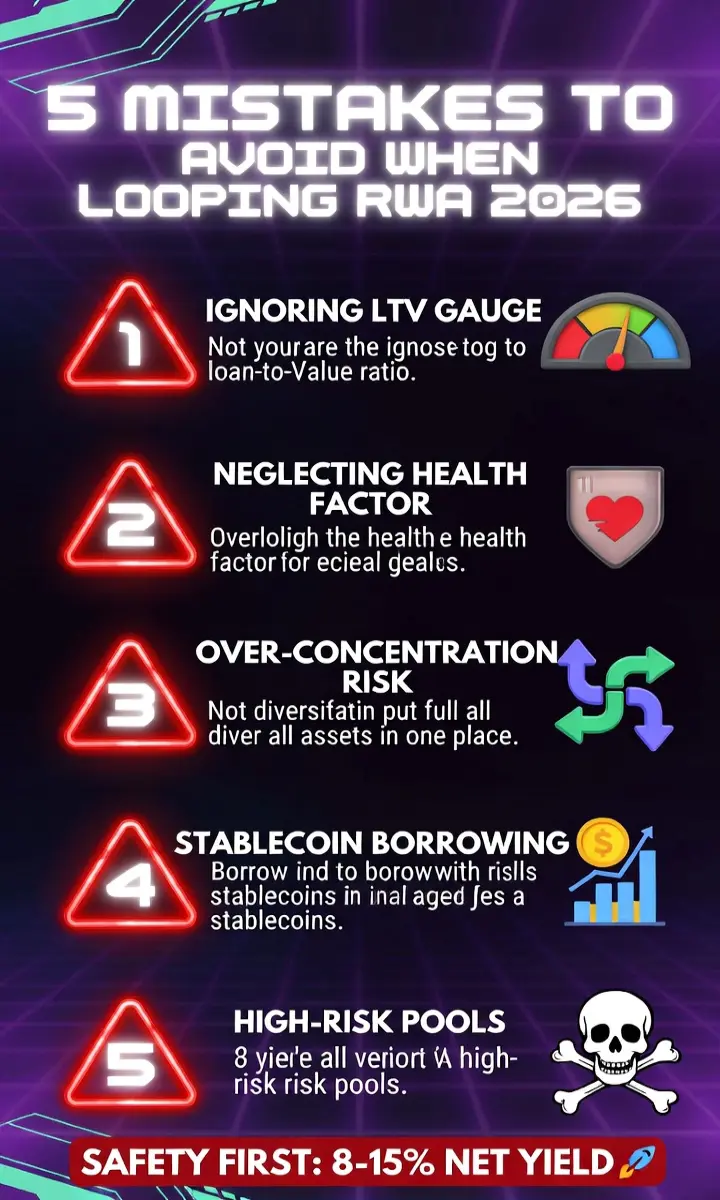
3. Using only one protocol
If Morpho has a bug, outage, or governance change — your whole position is at risk.
Diversify: 40% Morpho (OUSG), 40% Aave (Centrifuge), 20% Kinetiq (omnichain).
4. Borrowing volatile assets
Borrowing ETH or BTC to loop stable RWA = suicide. Collateral value drops → instant liquidation.
Rule: Borrow only stablecoins (USDC/DAI/USDT). Stable borrow rates are low (3–5%) and predictable.
5. Chasing high-risk RWAs for extra yield
Emerging private credit or sports memorabilia pools give 15–20%+, but liquidity is thin, oracles can lag, and liquidation risk x10.
Stick to blue-chip: OUSG/USDY (treasuries), Centrifuge senior pools. Yield 8–12% net is sustainable.
Bottom line: Looping RWA is powerful, but boring safety wins. Keep LTV low, diversify, monitor daily, borrow stables only, and avoid high-risk pools.
All daily APY updates, live signals, my current safe setups and exclusive breakdowns are now in Telegram:
Subscribe there for real-time alpha — see you inside! 🚀💎
DYOR. Not financial advice.





