
But they were just as glad, being young, to arrive in town again and greet their families. They were happier still to communicate the first inklings of this new spirit and freedom with their friends. They weren’t yet clear in their explanations, or completely understood. But word spread that something fine and exciting was happening out there which was inspirational, to say the least.
Perhaps the place was full of miracles and holiness. The town was already under the romantic spell of this venture. Now their revered leader was to visit the shrine. They could hardly refrain from the wildest speculations. Only a few temple priests distrusted the unfolding events. They’d hush up the people by their presence and bid them mind their tasks, but they couldn’t put a cap on such an invisible electricity.
Jonathan spent three days in town, again exploring the storage chambers in the basement of the temple. He’d no new items on his list except lemons, but thought that by exploring what they had, ideas might occur. The two priests in charge were helpful in his search. They had a strong desire to gratify him and gain some interest in his project, and lose nothing, except boxes of junk that had been crowding their passageways for over two decades.
It’d been the wise policy of the Church, once it was done with its first orgy of destruction, to box up rather than burn all but the most offensive of artifacts, such as books and pictures and electrical devices. Once it took control of its cities and quelled the violent mobs that lifted it to power, it set them to work neatly dismantling the houses and structures that still stood and crating up any preservable goods for future contingencies. It realized that it had destroyed the means of production for of most of these goods and didn't want to suffer any harm from a lack of them before it could build a society that wouldn’t require such things.
And so doorknobs, screens, brackets, tools, gears, glass, even pieces of ornaments and furniture, went into crates which were squirreled away. The objects were dipped in white but packed in the most random fashion, boxed without labeling, as no such system then existed. It was the chore of several temple priests to disburse these materials. But they usually found it much easier to just shut the doors, as they did in this town, until Jonathan arrived.
Now he, with his love of artifacts and with his staff of authority, took huge delight in prying open vast numbers of these crates and picking out all sorts of knick-knacks to take back to his temple. The two priests in charge followed him, chattering away, lanterns in hand, while two more attendants came after, dragging a heavy sack that swelled a little more with every step they took.
It didn't take long for Jonathan to load down three of his burros with these new treasures. The others were needed to carry back the more mundane supplies. He hadn't even gone through a quarter of the cellars before his bags were full. He found bars of stainless steel, disguised in white and gears and pieces of simple machinery which he picked through with a nostalgic fondness. His most remarkable discoveries were a clock, and a box full of cut glass. Each piece had been dipped in white and wrapped up and made no great impression. But he could tell by the feel and the interesting shapes what it was and appropriated the whole box without hesitation.
The evenings he passed at table with the other priests, telling them in detail of the progress of his new foundation. He often asked their advice on details, such as the number and size of the cabins he should build, knowing that this participation would win their goodwill. It was decided that after the head priest's journey they too would be allowed to visit, several at a time.
Jonathan knew that by allowing visitors he was flirting with danger, as some of the things he was planning would surely shock the narrow minds of these men. But he figured that he’d have another two months to prepare for this and either disguise what he was doing or devise ways to explain the innovations to them. The old priest would be a good test case, as he was already a strong supporter of the project. If Jonathan had a body of priests behind him, he could debate and fight the others before the council.
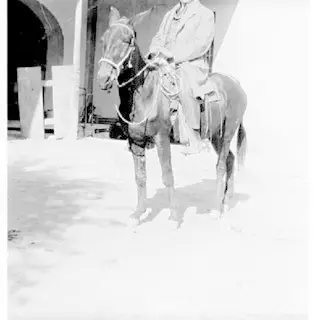
With ample provisions made for the old man's absence and a horse to carry him, they set out on the morning of the fourth day. Simon and Mary were charged with guiding the pack train ahead. Jonathan walked beside the priest, with his staff in one hand and the bridle of the horse in the other. The two old men chatted away as they moved along. It was pleasant for the priest to see the countryside again, bleak and desolate though it was. He’d not seen it for decades and it brought back memories and a sentimentality that fueled their conversation.
They started off innocently enough, talking of the beauty of certain landscapes they’d known and how, since the plague, nature had been a sadly ignored thing.
"But you’ll see" Jonathan remarked, "that left alone, nature has not neglected herself, in the loveliness of the spot we’ll reach tomorrow."
"I have a great yearning to see it," said the priest, "as you well know."
"Yes" said Jonathan, "and I too." But then continuing his train of thought, "do you remember, in the old days, before the blight of plants, how we used to almost worship nature, at the same time that we were destroying her?"
"Yes," said the old man, a bit reluctant to recall that era. "The population was a burden to the planet."
"That's right," said Jonathan, "and this reverence that I speak of was held only by the enlightened few, who felt it because they saw that they were losing her. But I wonder what would happen if we could foster such sentiments again in the hearts of the young. Now that nature is, in a way, in her rebirth, just as we are, wouldn’t that be a very beneficial thing?"
"Yes, I see your point" said the priest, growing warm. "Do you know that when I converse with you I’m not so loth to recall that dreadful time."
"Well, there are lessons to be drawn from it" said Jonathan. "Wisdom draws strength from even the worst of times and now that we’re out of danger, I don't think it’s a crime to tell a story or point a lesson or count our blessings."
This seemed fine and sensible to the old man. He himself, in the early days had been opposed to the more violent proceedings of the Church and dreaded its course. But as things calmed down, he took his part to try and mellow it even more, in hopes that one day it would be reconciled with the past. It was the most futile of efforts, he thought, to be at odds with the past. It meant a continuance of a hatred or fear that had no resolution.
To see such a reconciliation would repay years of troubled conscience that he’d struggled through. The essence of the old religion which the reformed church lacked was the mysterious doctrine of forgiveness. The old priest knew that it harmed his order a great deal to neglect this unique and truly holy principle.
The rest of the journey was passed in lighter talk and even laughter. Jonathan told the old priest the names he’d given his disciples and joked that he might make it a custom to have everyone who came there declare a name, as he couldn’t keep track of them otherwise. The priest mentioned that his old name had been ‘Terence’ but that he wasn’t eager to have it revived, as he’d often been teased about it as a child.
"Well then you can remain our Reverend Father” said Jonathan. "We can let one go without a name, since that very fact distinguishes him."






