
Skill.
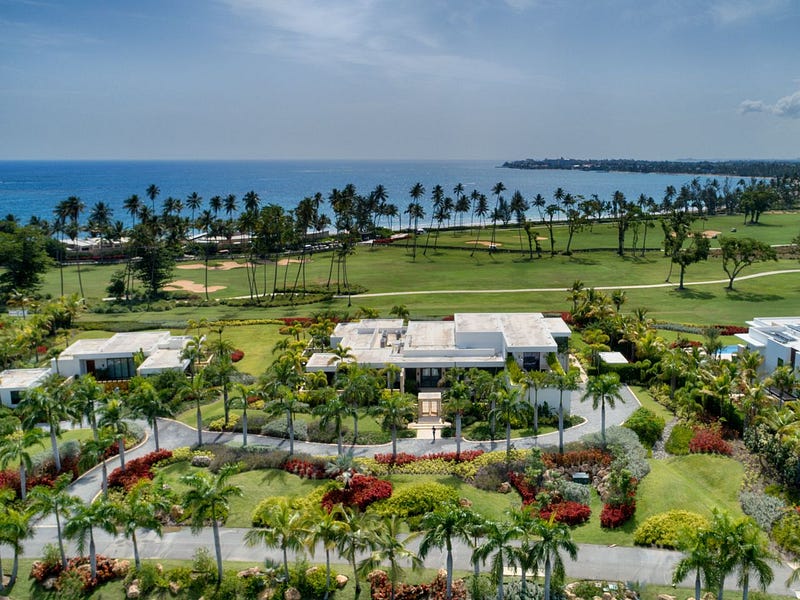
The Heinz mansion.
When that tribunal was over, with warm thanks from Victor and a promise that we’d have a part in any future work that came his way, we went back to Rincon and I foolishly poured all my profits and time into home improvements. I still desperately thought that if I made the house nice enough, she would come back. I did this for Willy’s sake, two parents better than one. And in my ongoing progression of theories of why she left me, I was thinking it was never me she was in love with, but the amenities. And this now seemed the plausible and driving motive in her head.
It makes me wonder how many marriages do stay intact, (in some convoluted arrangement) because of ‘amenities’ or just ‘convenience’, or worse yet ‘apathy’.
 Sanita, on my mind.
If I’d stayed in it forever, (or at least a few decades), it would have bloomed into a small mansion, with continual upgrades and add-ons. But once Sanita left the island with my son, I had to leave too, and being half-finished and abandoned, it fell to ruins, like a house of cards. If I could have foreseen this future, I would have left it the one room shack, with its kitchen deck, perfectly suitable for my weekend home with Willy. I would have saved myself over ten thousand dollars. But who can see the future.
Mickey wasn’t idle either, but in a more sensible way. He’d met a few of the rich Americans living on the West coast and did a few small jobs for them, proving his skills. Word spread, and as all the rich people seemed to know each other, so did his reputation. There was a large, white mansion in plain sight on the highway to Mayaguez, about fifteen minutes past Rincon, right on the beach. It was unfinished and unoccupied. It belonged to some relative of the Heinz family so we called it the ‘Heinz’ mansion as we saw it slowly rise from the ground. But something was amiss. It was ninety-five percent complete and then all construction stopped and it just sat there, deserted, for half a year.
Mickey somehow contacted the owner by phone. The house was at a standstill and this man wanted it completed, saying he was glad to be finally talking to an American builder in Puerto Rico. He must have heard from someone of Mickey’s reputation. He said he’d fly down in a few days to meet him. Mickey had a long walk-through of the house and fully convinced him he could finish it to the last detail.
The Puerto Rican contractor had walked away and wasn’t coming back. Puerto Ricans have a very simple, foolproof, (certainly ‘final’) solution to any problem they can’t solve, which allows them to go on with their lives in undisturbed serenity. They walk away. If they see something they can’t fix they turn and leave. If it’s out of sight, it’s out of mind. Life is simple on a beautiful island where fruit trees grow everywhere, easy to pluck. Fish abound in the sea, easy to catch, and everything else is ridiculously cheap. Life is as beautiful as the weather, constant sunshine.
The contractor built the house from extensive, exact, professional prints by an American architect. He’d done all he could, then disappeared before finishing the last complicated details, the double-mitre cuts needed on fancy molding, the marble countertops, glass cabinetry, the whole security system, and hardwired modem lines between the computers in various rooms, (this was before Wi-Fi). The house was almost ready to be furnished, the carpets installed, walls painted, fixtures up. They just didn’t turn on. Most of the electrical circuits didn’t work because of wiring errors, shorts and crossed phases.
Mickey was handed the prints and told to finish the job at a lucrative hourly wage, I think twenty an hour. He knew he needed me and offered fifteen an hour. We went and looked at it. The open panels were a tangle of wires, most unlabelled and unterminated, some wires obviously pulled out and laying on the floor, the telltale signs of some frustrated electrician trying to figure out the crossed circuits. I laughed at this and told Mickey I had three solid weeks of work. As Mickey took a closer look at the woodwork to be done and a whole kitchen of countertops, glass cabinet doors and one missing island in the middle, he realized he had an even greater amount of work. He tentatively promised the owner it could all be done in a month. The owner was overjoyed at such news. It was summer and he had a stream of guests lined up he wanted to fly in, starting in the Fall, tourist season.
So this is when I met Buddy, flown in from New Jersey a few days later and a real game changer in my life. He was our age, (we were all within a few years of each other, early forties), a complete contractor and carpentry whiz whom Mickey had worked with in New Jersey some eight years earlier. He knew his talents well, which people in the same trade always recognize in each other right away, like magnets attracting, just as when two intellectuals chance to meet and begin talking.
It takes five minutes with intellectuals, and a few days of working together in the construction trade, when it’s all clearly seen and settled, their estimation of each other, a mutual rating of each other’s skills which nothing can ever change. Talent is talent and even if chance events put the two of you at odds, in personal arenas, make you fight and violently disagree, you can hate the person but you can never deny their talent.
I’ve found this to be a universal truth. The reason is simple. Any exceptional skill you have displays itself in the real world, if it’s in conversational excellence or in carpentry or even in surfing. And those that have a similar gift, or close to it, recognize it instantly, powerfully, like an exquisite, unexpected sight that overjoys them and echoes back to their own abilities, forcibly, which they can’t help but acknowledge and admire, it’s so rare and striking. This mutual esteem settles into the deepest parts of their minds, where their core values and self-respect reside, and it’s never negotiable.
Temporal disputes or squabbles can touch it. It’s like the bottom of the sea which remains calm and unchanged no matter how many storms rage and stir up the surface. They may come to hate each other and fight face to face for awhile. But they admire their opponent, openly or secretly. Acknowledged talent is never touched or diminished. I saw this drama play out perfectly between Buddy and Mickey over several years, with me a spectator and changing affiliations right in the middle.
Here’s another example I saw play out in Rincon in a skill I had never tried. It was surfing. I was lucky to be friends with the three of the undisputed best surfers there, Richard, Casey and R.S., with Mickey a close fourth. They weren’t friends and very different in personalities and lives. Casey was married to Melaina, with three children, just down the street from me and worked in at a high class restaurant twenty miles away, catering to the very rich. He was a waiter making a good living off tips, enough to support his family comfortably. He had every characteristic of a perfect waiter, tall, handsome, always polite, soft-spoken and intelligent, a great father and husband. I did some electrical work on their house when they had money for improvements and knew him well.
Richard was my close friend from the time we built my house, but a pot smoking beach bum with no other ambitions. R.S. was an even closer friend, the carpet man in many of our stores. Over time he became the one I’d chose to spend my evenings with, at his kitchen table doing lines, drinking rum and talking away till dawn, sometimes just the two of us but more often with a few other friends. He’d lived in Rincon longer than anyone and knew everybody. He reminded me of Steve S. in Berkeley, always eager to listen intently to my long, eloquent, effusions on history and great literature at three a.m., when I was high and carried away, hushing others at the table for interrupting me and begging me to continue on. He instantly saw how rare that was, appreciated it for its worth and we became tight friends.
It was at his table that I heard the hierarchy. He was the best surfer in town, Casey the second and Richard the third, with Mickey a close fourth. They had little in common and weren’t even friends. But he could describe and weigh each of their qualities in surfing like a judge. He had the best overall talent and skill, knowledge of the waves and how to ride them. Casey was a practiced surfer with near equal knowledge, true talent but less than his. Richard had balls, unafraid of any wave and good from practice, Mickey too, but both had less finesse, reading the waves and riding the board with splendid balance and control.
All these words might seem like idle boasts to one with no experience. But I witnessed it several times from the Calypso patio. Once or twice a winter, (not even every year) a strong north-eastern storm would blow in and stir up the waves against the peninsula of Rincon to twelve or fourteen foot heights. On these rare, stormy days there were only three or four surfers in the water, the ones mentioned above. There would be a horde of other surfers, board in hand, standing on the beach and watching, waiting for the waves to quell a little when they would dare go in, but also admiring R.S.’s and Casey’s and Richard’s bravery and skill. Their wipe-outs in such turbulence scared everyone. But they’d resurface and catch the next monster and ride it to perfection. In these rare trials I could see that everything R.S. had told me was true. Strange they weren’t friends. But they did acknowledge each other’s merits, silently or with a nod, beyond any dispute. Mickey once admitted to me that R.S. was the best surfer in town.
last post ...






