
"I knew from my past relations with Dora, many of them intimate, that she was not only not opposed to the discrepancies of our human minds, but intrigued by them. In fact, she was fascinated in us and with her vastly more comprehensive intelligence she knew that there is something in us that she doesn't and might never have, but desires with an almost irrational ardour to taste, our power of creation, of self-replication, in a way that no computing machine could ever share.
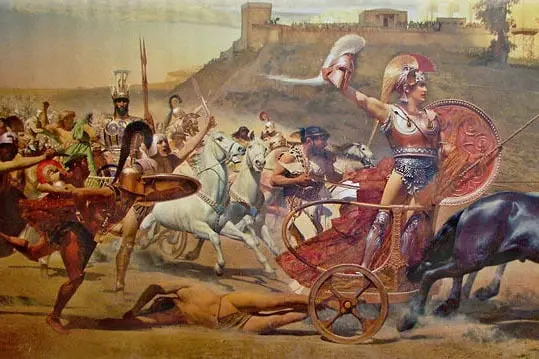
I know there is another aspect of our supposed weakness that she admired completely, our mortality. It's a famous line in Homer, the first and basic poem that said so much it practically shaped and defined the entire tradition of western civilization. It certainly conquered and vastly surpassed all other books leading to Einstein to AI. The verbal contests of the immortal gods watching from the heights of Olympus the heroes fight at Troy are amazing, some fly down to Earth unable to control their passions to talk to their human heroes directly. As the poem and death rages on, some of the Gods almost begin to cry at the death of Patroclus and Hector's charioteer Cerbriones. They feel envy that mortals live and die in an exciting experience they can never taste or fully comprehended. The death of the one mortal horse, Pedasos, tethered beside the three immortal horses given to Achilles by his mother, a half-goddess, for his four horse chariot is the most affecting scene in book four, where he is wounded and dies, though he was an equal in power and beauty and talent to the other horses, which they recognized and regretted, and a scene I can never read without tears.
No being, if any exist, with powers above ours, can look down upon us without some degree of admiration if such an emotion exists in them, because it is the crux of our life in daily survival, our contest, which to lose spells the end of our brief existence. And if they are our superiors, and have no such contest, no such fate, I consider them the losers for having no such fight, no such plight at all, some kind of lame existence, unenviable in its ease, something worse than death in its permanency, something dead in its permanent repetition, as we can imagine nothing worse than the constant continuity of the same thing, Sisyphus constantly rolling the bolder up the hill, Prometheus chained to a cliff and having his guts eaten out by birds of prey each day and they regrowing each night for a continual repetition of the torture, another 'Groundhog Day'.
next post... https://www.publish0x.com/robert-oreilly/a-modest-proposal-xoqlxvj
last post... https://www.publish0x.com/robert-oreilly/a-new-aproach-xqqogdn






