
I’ve described my boyhood friends, my hobbies and habits. But before I enter upon the college arena I’ll briefly address two more topics, religion and books.
My parents were not religious, never mentioned it, never mentioned church. But my friend Jim’s father was a strict Presbyterian and forced Jim and his younger brothers to a church nearby every Sunday, under threat of eternal punishment in Hell. Brad and I accompanied him a few times to the after-service Sunday school, for the free snacks and crafts. They didn’t preach then but gave us each a little, green, pocket New Testament to keep. One day when I was fifteen I decided I would settle the matter of God for good. So I took the little green book and hiked into the hills by myself after school. For three days in a row I sat in a particularly scenic spot in the grass, opened the book at random and began reading for an hour or so, trying my best to find something in it that had any resonance to my soul or mind. At the end of the third day I found nothing I could make any sense of. I closed my eyes and asked the Lord for some sign, any sign. I opened them and nothing unusual appeared, not even a bird flying by.
So I decided the question was unfathomable and a waste for further question. I’ve read many great religious works since then, from St. Augustine’s ‘Confessions’ to Boethius to Cardinal Newman and dozens of others, most in Latin. I admire Thomas a Kempis the most, his ‘Imitation of Christ’, but I’m not a Christian. Many of my literary heroes were devout Christians, Milton, Browne, Johnson and Pascal in particular. But this is a different age, where religious convictions are mostly evil in their effects, fuelling prejudices, creating and maintaining constant wars and carnage, the cancer of the most stupid and cursed hordes of mankind, and the Hells on Earth they make, Iraq, Iran, Afghanistan, Pakistan and Africa, places of daily conflict, bombs, rapes and murders of children, which never stop. Let’s not forget the far right conservatives of America, all hate, and all crazy, and the enslaved Catholic women of South America, or southern Europe. Jesus is more dead and abused than ever.
I’m an educated agnostic, more versed in the Christian religion, its literature and history, than one in ten thousand of the well-dressed people who go to church each Sunday. There are far better books than our bibles, as aids and guides to universal, moral and ethical behavior, like Marcus Aurelius’ meditations, or Epictetus, or even Erasmus. They’re just not read. They make up my religion, my peace of soul, my equanimity, without the threat of ‘Hell’. And for all my life’s deeds I’ll be able to say on my deathbed, just as Addison said: ‘See with what peace a Christian can die’. In my case I’ll use the term ‘Philosopher’.
I fell in love with great literature when I began Berkeley and found, in the great bookstores there, real classics. But that could never have happened, that love affair, if it were not for a few pleasant encounters with books before that, setting the stage for an all-out rapture. My father had a den with a whole wall of books. It impressed me with its looks, and I glanced into a dozen volumes, but never for long. They were book of the month club stuff, no classics, and seemed boring. I read slowly, (as I‘ve done all my life) so I had to be really interested in each page to read a book through. It had to have matter for serious thought or vivid description to keep me going. I read a few books on the early Arctic and Antarctic explorers, from the library, but not the popular, pulp literature, the mediocre and the genres. I did read a half-dozen sci-fi paperbacks though, mostly Heinlein, and the novel ‘Papillon’ which I found left behind by someone else in my desk one day, in the twelfth grade.
My high school French teacher assigned me an adolescent novel called ‘Le Grand Meaulnes’, which I hated, page after page, while she might have assigned me some short stories from Maupassant, which I would have loved. My English teachers were all young women (like my French teacher), cute but stupid, and assigned the same type of mediocre books, hoping to dummy-down the chore of reading for their slow students. I despised all these assignments and don’t even remember the names of the books assigned. Those texts were thrown in the garbage as soon as the finals were over, the place they belonged.
I doubt they realized that they were making most of their pupils into life-long haters of reading, all the while trying to promote an interest in it, botching the habit they were trying to promote, like a bad doctor who harms more patients than he cures. Sad to say, but I had few teachers in high-school that excited me at all, except for a tenth-grade Biology teacher, (an older woman), and my American history teacher, (a young man) who knew how to share a contagious interest in their subjects that sparked a similar enthusiasm in me. Luckily at Berkeley I met real English teachers. Most of my high school friends didn’t fare so well and spent the rest of their lives, their free hours, sitting in front of the T.V., watching dummied-down sit-coms for their dummied-down minds, matching the mind-numbing, repetitive jobs they ended up drudging away at for forty years. So you might say, in this way, high school served them well.
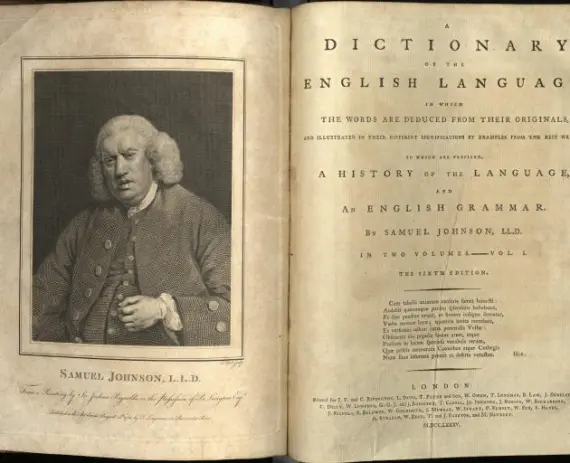
My inability to speed read became a significant influence in my life. That’s why I studied Latin and Greek. You don’t speed read those authors. You dwell on each line after slowly parsing out its precise meaning. In English, after Beowulf, Chaucer, Shakespeare, Spencer, Milton and Addison, my favorite authors were Bacon’s essays, Samuel Johnson’s Rambler essays, Sir Thomas Browne’s ‘Religio Medici’, Mathew Arnold, Mill, De Quincey, Coleridge and many other nineteenth century poets and essayists. In French I read Descartes, Pascal, Montaigne, La Bruyere, Bayle, Montesquieu, Voltaire and Champfort, and later poets, Rimbaud and Baudelaire and Nerval who put so many ideas on each page that it paid off my laboriously slow reading, but they fed a mind greedy for new revelations on every page. I was so naive with these authors I considered them my best friends and held imaginary conversations with them, just like Petrarch and Walter Savage Landor.
I had an appetite for richness of thought and originality, which few authors supply. But I found those few, whom others label ‘classics’ and ‘unreadable’ in the same sentence because they consider them so ponderous and against their pleasure of devouring books at lightning pace. It defines my uniqueness because I’ve found that most readers belong to the second set. I can read Johnson’s essays or Thomas Browne or Milton for hours and love the richness of the prose. I’ve tried to meet others with the same passion but even at Berkeley, I never did. I’ve talked to many intellectuals. All acknowledged the merits but never shared this delight. If you look into modern editions of such works you get all apologies in the introductions excusing how hard and compressed and difficult the prose is, how antiquated, too thick in thoughts, too tightly packed, as if the collective intelligence of the whole human race has gone way down, as Ripley in ‘Aliens’ surmises when waking up after eighty years of sleep, talking to a table of bureaucrats.
Sometimes I think this might be the case with us, clouded and distracted with so many new and loud products of technology which constantly demand our attention and flood our minds with unconnected and irrelevant data, an unending slide show of images in no particular order which task our brains to make sense of. There are such things as ‘stupefiers’ of the mind, and I’m not talking about drugs but media. Coleridge mentions this, quoting a twelfth century genius named Averroes, a Moorish philosopher from Spain who wrote a book called ‘Antimemnonics’, or stupefiers of the brain. He mentions bad habits like starring at clouds with your mouth open. But Coleridge adds to this the habit of reading the current literary periodicals of his time, so full of bias and bad criticism, and badly written invective without a point. The more you read them, (he claims) the more stupid you become, the more prejudiced for no reason, and the more likely to be idiotic and scrambled in your thoughts and conversations thereafter. This is a leading question to our current media, how it floods us with so much jangle it reduces us to non-rational beings with scant ability to reason or organize thoughts.






