
Google has announced that they have developed a new quantum chip, named Willow and its innovation marks a major leap forward in quantum computing. With a 105-Qubit Superconducting Processor it represents a significant increase in scale and stability compared to previous chips. Incidentally, although I don’t totally understand it, it seems that qubit is far more flexible and can carry more detail than a classic (binary bit) and it can represent multiple variables rather than just one. This means that Willow has a verifiable quantum advantage and has demonstrated that it has been able to solve a real-world problem faster than any classical supercomputer could.
This result can be independently confirmed.
Furthermore, Willow has been able to run a novel algorithm called Quantum Echoes, based on out-of-time-order correlators (OTOCs) which measure how disturbances spread in quantum systems, and was used to simulate molecular (! That is crazy small and takes miniaturisation to a whole new level) features. At the same time, in benchmark tests, Willow completed a complex physics simulation 13,000 times faster than the most powerful classical supercomputers and to make it an even more super chip there has been a breakthrough in error suppression due to its advanced error-correction techniques, making it far more reliable than any previous quantum hardware out there.
Frankly, as I was reading and putting this article together much of it was beyond my humble grasp, but I can read and put the words into some kind of order (btw I only came across it because it was on my MSM feed which my Microsoft Edge goes to and I decided that it must be something special and wanted to share it with you all). The bottom line, and that always comes down to real world application, is that Willow’s speed and precision could revolutionise how scientists simulate molecules, this in turn could potentially accelerate drug discovery and materials science / engineering (developing new compounds right from their molecular level) and has further applications in computational chemistry. In simple terms this means that tasks that are currently bottlenecked by classical computing (because classic computers are too slow!) like modelling atomic interactions — could be dramatically accelerated.
Speed is king here.
What makes Willow so special is that it isn’t just a theoretical milestone. It’s actually out there and its performance has been verified and that self-same performance signals the beginning of practical quantum computing — where quantum processors can tackle problems that classical machines simply can’t, even with massive resources.
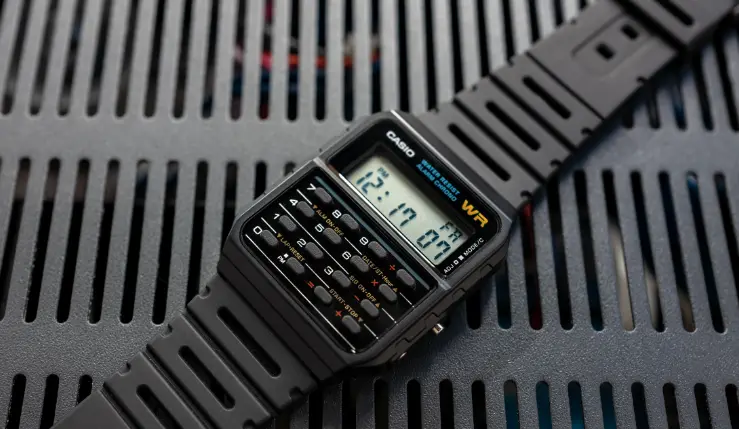
Think of any great leaps in accessible mathematics and you will understand the significance. I would like to think of it, in terms of significance, improvement in speed and accuracy, as a jump from the abacus to the electronic calculator. BTW for those of you who don’t remember them – they have been around much longer than they have been a smartphone app. They really existed. I actually had several dating back to the 80s including one on a watch! At the time it seemed to be the be all of technological advancement.
As always stay safe and well my friends.






