
When I was a child I was inspired by The Usborne Book of the Future: A Trip in Time to the Year 2000 and Beyond. It is a futurist book, that made all kinds of predictions about how our future would look including how our homes might look in the future, as show in the header image.
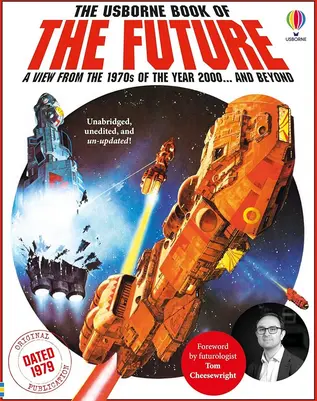
Assuming that we avoid World War III, people will be visiting the moon for their holidays and there will be no more war, disease or poverty. Everybody will be living in sustainable homes and we will be travelling to work in driverless pods. Explorers will have gone beyond the edges of the solar system and we will be mining the vast resources of Jupiter. Microbes will be munching their way through the methane rich atmosphere of Venus and releasing oxygen as a by-product, in what will mark the first stage of transforming it into a living sister planet for our own Earth. We will be working from home and have more leisure time than ever before as robots take on day to day housekeeping chores. Paper will be a thing of the past as the ‘paperless office’ takes over. Even some predictions that may alarm us in the early 21st century (such as synthetic food or a pill-based diet and crafting our own designer babies free of genetic imperfection) were seen as part of embracing the Utopian future.
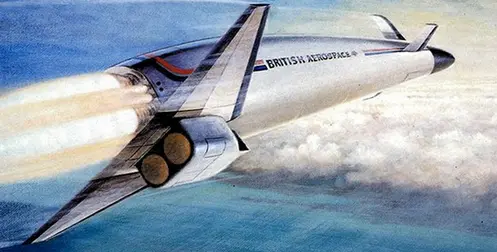
The British HOTOL (Horizontal Take-Off and Landing) project, started in 1982, will mark the next step in transportation. Ground launched, it will replace Concorde and a flight from the UK to Australia will take only an hour thanks to its amazing space skimming ability that will use the Earth’s natural rotation to speed the journey up. The planet will be a much smaller place. As Concorde had made one-day business trips between Europe and North America possible so HOTOL will for the whole world.
So What Happened to Our Future?
These visions of the future that I had were largely inspired by futurists like Arthur C Clarke, as well as the whole science fiction genre (typically exemplified by Star Trek, but not limited to it). This Utopian future seems further away than ever. The deadliest European conflict since The Second World War is raging between Russia and Ukraine, Trump is aggressively attacking all around him, even his allies (think Denmark and Greenland as well as Canada) and he is threatening to renege on all kinds of international treaties including trade agreements. Consider his real threat to pull out of the recently agreed trade agreement between the US and the UK. This actually puts him in the same category as Hitler when it comes to anything written down. Even Stalin didn't go that far - although admittedly for his own reasons. He honoured the Molotov-Ribbentrop Agreement right up to the Nazi invasion of June 1941. In fact Stalin didn't even believe the invasion had started when in fact it had. Trump also illegally attacked Iran and made a mockery of his understanding of what Nato stands for and its purpose.
Elsewhere we are seeing far right parties gain power and popularity (with the exceptions of Poland and Hungary), which tend to be more isolationist and zenophobic. The bottom line is that largely because of Trump and Putin the world is in a far more dangerous place than it was since the height of the Cold War and probably even before that.
It seems like the future of my childhood was stolen while I was not even looking!
HOTOL was abandoned in 1988, and even Concorde was scrapped a couple of years after one crashed in Paris in July 2000. It means that we are now flying slower than we were in the 1970s. We are asking questions about whether we should even return to the moon and taking a holiday there is at best a distant fantasy. We are nowhere near mining Jupiter or terraforming Venus. To date the only spacecraft that has gone beyond the edge of the solar system is the Voyager 1 probe – although Voyager 2 is expected to follow in 2016. Both of these probes were launched in the 1970s when this future appeared to be just around the corner.
Diseases such as Ebola appear to be more virulent than ever and hospitals fear so called ‘superbugs’ such as MRSA which have high mortality rates and that is without even mentioning the global impact of the Covid pandemic.
Experimentation with food is highly controversial as many object to genetic modification and the age old problem of fossil fuel dependency still seems to be our Achilles heel.
But it is not all doom and gloom!
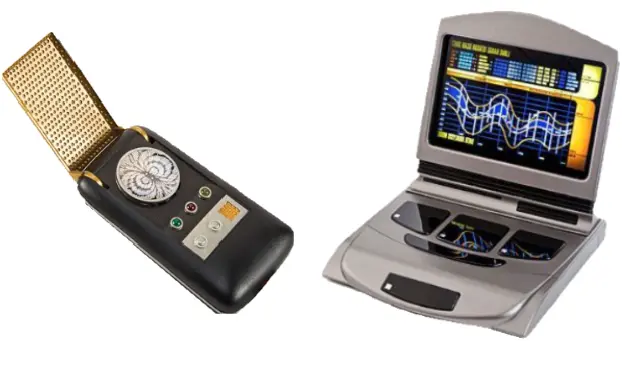
Communications technology has advanced beyond what many futurists had predicted with the internet / smart devices. This is typically demonstrated by a communicator (see below left) from the original Star Trek made in the 1960s. However even a Star Trek: Voyager, which was made as late as 2002, the computer (see below right) appears chunky and limited compared to what we have in 2015 and to boot there is no touchscreen technology in sight.
HOTOL may have been abandoned, but others have taken its place. SpaceShipOne won the X prize as the first privately funded spacecraft to enter space and despite an accident in November 2014, Richard Branson’s Virgin Galactic still leads the way – although delivery of first flights were delayed. It may not deliver London to Sydney in an hour, but it will enable members of the public (albeit rich ones) to touch the edge of space. Elon Musk's SpaceX has become a significant player as the push to explore the solar system and specifically to reach Mars is gathering momentum. The recent Artemis Mission around the Moon (which also signified the setting of a new record concerning the farthest a human has ever travelled from our homeword Earth) shows clearly the rebirth of a desire to reach for the stars
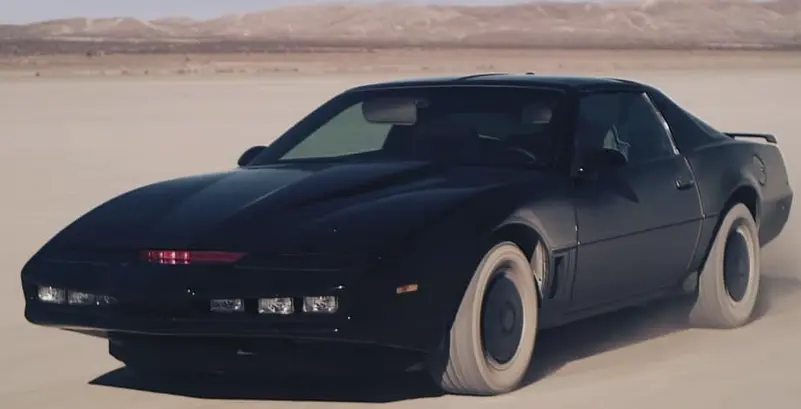
Driverless cars, possibly best exemplified by K.I.T.T. in Knight Rider in the 1980s, are on the verge of becoming reality. Once driverless cars are in place it is a relatively simple next step to create an integrated transport system to manage vehicles automatically using logistics technologies (such as parcel tracking) which are already in place. In February 2015 the British government cleared the way for driverless cars to appear on the road in the very near future.
The office may not yet be paperless, but with hot-desking, agile work processes and home working becoming popular the office as it stands is being transformed and slowly enabling people to spend more time at home. While there is some movement to get people back into the office. Covid forever changed the way we work and view "going to work". Meetings are now conducted remotely through VoIP technology and touchscreens are doing away with excessive amounts of paper. For many an office is now defined as simply any place where there is a secure internet connection. One thing is for sure, in the developed world many working practices are being transformed. In fact a more relevant question that has appeared in recent years is the issue of whether we need to travel at all – especially to work.
Fossil fuel dependency could easily become a thing of the past. The truth is, the technologies are out there and improving all the time. What is lacking is the political will to change and an individual desire to accept it. The bottom line is that no change will come while we still insist on using our ‘gas-guzzling’ SUVs.
So maybe the future I dreamt of has not passed, it is just coming a bit slower than expected. If I were to write a school report I could say ‘progress has been made, but could do better’.
As always stay safe and well my friends.






