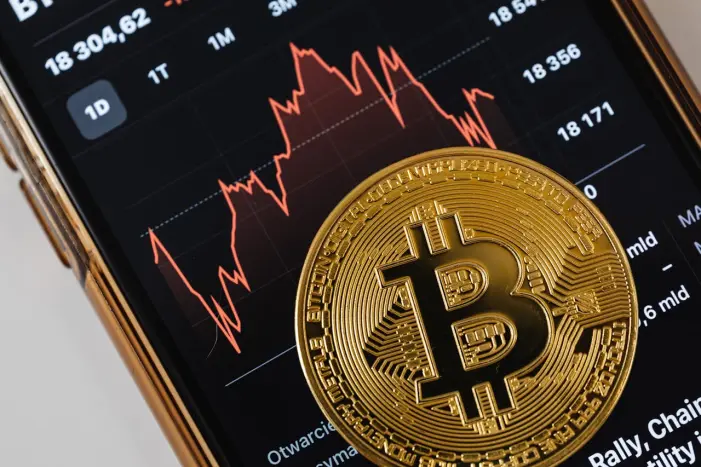
While central banks are still figuring out how to curb rising inflation, Bitcoin is growing on its own again – reminding everyone why it was created in the first place. It was originally conceived as protection against depreciating fiat money, an alternative financial system where monetary issuance is transparent and limited. Over time, however, it became a speculative asset – a mirror of investor greed.
But now the cycle is turning back. The global economy is once again unstable: prices are rising, trade balances are collapsing, and national currencies are losing credibility. Against this backdrop, BTC is reclaiming its original mission – not just as a store of value, but as a barometer of global distrust. Unlike gold or stocks, Bitcoin reacts faster, reflecting fear and expectations in real time. Let’s break down why this has become possible again in 2025.
The context of the global economy
Even several years after the pandemic, the global economy remains in a state where stability feels more like an illusion. In the U.S., inflation is still above the Federal Reserve’s target, and in some countries it reaches not just tens but hundreds of percent annually. Even the International Monetary Fund notes a growing erosion of trust in central banks – a factor that in itself can fuel inflationary risks.
In 2025, the situation was further shaped by Donald Trump’s trade policy, which uses tariffs as a tool of pressure on other nations. According to the Peterson Institute for International Economics, the 2025 tariffs have already disrupted established supply chains and impacted currency exchange rates. For the global economy, this means more than just numbers: tariffs make imports more expensive and contribute to inflation worldwide.
The weakening of global currencies and declining trust in banks create ideal conditions for assets that operate independently of political decisions. At the top of this list are crypto – and first among them, BTC, serving as a litmus test of global distrust toward fiat money.
During such periods, BTC’s price reflects not so much demand for technology as the level of anxiety within the financial system – turning it into an indicator of global inflation.
Trump's “cryptorave” and the legitimisation of digital assets
The new wave of “crypto-optimism” began in late 2024 with Donald Trump’s bold statements: the new president first promised to support the industry, and by July of that year had already signed the GENIUS Act – the first-ever US law establishing a framework for stablecoins as a form of currency, aimed at preserving the dollar’s global dominance.
In practice, this means a controlled infrastructure where stablecoins function almost like digital dollars under government oversight. It effectively makes them a covert alternative to CBDCs: people gain convenience, while the state gains invisible control.
Essentially, the law extends the dollar’s influence not only as a fiat currency but also as a digital ecosystem asset – though one that still retains fiat-style inflationary traits.
At the same time, the topic of Bitcoin reserves at the state level has been rapidly gaining traction. Following the US, both China and France have entered the race for BTC – and that’s only what’s happening publicly. Such initiatives are reshaping how Bitcoin is perceived: it’s no longer “outside the system”, nor merely a speculative asset, but a component of national strategy – a tool of geopolitical discourse and macroeconomic policy. This is precisely what strengthens Bitcoin’s role as a genuine anti-inflationary factor.
Bull market contrary to forecasts
The history of Bitcoin has always unfolded in near-perfect cycles: every time after a halving – the scheduled reduction of miner rewards by half – the market would enter a phase of rapid growth, reach a peak, and then lose up to 80% of its value. These recurring waves created a sense of predictability: that one could forecast the next rally simply by marking the halving date and adding a number to it.
In the spring of 2024, ahead of the new halving, analysts expected history to repeat itself.
But 2025 turned out differently.
First, BTC hit a new all-time high even before the halving – purely on expectations. And afterward, instead of following the usual post-halving pattern, the market saw the longest and most stable growth phase in Bitcoin’s history. The classic model broke down – for the first time ever.
The causes of this shift can only be speculated about, but one thing is clear: they lie outside the crypto market itself – primarily in economic and political factors.
- First, institutional adoption: Bitcoin- and crypto-based ETFs, corporate balance sheets, and funds now holding BTC as part of their reserves.
- Second, the growing demand for “digital gold” as a hedge against currency volatility and trade conflicts – especially amid a broader economic crisis.
And finally, the decisive factor – the change in the tone of U.S. policy.
Amid Trump’s “cryptorave”, the SEC’s softer stance, and discussions of state-level Bitcoin reserves, this no longer looks like a bubble but rather a reframing of how governments perceive digital assets. For the first time, Bitcoin isn’t moving according to its internal cycle but in response to macroeconomic conditions. It now reacts to economic stimuli and inflationary expectations – like gold or oil, not a “crypto toy.”
That’s why this cycle isn’t just another turn of the wheel – it may well be Bitcoin’s first truly mature growth phase.
Restoring trust in technology
More and more people are choosing not to rely on intermediaries, but to take direct control of their own money. Instead of keeping funds in bank accounts, they are turning to crypto wallets – tools where the rules are set by code, not by human discretion.
Solutions like Trustee Plus allow users to maintain full cryptographic ownership of assets:
- They protect user funds and data through blockchain-level encryption (connection and signature), employ anonymization and multi-access protocols, and continuously integrate up-to-date security and storage technologies.
- At the same time, they preserve the convenience of traditional financial services – enabling asset transfers without the typical blockchain limits on speed and fees, offering - P2P functionality, and providing a cryptocard for global BTC payments.
For many, such wallets – combined with Bitcoin – represent more than just technological convenience; they embody a new form of independence, a literal means of self-preserving capital. At this point, cryptocurrencies restore trust – not in people or institutions, but in mathematics, algorithms, and the unchanging rules of the blockchain world.
Why Bitcoin has become an inflation indicator again
In 2025, the correlation between Bitcoin’s movements and inflation expectations became more apparent than ever. Whenever markets anticipate new stimulus measures, money printing, or another round of monetary easing, BTC and the market – are the first to react.
In this sense, Bitcoin is evolving into a new kind of inflation indicator – not a measure of prices, but a gauge of how fragile faith in the paper behind fiat currency has become.
It’s not just about inflation as a number. Today, Bitcoin reflects a deeper distrust – not in money’s purchasing power, but in the very system that creates, devalues, and manages it. In a world where central banks increasingly intervene in markets and currencies depend on political decisions, BTC has become a signal of this systemic tension. Its growth is no longer driven by greed, but by doubt – and by the desire to return control over money to its rightful owners. Just as it was originally meant to be.
About the author: Ivan Ordenko is the Head of Partnerships & Marketing at Trustee Plus, bringing over three years of experience in driving business growth, building strategic B2B partnerships, and scaling marketing initiatives within fast-paced fintech environments. He focuses on developing tailored solutions for teams requiring fast mass payouts, transparent payment flows, and seamless integration with crypto card services.
Note: This post was provided and published on behalf of a client. Publish0x does not guarantee the accuracy of the statements made in this post. The post should not be considered as an Publish0x endorsement of the products, services, or people mentioned. Readers should do their own research before taking any actions related to the company. Publish0x is not responsible, directly or indirectly, for any damage or loss caused or alleged to be caused by or in connection with the use of or reliance on any content, goods, or services mentioned in the press release or sponsored post.






