Publication in Russian on the Zen blog
https://dzen.ru/a/Zj4N7sn1BmLjAKMb
Censorship in Literature and Criminal Prosecutions in Russia.
The scandal surrounding the writer Vladimir Sorokin. Welcome to postmodernism. Now banned by "experts."
Let's start with the official chronicle.
At the end of January 2024, the Investigative Committee received a complaint demanding that Sorokin's novel "Heritage" be checked for LGBT propaganda and violence against children. The initiative group that signed the complaint consisted of more than 1,500 people. The main signatories voiced the opinion that this novel is "active and talentedly written hard pornography", as well as "dystopia, looking like a mockery of the fighters defending the Russian Federation." The book was sent for a thorough check.
It is reported that the book contains information prohibited from distribution in accordance with Russian law - Article 6.21 of the Code of Administrative Offenses ("Propaganda of non-traditional sexual relations and/or preferences, gender reassignment").
Vladimir Sorokin himself rejected the accusations of pornography, LGBT propaganda and violence against children in the book. He called the complaints about his novel "a fuss raised by a group of informers" and compared it to a similar attempt to ban his other work, "Blue Lard," in 2002.
Sorokin rejected the accusations of LGBT propaganda and scenes of violence against children and noted that the main characters of the science fiction novel about the future "are no longer children," and the violent scenes in the work are a reflection of the world and human behavior. According to him, people who see LGBT propaganda, pedophilia or pornography in the book "tear out pieces from the novel" and "hang the necessary labels." The writer compares the situation that unfolded around "Heritage" with a criminal case that was opened in 2003 because of his book "Blue Lard" based on a complaint from activists and closed "due to lack of evidence." Expert examinations of the novel then showed that “all frank descriptions of sexual scenes and natural functions are conditioned by the logic of the narrative and are of an absolutely artistic nature.”
"Literature is a free beast, it roams where it wants, and roams by itself, without censorship and writers' unions. The label of pornography does not stick to truly free literature: attempts to sue the authors of "Ulysses", "Lolita", "Tropic of Cancer" failed. Nowadays only a cultured savage can call the Marquis de Sade a pornographer," Sorokin noted.
Sorokin's "Heritage" was published at the end of 2023. The novel completes the trilogy about Doctor Platon Garin, which also includes the story "The Snowstorm" and the novel "Doctor Garin". In "Heritage", the action takes place in a post-apocalyptic future - after a nuclear war. The plot is built around the Trans-Siberian Express, which is fueled by human bodies instead of coal.
Vladimir Sorokin is a Russian writer, screenwriter and artist who represents conceptualism and social art in Russian literature, winner of the "People's Booker", Andrei Bely, Liberty, German Ministry of Culture, Big Book awards, laureate of the International Gorky Prize and the "New Literature" award. Vladimir Sorokin's books have been translated into more than twenty-five languages.
The books of the postmodernist writer Vladimir Sorokin can be viewed here. At the time of writing, not all of the writer's books have been blocked and removed.
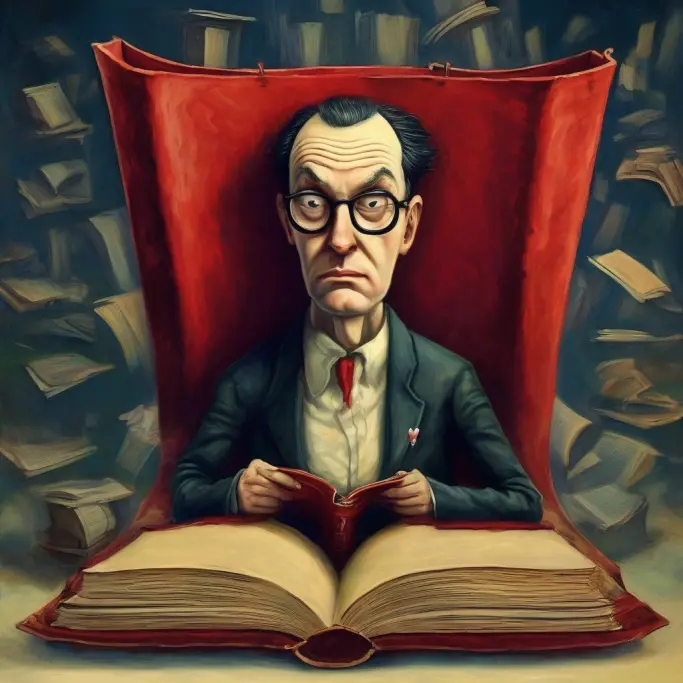
It's not easy to live in this world if there is such literature...
Before you start reading literature, and especially before you judge this literature, you need to clearly understand what postmodernism is. This is the key to how you will relate to the genre. There are many trends, genres, and subgenres in art. And if you are subjectively not satisfied with a genre, this does not mean that this genre is bad and unsuitable, it is simply not yours. It's something like in music: you have been listening to chanson since the cradle, and you consider K-pop, which is shaking the whole world, to be the music of heretics))) I am sure the analogy is clear. The characteristic features of postmodernism are irony, rethinking the culture of the past and rejection of traditional artistic values. Postmodernism offers to rethink existing values and destroys the border between art and non-art. Postmodernism is a rethinking of postmodern culture. Where "post" is "after". And "modern" is "modernity". This means "rebellion against modernity".
Once Sorokin, visiting Dibrov in Anthropology, said: "Russian literature is like an old sofa that needs an axe." So that everyone would smoke. Not everything should be read only by Chekhov and Tyutchev, although it is necessary.
If you criticize a postmodernist, then it is the same as scolding a disabled person for not being able to walk. The meaning of postmodernism is in the deconstruction of plots from the classics. Separately, as for the anti-Soviet spirit of the writer, it is a component of the genre, as a rebellion, rethinking and rejection of traditional values. And if you read Lenin in the evenings, Brezhnev's memoirs, Malaya Zemlya, Vozrozhdenie and Tselina, then, probably, the "rebellious" postmodernist is not your genre.
Someone may agree with the writer, and someone may not share his opinion, but he, as a person, has the right to his own opinion. But to criticize Sorokin is bad manners, because the goal of his literary work is to light the fuse so that the reader explodes. It's like going to a stand-up comedy show and being offended by the comedian's jokes (complete nonsense, wouldn't you agree?).
If you start reading something like this and think in a stereotypical way in search of a plot and meaning, then for enlightenment you will be led astray by slaps in the face and your expectations will be deceived as many times as necessary until you begin to accept things as they are and not build expectations. It's like reassembling neural chains into chaos. Like, how do you like this, are you stereotypical thinking? A variation? Of course!
It's funny how year after year Sorokin sets fire to people's places where they sit, touching on the most basic feelings with his experimental literature. Sorokin is an excellent stylist, but you need to enter his work gradually and start with something light, like "The Snowstorm" or "The Day of the Oprichnik".
Sorokin is, first and foremost, a postmodernist. Those who read him are not looking for "modern" literature. His fans are, first and foremost, fans of postmodernism! The target audience of such writers as Pelevin, Nabokov, Kafka, Banks, Orwell. That's why he is loved, although he is difficult to perceive.
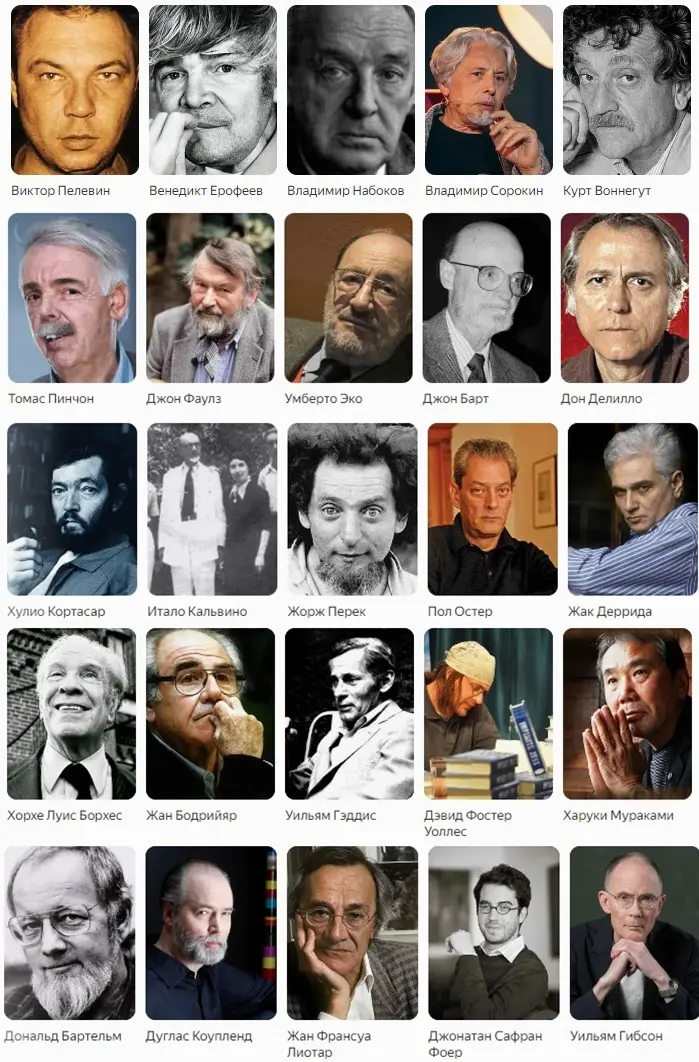

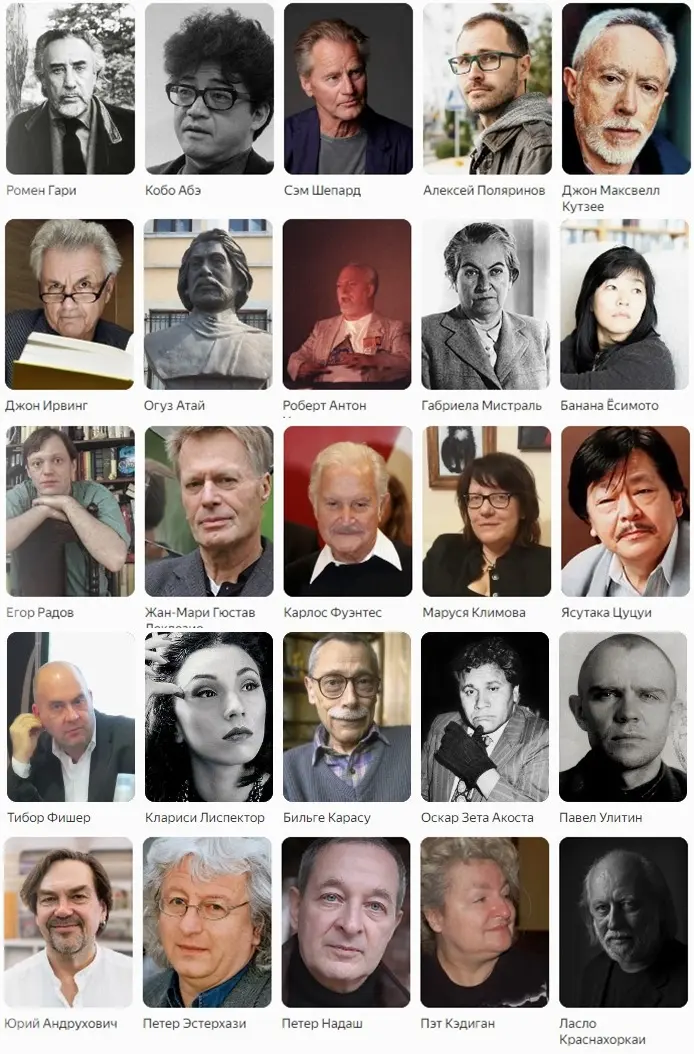
Without understanding the essence of the genre, the reader will not be able to master the grotesque inherent in this genre. From this misunderstanding begins the census of those indignant towards Sorokin. And in fact, such a reader does not understand that he himself is the personification of the heroes who descended from his pages. One thing is certain, that Sorokin's literature is not for everyone, but it is stupid to deny his talent.
Grotesque and metaphors - the style of stories is unique to the author. Where satire is a sharp manifestation of the comic in art and is a poetic humiliating denunciation of phenomena with the help of various comic means (techniques): sarcasm, irony, hyperbole, grotesque, allegory, parody and others.
It's funny that many people insist so much on the theme of sh...t in Sorokin! After all, the obligatory norm of this sh...t is about them, and not about the writer! If the reader thinks that all artistic speech is truly intellectual or at least neutral, and everything else is pseudo, then it may turn out that pseudo is just a stylistic device in literature. After all, behind the beautiful facade of the mighty Russian language, the language of a great culture, lies a lot of sh...t. And there is nothing new in this. But Sorokin is still the same - he writes about it beautifully and richly.
The feelings that reading Sorokin's books evoke can be described as "I liked it, but I didn't like it." Although there is no point in arguing with individual masterpieces. "Blue Lard" is on the verge of genius. It is no coincidence that this book was even burned, it infuriated some people.
There was a time when many threw up their hands and screamed that Sorokin is not art, but over time they begin to understand and accept his work. I will cite as an example Hemingway's collection "In Our Time". Where most of the stories are not even stories, but just sketches - the heroes are fishing, others are skiing, the third has returned from the war and does not want to work anywhere, the fourth has set up camp in the forest. These can hardly be called stories. And I think the point is that the events of Sorokin's works take place in an artistic world that the reader is not accustomed to consider aesthetic and acceptable in literature or life. In addition, the time leaves its mark, when taboos in our society are weakening, or they can be challenged, their boundaries can be explored. As for the hackneyed themes in Sorokin, many great artists have it that they create their own unique world. If you watch Lynch's films, some will repeat themes and style. Or Bergman, who often addresses the topic of faith. Tarkovsky. From literature, this is, for example, Kafka. Here, everything depends on the viewer or reader, whether it is interesting to him or not. Therefore, all the epithets in his direction are partly valid, because his old works "Norma", "Day of the Oprichnik" are really stylistically interesting and raise non-trivial topics, make you think. Considering that for that time it was breakthrough literature. Cruelty was also always present in the works - "Hearts of Four" - will not leave your head for a long time, there are descriptions of all natural and not so natural processes. But it should be taken into account that all his books are 18+, which means that such books should be read by adults with formed mental personalities. Are pussies, poop, menstruation things that are distant from life? Since when did mentioning this in the text become unacceptable if the book has a censor in ADVANCE? Where does Puritanism suddenly wake up in people when such topics are revealed? As a result, the text of the books is perceived clumsily. And now we have come to the most important thing - this is a political position, which everyone certainly has the right to, and which certainly influences our opinion. So the greatest disgust for Sorokin is not for his text, but for the author himself. He is still not worthy of the title of graphomaniac of all Rus', and anyone who has read something more classical will agree with me. He has a unique language, and for the sake of interest it is worth reading "Norma". Before getting to know the author, readers should take into account that he has a lot of brutality (although, you know, there are things that are psychologically more difficult). And if we are going to evaluate Sorokin as lovers of literature, with different tastes, different worldviews and backgrounds, then, accordingly, we all perceive art differently. But the political position of the author may not suit many, and then we move from art to the person.
Sorokin's postmodernism is a combination of intertwining and unraveling realities. Sorokin predicted modern Russia, actual feudalism, imperialism, obscurantism and Orthodoxy, dependence on China.
When Sorokin wrote "The Day of the Oprichnik", he wrote about the future, a work that predicted what would happen to the country. And when I read it, this future had already arrived, and I was amazed at how accurately he predicted everything. I read "The Snowstorm" and "Doctor Garin" as soon as they came out, and I thought, no, this is too fantastic and at the same time straightforward and simple. But no, here it is, this future, it has arrived. And now "Heritage". Apparently, one can draw practically applicable conclusions from Sorokin's books. For example, in the future, try to stay away from partisan detachments, otherwise you will be pissed to death.
Sorokin wrote too much about our future. Practically showing all sorts of totalitarian techniques, how to distinguish manipulation, what evil looks like. And if a person cannot independently reach this recognition, then this writer will be useful to you in practical terms in Russia. In terms of resisting clowns, making faces in the stands and on the idiot box.
Parasites rule us...
We are to blame for this ourselves...
Why not poison them with dust...
We'd better live worse...
(V. Sorokin "Day of the Oprichnik")
Vladimir Sorokin keeps his mind and does not succumb, like the overwhelming majority, to the massive propaganda that we all observe. Today, this propaganda has almost reached its point. It already presents everything in such a way that evil and violence are quite normal... They say that this is how the country strengthens its position in the world. That is, in fact, such a position poisons the consciousness of Russians with this nonsense. Nonsense is becoming the norm...
Sorokin's texts give great joy. They clearly show that not all of us are infected with the virus of fascism. That there are sane people who are not affected by the new total imperial propaganda.
And the fact that V. Sorokin condemned the war speaks of his high morality...
Welcome to the postmodernism of Vladimir Sorokin, banned by "experts".
Писатель Владимир Сорокин, постмодернизм.
Author's video content.
In collaboration with CMCproduction & SmartREC video studios
https://www.youtube.com/c/ViolettaWennman
https://ok.ru/shipshard1
https://vk.com/shipshardvk
https://www.pinterest.ca/omegagirs/
https://dzen.ru/shipshard
https://t.me/shipshard
I INVITE YOU TO THE TELEGRAM CHANNEL
UNCENSORED
https://t.me/shipshard
Publication in Russian on the Zen blog
https://dzen.ru/a/Zj4N7sn1BmLjAKMb