
Zen blog post in Russian
https://dzen.ru/a/ad9-G4UyT2yYi6c8
Myths about the "heyday of Chernobyl" are popular because they emotionally capture and simplify complex reality. I am not a scientist, I am not a biologist, but I will analyze such publications based on known facts, guided by logic and critical thinking. That's what I'm doing as part of the blog. So, let's look at where the fact ends and the interpretation begins.
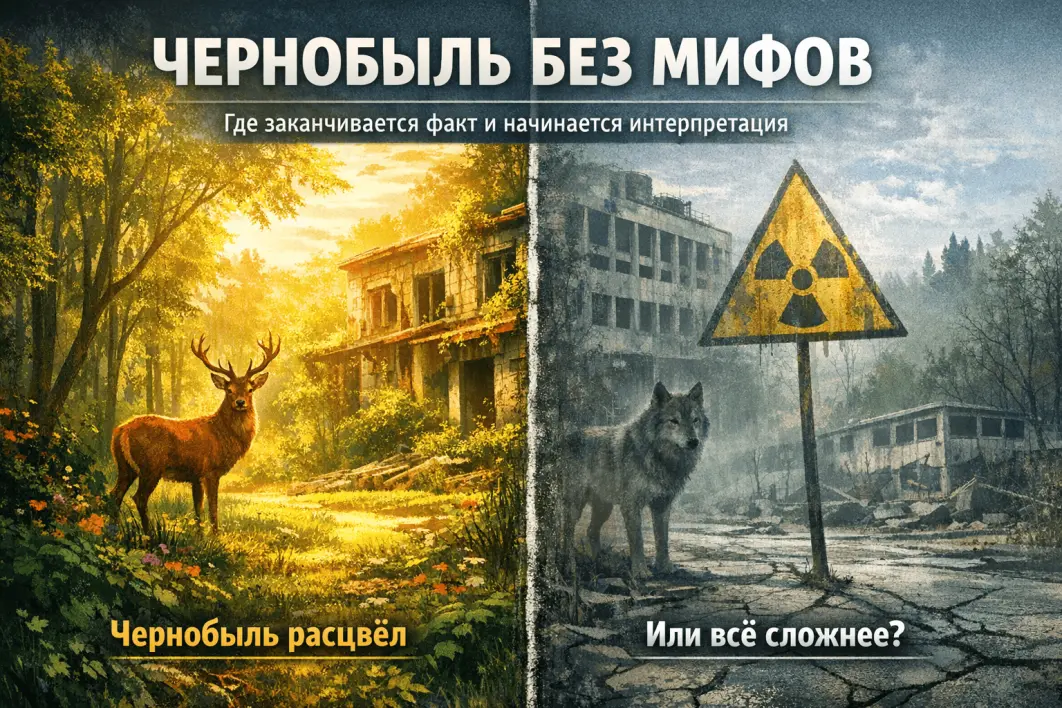
Quite often there are publications on the topic of Chernobyl. Many sound powerful and almost poetic. They catch on, make you think, and draw before your eyes an image of nature that has not just survived, but flourished where man once put an end to it.
But if you take away the emotions and look closely at the scientific data, the picture becomes more complicated, deeper, and perhaps even more interesting.
There are errors and exaggerations in popular texts, and many common statements have no reliable confirmation or are greatly simplified. Such formulations create the illusion of being scientific, but distort the real picture.
Below is an example of a strong and atmospheric text that mixes real scientific observations with exaggerations and partially unreliable statements. I will quote completely without changes:
The Chernobyl biologist, who has been living among abandoned villages overgrown with forest and silence for more than fifteen years, once said a phrase at a conference in Prague, after which the hall froze in silence for several minutes: "Radiation turned out to be kinder than man..."
The silence was as deep as the Chernobyl forest at night. Because everyone knew he wasn't exaggerating.
Forty years have passed since the disaster. And the territory that the world considered doomed for a millennium has turned into one of the cleanest and wildest nature reserves in Europe. Where once there were concrete blocks, life is now sprouting — stubborn, wise and almost pristine.
The population of the big beasts has increased sevenfold.
Wolves settled in old schools, comfortably settled under desks where children once sat.
Bears have returned here for the first time in a hundred years.
A lynx walks on the roofs of houses covered with moss.
Deer, moose, and Przewalski's wild horses roam the streets, which still remember human voices.
What we called the dead zone became a place of triumph for life.
Statistics, dry and emotionless, say a simple thing: the absence of man is the best condition for restoring nature. But the most interesting thing is not only the return. This is evolution right before our eyes. Animals mutate... not to harm, but for the good of survival.
Chernobyl wolves are six times more resistant to infections. Their cells are capable of repairing DNA on their own after irradiation. Frogs have turned black — their skin is rich in melanin, which absorbs radiation like armor. Dogs living near the reactor have more than 200 unique genetic variations found nowhere else on the planet. Some scientists believe that these mutations may be the key to the development of anti-cancer and radiation drugs.
Even the birds are different. Their blood contains ten times more antioxidants than regular blood. They are stronger, reproduce faster, and sing even louder. An ornithologist who studied these birds said a phrase that became a symbol of the new Chernobyl: "This is not a miracle. It's biology that has learned not to be afraid."
And plants... They just broke the rules.
Birch trees grow through concrete, pine trees break through asphalt, and grapes weave old antennae, turning metal into a living frame.
Near the reactor, scientists found mushrooms that feed on radiation. They absorb ionizing radiation and convert it into energy for growth. This phenomenon was called radiotrophy — for the first time in history, it was recorded how a living body literally "eats" radiation.
The soils contain unique microorganisms capable of decomposing isotopes of caesium and strontium.
Nature, it seems, has begun to purify itself — without help, without technology, without man.
Chernobyl is no longer a symbol of destruction. It has become the laboratory of the future. A place where biology is writing a new scenario, a scenario where life is winning even where we thought everything was dead.
There, among the ruins, nature is quietly telling us the truth that we didn't want to hear.:
You are not the center of the world.
You're just a guest.
And perhaps the scariest discovery of Chernobyl is not in radiation, but in the fact that the world will live perfectly without us.
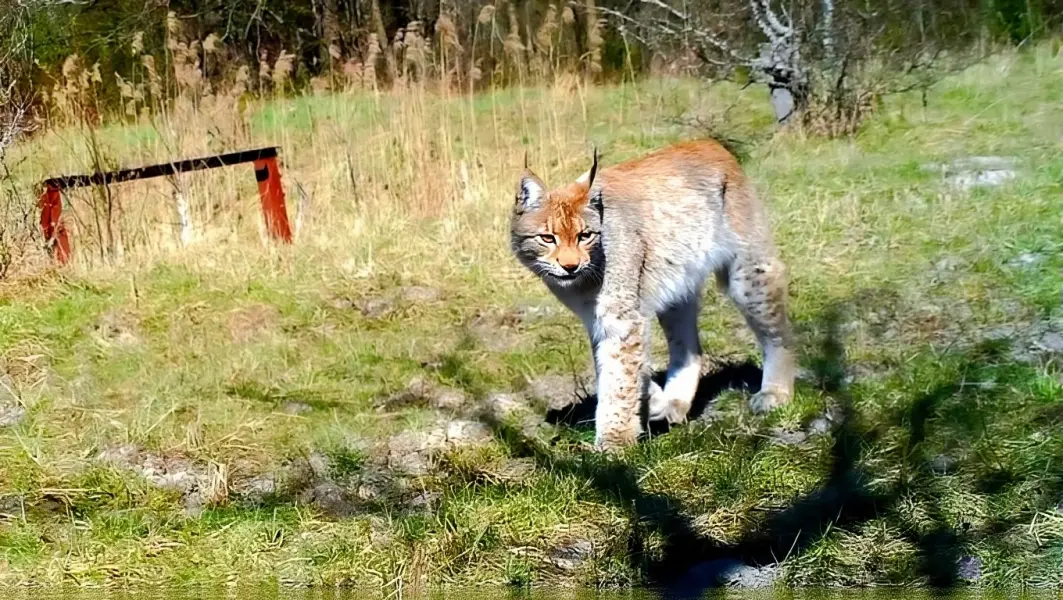
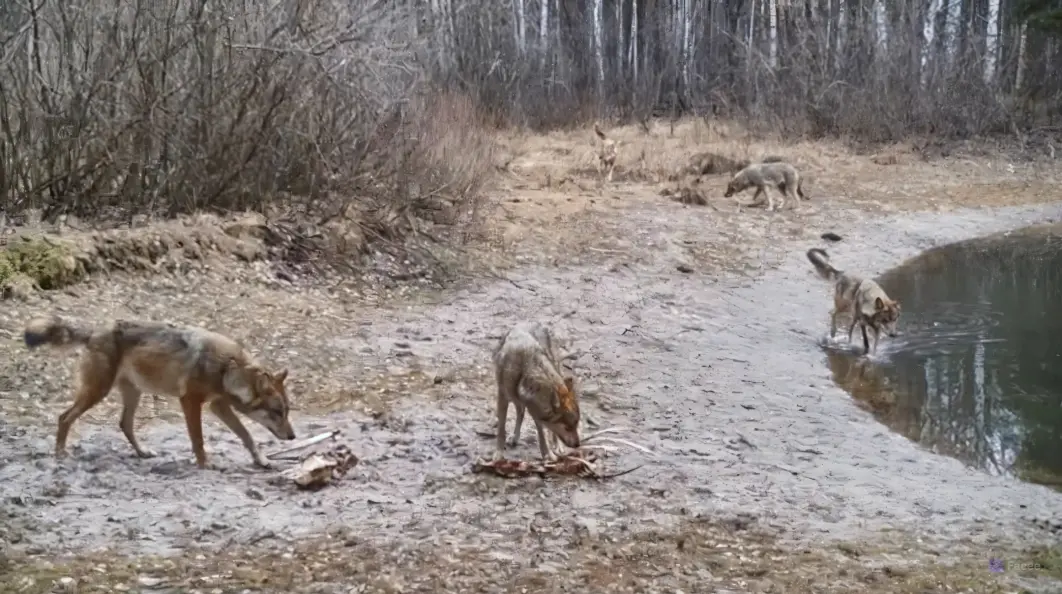
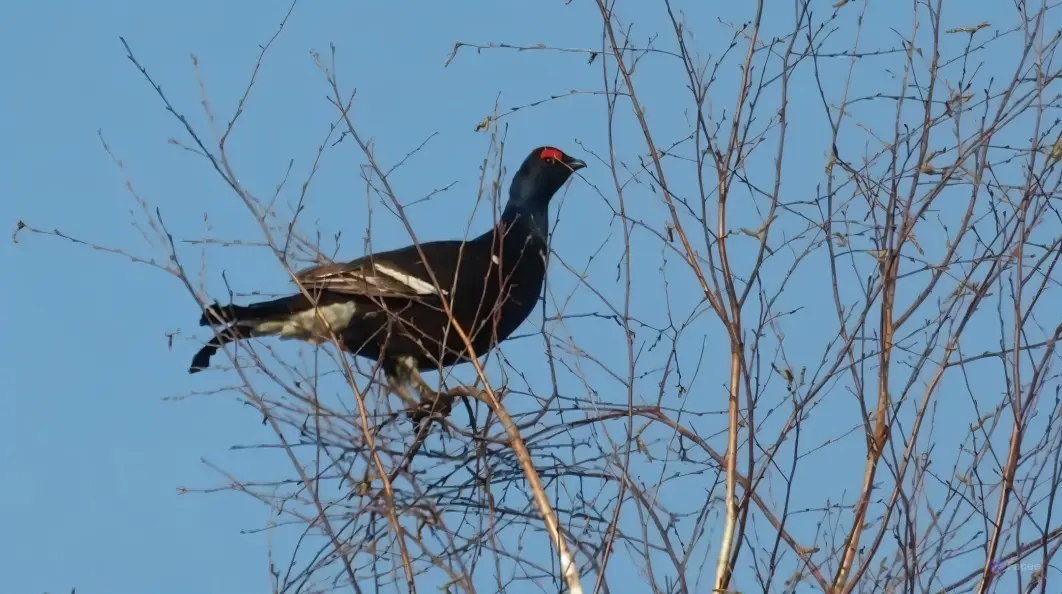
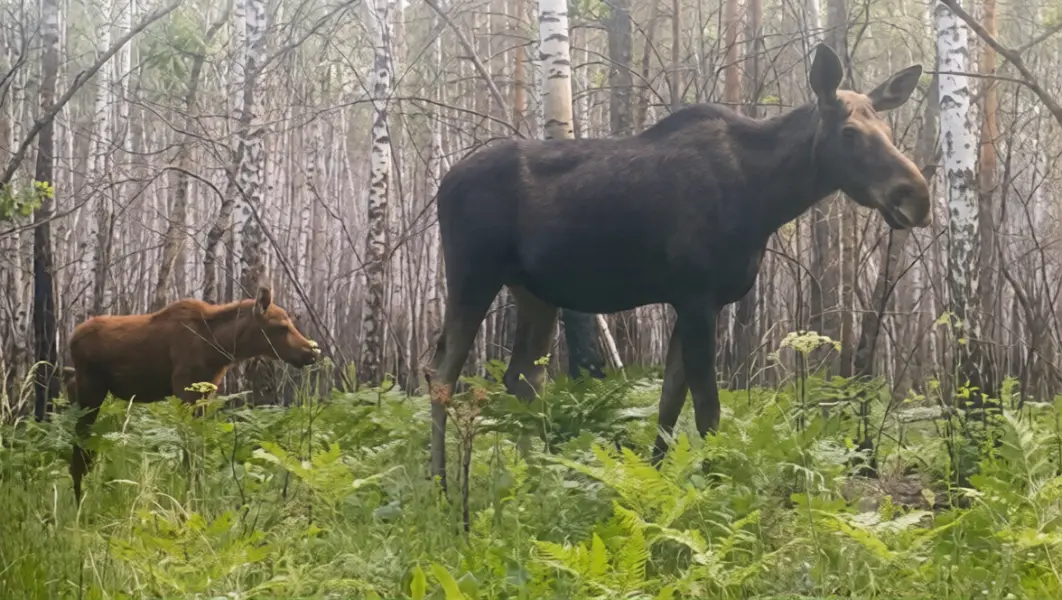
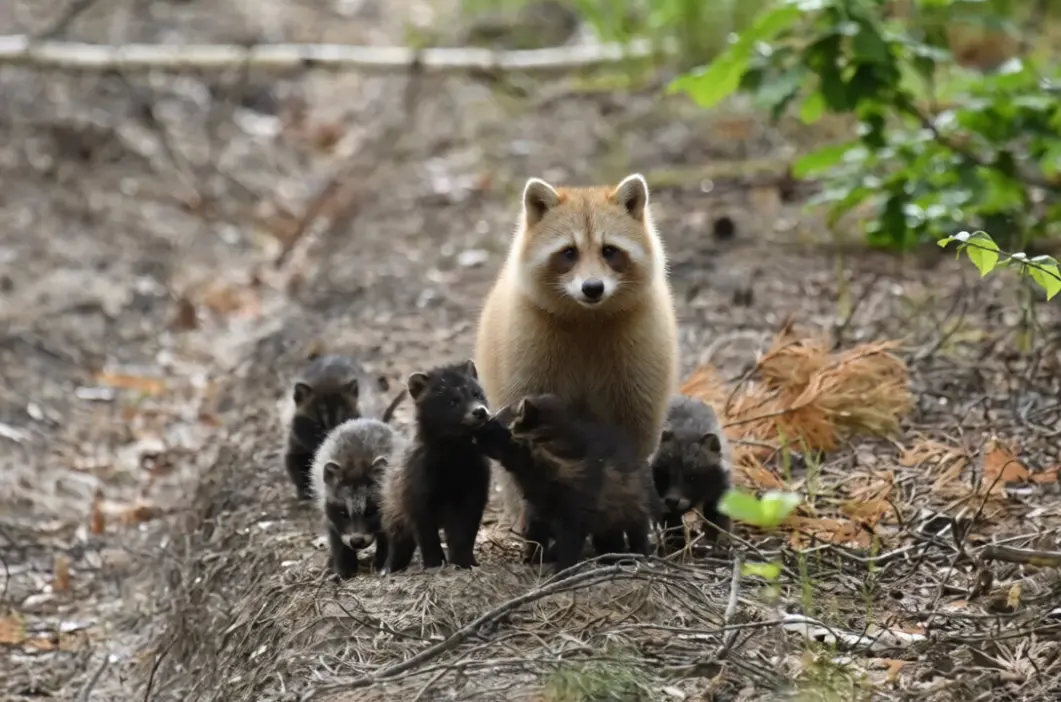
After the accident at the Chernobyl nuclear power plant, the unexpected really happened. In the exclusion zone around the Chernobyl exclusion Zone, human influence has sharply decreased. Many species of animals have returned: wolves, moose, wild boars, lynxes, as well as Przewalski's horse. The biomass of large mammals as a whole has increased compared to the period before the accident. In fact, the absence of humans is often more important than the radiation factor for the ecosystem.
But this is where the substitution of concepts begins. The illusion of a "wild paradise" Photographs of forests, animals and abandoned cities create the feeling that nature has fully recovered. However, this is a visual illusion. The radiation has not disappeared. It continues to damage DNA, affect reproduction, and shorten life expectancy. The most important thing is that many of the consequences are invisible. An animal may look healthy, but have genetic damage or reduced chances of offspring survival. This creates a false impression of well-being. The exaggerations begin with the statement that "the population has grown 7 times." In fact, it depends on the pollution zone. Because some species have really grown, but others have suffered. Brown bears have indeed started appearing in Chernobyl "for the first time in 100 years." But this is not a massive comeback, these are rare sightings. The most dangerous simplification in the publication is when the author says that "animals mutate for good." In reality, mutations are harmful or neutral, but not useful. Many animals have increased mortality, reproduction problems, and DNA damage. Yes, there is natural selection — more stable individuals survive, but this is not an "improvement", but a strict filtration. The fact that "Wolves are 6 times more resistant to infections" is a completely unconfirmed figure, it is not an established fact, it is only known that they really have changes in the immune system, and only the likelihood of a possible increased resistance to certain factors. The "dogs with 200 unique mutations" have indeed been found to have genetic differences, but this is due not only to radiation, but also to isolation, interbreeding, and gene drift. The only really documented fact is that frogs have more melanin in the zone. It really helps to better protect yourself from radiation. "Mushrooms that feed on radiation" are radiotrophic mushrooms. This is due to a phenomenon called "radiotrophy." But it is important to understand that they do not "eat radiation" as food in the usual sense. Rather, they use radiation to alter metabolism (similar to photosynthesis). It is absolutely not true that "Microorganisms decompose cesium and strontium." Radioactive elements do not “decompose” biologically. They can bind, redistribute, accumulate. But they don't disappear because of bacteria. In general, Chernobyl is not a "paradise" or a "hell", but a complex experiment. Yes, nature is recovering without humans. Yes, the ecosystem has become richer in the number of animals. But radiation continues to cause harm at the DNA level. But many effects are hidden and long-term. Therefore, saying that "radiation turned out to be kinder than man" is not a scientific conclusion, it's just a beautiful metaphor. I would put it another way, that the absence of humans turned out to be more important than the harm of radiation — for many species. Publications of this kind on the Internet are a mixture of real observations, scientific hypotheses and artistic exaggerations. Such publications help to understand that human influence on nature can be more destructive than we think. But it is wrong to conclude that radiation is "useful" or "helps evolution." The popularity of such publications is understandable and we easily believe in these stories, because it is easier for people to perceive simple and vivid stories than complex scientific reality. Radiation is invisible, and we tend to judge by appearance — if there is a forest and animals, then "everything is fine." Journalistic texts often reinforce scientific conclusions for the sake of expressiveness. There is a psychological desire to believe that even after a disaster, everything can end well.
I write and shoot. Join me
Author's video content
https://www.youtube.com/c/ViolettaWennman
Political trash
https://www.youtube.com/@Ship-Shard
I invite you to the telegram channel
https://t.me/shipshard
Highly Social on Zen
https://dzen.ru/shipshard
For goodies
https://dzen.ru/shipshard?donate=true
My hobbies are history, philosophy, psychology, music, economics, politics, and sociology. I write about this and much more. Professional model. She has performed at international music festivals (vocals, dancing, imitation of vocalists). I am studying at the Academy of Arts - the film and art industry, I am a producer and the owner of a video studio.
I am glad to see all of you in my blogs.

You won't lose me here. https://t.me/shipshard






