
The Banker’s trust is a corporation of corporations; a bank of banks, that was founded and controlled by J.P Morgan in 1903 including an onslaught of powerful New York Banks. The company lasted until 1999 when it merged into Deutsche Bank, a powerful German multinational investment company.
With the power of the most influential New York Banks, the Bankers Trust was able to create an immense reputation that represented wealth and success across the world. Almost instantly, Morgan’s trust was among the largest in the country and established themselves on Wall Street as finance cowboys that did what they wanted. ("BANKERS' ABSORBS MANHATTAN TRUST; The New York Times. February 21, 1912).
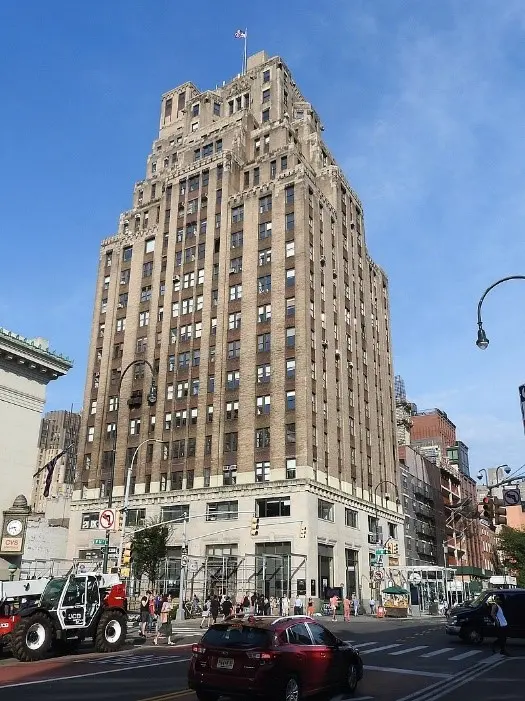
(80 8th Avenue, the 1930 Bankers Trust Building)
Discussing the Bankers Trust and all of its parts is like an elephant, and to eat an elephant you need to go one piece at a time. We have started to establish the power of Morgan, Rockefeller, and others, but it truly pales in comparison to the future wealth they would generate at the expense of those who don’t have the wealth or education to compete with international powerhouses that became the greatest manipulative and educated financers in the world.
An individual that was vital to Morgan’s success by helping formulate the Banker’s Trust was Edmund Converse, the first named President of the financial institution. Converse previously assisted J.P Morgan with the acquisition of numerous companies during Morgan’s successful attempt to monopolize industries, including the National Tube Company, that serviced numerous commercial industries such as energy, machinery, heavy equipment, and more; and also assisted during Morgan’s purchase of U.S Steel from Andrew Carnegie. Converse was very successful during the early years of serving under Morgan as president of both the Bankers Trust and the Astor Trust company or the Astor National Bank simultaneously from 1907-1914. In 1914, Converse resigned from the Bankers trust and served exclusively as the president of the Astor Trust from 1914-1917, in addition to being on the Board of Directors of other powerful companies. The Astor Trust was once started by John Jacob Astor IV, whose relative was the richest American in the country in 1848 from monopolizing the fur industry. However, by the time Converse was president of the company J.P Morgan had successfully bought out a majority of the shares held by the public, and the Bankers and Astor’s Trust merged in 1917.
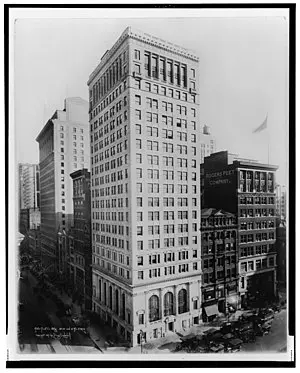
(The Astor Trust Co. Building, 1917.)
Panic of 1907
During Converse’s tenure as president, he served throughout the Panic of 1907, one of the most important financial crises in American History, although it is hardly ever discussed. It led to the failure of over 200 banks across the country and created unprecedented, unforgivable, and permanently altering changes to our lives today, even if we don’t realize it.
The financial terror was an economic recession that resulted in a 50% drop in the value of stocks on the New York Stock Exchange. After this drop in value, numerous Bank Runs were occurring. Customers of different banks across the nation were walking into their local branch and demanding the teller to be given all of the money they had stored in their bank account. This led to a big issue with banks because in the United States we use a fractional-reserve banking system. These banks have a certain percentage of their deposits they must keep in the vault, this is called a reserve requirement. The rest of the money that they’re not required to keep in the vault is lent to various private institutions, public entities, and people who want or need loans.
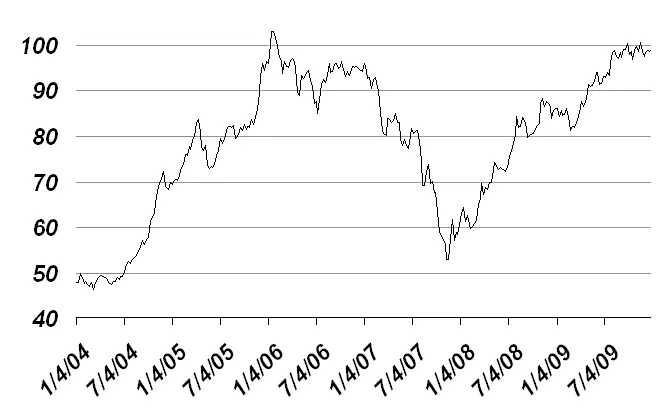
(Dow Jones Industrial Average 1904–1910. The bottom of 53 was recorded November 15, 1907.)
The typical reserve requirement at this time was around 20-25% which means if there were 1 million dollars of deposits in a bank branch then they would have around 200-250k in liquid cash. One of the advantages to having a trust, as opposed to a bank, was that trusts were able to only keep around 5% of their deposits in reserves while loaning out the rest of the money. Therefore, different trusts, like the Astor and the Banker’s, would play a pivotal role in the economy for payments and borrowing. In this instance, there were thousands of people attempting to take out all of their money at the same time, and banks are only able to operate under normal conditions. This led to the lower and middle classes being denied entry into the facility and unable to withdraw money from their bank. When people can’t withdraw money from their banks it leads to people believe banks are going to fail. When people lose confidence in the bank’s ability to follow through with their duty, illiquidity is created in the banking system because people and entities no longer deposit, or lend, their money to financial institutions they believe are going to fail. When illiquidity is present, banks go insolvent or bankrupt because of their poor lending practices and erroneous bureaucratic decisions. These bad decisions ultimately lead to everyday citizens losing their money for good. People’s money literally disappeared into thin air.
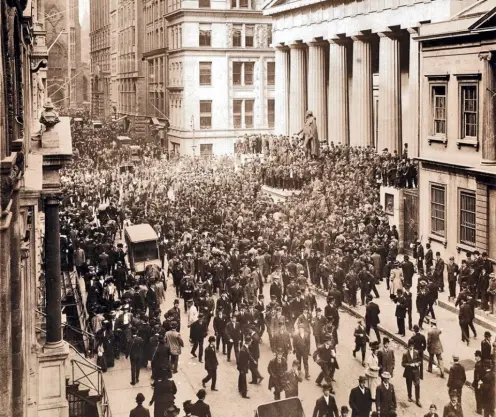
(Wall Street during the bank panic in October 1907)
As we have been mentioning throughout this section, another cause of the Panic of 1907 was wealthy gurus creating and utilizing trusts. A Trust sounds innocent, but in fact, it is an organization used by the rich to administer financial decisions based on other companies, groups, people, etc. The Trust is independently owned by the assets that the Trust controls. In other words, the companies held by the trust have owners that make decisions for each company independently and the Trust has a separate owner who is the administer of financial decisions of the assets within the Trust that is contributed by each independent company. However, in our case of the Astor Trust, Bankers Trust, and many more like it, they were often controlled by the same people owning the companies inside of them. In other words, JP Morgan would take his smaller companies and create different trusts to hold these companies that would allow him to avoid anti-trust litigation that was becoming prevalent at the start of the 20th century.
Furthermore, when New York banks raised interest rates on debt offerings to attract money from investors around the country, “The interest rates on loans to brokers at the stock exchange soared to 70%” (Bruner & Carr 2007, p. 85). Investments the New York Bankers primarily choose to invest in decreased in value because of regulation hurting the railroad companies with the introduction of the ICC and Standard Oil being fined 29 million for antitrust violations. Investors began to lose confidence in the market, including the most important American industries and further downward price action continued to affect the markets as a whole.
Today and at that time, Trusts are much less regulated than banks or public corporations. However, they participated in many of the same activities that banks did. Lending, borrowing, and mergers to name a few. In the early 1900s trusts had loaned out about the same amount as all National banks combined in the United States and grew their assets by over 200% in the previous ten years (Moen & Tallman 1992, p. 612). During the panic, trusts acted as a lender of last resort with no federal reserve being created yet and were subject to the same “bank runs” that the traditional banks were experiencing. Many of the trusts had the ultimate goal of monopolizing an entire industry of the market. Rockefeller and Oil, Carnegie and Steel, and ATT with Telecommunications to name some famous ones.
The trigger occurred in the fall of 1907 when the Heinze family had a failed attempt at monopolizing and cornering the copper industry. Fritz Auguste Heinze created United States Copper (USC) a mining, refining, and production company involved in the copper industry throughout the Midwest, with the help of Charles Morse, who had control of 13 banks and who had an effective monopoly on New York’s market for ice.
Fritz brother, Otto, was a broker and planned on injecting millions of dollars into the market by buying shares of the public company in hopes of increasing the price and cornering the market. The reason he wanted to do this, is because he heard rumblings of brokers in New York creating a large short position on United States Copper (betting that the price of the stock goes down). However, Otto’s plan was for him to buy such a large portion of the company’s stock that the Heinze family would own nearly all the USC positions, and the brokers who shorted the stock would be forced to buy the stocks back from him at a much higher price because the Heinze family owned a majority of the shares and manipulated the market to show a positive outlook for the company, creating what is called a short squeeze. In order to gather the funds necessary to buy the stock of USC, the Heinze family had borrowed money from state banks, national banks, and some of the largest trusts in the world, including the Knickerbocker Trust Company, a trust with the third largest assets under management in New York.
Otto Heinze was the one who pulled the trigger on the weapon of the crisis in late October by beginning to purchase United States Copper stock. Their plan initially worked, with the price increasing from 39$ to 60$ in a span of two days. However, short sellers found more shares to borrow and the price of the shares dropped to 10$ by the close of the next business day, making it appear that Otto severely overestimated the amount of control he had over the industry and the plan had officially failed (Bruner & Carr 2007, pp. 47–48). Once this news broke, Otto was left with overpriced stocks that he didn’t know what to do with and couldn’t sell to pay back the borrowed money from banks and trusts to begin his scheme. The news broke and the prices of stocks across the board fell, the trusts and banks that had lent out millions of dollars began to fail because they couldn’t get their money back. After the Knickerbocker trust failed, a place where people had their entire life savings, and the news hit the public bank runs on trusts and banks began across New York which spread to the rest of the country. The price action was so bad, that brokers began soliciting sales of the shares on the curb outside of the New York Stock Exchange. This ‘curb market’ eventually formed the American Stock Exchange and the contagion effects began affecting the entire market. Finally, in 1907 the public attempted to recoup their lost funds by attempting to withdraw in large groups, leading to a flywheel effect and eventually bank runs across numerous financial institutions across the country took their toll. People lost their jobs, homes, families, life savings, and even lives because of the greed of a wealthy family that had control over our economic system.
So, what happened as a result of this panic? An emergency meeting was called by John Pierpont Morgan inside of his home.
One of the important contributors to Morgan’s success was a young and fruitful businessman named Benjamin Strong Jr. whose family was in the banking industry. Strong joined the Bankers Trust in 1904 and quickly rose through the ranks to become Vice President in 1909 after assisting J.P Morgan with working out the deals to help solve the 1907 panic. He will play an especially important role in the future so it’s crucial we keep him in mind.
Morgan led the nation’s financial and political leaders in his luxurious conference room and locked the door behind him. Explaining that no one was to leave the room until they created a solution to this economic disaster. When the meeting was finished, Morgan successfully organized financial leaders across the world to generate the capital to buy out smaller trusts, railroad companies, and other businesses while gaining legal immunity from president Theodore Roosevelt including;
The Astor family: John Jacob Astor was the first multi-millionaire in the United States through the fur trade and real estate investments. His family went on to own a large part of New York real estate in the late 19th and early 20th centuries.
The DuPont Family: Pierre Samuel du Pont de Nemours was a French National who migrated to the United States before the American revolution and played a large part in the political negotiations and also started a successful gun powder company that would go on to dominate the industry. In the following generations, they extended their reach to chemical and energy companies with many mergers and acquisitions in addition to investments in automotive firms. Their companies are still in existence today.
The Guggenheim family: Meyer Guggenheim was originally born in Switzerland and moved to the United States where he married an American woman named, Barbara Meyer. They began a family that consisted of 11 children with 8 boys. This family would on to create a business that would end up dominating the global mining and smelting business of various medals. Today, Guggenheim Partners and Guggenheim Investment Advisors, two financial companies, control over $250 billion in assets.
The Vanderbilt family: Cornelius Vanderbilt was the first member of the family to gain generational wealth for his future ancestors. Their focus was the railroad and shipping industry in the United States, as well as acquiring and buildings various mansions on prized real estate in New York. Cornelius is credited with
The Rothschild family: Lord Rothschild put forth millions of funds to buy up positions on the NYSE and represented the European financiers who we will continue to discuss, Lord Rothschild came from the British branch of the Rothschild family.
After J.P Morgan worked with a number of trusts to avoid a destructive economic collapse in 1907, the Bankers Trust continued its spree of dominance by taking advantage of volatility and FUD (fear, uncertainty, and doubt) merging more banks and acquiring more companies. Simultaneously, a new and serious dialogue began taking place between political leaders in the United States on ways to resolve the reoccurring issue of bank runs, economic panics, and how one person, JP Morgan, saved the entire United States economy from a collapse and in the future would be able to control the politicians and financers he assisted.
Less than a year later in 1908, the government had its solution which involved three major ideas. The first solution was the creation of the Pujo Congressional Committee. After further investigation from the Pujo committee found that a small group of Money Changers had gone on to control most of the assets in the United States. The following is a quote from a New York Times article that was written on January 12, 2013, by the New York Times.
“The three dominant personalities in this community of financial interests have been J. Pierpont Morgan, who is now in his seventy-sixth year, and spends much of his time in Europe; James E. Stillman who is in his sixty-third year, and lives in Europe and George F. Baker, who is in his seventieth year, and is now the most active man in the group. The five institutions which these men and their associates dominate and which are regarded by the committee as the superstructure of the money trust, are J.P Morgan and Co., the First National Bank, the National City bank, the Bankers Trust Company, and the Guaranty Trust Company…Together have 341 Directors, in 112 corporations have aggregate resources of capitalization of $22,245,000,000” (https://timesmachine.nytimes.com/timesmachine/1913/01/12/100604553.pdf).
All of this was headed and controlled by one person, the person who controlled finance, John Pierpont Morgan. To put this amount of wealth into perspective, the entire New York Stock Exchange market capitalization at the time was 26.5 billion. So, imagine one person controlling around 85% of the entire United States economy. In 2018 the listed value of market capitalization on the NYSE was $30,000,000,000,000
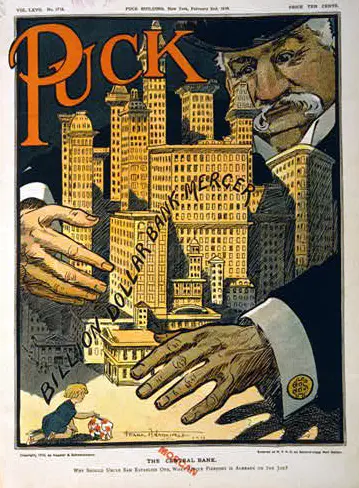
(Cartoon of J. P. Morgan seizing control of banks)
This congressional subcommittee concluded at the end of its findings that trust and banks had overexerted their power in the United States and the government wanted to take back some of the power for itself. Throughout the report, senator Pujo was candor and wasted no time exclaiming individual people who had a large part in this calculated plot including Paul Warburg, Jacob H. Schiff, Felix M. Warburg, Frank E. Peabody, William Rockefeller, Benjamin Strong, Jr., and J.P Morgan. Keep these names in mind.
The second solution from Money Changers involved increasing politicians’ power and reducing the control small groups of people could have on society. Although, in reality, their solutions didn’t solve anything. It simply expanded the power of small groups of wealthy people that would be created as “new entities”. What else did the government and the wealthy elite do? They used their greedy beliefs to put in to pass the 16th amendment into the Constitution which enabled Congress the right to tax U.S citizens on their earned income. Every time you get a paycheck, a percentage of your check goes to paying for government expenditures like military, social security, and more. Obviously, taxes today have gotten out of control in a number of ways, but the government's solution was to give themselves the right to take more money away from its citizens and small businesses.
Lastly, they passed the Aldrich–Vreeland Act in 1908 which created the National Monetary Commission. In their words, it was a bipartisan committee that had two jobs, to study the banking system in the United States and studying the banking system in Europe.
The head of the committee was Nelson Aldrich, who was an extremely powerful republican congress member at the time that led many of the financial discussions around the country. Aldrich had extremely good relationships with the elite of the country because of his power and prowess in the industry. He is well known for having close ties with J.P Morgan through business deals and negotiations and the Rockefeller family because his daughter married John D. Rockefeller Jr. Aldrich held a secret meeting, not telling the government or the public, on Jekyll Island in 1910. This island at the time was used as a retreat from the winter months for the wealthiest elite in the country. In attendance at the meeting were the following:
Frank A. Vanderlip, president of the National City Bank of New York, connected to the Rockefeller family.
Charles D. Norton, president of the First National Bank of New York
Col. Edward M. House, the eventual executive advisor to President Woodrow Wilson and given credit for the creation of the Council on Foreign Relations
Henry Davison, senior partner of J.P. Morgan Company
Paul Warburg, an investment banker for Kuhn, Loeb, & Co.
Keep these names in mind.
What happened as a result of that meeting would go on to change the lives of every person who lived in a civilized society in the world. Over a 10-day stay on the island, these financial chiefs created a carefully and well-thought-out piece of legislation that politicians couldn’t deny, along with a perfect entity to orchestrate their arrangement that would go on to rule the United States and the world in perpetuity. They would create the Federal Reserve System of the United States in 1914, the wealthy and politicians' first solution to the crippled economy.
It cannot be overstated how powerful this institution is in the world and controls the everyday lives of people like me and you. This public-private institution can be looked at as the source of our societal, economic, political, spiritual, and humanitarian suffering that the lower and middle classes deal with on a daily basis while the rich and wealthy relax on their yachts, mansions, or private jets laughing at stupid we are as a nation, and the world at large.
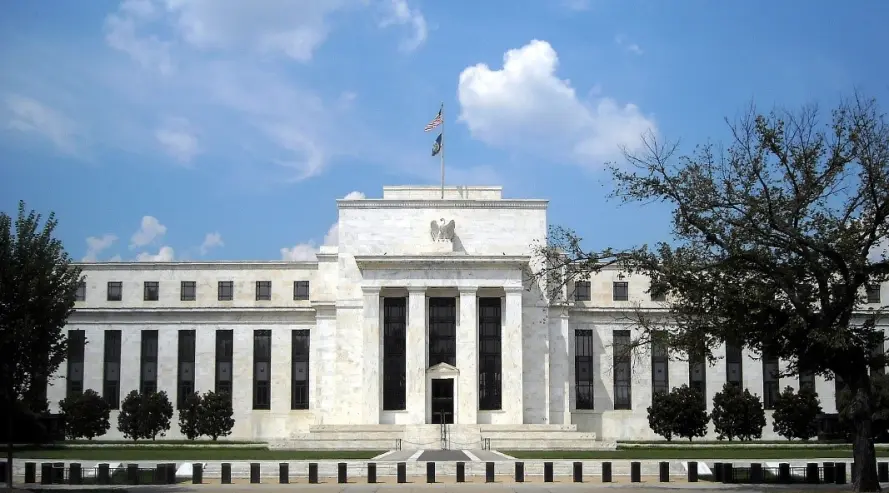
(The Marriner S. Eccles Federal Reserve Board Building, commonly known as the Eccles Building or Federal Reserve Building)






