
What is NFT?
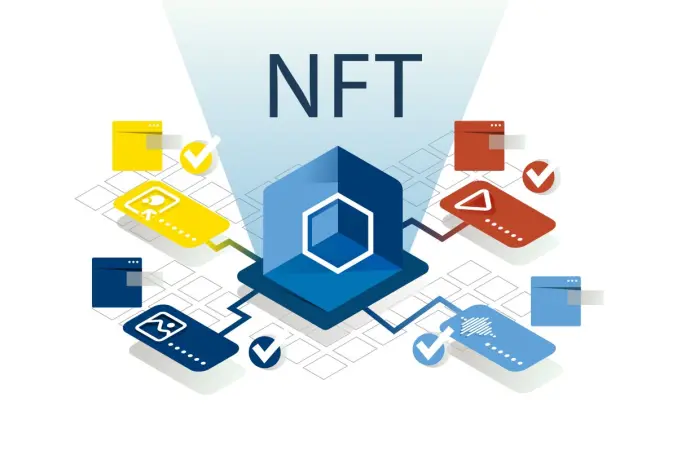
First, you need to understand the definition of NFTs. NFTs stands for Non-fungible token and represent real-world assets. They are stored on the blockchain and guaranteed for their authenticity, uniqueness, and value. An NFT can represent music, artwork, sports, etc.
What are the special properties of NFTs?
With the development of current technology, NFTs play an important role in the technology world. They play an important role because of their unique properties, like being indivisible, unique, verifiable, and identifiable,…
NFTs cannot be divided
Unlike Ether or Bitcoin which are divisible. An NFT is an intact and indivisible property.
NFTs is unique
Each NFT is a unique item; there are no equivalent values, they cannot be replaced, and they cannot be reproduced in any way.
Verifiable and identifiable
Because they work with data on the blockchain, all NFT's works are always original and can be verified using that blockchain.
Scarcity
NFTs can be scarce, and this is a reason to promote their merits.
Transparency
Because the public distributed ledger is decentralized and immutable, where the record of issuance, transfer, and activity of tokens is publicly verifiable, everyone can fully trust and verify the authenticity of a specific NFT.
To better understand NFT properties, please read more here: https://www.publish0x.com/potential-of-nfts/what-makes-nfts-different-from-the-original-cryptocurrency-xddglkm
How do NFTs solve current problems?
NFTs have outstanding properties as indivisible, unbreakable or tamperable, verifiable, and scarce assets, which makes NFTs special and easy to solve many problems remain at this time of technological development.
NFTs solve persistent problems revolving around the field of art: entertainment, copyright, counterfeit money, ...
Thanks to its special properties, NFTs are widely applied in many fields, notably in the fields of digital art, collectibles, in-game items, and sports NFT. Specifically:
- Real asset authentication: With the development of digital technology in the future, NFTs can be widely applied in all areas of life, encrypting all assets and the ability to digitize all property rights. From there, real assets can be easily verified with simple procedures.
- Art: With NFTs, a person can purchase a painting, convert it into a digital file, upload it, and attach it to a token on the blockchain platform to prove their ownership. This solves problems related to copyright protection in painting, music, and cinema for artists.
- Gaming: For blockchain games with NFT apps, the item is pegged to a token that can be easily exchanged for anyone. No one can affect or change the item.
Now, creators and artists don't need to depend on record labels and producers to distribute their royalties. They don't need to spend a lot of time at this stage.
There is no dispute as to how much royalties each party receives as each party's share is pre-determined and agreed upon.
Furthermore, today's valuable NFTs have been sold for huge amounts of money over the past few years because of the value they offer themselves, such as in terms of rarity, the price at which the interested community values them, or their actual value.
NFTs were born to solve the physical problems that real-life assets still exist. Rare paintings, instead of being preserved in real life, can cause damage, fade, or lose value over time. Now with Blockchain technology, NFTs will solve the outstanding problems of assets. Physically by storing them digitally, thereby ensuring copyright issues, preserving their value, and also becoming known to more people for their works.
NFTs are the solution to digital scarcity. by binding original digital artwork ownership to an immutable and public ledger entry.
Above are my sharing about NFTS, hope you will get a lot of information through this article. Thank you for reading!





