
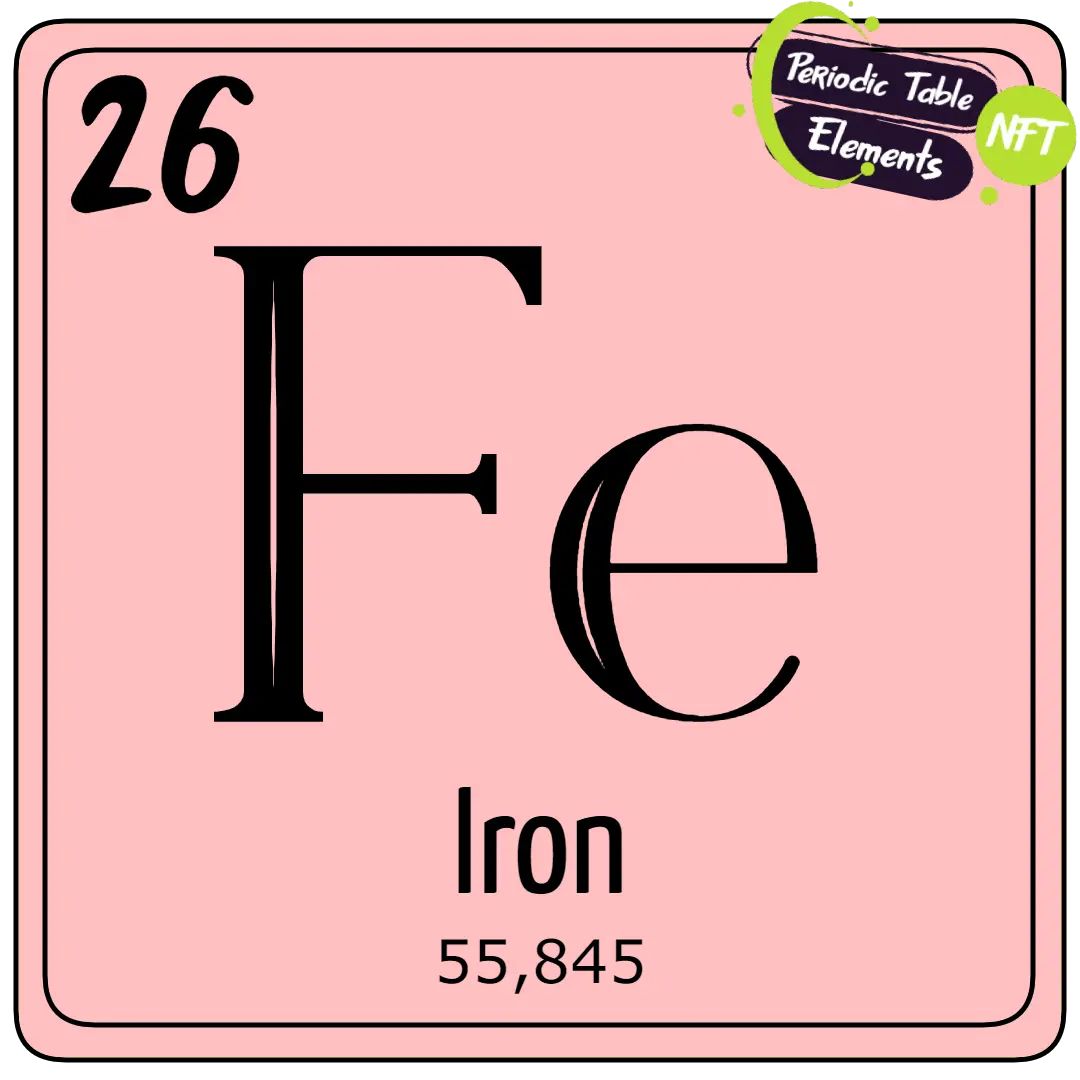
Fe is the symbol of the chemical element with atomic number 26. It is the abbreviation of the word ferrum, the Latin name for iron.
This element is almost always found linked to others such as: carbon, silicon, manganese, chromium, nickel, etc. With carbon, iron forms its two best known alloys: steel and cast iron.
On an industrial level it is possible to obtain iron with a purity that is close to 100%. This product is then used to be bonded to other chemical elements to obtain alloys with the most diverse characteristics.
An element so important that in the past it gave its name to an entire historical period: the Iron Age.
The first evidence of the use of iron comes from the Sumerians and the Hittites, who already used it for 4,000 years BC for small objects such as spear points and jewels.
Scientists have estimated that iron is the most abundant metal within the Earth, as it is present in large quantities in the Earth's core and mantle, along with nickel and sulfur and is estimated to be the sixth most abundant element in the entire universe, with a percentage by weight of about 0.11%, preceded by hydrogen (75%), helium (23%), oxygen (1%), carbon (0.5%) and neon (0.13%).
Iron is by far the most used metal by humanity, it alone accounts for 95% of the world's metal production. Its low cost and its resistance in the form known as steel make it an indispensable building material, especially in the construction of cars, ship hulls and load-bearing elements of buildings.
Common iron, technically called wrought or soft iron, contains less than 0.5% carbon, so it is still steel. It is a hard and malleable material. However, the term iron is often commonly referred to as extra-soft and mild steel. A particularly pure iron, known as "Armco iron", has been produced since 1927 with particular processes and is used where a very high magnetic permeability and negligible magnetic hysteresis are required.
Iron is essential for the life of all living things, except for a few bacteria.
Excessive intake of iron from food is toxic because excess iron ions react with peroxides in the body to form free radicals. As long as the iron remains at normal levels, the body's anti-oxidant mechanisms are able to keep the level of free radicals in check.
An excess of iron can produce disturbances (hemochromatosis); for this reason the intake of iron through medicines and supplements must be carried out under strict medical supervision and only in case of problems related to iron deficiency.
Giveaway
For such an important element, an important supply was needed, but above all an important giveaway. Our intent is to beat every record and be able to exhaust all the NFTs assigned to this giveaway.
We have never reached such a high number of comments and we hope not to be disappointed by seeing the first giveaway that you will not be able to exhaust.
For this giveaway we have decided to assign 150 NFTs divided as follows:
- 40 NFT to the fastest to enter their comment with the address wax
- 110 NFTs randomly assigned to all others who will comment by December 30th at 16:00 CEST.
Did we promise you a year-end with fireworks? We are doing our best. Now it's up to you to play your strategy: let things go their own way or be able to amaze us once again by inviting friends and acquaintances and also send this fantastic giveaway sold out.
The Periodic Table NFT project
The Periodic Table NFT project aims to raise awareness of chemical elements in a modern key, basing the approach on blockchain and Non Fungible Token.
Day after day it will be possible to know the single elements that make up the table, to collect curiosities about each of them and about the table in general.
We are working to be able to learn, in a playful way, also what happens by combining the various elements.
The whole project is based on the collection of NFTs that can be bought on the site https://wax.atomichub.io/market?collection_name=periodicelem&order=desc&sort=created&symbol=WAX or by participating in simple giveaways published on publish0x.
Elements released
- #1 Hydrogen (max supply 200)
- #2 Helium (max supply 200)
- #3 Lithium (max supply 200)
- #4 Beryllium (max supply 99)
- #5 Boron (max supply 99)
- #6 Carbon (max supply 200)
- #7 Nitrogen (max supply 200)
- #8 Oxygen (max supply 299)
- #9 Fluorine (max supply 149)
- #10 Neon (max supply 200)
- #11 Sodium (max supply 299)
- #12 Magnesium (max supply 99)
- #13 Aluminiun (max supply 299)
- #14 Silicon (max supply 200)
- #15 Phosphorus (max supply 200)
- #16 Sulfur (max supply 200)
- #17 Chlorine (max supply 299)
- #18 Argon (max supply 149)
- #19 Potassium (max supply 249)
- #20 Calcium (max supply 200)
- #21 Scandium (max supply 99)
- #22 Titanium (max supply 200)
- #23 Vanadium (max supply 149)
- #24 Chromium (max supply 200)
- #25 Manganese (max supply 200)
- #26 Iron (max supply 299)
Molecule released
- H2O - Water (max supply 37)
- NaCl - Salt (max supply 64)
- CaC2 - Calcium carbide (max supply 46)
Link to save
- Market on atomichub for the purchase of NFTs
- Blog on publish0x to be updated
- Telegram channel
- Discord: in the "all-projects" channel
(Foto di Nadine Doerlé da Pixabay)





![🌐 DIA (DIA): The Open Oracle That's Transforming the Future of Web3🚀 [PT/SPA/ENG/GER/KOR]](https://www.publish0x.com/img/1189948.webp?action=resize&ar=1&enc=webp&h=287&inv=0&ori=1&st=1&up=1&w=510&signature=726d2fe9be968dbd1d4345e4cc8ff760b4421ded4185698d749242c3b0f3f278)


