
INTRO
A reader recently told me that low-skill online services are being squeezed by AI. He's partly right, and I think students deserve an honest answer, not hype.
AI is already good at some tasks that people used to be paid for. But work is made of many tasks, and not all of them are equally easy to automate. The question isn't whether AI will change online work. It will. The question is how to be on the right side of that change.
Where AI is strong, and where you win
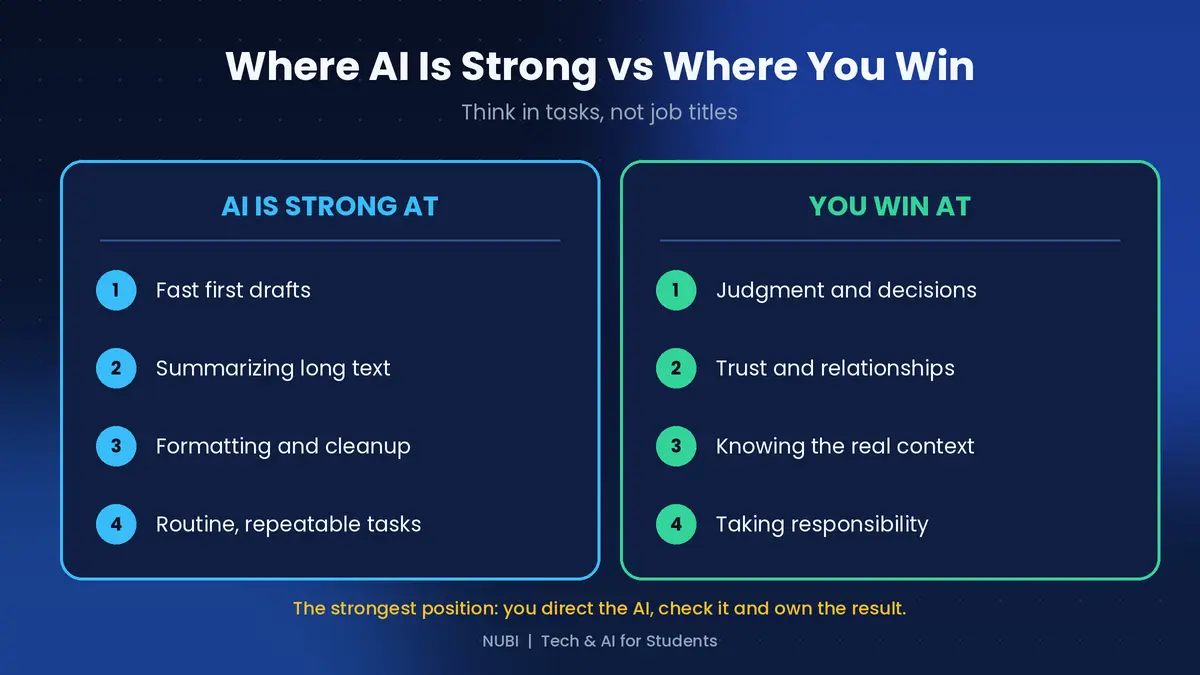
AI is strong at fast first drafts, summarizing long text, formatting and routine, repeatable tasks. If your only offer is cheap, generic output of that kind, you're competing with a tool that costs almost nothing.
You do better at the things clients actually worry about: judgment and decisions, building trust, knowing the real context of a problem and taking responsibility for the result. A tool can produce an answer, but it can't be accountable to a client.
How exposed is your skill?
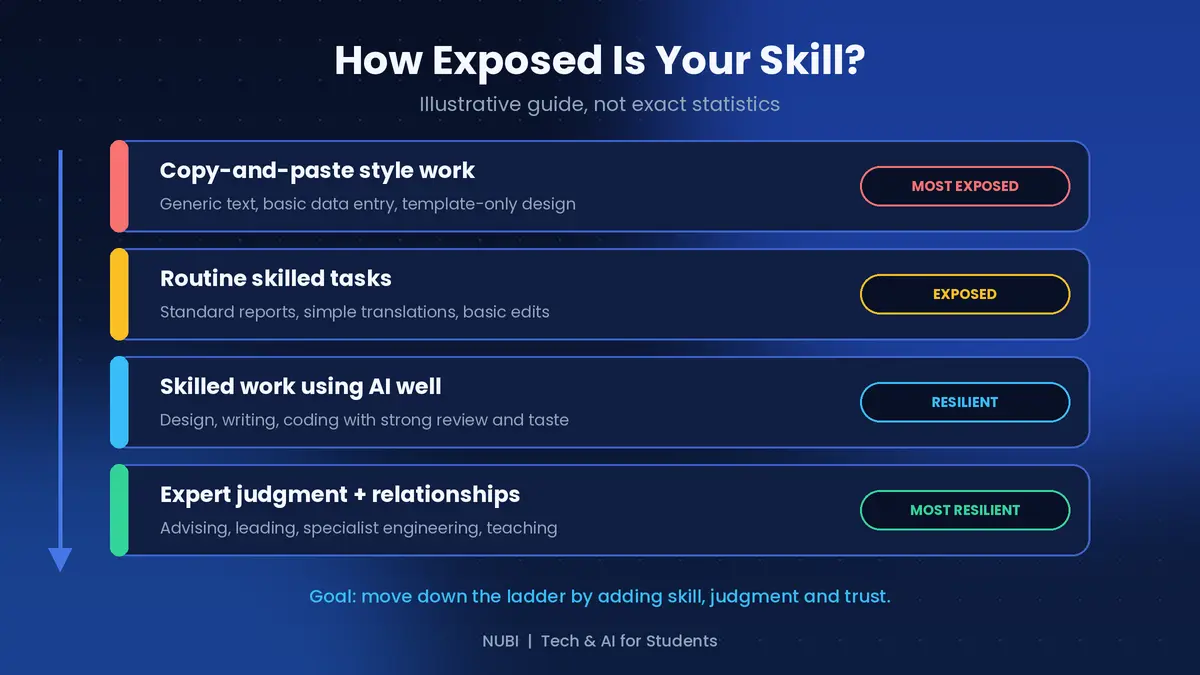
Think of skills as a ladder. At the top are copy-and-paste style tasks, like generic text and basic data entry, which are the most exposed. Routine skilled tasks, like standard reports and simple edits, are exposed too.
Further down are skilled people who use AI well, with strong review and taste. At the bottom, the most resilient work combines expert judgment with relationships, like advising, leading, specialist engineering and teaching. This is an illustration and not exact statistics, but the direction is useful: move down the ladder by adding skill, judgment and trust.
Build a T-shaped skill set
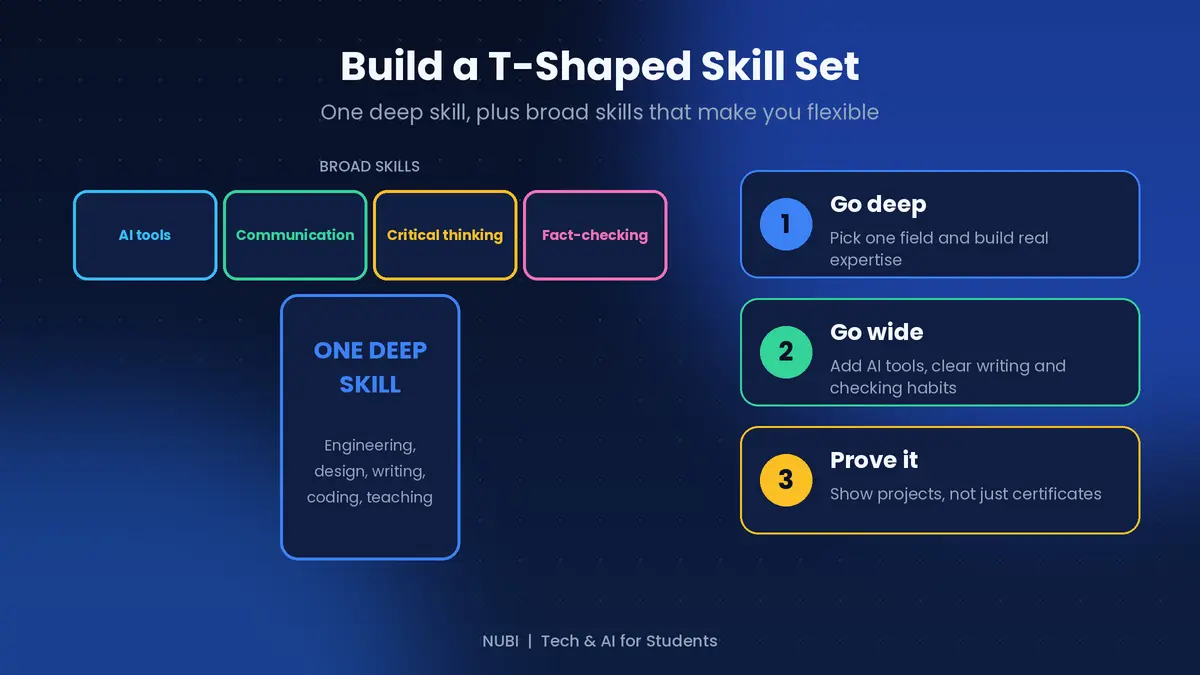
A T-shaped person has one deep skill plus a range of broader abilities.
Go deep. Pick one field, such as engineering, design, writing, coding or teaching, and build real expertise.
Go wide. Add AI tools, clear communication, critical thinking and fact-checking habits.
Prove it. Show real projects, not just certificates.
The deep skill gives you value, and the broad skills let you use AI without being replaced by it.
A 90-day plan
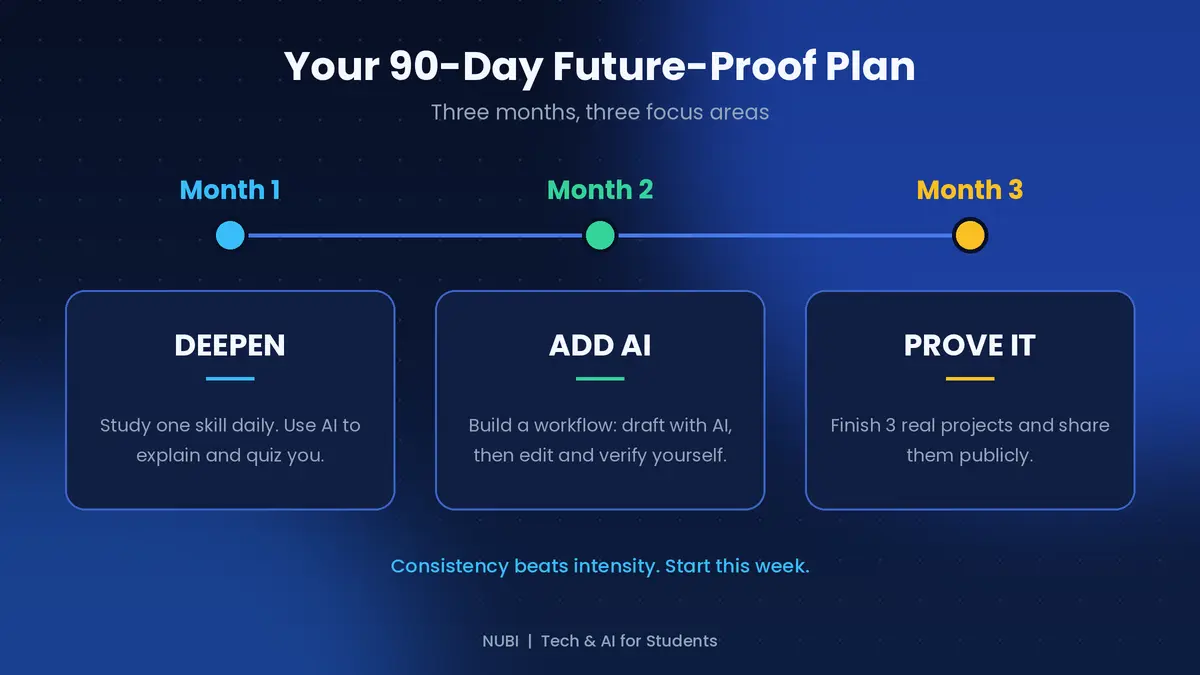
Month 1, Deepen: study one skill daily and use AI to explain things and quiz you.
Month 2, Add AI: build a workflow where AI drafts and you edit and verify.
Month 3, Prove it: finish three real projects and share them publicly.
Consistency beats intensity, so even thirty focused minutes a day adds up.
What not to do
Don't build your whole income on cheap, generic work that a free tool can copy. Don't ignore AI either, because people who use it well will have an advantage over those who refuse. And don't trust AI output blindly, since being the person who checks it is part of your value.
Quick recap
AI is strong at routine tasks, but weak at accountability and trust
Think in tasks, not job titles
Move toward skills that need judgment and relationships
Build one deep skill plus broad skills (the T shape)
Prove your ability with real projects
Final thoughts
AI will change online work, but it won't remove the need for people who can think, decide and be trusted. The students who do best will be the ones who learn deeply and use AI as a tool. Which skill are you building right now? Tell me in the comments and I'll write about it.
Support this blog
If this guide helped you, you can tip me. Every bit helps me keep creating free guides for students. Thank you!
Next: how to build a simple online portfolio for free. Follow so you don't miss it.






