INTRO
Crypto prices can jump or drop by large amounts in a single day, sometimes in a few hours. For a beginner this is exciting and scary at the same time. Why does it happen, and what should you do about it?
Understanding why prices move won't let you predict them, since nobody can do that reliably. But it will help you avoid the emotional mistakes that cost beginners the most.
This article is educational only and is not financial advice. Crypto is risky, and you can lose everything you put in.
6 forces that move prices
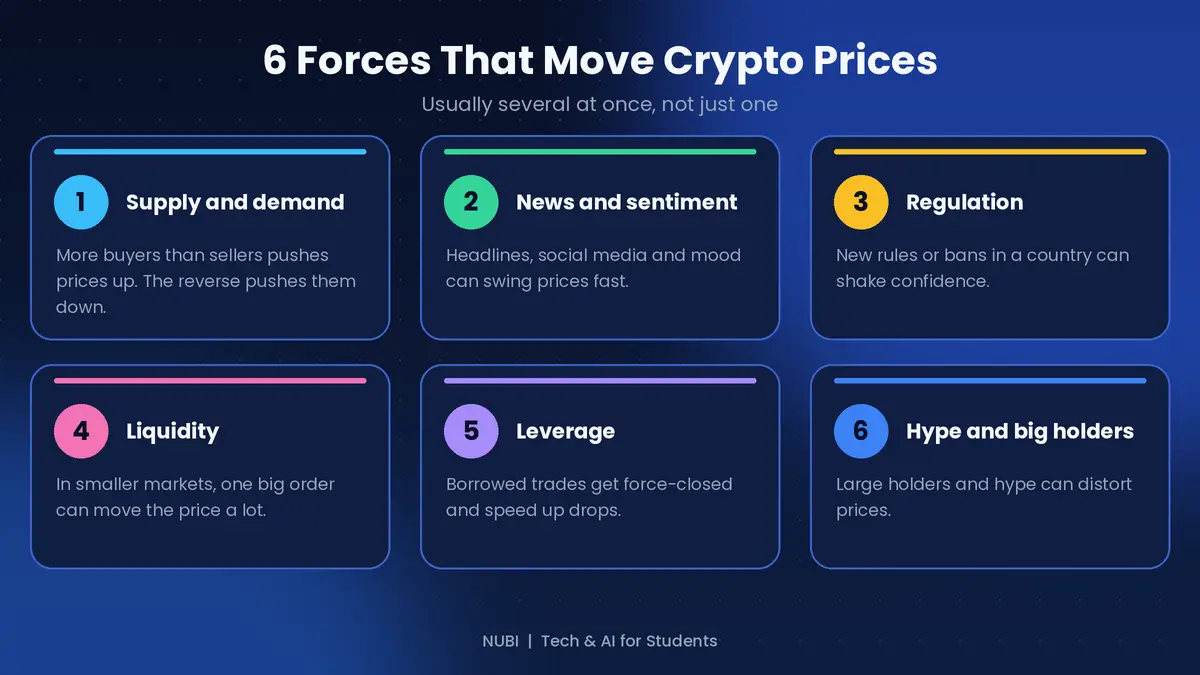
Prices usually move because of several forces at once:
Supply and demand. More buyers than sellers pushes prices up, and the reverse pushes them down.
News and sentiment. Headlines, social media and general mood can swing prices fast, sometimes before anyone knows if the news is true.
Regulation. New rules or bans in a country can shake confidence.
Liquidity. In smaller markets, one big order can move the price a lot.
Leverage. Borrowed trades get force-closed and speed up drops.
Hype and big holders. Large holders and hype can distort prices, especially for smaller coins.
Crypto also trades around the clock, with no closing bell. That means news can hit at any hour, and prices can react while you're asleep.
Price is not the whole story
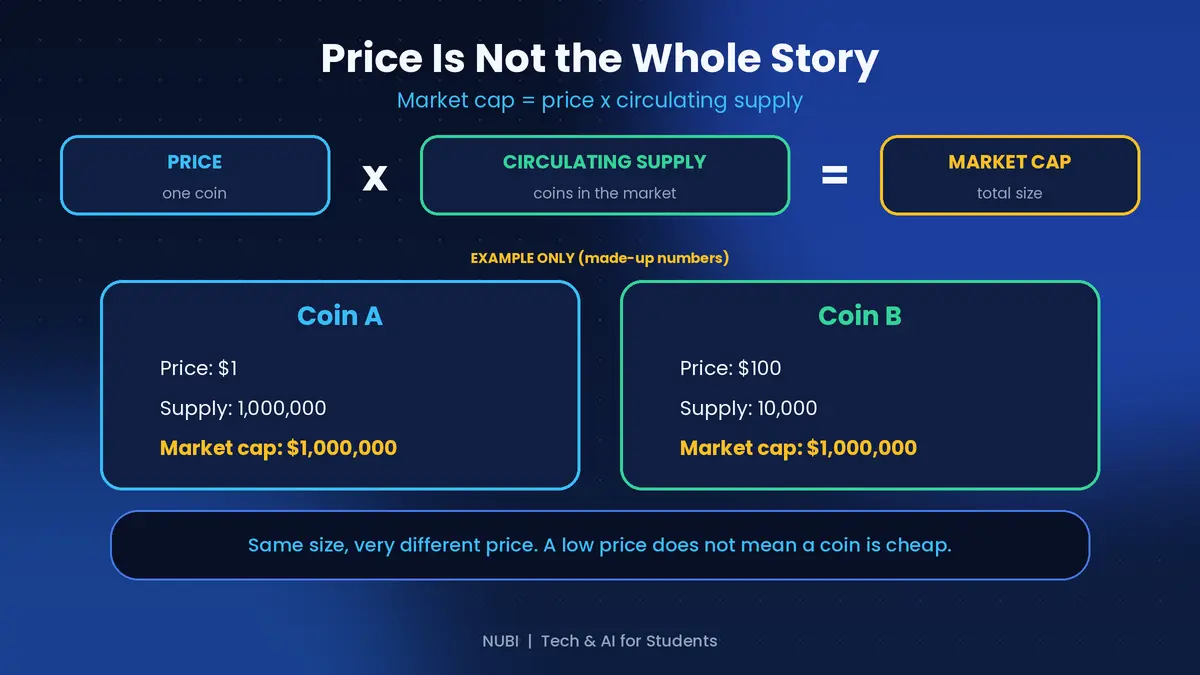
Many beginners think a coin with a very low price is "cheap" and has more room to grow. That isn't how it works. What matters is the market cap, which is the price multiplied by the circulating supply, the number of coins in the market.
In the made-up example above, Coin A costs $1 and Coin B costs $100, but both have a market cap of $1,000,000. They're the same size. A low price alone says nothing about whether a coin is a good or bad choice, so compare market cap and fundamentals, not just price.
Why smaller markets swing more
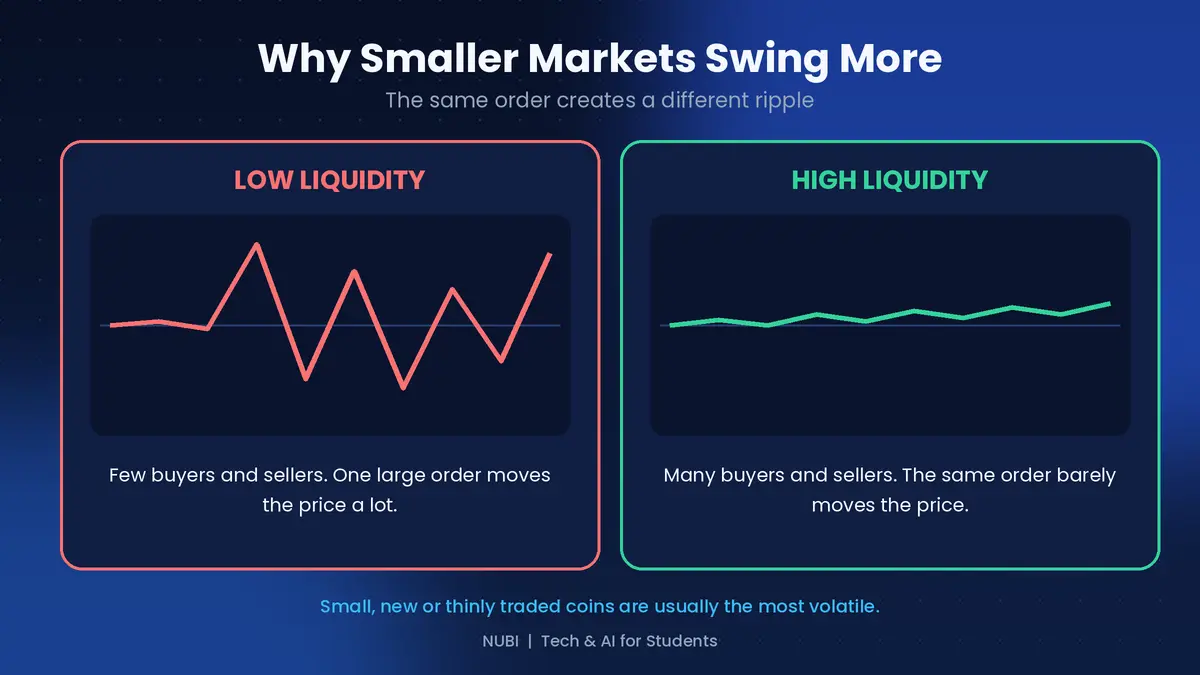
Liquidity describes how easily you can buy or sell without moving the price. In a high-liquidity market there are many buyers and sellers, so the same order barely changes the price. In a low-liquidity market, one large order can push the price up or down sharply.
That's why small, new or thinly traded coins are usually the most volatile, and often the most risky for beginners.
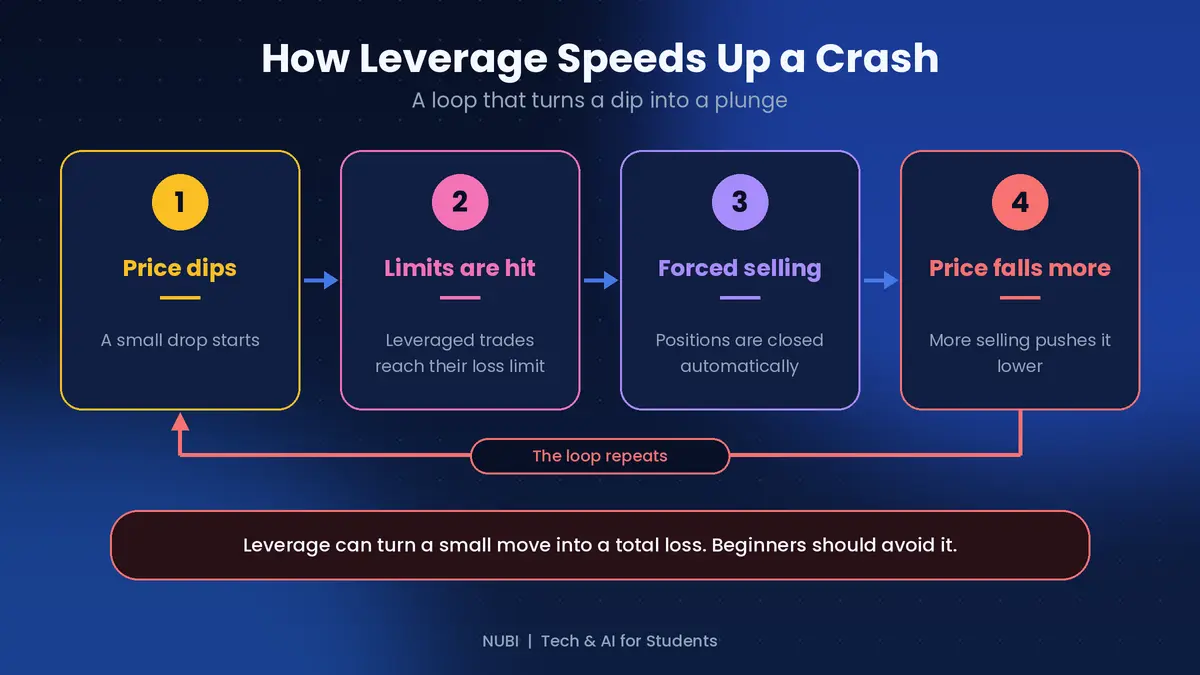
How leverage speeds up a crash
Leverage means trading with borrowed money. It can magnify gains, but it magnifies losses too. When prices dip, leveraged trades that reach their loss limit are closed automatically. That forced selling pushes the price lower, which closes more trades, and the loop repeats.
This is one reason sudden crashes can be so fast and so deep. Leverage can turn a small move into a total loss, which is why beginners should avoid it.
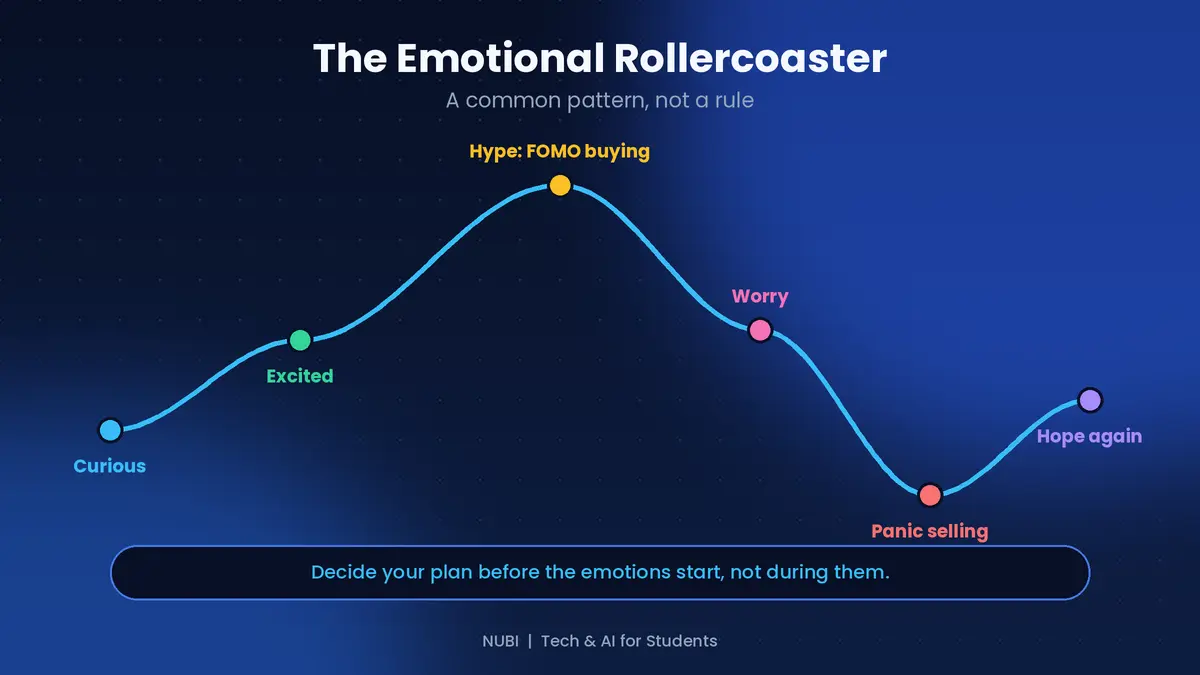
The emotional rollercoaster
Prices move because people move them, and people follow a common emotional pattern. First there's curiosity, then excitement, then hype, when fear of missing out (FOMO) drives people to buy near the top. When prices fall comes worry, then panic selling near the bottom, and eventually hope returns.
This is a common pattern, not a rule. But knowing it helps you notice when your own emotions are pulling you. The best protection is to decide your plan before the emotions start, not during them.
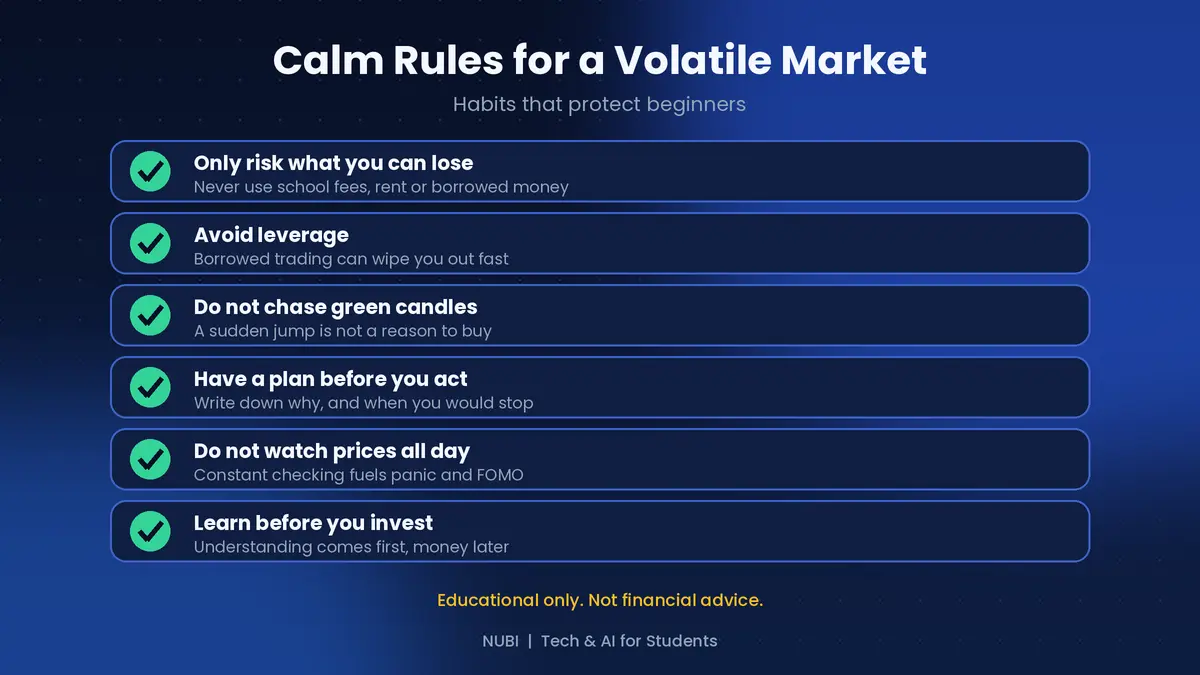
Calm rules for a volatile market
Only risk what you can afford to lose. Never use school fees, rent or borrowed money.
Avoid leverage. Borrowed trading can wipe you out fast.
Don't chase green candles. A sudden jump isn't a reason to buy.
Have a plan before you act. Write down why you're doing something and when you'd stop.
Don't watch prices all day. Constant checking fuels panic and FOMO.
Learn before you invest. Understanding comes first, money later.
Nobody can predict prices, and anyone who says they can, especially when selling a course or a "signal," deserves extra suspicion.
Quick recap
Prices move because of many forces at once
Compare market cap, not just price
Smaller, thinly traded markets swing more
Leverage speeds up crashes and can wipe out a beginner
Emotions like FOMO and panic cause many avoidable losses
Set a plan in advance and only risk what you can lose
Final thoughts
Volatility is part of crypto, and it can't be removed. What you can control is your knowledge, your plan and your emotions. Which part of crypto prices confuses you most? Tell me in the comments and I'll cover it in a future guide.
Support this blog
If this guide helped you, you can tip me. Every bit helps me keep creating free guides for students. Thank you!
Next: crypto scams in 2026 and how to protect yourself. Follow so you don't miss it.