
 INTRO
A few years ago, faking a photo or a voice took skill and software. Today it can take a few minutes and a free tool. That's useful for creativity, but it also means false images, videos and articles now spread faster than ever.
As a student, you use the internet to research, learn and make decisions, so this affects you directly. This guide explains what to watch for and gives you a simple method to check what you see.
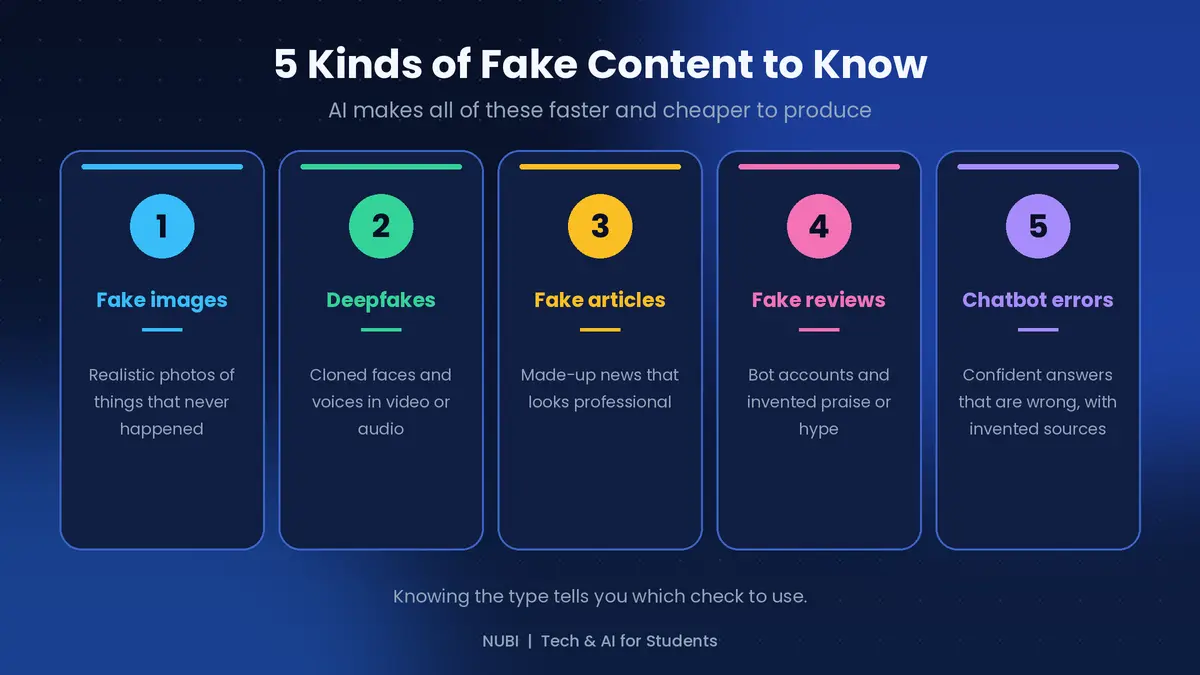
5 kinds of fake content
Fake images: realistic photos of things that never happened.
Deepfakes: cloned faces and voices in video or audio.
Fake articles: made-up news that looks professional.
Fake reviews and profiles: bot accounts and invented praise.
Chatbot errors: confident answers that are wrong, sometimes with invented sources.
The last one is worth special attention. AI chatbots can produce answers that sound certain but are wrong, and they sometimes invent references. If you use AI for assignments, always check the sources it gives you. If you can't find a source, don't use it.
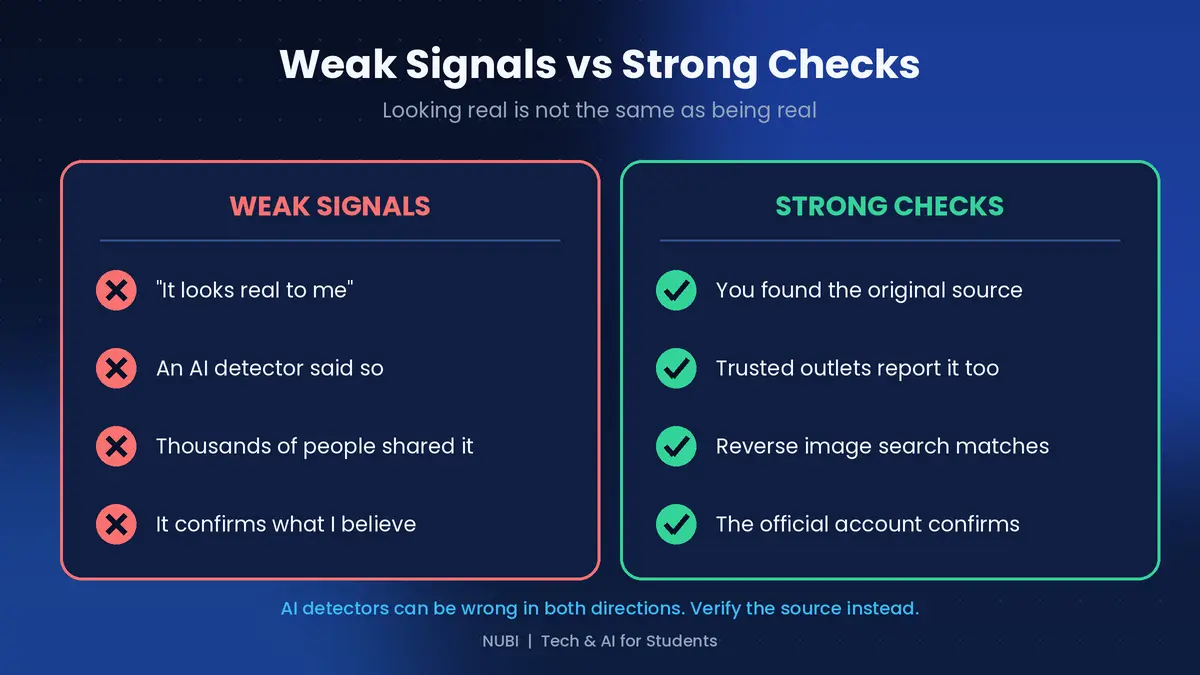
Why "it looks real" isn't enough
People used to say you could spot an AI image by strange hands or garbled text. Those clues are getting less reliable as the tools improve, so don't depend on them alone.
AI detection tools aren't a perfect answer either. They can wrongly flag human work and miss AI work, so treat their results as a hint, not a verdict. A post being shared thousands of times doesn't make it true, and a claim that confirms what you already believe deserves extra caution.
What works better is checking the source. Can you find the original? Do trusted outlets report the same thing? Does a reverse image search show where the picture really came from? Does the official account confirm it?
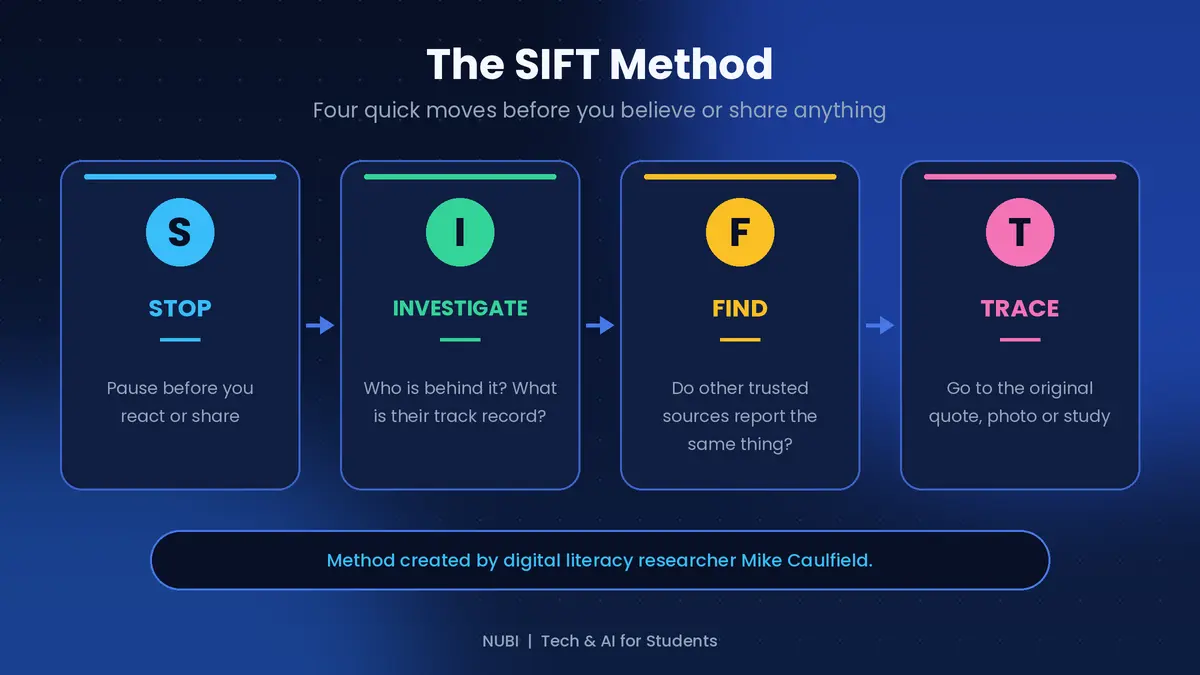
The SIFT method
SIFT is a simple method created by digital literacy researcher Mike Caulfield. It has four quick moves:
Stop. Pause before you react or share. Strong emotion is a warning sign.
Investigate the source. Who is behind it, and what's their track record?
Find better coverage. Do other trusted sources report the same thing?
Trace to the original. Go to the original quote, photo or study, because things often get twisted along the way.
It takes about a minute, and it catches a lot.
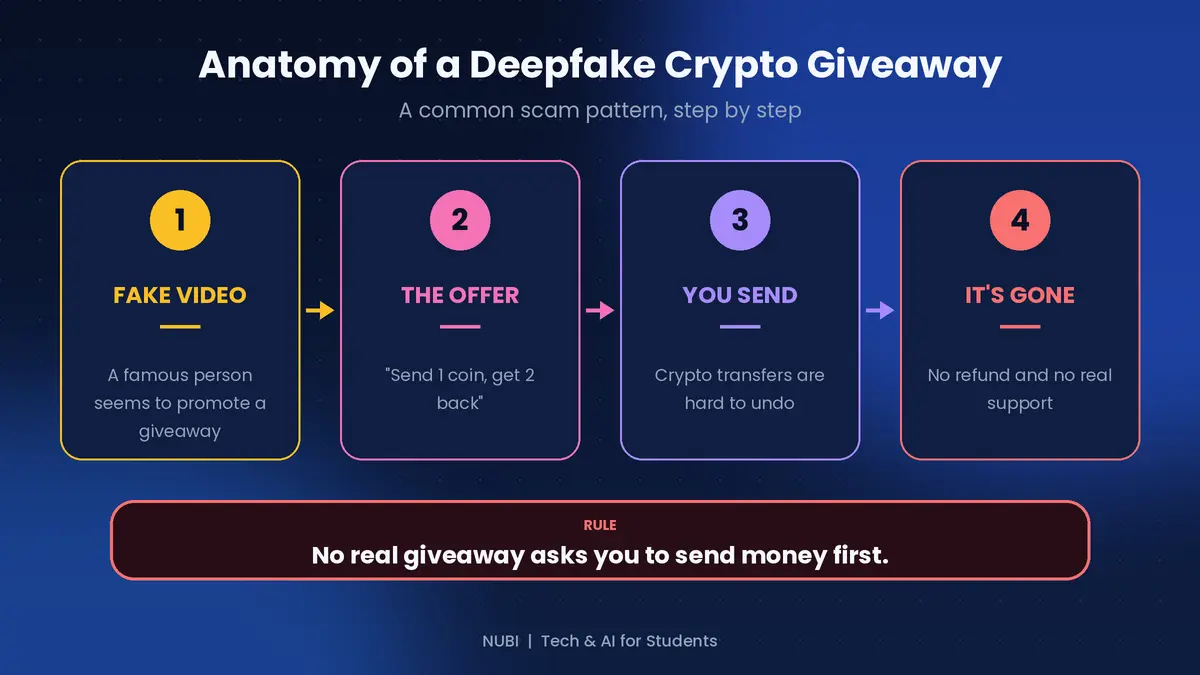
The crypto angle: deepfake giveaways
Crypto scammers use fake content a lot. A common pattern looks like this:
A video appears to show a famous person promoting a giveaway.
The offer: "send 1 coin and get 2 back."
You send crypto, and transfers like this are very hard to undo.
The money is gone, with no refund and no real support.
The video can be a deepfake, and the account that posted it can be hacked or fake. The rule is simple: no real giveaway asks you to send money first. If an offer sounds too good to be true, it almost certainly is.
Voice-cloning scams
Scammers can also clone a voice and call a family member pretending to be you or someone you know in an emergency. Agree on a code word with close family, and if a call asks for urgent money, hang up and call the person back on their normal number.
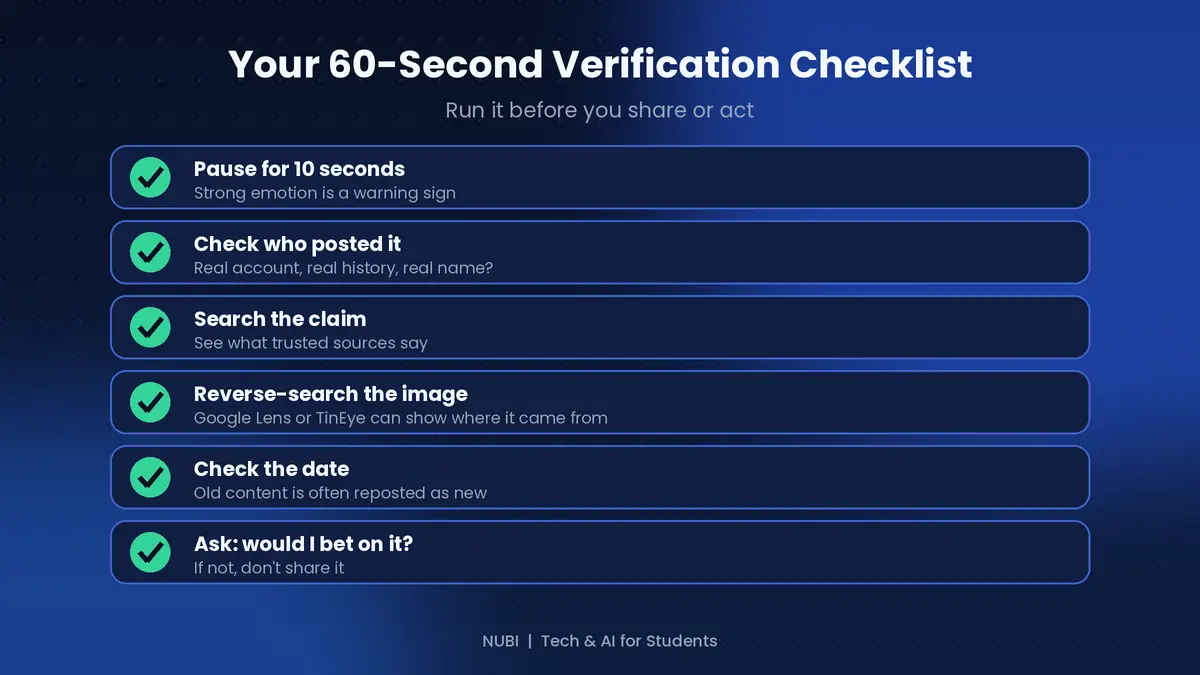
Your 60-second checklist
Pause for ten seconds.
Check who posted it: real account, real history, real name?
Search the claim and see what trusted sources say.
Reverse-search the image with a tool like Google Lens or TinEye.
Check the date, since old content is often reposted as new.
Ask yourself: would I bet on this being true? If not, don't share it.
Quick recap
Fake content comes in five main forms
"It looks real" is no longer a reliable test
AI detectors are a hint, not proof
Use SIFT: Stop, Investigate, Find, Trace
No real crypto giveaway asks you to send first
Verify chatbot sources before you use them
Final thoughts
You don't need to become a detective. You just need to build one habit: check before you believe, and check before you share. It protects you, your grades and the people who trust what you post. What's the most convincing fake you've seen online? Tell me in the comments and I'll cover it in a future guide.
Support this blog
If this guide helped you, you can tip me. Every bit helps me keep creating free guides for students. Thank you!
Next: how to use AI to research crypto projects safely, and avoid scams. Follow so you don't miss it.






